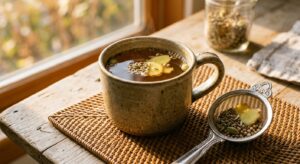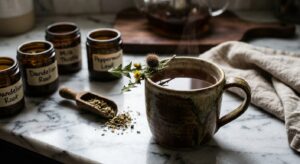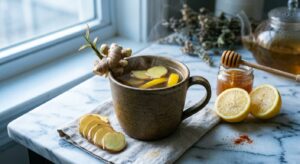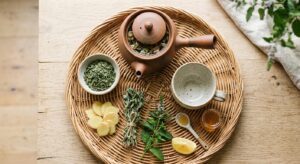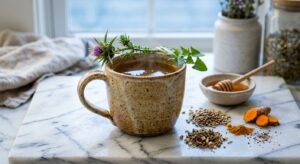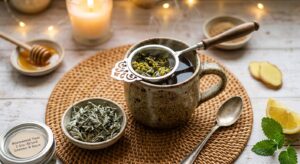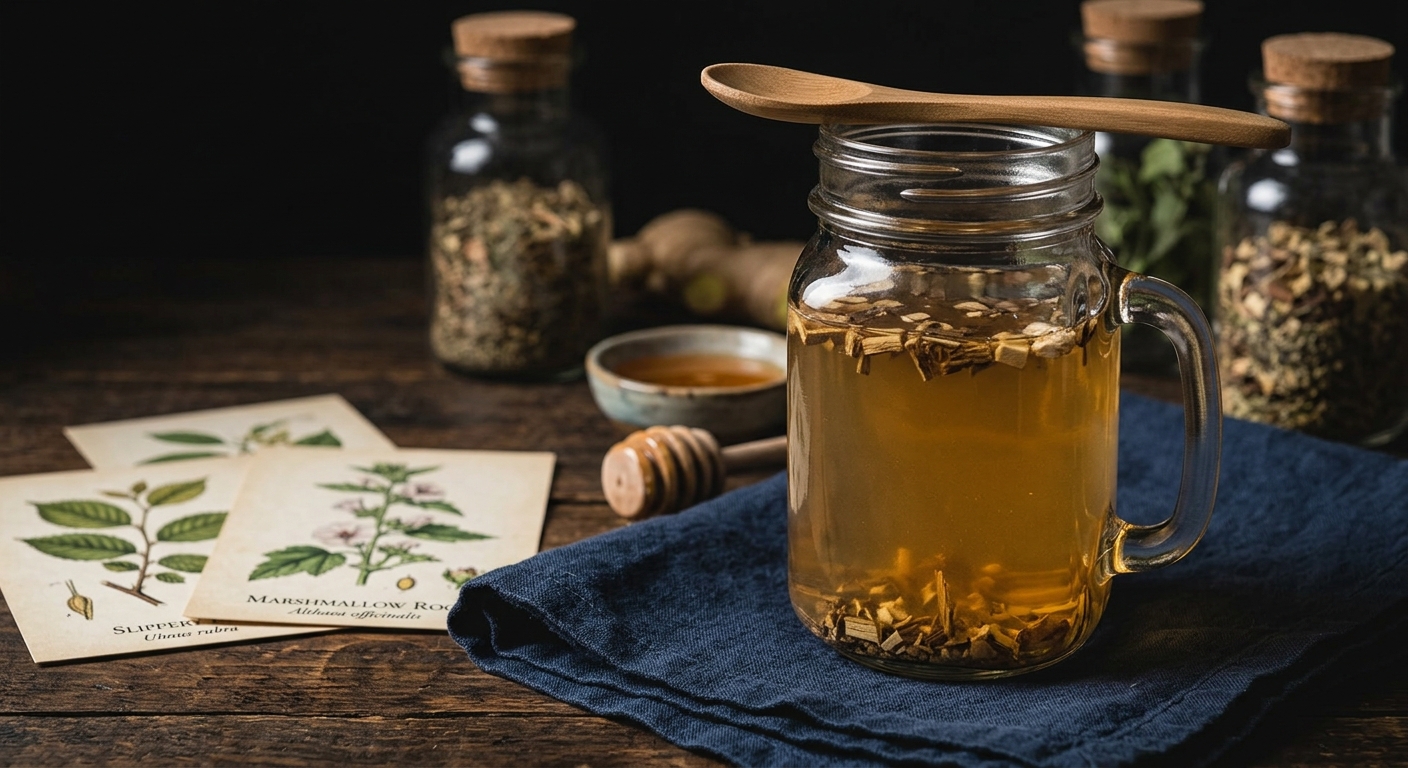
Heartburn has been a human complaint for centuries, and the herbal world has long offered an answer rooted not in suppressing acid, but in protecting the delicate tissues that acid irritates. Slippery elm, harvested from the inner bark of Ulmus rubra, was a staple of Indigenous North American medicine, prized for its thick, slippery mucilage that soothes everything from sore throats to irritated stomach linings. Marshmallow root (Althaea officinalis) has an equally ancient pedigree, used in European and Middle Eastern herbalism for over 2,000 years as a demulcent, meaning a substance that coats and calms inflamed mucous membranes. Together, these two herbs create a tea that feels almost protective from the first sip.
The third member of this blend, deglycyrrhizinated licorice root (commonly called DGL), brings its own powerful history to the cup. Licorice (Glycyrrhiza glabra) has appeared in Egyptian papyri, traditional Chinese medicine, and Ayurvedic texts as a remedy for digestive complaints. The deglycyrrhizinated form has had the compound glycyrrhizin removed, making it safe for regular use without the blood pressure concerns associated with whole licorice root. Modern herbalists specifically recommend DGL for its ability to stimulate the production of mucus in the stomach lining and esophagus, reinforcing the body’s own natural defenses against acid.
What makes this heartburn tea remarkable is its mechanism. Unlike antacids that neutralize acid or proton pump inhibitors that block its production, this blend works by supporting the integrity of the tissues themselves. The mucilage from slippery elm and marshmallow root forms a physical, gel-like coating over irritated tissue, while DGL licorice encourages cellular repair. The tea has a gentle, mildly sweet, earthy flavor with a characteristic slight thickness on the palate, which is actually the mucilage doing its work. It is best sipped slowly, about 20 to 30 minutes before meals or immediately after symptoms arise.
2
cups
Ingredients
- 2 tspslippery elm bark powder or cut bark
- 1 tspDGL licorice root (deglycyrrhizinated), cut and sifted
- 1 tspdried marshmallow root, cut and sifted
- 500 mlwater
- —raw honey or a small piece of fresh ginger to taste (optional)
How to Brew
Click on an item below to shop for the recommended items for this recipe on Amazon.
As an Amazon Associate, we earn from qualifying purchases.
- Heat your water to 85 to 90°C (185 to 194°F). If you do not have a temperature-controlled kettle, bring water to a full boil and let it rest off the heat for 3 to 4 minutes before using.
- Add the slippery elm bark, DGL licorice root, and marshmallow root to a tea infuser or directly into a small saucepan. Because slippery elm powder can pass through standard mesh infusers, a fine-mesh strainer or muslin tea bag is recommended.
- Pour the hot water over the herbs and cover the vessel immediately with a lid or a small plate. Covering is important: it traps the volatile aromatic compounds and helps maintain an even steeping temperature.
- Steep for 10 to 15 minutes, stirring once at the halfway point. The liquid will take on a slightly viscous, silky quality as the mucilage dissolves – this is exactly what you want.
- Strain thoroughly into a mug. If using slippery elm powder, pass the liquid through a fine-mesh strainer lined with a coffee filter for a cleaner result.
- Sip slowly, about 20 to 30 minutes before a meal or as soon as heartburn symptoms arise. Add a small amount of raw honey if desired, but avoid lemon or citrus, as acidity counteracts the soothing effect.
- Measure the slippery elm bark, DGL licorice root, and marshmallow root into a clean glass jar. If using slippery elm powder, consider placing it in a muslin tea bag to make straining easier after the long steep.
- Pour room-temperature filtered water (about 500 ml for 2 servings) over the herbs. Do not use hot or warm water for this method: the goal is a slow, cold extraction that maximizes mucilage release from the marshmallow root specifically.
- Stir gently to make sure all the herbs are fully submerged, then seal the jar with a lid or cover it tightly with plastic wrap.
- Place the jar in the refrigerator and allow it to steep for 8 to 12 hours. Overnight is ideal. The liquid will gradually become slightly viscous and pale amber in color.
- Strain the cold brew through a fine-mesh strainer or a strainer lined with a coffee filter, pressing gently on the herbs to extract the last of the mucilage-rich liquid.
- Serve chilled or at room temperature. This cold-brew version can be stored in the refrigerator for up to 48 hours. Stir or shake gently before each serving, as the mucilage may settle slightly.
- Combine the slippery elm bark pieces, DGL licorice root, and marshmallow root in a small saucepan. Add 600 ml of cold filtered water – the extra volume accounts for evaporation during simmering.
- Place the saucepan over medium-low heat and slowly bring the water up to a gentle simmer. Watch the heat carefully: you want small, lazy bubbles rising occasionally, not a full rolling boil. Vigorous boiling for this long can break down the mucilage and make the tea bitter.
- Maintain the gentle simmer uncovered for 15 to 20 minutes, stirring every 5 minutes. The liquid will reduce slightly and deepen in color to a warm amber or light honey-gold. It will also feel noticeably thicker and more viscous than plain water.
- Remove from heat and let the decoction rest for 5 minutes off the burner. This allows any remaining mucilage to fully integrate into the liquid.
- Strain through a fine-mesh strainer into mugs or a heat-safe pitcher, pressing firmly on the spent herbs to extract all of the soothing liquid.
- This decoction is more concentrated than the hot brew. You may dilute it with a small amount of warm water if the flavor is too intense, or sip it as-is in smaller quantities (150 to 180 ml per serving). A small amount of honey pairs very well here. Drink slowly before or after meals.
Health Benefits
The mucilage from slippery elm and marshmallow root dissolves in water to form a gel-like layer that physically coats the esophageal lining, acting as a buffer between irritated tissue and stomach acid. This mechanism is supported by both traditional herbalism and clinical observations of demulcent herbs in gastrointestinal care.
DGL licorice root has been shown in multiple clinical studies to promote the secretion of mucus by the stomach lining, reinforcing the body’s own natural protective barrier. A 2011 study published in Evidence-Based Complementary and Alternative Medicine found DGL effective in reducing symptoms of functional dyspepsia, which often overlaps with heartburn.
All three herbs in this blend carry anti-inflammatory compounds. The flavonoid glycosides in DGL licorice and the phenolic antioxidants in slippery elm work together to calm the inflammatory response in tissues repeatedly exposed to acid, which may reduce the severity and frequency of reflux episodes over time.
Marshmallow root has a mild antispasmodic effect on the smooth muscle of the digestive tract, which may help reduce the uncomfortable feeling of tightness or pressure in the chest and upper abdomen associated with acid reflux. This relaxing effect complements the coating action of the other herbs.
Chronic acid exposure can cause minor erosion of the esophageal lining. Slippery elm has a long traditional use in wound-healing and tissue repair, and its mucilage provides a moist, protective environment that supports cellular regeneration in irritated mucous membranes.
🧪 Key Bioactive Compounds
The Science Behind Slippery Elm
The science behind this heartburn tea centers on a class of compounds called mucilaginous polysaccharides, large, complex carbohydrate molecules that absorb water and swell into a slippery, gel-like substance. In slippery elm, these polysaccharides are found in the inner bark and consist primarily of arabinogalactans and rhamnose-rich molecules that, when hydrated, form a viscous colloid. When you drink this tea, that colloid adheres to the mucosal lining of the esophagus and stomach, creating a physical film that slows the penetration of acid into the underlying tissue. This is the same basic principle behind many commercial antacid suspensions, but achieved here through whole-plant constituents.
Marshmallow root contributes a similar but distinct mucilage, composed largely of pectin, arabinans, and glucuronans. Notably, research has shown that these compounds are released most abundantly in cold or room-temperature water rather than hot water, which is why the cold brew method is particularly effective for extracting marshmallow root’s demulcent benefits. A study published in Complementary Medicine Research (2013) found that a syrup containing marshmallow root extract significantly reduced throat and stomach irritation in participants with mild gastroesophageal reflux, supporting the traditional use of this plant as a digestive soother.
The inclusion of deglycyrrhizinated licorice (DGL) adds a mechanistically different layer of protection. Rather than simply coating tissue, DGL has been shown to upregulate the expression of mucin genes in gastric epithelial cells, meaning it encourages the stomach itself to produce more of its own protective mucus. The key active constituents responsible for this effect include glycyrrhetinic acid derivatives and flavonoids such as liquiritin and isoliquiritin, which also exhibit meaningful anti-inflammatory activity by inhibiting cyclooxygenase and lipoxygenase pathways. When these three herbs work in concert, they address heartburn through coating, stimulating repair, and calming inflammation simultaneously, providing a layered, plant-based approach to esophageal and gastric protection.
Brewing Tips
- Always steep this tea covered. The lid traps heat and moisture, which helps the mucilaginous polysaccharides fully dissolve and integrate into the liquid rather than evaporating along with the steam.
- Drink this tea slowly and in an upright position. Sipping it over 10 to 15 minutes, rather than drinking it quickly, gives the mucilage more contact time with the esophagus and stomach lining, maximizing its soothing effect.
- Avoid adding lemon, citrus juice, or any acidic ingredient to this blend. The soothing mechanism of all three herbs depends on maintaining a neutral to slightly alkaline environment. Acid will partially break down the mucilage and counteract the protective gel before it can coat the esophagus.