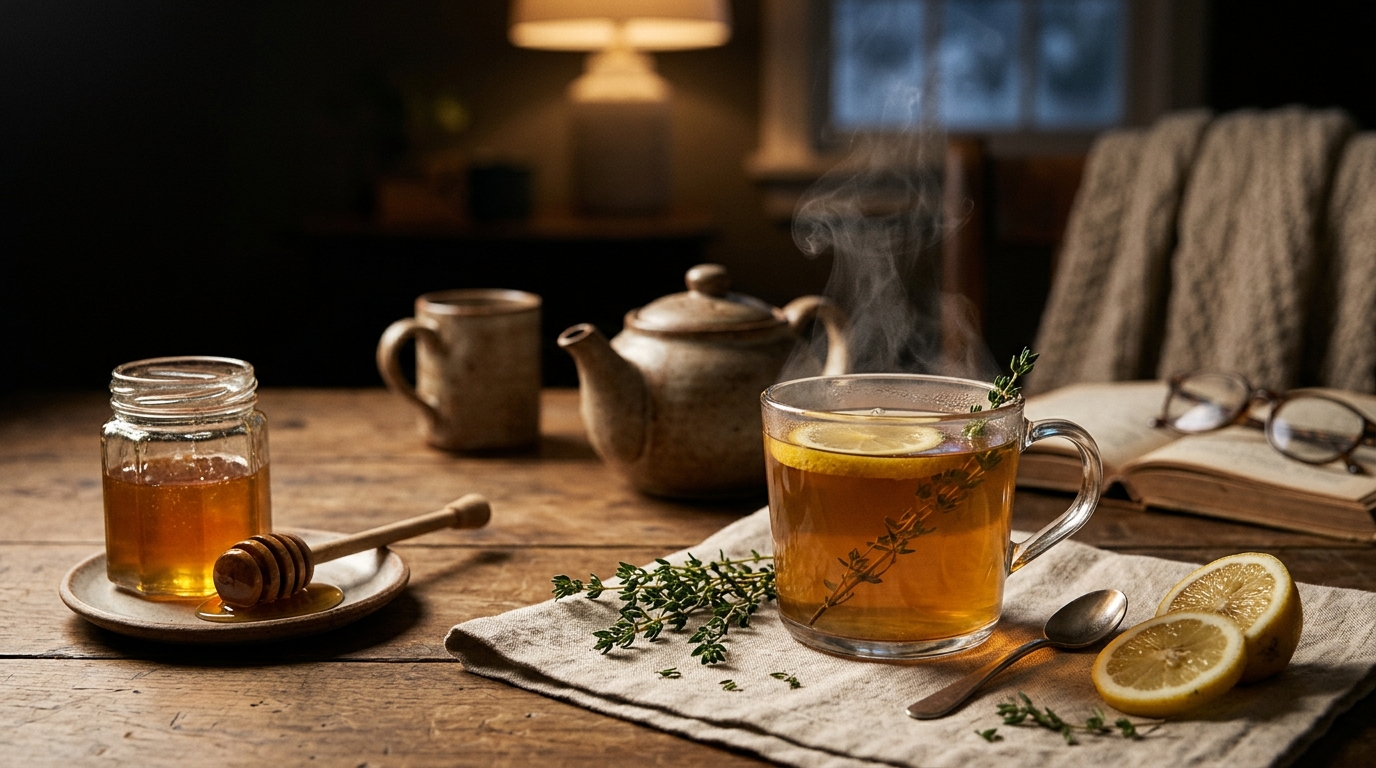
Long before cough syrups lined pharmacy shelves, thyme was the herb kitchens reached for when a cold settled in. The ancient Egyptians used thyme in embalming practices, the Greeks burned it as incense and believed it carried courage, and medieval European households tucked sprigs under pillows to ward off nightmares and restore sleep. By the time Victorian herbalists were writing down their remedies, thyme tea sweetened with honey was already a fixture of the sickroom, passed from grandmother to grandchild as the first thing you drank at the earliest tickle in the throat.
What makes this old remedy so enduring is how neatly its three ingredients work together. Thyme brings its volatile oils, especially thymol and carvacrol, which give the herb its sharp, medicinal fragrance and its long reputation as a respiratory ally. Raw honey coats the throat and has been shown in clinical research to quiet nighttime coughs, particularly in children over one year old. Lemon adds bright acidity, a little vitamin C, and a clean finish that keeps the whole cup from tasting too much like a medicine cabinet.
This version is reimagined for the end of the day. We lean into a gentler steep, a slightly softer thyme presence, and a generous spoonful of honey, so the cup feels more like a lullaby than a treatment. It is caffeine-free, naturally warming, and ideal when you feel a cold coming on or simply want to wind down with something fragrant and grounding.
2
cups
Ingredients
- 2 tspdried thyme leaves (or 6 to 8 fresh sprigs)
- 480 mlwater (95°C / 203°F)
- 2 tbspfresh lemon juice
- 2 tspraw honey, or to taste
- —1 thin slice of fresh lemon for garnish (optional)
- —1 small slice of fresh ginger for extra warmth (optional)
How to Brew
Click on an item below to shop for the recommended items for this recipe on Amazon.
As an Amazon Associate, we earn from qualifying purchases.
- Bring fresh water to a boil, then let it rest for about 30 seconds so it settles near 95°C (203°F). Water straight off a rolling boil can make thyme taste harsh and bitter.
- Place the dried thyme leaves in a teapot or mug. If using fresh sprigs, gently bruise them between your fingers first to release their oils.
- Pour the hot water over the thyme and cover immediately with a saucer or lid. Steep for 7 to 10 minutes; closer to 7 for a lighter evening cup, closer to 10 for a stronger, more medicinal brew.
- Strain the tea into your mug or a second warmed pot, pressing the leaves lightly to extract the last of the liquid.
- Let the tea cool for 1 to 2 minutes, then stir in the honey until fully dissolved. Adding honey to slightly cooled tea preserves its delicate enzymes and flavor.
- Squeeze in the lemon juice, stir once more, and sip slowly while still warm.
- Add the dried thyme leaves (or bruised fresh sprigs) to a clean glass jar. For cold brew, use a slightly higher ratio: about 1 tablespoon of dried thyme per 480 ml of water.
- Pour in cool, filtered water, stir briefly to submerge the leaves, and seal the jar with a lid.
- Refrigerate for 8 to 10 hours, or overnight. Avoid steeping longer than 12 hours, as thyme can turn slightly sharp and dusty.
- Strain the tea through a fine mesh sieve into a clean pitcher or glass, discarding the leaves.
- Stir the honey in a small splash of warm water first, so it dissolves fully, then mix it into the cold tea. Honey will not dissolve well straight into cold liquid.
- Add the lemon juice, taste, and adjust sweetness. Serve over a few ice cubes or at refrigerator temperature.
- Combine 4 tablespoons of dried thyme (or a generous handful of fresh sprigs) with 480 ml of water in a small saucepan.
- Bring to a gentle simmer over medium-low heat, then reduce the heat so the surface barely trembles. Cover and simmer for 10 minutes, reducing the liquid slightly.
- Remove the pan from the heat and let the thyme rest, covered, for another 15 minutes to deepen the flavor.
- Strain through a fine mesh sieve into a clean jar, pressing the leaves to extract every drop. You should have roughly 300 to 350 ml of strong thyme liquid.
- While the liquid is still warm but not hot, stir in 4 tablespoons of raw honey and 4 tablespoons of lemon juice until fully combined.
- Cool completely, then seal and refrigerate. To serve, mix 1 part concentrate with 2 to 3 parts hot water for a warming cup, or pour over ice and top with cold water or sparkling water.
Health Benefits
Thyme has a long history as an expectorant and cough remedy, and clinical studies on thyme-based preparations (often combined with ivy or primrose) have shown reduced cough severity in acute bronchitis. Honey adds its own demulcent coating action, and research supports its use for nighttime coughs.
Thymol and carvacrol are thought to relax bronchial smooth muscle and help loosen mucus, making it easier to clear the airways when you are congested. The warm steam rising from the cup offers additional short-term relief.
Rosmarinic acid, luteolin, and other polyphenols in thyme help neutralize free radicals, while lemon contributes vitamin C. Together they support the body’s normal defenses during cold season, though no tea can prevent illness outright.
A warm, caffeine-free ritual before bed lowers the pace of the evening, and thyme’s aromatic compounds like linalool are associated with relaxation. Easier breathing and a soothed throat also make it simpler to fall and stay asleep when you are under the weather.
Traditionally, thyme has been used as a carminative to ease bloating and gas. Its volatile oils are believed to relax the smooth muscle of the digestive tract, which is why thyme tea was often offered after heavy meals.
🧪 Key Bioactive Compounds
The Science Behind Thyme
Thyme’s reputation as a respiratory herb rests largely on its essential oil, which can be up to 50 percent thymol and carvacrol depending on the chemotype. These phenolic compounds disrupt bacterial cell membranes in laboratory settings, which explains thyme’s long use as an antiseptic and why it appears in mouthwashes and throat lozenges. In traditional preparations, they also seem to relax the smooth muscle lining the bronchi, helping the airways stay open and mucus move more freely.
Human trials have mostly studied standardized thyme extracts rather than tea, but the results are encouraging. Combinations of thyme and ivy leaf or thyme and primrose root have been shown to shorten the duration of coughs in acute bronchitis and to reduce cough frequency compared with placebo. A hot cup of thyme tea delivers a smaller dose of these compounds, so it is best viewed as a supportive, comforting remedy rather than a replacement for medical care.
Honey earns its place in this recipe on strong evidence. Several clinical trials have found that a spoonful of honey before bed reduces nighttime cough frequency and improves sleep quality in children with upper respiratory infections, performing as well as or better than some over-the-counter cough suppressants. Combined with lemon’s vitamin C and the antioxidant flavonoids in thyme, the tea offers a modest but real contribution to comfort and recovery, all in a form that is gentle, hydrating, and genuinely pleasant to drink.
Brewing Tips
- Always cover your cup while the thyme steeps. Thymol and carvacrol are volatile, and a lid keeps them in your tea instead of in the air.
- Add honey after the tea has cooled for a minute or two. Very hot liquid can dull honey’s delicate flavor and degrade some of its beneficial enzymes.
- Use fresh thyme when you can. Gently bruise the sprigs before steeping, and use about three times as much by volume as you would dried leaves.
- Brew a double batch of the concentrate on Sunday so a soothing evening cup is ready in under a minute all week long.