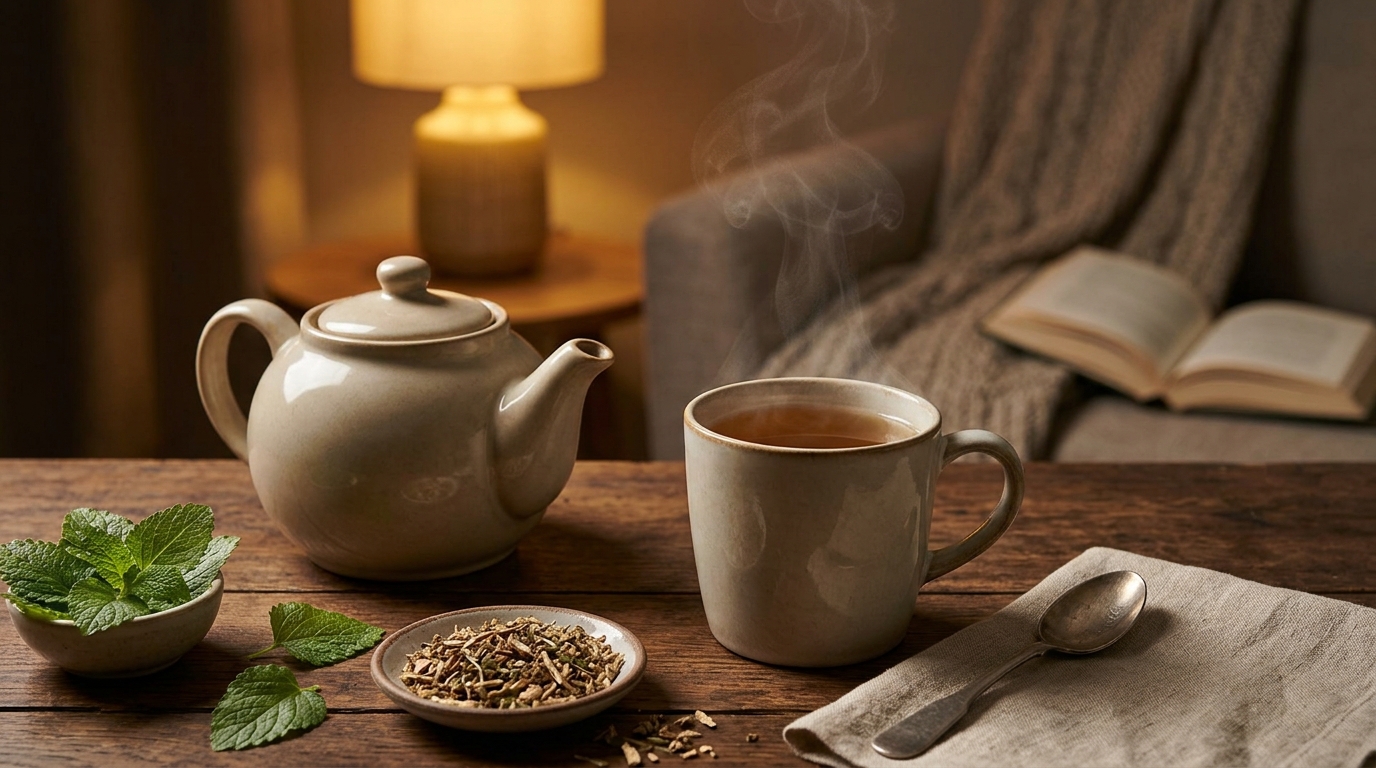
Valerian (Valeriana officinalis) has been used as a calming remedy for well over two thousand years. Hippocrates described the plant, and Galen later recommended it for insomnia. By the Middle Ages it was a staple of European folk medicine, so widely trusted for nervous complaints that it earned nicknames like ‘all-heal’ and, in some regions, ‘nature’s valium.’ The medicinal part is the root, which carries a famously pungent, musky aroma that cats adore and many people find either comforting or startling.
Lemon balm (Melissa officinalis) comes from a gentler corner of the herbal tradition. A member of the mint family, it was cultivated in medieval monastery gardens and prized by Paracelsus, who called it the ‘elixir of life.’ Carmelite nuns distilled it into a famous tonic water in the 1600s, and herbalists like Nicholas Culpeper recommended it to ‘drive away melancholy.’ Its leaves smell like fresh lemon with a soft herbal sweetness, and it has long been used for restlessness, nervous stomachs, and low mood.
Brewed together, the two herbs balance each other beautifully. Valerian brings the deep, grounding, sedative weight, while lemon balm lifts the flavor, softens valerian’s strong aroma, and adds its own anxiety-easing action. Modern clinical research has even tested this exact pairing in standardized extracts, finding it promising for sleep quality and nervous restlessness. The result is a cup that tastes surprisingly pleasant and signals to the body that the day is done.
2
cups
Ingredients
- 2 tspdried valerian root, coarsely chopped
- 2 tbspdried lemon balm leaves
- 480 mlwater (95°C / 203°F)
- —raw honey to taste (optional)
- —a thin slice of fresh lemon or a few dried orange peel strips (optional)
How to Brew
Click on an item below to shop for the recommended items for this recipe on Amazon.
As an Amazon Associate, we earn from qualifying purchases.
- Measure 2 teaspoons of dried valerian root and 2 tablespoons of dried lemon balm into a teapot or large mug. The valerian should be coarsely chopped or cut rather than powdered, so it steeps evenly without turning bitter or cloudy.
- Bring fresh water to a boil, then let it rest for about 30 seconds so it sits near 95°C (203°F). Valerian root tolerates and benefits from hot water, while the lemon balm leaves are protected by the short rest from scorching.
- Pour 480 ml of the hot water over the herbs, immediately cover with a lid or saucer, and set a timer for 12 minutes. Covering traps the aromatic lemon balm oils that would otherwise drift away.
- Strain through a fine mesh strainer into two cups, pressing lightly on the herbs to release the last of the liquid. Taste before adding anything.
- Sweeten with a small spoonful of raw honey if the earthy valerian note is too assertive for you, and add a slice of lemon if desired. Sip slowly about 30 to 60 minutes before bed.
- Combine 1 tablespoon of dried valerian root and 3 tablespoons of dried lemon balm in a clean glass jar. This is a slightly higher herb ratio than the hot method, which compensates for the gentler extraction in cold water.
- Pour 700 ml of cool filtered water over the herbs, stir gently, and seal the jar with its lid.
- Place the jar in the refrigerator and let it steep for 8 to 10 hours, ideally overnight. Give it a gentle swirl once if you happen to open the fridge, but no stirring is required.
- Strain through a fine mesh strainer or a layer of muslin into a clean bottle or pitcher, discarding the spent herbs.
- Serve over a few ice cubes or at fridge temperature, with a lemon slice and a drizzle of honey if you like. Drink within 24 hours, as cold-brewed herbal infusions spoil faster than hot ones.
- Place 2 teaspoons of chopped dried valerian root and 500 ml of cold water into a small saucepan. Starting with cold water allows the tough root fibers to release their compounds gradually as the water warms.
- Bring the pot slowly to a gentle simmer, then reduce the heat so it barely bubbles. Cover and simmer for 15 minutes. Do not allow a rolling boil, which can drive off valerian’s volatile oils along with the water.
- Remove the pan from the heat and immediately stir in 2 tablespoons of dried lemon balm leaves. Replace the lid and let the herbs steep for 7 minutes, so the delicate lemon oils infuse without being cooked away.
- Strain the tea through a fine mesh strainer into your cups, pressing the herbs gently to extract the remaining liquid.
- Add honey, a squeeze of lemon, or a pinch of dried orange peel to taste. This version is the most potent of the three, so start with a single cup in the evening.
Health Benefits
Valerian’s valerenic acid influences GABA activity in the brain, and several trials suggest it can shorten the time needed to fall asleep and improve perceived sleep quality, though results vary between studies and the effect builds over days to weeks.
Lemon balm’s rosmarinic acid and volatile oils appear to support GABA signaling, and small clinical studies have found lemon balm extracts increase calmness and reduce stress-related symptoms.
Clinical research on valerian and lemon balm taken together has reported improvements in restlessness and sleep disturbances in both adults and children, supporting the traditional practice of pairing them.
Both herbs have a long history as antispasmodics, and their gentle relaxing action on smooth muscle may ease the digestive tension and physical tightness that often accompany stress.
Lemon balm has traditionally been used to relieve low mood and mental fatigue, and small studies suggest it may improve alertness and contentment, making the evening blend feel uplifting rather than merely heavy.
🧪 Key Bioactive Compounds
The Science Behind Valerian
The calming reputation of this pairing rests largely on the GABA system, the brain’s main inhibitory signaling pathway. Valerian’s valerenic acid is believed to bind to a subunit of the GABA-A receptor and to inhibit the enzyme that breaks GABA down, effectively increasing the calming signal. Lemon balm’s rosmarinic acid appears to work through a complementary route, inhibiting GABA transaminase, the enzyme responsible for degrading GABA. Because the two herbs act at different points in the same pathway, their combination may produce a more rounded effect than either alone.
Human evidence is encouraging but not conclusive. Reviews of valerian for sleep describe modest improvements in subjective sleep quality, with inconsistent results caused by differences in preparation, dose, and study design. Trials using valerian together with lemon balm, including studies in people with sleep disturbances and in children with restlessness, have reported meaningful improvements in sleep and anxiety-related symptoms. Most of this research used standardized extracts, so a home-brewed tea is likely milder and more variable, which is partly why consistency and routine matter.
It is worth noting that valerian’s valepotriates are heat-sensitive and degrade in water, while valerenic acid and the other more stable constituents carry through into the cup. Lemon balm’s volatile oils are likewise fragile, which is why covering the tea while it steeps, and adding the balm late in a decoction, preserves more of its character. Good brewing technique therefore directly shapes both the flavor and the potential benefit of this tea.
Brewing Tips
- Buy valerian root that smells strongly earthy and fresh rather than flat or dusty, and store it in an airtight, light-proof container to protect its volatile compounds.
- Always cover the cup while steeping, since lemon balm’s aromatic oils escape with the steam and much of its flavor and calming character goes with them.
- Drink the tea 30 to 60 minutes before bed rather than right at lights-out, giving the herbs time to work and preventing a late-night bathroom trip.
- Valerian often works best with consistent use over one to two weeks rather than as a one-off remedy, so try it nightly for a short period and observe how you feel.
- If valerian’s aroma is too strong, shift the ratio toward more lemon balm, try the cold brew method, or add a strip of orange peel to soften the musky notes.