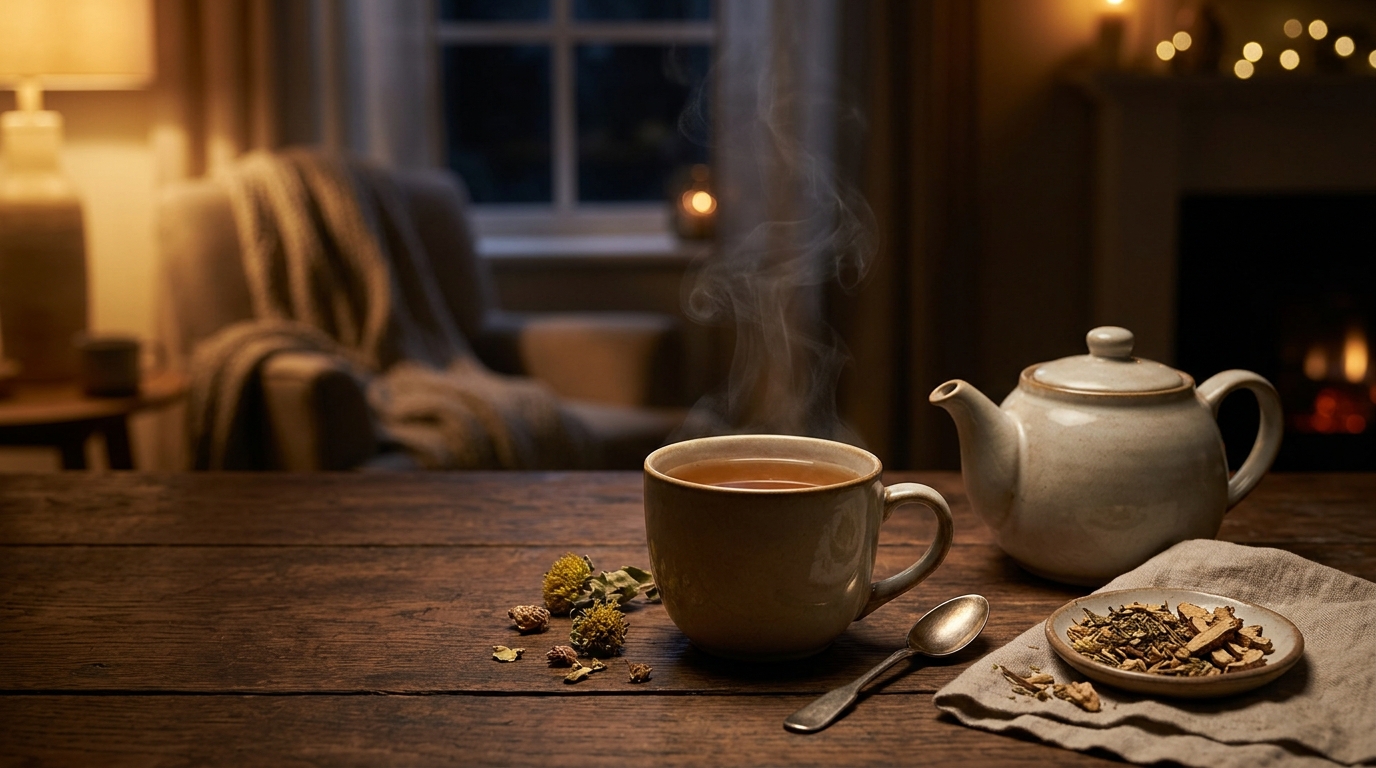
Rhodiola rosea, also called golden root or roseroot, grows in the harsh, windswept mountains of Scandinavia, Siberia, and the Arctic. For centuries, Vikings, Siberian herbalists, and Scandinavian villagers turned to this hardy, fleshy-rooted plant to endure punishing winters and long physical labor. Russian researchers in the 20th century studied it extensively as an adaptogen, a term for substances thought to help the body resist physical, chemical, and emotional stressors, and it was reportedly given to cosmonauts and athletes.
Here is the twist that makes this post unconventional: rhodiola has a reputation as a daytime herb. Many people take it in the morning to fight fatigue and sharpen focus, and in some individuals it can feel mildly stimulating. So why drink it in the evening? Because for many people, nighttime restlessness is not a lack of tiredness but an overactive stress response, a mind that cannot stop replaying the day. Rhodiola’s adaptogenic character is aimed at that stress response rather than at sedation, and a small, early-evening cup can fit into a wind-down routine for some people, particularly when paired with calming herbs.
In the cup, rhodiola is surprisingly gentle: earthy, faintly rose-like (the root smells of roses when cut, which is where the name rosea comes from), with a pleasant bitter-sweet edge. This guide shows you how to brew it three ways, and how to build an evening blend that leans on rhodiola’s strengths without overstimulating you. If you are sensitive to stimulating herbs, start with a small dose and have your cup well before bedtime.
2
cups
Ingredients
- 2 tspdried rhodiola root, coarsely chopped or cut
- 500 mlwater (95°C / 203°F)
- 1 tspdried lemon balm leaf (optional, for calming support)
- —raw honey or a small slice of dried orange peel to taste (optional)
How to Brew
Click on an item below to shop for the recommended items for this recipe on Amazon.
As an Amazon Associate, we earn from qualifying purchases.
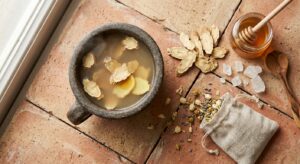
- Measure 2 teaspoons of coarsely chopped dried rhodiola root and place it in a large infuser or directly into a teapot. Powdered root will turn gritty and bitter, so choose cut pieces if you can.
- Bring fresh water to a full boil, then let it rest for about 30 seconds to bring the temperature down to roughly 95°C (203°F).
- Pour 500 ml of the hot water over the root and cover the pot or mug with a lid or saucer to hold in the aromatic compounds.
- Steep for 10 to 12 minutes. Shorter steeps taste lighter and more floral, while longer steeps draw out more of the bitter, tannic character.
- If using lemon balm, add 1 teaspoon during the final 5 minutes of steeping so its delicate oils do not cook off.
- Strain into two cups. Sip slowly, and add a little honey if the bitterness is stronger than you like.
- Place 3 teaspoons of coarsely chopped dried rhodiola root in a clean glass jar. Cold water extracts more slowly, so use a bit more root than you would for a hot brew.
- Add 500 ml of cool, filtered water and stir gently to wet all the pieces of root.
- Seal the jar and refrigerate for 8 to 10 hours, or overnight. Do not leave it at room temperature for long periods, as plant material in water can spoil.
- Strain through a fine mesh sieve or a paper filter to remove all root fragments.
- Serve over ice or at fridge temperature, with a slice of lemon or a sprig of fresh mint. Drink within 24 hours for the best flavor and freshness.
- Add 2 teaspoons of coarsely chopped dried rhodiola root to a small non-reactive saucepan (stainless steel, enamel, or glass).
- Pour in 600 ml of cold water. Starting with cold water lets the root release its constituents gradually as the temperature rises.
- Bring to a boil over medium heat, then immediately reduce to the lowest heat that maintains a gentle simmer. A hard boil can drive off aromatics and make the tea harsh.
- Cover and simmer for 15 to 20 minutes, until the liquid has reduced slightly and turned a deeper golden-amber color.
- Remove from the heat and let it rest, covered, for 5 minutes so the flavors settle.
- Strain through a fine sieve into a mug or teapot. If you like, stir in lemon balm or chamomile at this stage and let it steep for 3 to 5 minutes.
Health Benefits
Rhodiola is classified as an adaptogen, and several small human trials suggest it may reduce symptoms of stress-related fatigue and burnout. It is thought to modulate the body’s stress-response systems, including cortisol signaling, though effects vary by individual and extract.
Some clinical studies using standardized extracts have reported modest improvements in mild-to-moderate low mood and mental fatigue. A tea contains far less concentrated active compounds than a standardized extract, so expect a gentle, subtle effect.
Unlike sedative herbs, rhodiola is studied for its ability to lessen the feeling of exhaustion and mental overload. This is why it suits an early-evening wind-down for people whose tiredness is driven by stress rather than by a lack of rest.
The phenolic and flavonoid compounds in rhodiola root show antioxidant activity in laboratory studies. This may help protect cells from oxidative stress, although the practical effect of drinking the tea has not been well established.
Combining rhodiola with relaxing herbs like lemon balm or chamomile may balance its mildly activating nature, creating a cup that eases stress without leaving you wired. This is a traditional-style pairing logic rather than a clinically tested combination.
🧪 Key Bioactive Compounds
The Science Behind Rhodiola
Rhodiola’s reputation rests on two groups of compounds: the rosavins (rosavin, rosarin, and rosin) and salidroside. Rosavins are considered a chemical fingerprint of Rhodiola rosea specifically, which is why quality extracts are often standardized to contain a set ratio of rosavins to salidroside. Researchers believe these compounds interact with the hypothalamic-pituitary-adrenal (HPA) axis, the hormonal network that governs your response to stress, and may influence the release of stress-related signaling molecules.
Laboratory and animal studies suggest that rhodiola constituents may modulate neurotransmitters such as serotonin, dopamine, and norepinephrine, and may also affect the activity of enzymes that break these chemicals down. This could help explain the traditional reports of improved mental stamina and mood. Human trials have shown encouraging but modest results, with several small studies finding reduced fatigue and improved performance under stress. However, the research is often limited by small sample sizes and short durations, and most use concentrated standardized extracts rather than tea.
It is worth being honest about the limits of the evidence. A cup of rhodiola tea delivers a smaller and less predictable dose of active compounds than a measured supplement, and boiling and steeping extract the water-soluble constituents differently than an alcohol-based extract does. Think of the tea as a gentle, ritual-friendly way to enjoy the herb rather than a substitute for clinical treatment. Its real strength may be the combination of mild adaptogenic support and the calming act of slowing down with a warm cup.
Brewing Tips
- Drink rhodiola tea in the early evening, ideally at least 3 to 4 hours before bed, and notice how your body responds before making it a nightly habit.
- Choose cut or coarsely chopped root over fine powder for a smoother, less bitter brew that is easier to strain.
- Start with half the suggested amount if you are new to adaptogens, then increase gradually as you learn your tolerance.
- Store dried rhodiola root in an airtight container away from light and heat to preserve its aroma and potency.
- Pair rhodiola with calming herbs like lemon balm, chamomile, or passionflower to soften its slightly activating edge.