Few plants carry as much sensory magic as lavender. Native to the sun-scorched hillsides of the Mediterranean, Lavandula angustifolia has been woven into human life for over 2,500 years. Ancient Egyptians used it in mummification rituals and perfumes, Romans added it to their bathwater (the word lavender itself is thought to derive from the Latin lavare, meaning to wash), and medieval herbalists prescribed it for headaches, heart palpitations, and what they called melancholy. Across wildly different cultures and centuries, one thing remained constant: lavender was the herb people reached for when life felt like too much.
As a tea, lavender occupies a genuinely unique place in the herbal world. Its flowers contain a complex array of volatile oils, flavonoids, and coumarins that work together on the central nervous system to reduce anxious feelings without causing the heavy drowsiness associated with stronger herbal sedatives like valerian. This makes lavender tea a wonderful daytime companion, something you can sip at your desk during a stressful afternoon or pour into a quiet cup before a difficult conversation. The aroma alone, that unmistakably purple, sweet-floral scent, has been shown to shift brain wave activity toward a more relaxed state.
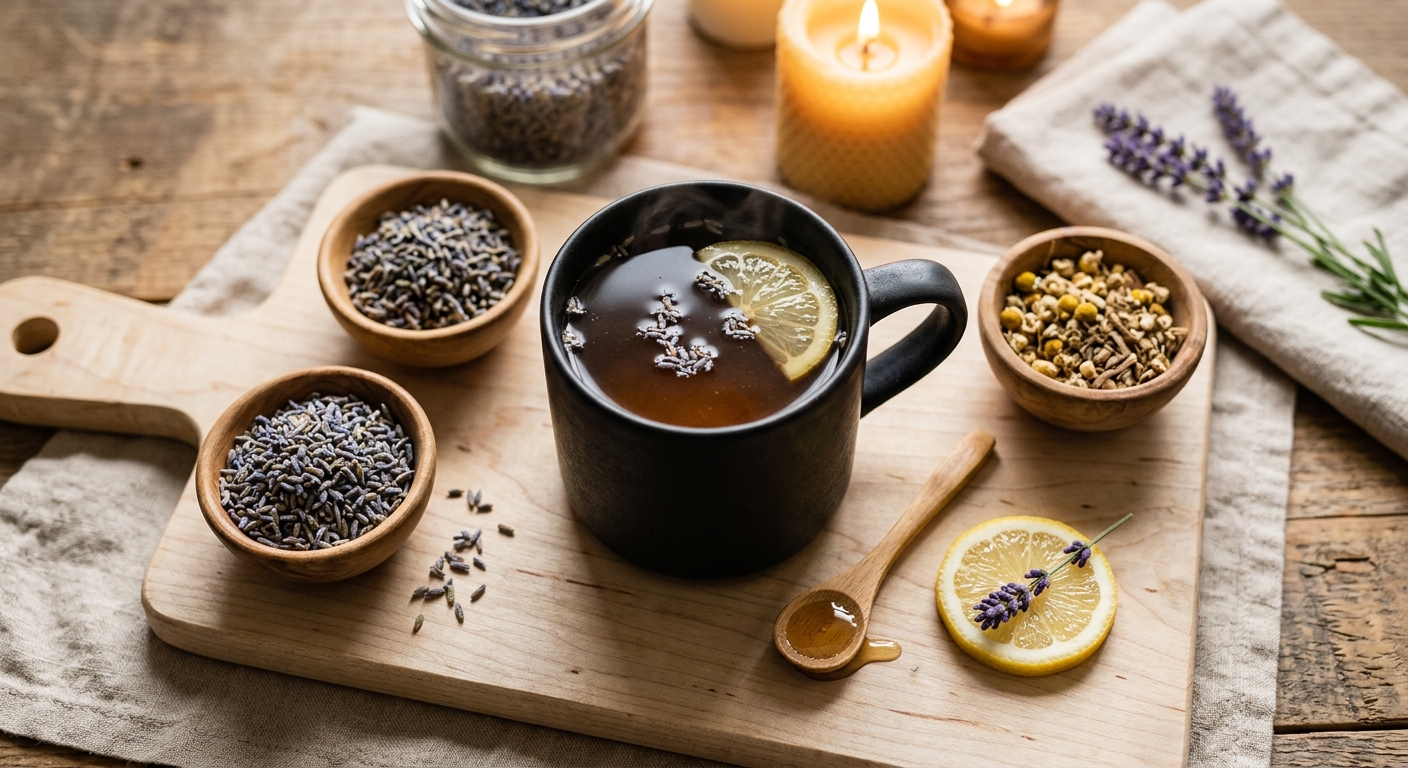
What also makes lavender special is its culinary elegance. Unlike some medicinal herbs that taste more like a forest floor than a pleasurable drink, lavender brews into something genuinely beautiful: a pale violet-gold cup with a floral sweetness and a faintly herbal, almost woody backbone. It pairs naturally with lemon, honey, and chamomile, and it rewards careful brewing. Too hot and the delicate volatile compounds burn off, leaving a flat, slightly soapy taste. Brewed with care, however, lavender tea is one of the loveliest cups in the herbal repertoire.
2
cups
Ingredients
- 2 tspdried culinary lavender flower buds (Lavandula angustifolia)
- 480 mlwater (90°C / 194°F)
- —raw honey to taste (optional)
- —fresh lemon slice to taste (optional)
How to Brew
Click on an item below to shop for the recommended items for this recipe on Amazon.
As an Amazon Associate, we earn from qualifying purchases.
- Measure 1 teaspoon of dried culinary lavender buds per 240 ml of water. Lightly crush the buds between your fingers before placing them in your infuser to help release the volatile oils without over-bruising them.
- Heat filtered water to 88 to 92°C (190 to 198°F). If you do not have a temperature-controlled kettle, bring water to a full boil and let it rest for 2 to 3 minutes before pouring.
- Place the infuser in your prewarmed mug and pour the water slowly over the lavender buds. Prewarming the mug with a splash of hot water keeps the brewing temperature stable.
- Cover the mug with a small saucer or lid for the entire steep. This is important: trapping the steam prevents the aromatic volatile oils from escaping with it, preserving the floral complexity in the cup.
- Steep for exactly 5 to 7 minutes. Taste at 5 minutes; if you prefer a more pronounced floral intensity, steep to 7 minutes but no longer, as over-steeping introduces bitterness.
- Remove the infuser, stir in raw honey if desired, and add a thin slice of lemon to brighten the floral notes. Sip slowly and without distraction.
- Use a slightly higher ratio than hot brew: 1.5 teaspoons of dried lavender buds per 240 ml of cold filtered water. Do not crush the buds for this method; leave them whole to allow for a slower, gentler extraction.
- Combine the lavender buds and cold water in a glass jar. Stir gently with a spoon to ensure all buds are fully submerged. Do not seal the jar tightly; lay the lid loosely on top or cover with a clean cloth.
- Leave the jar at room temperature for 1 hour to begin extraction, then transfer to the refrigerator.
- Allow the lavender to cold brew in the refrigerator for a further 7 to 11 hours, for a total steeping time of 8 to 12 hours. Overnight cold brewing works very well for this method.
- Strain the infusion through a fine mesh strainer into a serving glass or pitcher, pressing the buds gently with a spoon to extract any remaining liquid.
- Serve over ice with a long strip of lemon peel and a drizzle of lavender-infused honey if desired. The cold brew concentrate can be stored in the refrigerator for up to 48 hours.
- Use double the standard ratio: 2 teaspoons of dried culinary lavender buds per 120 ml of water. This produces a concentrated infusion that is meant to be diluted before drinking.
- Heat filtered water to 88 to 92°C (190 to 198°F). Combine the lavender buds and water in a small saucepan or heatproof vessel. Cover immediately with a lid to trap volatile oils.
- Steep covered for 10 to 12 minutes. The longer steep time at this doubled ratio produces a deep, aromatic concentrate without turning excessively bitter, since the water-to-herb ratio is more balanced than it appears.
- Strain through a fine mesh strainer or cheesecloth into a small glass jar, pressing the buds to extract maximum liquid. You will notice the concentrate has a noticeably deeper color and a more intense perfume than a standard cup.
- Allow the concentrate to cool to room temperature before sealing and refrigerating. It will keep well for up to 5 days.
- To serve, dilute 1 part concentrate with 1 part hot water, sparkling water, or warm oat milk. Add honey or a squeeze of lemon to taste. For a calming evening drink, combine with warm milk and a pinch of culinary-grade dried chamomile.
Health Benefits
Multiple clinical trials, including studies using oral lavender oil preparation Silexan, have demonstrated that lavender significantly reduces generalized anxiety. The primary mechanism involves linalool and linalyl acetate modulating GABA-A receptor activity, which calms overactive neural signaling without causing dependency or cognitive impairment.
Lavender has been shown in several human studies to improve sleep duration and sleep quality, particularly in people experiencing mild insomnia or anxiety-related sleep disruption. Its sedative effects are gentle enough to avoid grogginess the following morning, making it suitable for evening use.
Lavender’s antispasmodic compounds, particularly coumarin and linalool, help relax smooth muscle in the gastrointestinal tract. This can reduce bloating, cramping, and nausea associated with stress-induced gut dysfunction, sometimes called the gut-brain axis response to anxiety.
Aromatherapeutic and ingested lavender have both been shown to reduce symptoms of mild depression and low mood in clinical settings. Rosmarinic acid and luteolin may contribute by reducing neuroinflammation, while linalool’s effect on the limbic system directly influences emotional processing.
Lavender flower tea is a meaningful source of polyphenols, including rosmarinic acid and luteolin, which neutralize free radicals and reduce oxidative stress. Chronic oxidative stress is linked to anxiety disorders, neurodegeneration, and immune dysfunction, making lavender’s antioxidant activity a meaningful complementary benefit.
🧪 Key Bioactive Compounds
The Science Behind Lavender
The calming power of lavender comes down to a beautifully coordinated interplay between its volatile terpenes and its phenolic compounds, each working on the nervous system through slightly different but complementary pathways. The most studied of these is linalool, a monoterpene alcohol that makes up 25 to 45 percent of true lavender essential oil. Research published in journals including Phytomedicine and Frontiers in Pharmacology has confirmed that linalool binds to and modulates GABA-A receptors, the same receptor system targeted by benzodiazepine drugs like diazepam. Unlike pharmaceutical anxiolytics, however, linalool does this at a much gentler level and without the risk of tolerance, dependence, or next-day sedation at the doses found in a cup of tea.
Linalyl acetate, linalool’s ester counterpart and the compound most responsible for lavender’s sweet, slightly fruity scent, enhances and extends linalool’s effects through what pharmacologists call synergistic action. Together these two compounds account for a majority of lavender’s observed anxiolytic activity in both animal models and human clinical trials. The most rigorous human evidence comes from studies of Silexan, an oral lavender oil preparation standardized to 80 mg per capsule, which has outperformed placebo and performed comparably to low-dose lorazepam in reducing generalized anxiety disorder symptoms. While a cup of lavender flower tea delivers these compounds at lower concentrations than a standardized supplement, the effects are meaningful and well documented in the broader literature on plant-based anxiolytics.
Beyond the volatile terpenes, lavender flowers contribute a rich supply of polyphenols to the brewed cup. Rosmarinic acid, also found in rosemary, lemon balm, and sage, demonstrates anti-inflammatory activity by inhibiting pro-inflammatory enzymes including COX-2 and 5-LOX. Chronic neuroinflammation is increasingly recognized as a driver of anxiety and depressive symptoms, which gives rosmarinic acid a meaningful supporting role in lavender’s overall effect profile. The flavonoids apigenin and luteolin add further GABAergic and neuroprotective activity, rounding out a phytochemical picture that explains why lavender has endured for millennia as humanity’s most beloved herb for the anxious mind.
Brewing Tips
- Always cover your mug while steeping lavender. The volatile aromatic compounds that produce lavender’s calming effects are highly susceptible to evaporation, and a covered steep retains significantly more linalool and linalyl acetate in the final cup.
- Buy culinary-grade Lavandula angustifolia specifically. Many ornamental lavender varieties such as Lavandula stoechas or Lavandula x intermedia (lavandin) have a harsher, more camphor-heavy flavor profile and a different chemical composition that is less suitable for drinking and potentially more irritating to consume.
- Start with a lighter hand and adjust upward. Lavender is potent, and the line between fragrant and overpowering is a fine one. Begin with half a teaspoon per cup for your first brew and increase to a full teaspoon once you have calibrated your own preference.