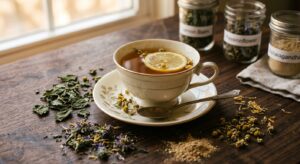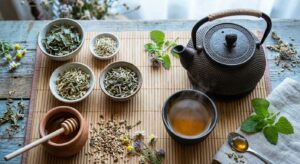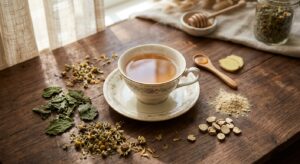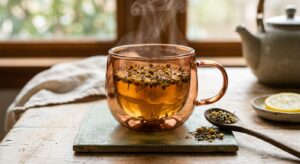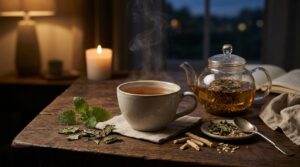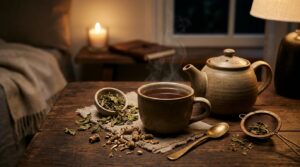
In India, tulsi (Ocimum tenuiflorum, also called Ocimum sanctum) is far more than a kitchen herb. Households have grown it in courtyard shrines for thousands of years, and it is often called the ‘Queen of Herbs’ or ‘The Incomparable One.’ Ayurvedic texts describe tulsi as a rasayana, a rejuvenating tonic believed to promote longevity, clear the mind, and help the body adapt to the pressures of daily life. Modern researchers classify it as an adaptogen, a plant that helps the body respond to physical and emotional stress.
Lavender (Lavandula angustifolia) has its own long history of calming rituals. Roman bathers scented their waters with it, medieval Europeans tucked sachets under pillows, and herbalists have long brewed its purple buds to ease tension and restlessness. Its sweet, floral aroma is so closely tied to relaxation that scientists have studied its effects on anxiety in clinical trials.
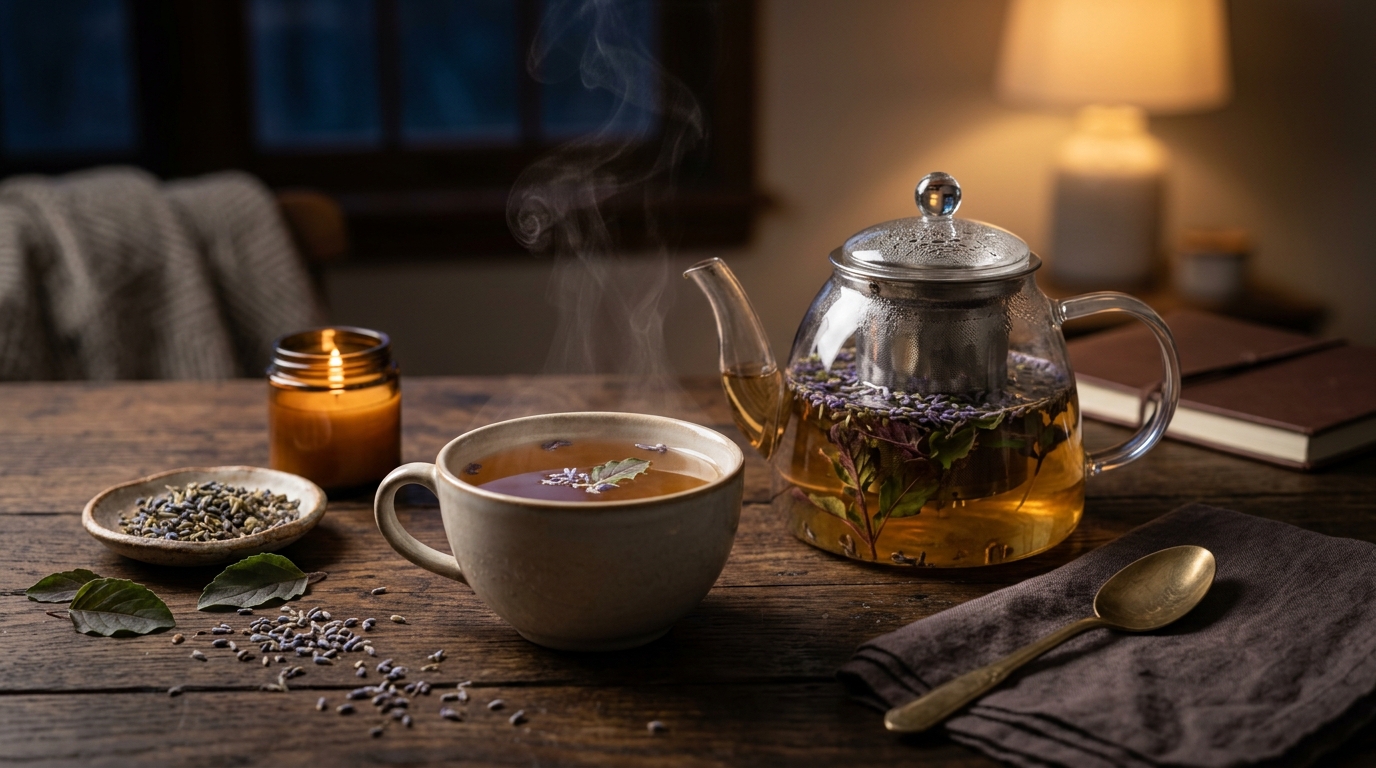
Together, the two herbs make an elegant nightcap. Tulsi brings a warm, clove-like spiciness with peppery, minty undertones, while lavender adds a soft floral sweetness that rounds out the cup. The result is a tea that smells like a garden at dusk and tastes like a gentle exhale, ideal for the quiet hour between dinner and bed.
2
cups
Ingredients
- 2 tspdried tulsi (holy basil) leaves
- 1 tspdried culinary lavender buds
- 480 mlfiltered water (95°C / 203°F)
- —raw honey or a slice of fresh ginger to taste (optional)
How to Brew
Click on an item below to shop for the recommended items for this recipe on Amazon.
As an Amazon Associate, we earn from qualifying purchases.
- Bring filtered water to a boil, then let it rest for about 30 seconds so it settles near 95°C (203°F).
- Place the tulsi leaves and lavender buds in a teapot or large infuser basket, using a ratio of roughly 1 teaspoon tulsi and half a teaspoon lavender per cup.
- Pour the hot water over the herbs and cover the vessel immediately. Covering traps the volatile aromatic oils in tulsi and lavender that would otherwise escape with the steam.
- Steep for 7 to 10 minutes. Seven minutes gives a lighter, floral cup, while ten brings out tulsi’s deeper clove-like spice.
- Strain into mugs, pressing gently on the herbs to release the last of the liquid. Stir in honey if desired and sip slowly, ideally 30 to 60 minutes before bed.
- Add 2 tablespoons of dried tulsi and 1 teaspoon of lavender buds to a clean glass jar. This is a higher ratio than hot brew because cold water extracts more slowly.
- Pour in 1 liter of cold filtered water, stir gently, and seal the lid.
- Refrigerate for 8 to 12 hours, or overnight. Avoid steeping beyond 12 hours, as the lavender can turn bitter and medicinal.
- Strain through a fine mesh sieve or a nut-milk bag into a clean jar or pitcher, discarding the herbs.
- Serve over ice with a lemon wedge or a few fresh mint leaves. Consume within 48 hours and keep refrigerated.
- Combine 2 teaspoons of tulsi leaves, 3 thin slices of fresh ginger, and 480 ml of water in a small saucepan. Add a pinch of ground cardamom or one crushed pod if you like.
- Bring to a gentle simmer over medium-low heat and let it bubble softly, uncovered, for about 10 minutes. The water will deepen to a rich golden color and the kitchen will smell of clove and spice.
- Remove the pan from the heat and stir in the lavender buds. Cover and steep for 5 minutes. Adding lavender off the heat preserves its floral oils, which would turn harsh if boiled.
- Strain through a fine sieve into warmed mugs.
- Sweeten with honey or jaggery. For a creamier nightcap, stir in a splash of warm oat or almond milk.
Health Benefits
Tulsi is a well-known adaptogen, and small human trials suggest regular use may lower perceived stress and reduce cortisol-related symptoms. More large-scale studies are still needed.
Lavender’s linalool and linalyl acetate have been studied for anxiolytic effects, and clinical research on lavender preparations has shown reductions in anxiety scores, though most trials use oral capsules or aromatherapy rather than tea.
By calming both mind and body, this blend can help you wind down before bed. Lavender in particular has some evidence for improving sleep quality in people with mild sleep disturbances.
Tulsi is rich in rosmarinic acid, flavonoids, and other polyphenols that help protect cells from oxidative stress.
Both herbs have traditional use for easing stress-related digestive upset, and tulsi’s warming, carminative qualities may help settle the stomach after an evening meal.
🧪 Key Bioactive Compounds
The Science Behind Holy Basil
Tulsi’s calming reputation has begun to find support in modern research. Its leaves contain a complex mix of phenolic compounds, including eugenol, rosmarinic acid, and apigenin, as well as triterpenoids like ursolic acid. Studies in humans and animals suggest these compounds may influence the hypothalamic-pituitary-adrenal (HPA) axis, the body’s central stress-response system, helping to moderate the release of stress hormones such as cortisol. Small clinical trials have reported improvements in self-rated stress, mood, and forgetfulness after several weeks of tulsi supplementation, although study sizes are modest and more rigorous research is welcome.
Lavender’s primary actions come from its volatile oils, chiefly linalool and linalyl acetate. Research suggests linalool may modulate neurotransmitter activity in the brain, including effects on GABA and glutamate signaling, which could explain lavender’s relaxing influence. Clinical trials of standardized lavender oil preparations have shown meaningful reductions in anxiety, and aromatherapy studies point to benefits for sleep quality. It is worth noting that the strongest evidence comes from concentrated oils rather than tea, so a cup of lavender infusion should be thought of as a gentle, supportive ritual rather than a potent treatment.
Beyond the chemistry, the ritual itself matters. Setting aside a few quiet minutes to prepare and sip a warm, fragrant drink signals the nervous system that the day is ending. The aroma of lavender and tulsi, inhaled as you sip, may contribute to the effect through the olfactory system’s direct links to brain regions involved in emotion and memory.
Brewing Tips
- Choose organic tulsi from a reputable source. Rama, Krishna, and Vana varieties each have slightly different flavors, with Krishna tulsi tending to be more peppery and Rama milder and sweeter.
- Use culinary-grade lavender only, and measure carefully. Lavender is potent, and an extra pinch can quickly overwhelm the tea.
- Store both herbs in airtight, opaque containers away from heat and light, and use them within a year for the best aroma and potency.
- For a fuller, more soothing nightcap, pair the tea with a small spoonful of honey and a few slow, deep breaths while you drink.
- Make a dry blend ahead of time by combining 4 parts tulsi with 1 part lavender in a jar, so your evening cup is ready in minutes.