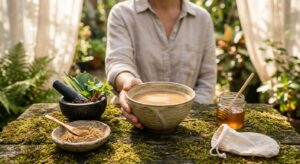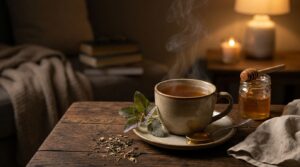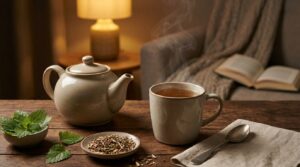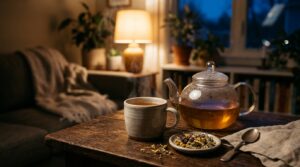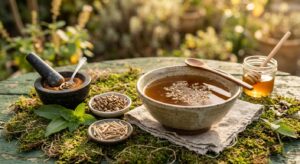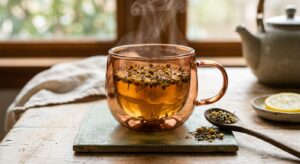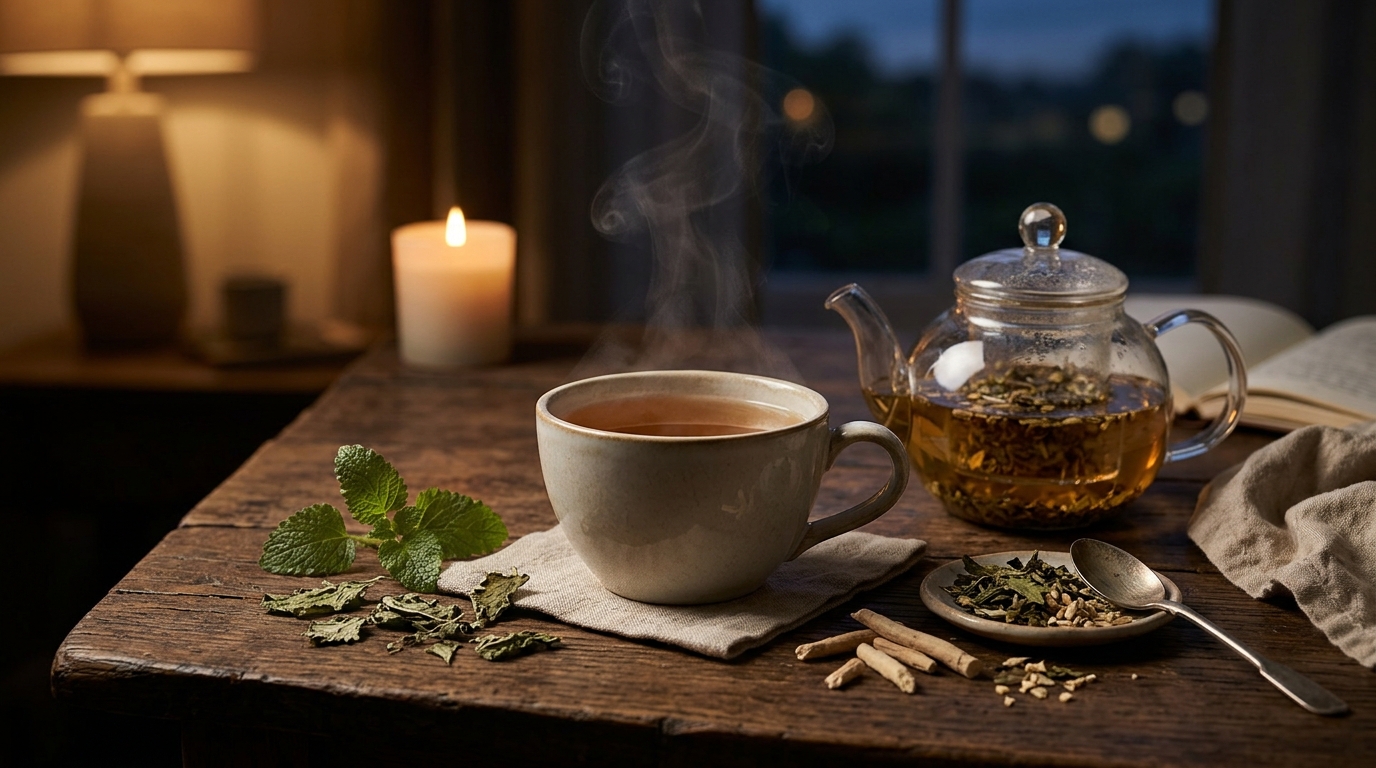
Ashwagandha (Withania somnifera) has been a cornerstone of Ayurvedic medicine for more than 3,000 years. Its Sanskrit name translates roughly to “smell of the horse,” a nod to both the root’s distinctive earthy aroma and the traditional belief that it imparts the vigor and resilience of a horse. Classified as an adaptogen, it was prescribed to restore balance during times of exhaustion, nervous strain, and the slow wear of everyday life.
Lemon balm (Melissa officinalis) has an equally storied past. Medieval monks cultivated it in monastery gardens, the Swiss physician Paracelsus called it the “elixir of life,” and Carmelite nuns distilled it into a famous tonic water in the 1600s to calm frayed nerves. Its bright, citrus-scented leaves belong to the mint family, and generations of herbalists have turned to it for restlessness, tension, and troubled sleep.
Combined, the two make a beautifully complementary evening ritual. Ashwagandha brings a deep, grounding, slightly bittersweet foundation, while lemon balm lifts the cup with gentle citrus and a calming, almost sweet fragrance. For anyone new to herbal tea, this blend is approachable, forgiving, and genuinely pleasant to drink as you wind down.
2
cups
Ingredients
- 1 tspdried ashwagandha root, coarsely cut
- 2 tspdried lemon balm leaf
- 480 mlfiltered water
- —raw honey or maple syrup to taste (optional)
- —a thin slice of fresh lemon or ginger (optional)
How to Brew
Click on an item below to shop for the recommended items for this recipe on Amazon.
As an Amazon Associate, we earn from qualifying purchases.
- Measure 1 tsp of dried ashwagandha root into your teapot or a heat-safe mug. Bring 240 ml of fresh filtered water per serving to a full boil, then let it rest for about 30 seconds.
- Pour the hot water over the ashwagandha root and cover with a lid or saucer. Let it steep alone for 5 minutes so the dense root can begin to soften and open up.
- After 5 minutes, add 2 tsp of dried lemon balm leaf to the pot, give it a gentle stir, and re-cover. Covering is important here because it traps the fragrant volatile oils that would otherwise escape with the steam.
- Steep the combined herbs for another 5 to 7 minutes. A longer steep gives a stronger, earthier cup, while 5 minutes keeps the lemon balm more prominent.
- Strain into your favorite mug, pressing gently on the herbs to extract the last of the liquid. Stir in honey or maple syrup if desired, and sip slowly about an hour before bed.
- Combine 1 tbsp of dried ashwagandha root and 2 tbsp of dried lemon balm leaf in a large glass jar. This makes a slightly stronger ratio than the hot brew to compensate for the gentler extraction.
- Pour 1 liter of cool filtered water over the herbs and stir once to make sure everything is saturated. Seal the jar with a lid.
- Place the jar in the refrigerator and let it steep for 8 to 10 hours, or overnight. There is no need to stir during this time.
- Strain through a fine-mesh sieve or a layer of muslin into a clean pitcher or second jar, pressing lightly on the herbs.
- Serve over ice with a slice of lemon, or pour a glass and enjoy it chilled. Store any remaining tea in the refrigerator and drink within 48 hours.
- Add 1 to 2 tsp of dried ashwagandha root and 480 ml of cold filtered water to a small saucepan. Starting with cold water allows the root to heat gradually.
- Bring the water to a boil, then immediately reduce the heat to the lowest setting so it simmers very gently. Partially cover the pot and simmer for 15 minutes, until the liquid has reduced slightly and turned a warm golden brown.
- Remove the pot from the heat and add 2 tsp of dried lemon balm leaf. Stir, cover fully, and let the mixture steep for 5 minutes. Never boil the lemon balm, as prolonged heat destroys its delicate citrus aroma.
- Strain through a fine-mesh sieve into two mugs. For a more traditional Ayurvedic touch, stir in a splash of warm milk or oat milk, a pinch of cinnamon, and a little honey once the tea has cooled slightly.
Health Benefits
Several randomized controlled trials have found that ashwagandha extract can lower perceived stress and reduce serum cortisol in adults under chronic stress. Most research uses concentrated extracts, so tea is a gentler version of the effect.
Lemon balm has been shown in small human studies to improve calmness and mood, likely through its effect on GABA activity in the brain. Ashwagandha has also shown modest anti-anxiety effects in clinical trials.
Both herbs have been studied for sleep support, and ashwagandha in particular has improved sleep onset and quality in some trials. Sipping a warm, caffeine-free cup also reinforces a relaxing pre-bed routine.
Lemon balm has been associated with improved attention and working memory in small studies, and ashwagandha has shown cognitive benefits in people with mild impairment. This pairing may help you feel calm without feeling foggy.
As a member of the mint family, lemon balm has a long history as a carminative, easing bloating and nervous stomach. This makes the tea especially useful when stress shows up in your gut.
🧪 Key Bioactive Compounds
The Science Behind Ashwagandha
The stress-modulating reputation of ashwagandha rests mainly on a group of compounds called withanolides. Research suggests these molecules help regulate the hypothalamic-pituitary-adrenal (HPA) axis, the body’s central stress-response system. In controlled trials lasting 6 to 8 weeks, participants taking standardized ashwagandha extracts showed meaningful reductions in perceived stress and in morning cortisol compared to placebo. It is worth noting that these studies typically used concentrated root extracts rather than tea, so a cup of tea likely delivers a milder effect.
Lemon balm works through a different but complementary route. Its rosmarinic acid and volatile oils appear to interact with the GABA system, the brain’s main inhibitory pathway responsible for dampening excess neural activity. By inhibiting GABA transaminase, the enzyme that breaks down GABA, lemon balm may help keep this calming neurotransmitter available for longer. Small clinical studies have reported improved mood, increased calmness, and better performance on cognitive tasks after lemon balm intake.
The evidence for both herbs is encouraging but still developing. Many trials are small, short, or use varying doses, and tea preparations are less standardized than supplements. Still, the long traditional use, the plausible mechanisms, and the overall good tolerability make this blend a reasonable and enjoyable choice for a gentle evening wind-down, best viewed as one supportive piece of a broader approach to managing stress.
Brewing Tips
- Choose organic, cut-and-sifted ashwagandha root from a reputable supplier, and buy lemon balm that is still green and fragrant rather than brown and dusty.
- Drink this tea about 60 minutes before bed to give your body time to wind down, and pair it with dim lighting and screens off for a true ritual.
- If the earthiness of ashwagandha is too strong at first, start with half a teaspoon, add a little honey, and increase gradually as your palate adjusts.
- Store both herbs in airtight, opaque containers away from heat and light, and use them within 12 months for the best flavor and potency.