The gut and the brain are in constant conversation. Through the vagus nerve and a vast network of enteric neurons, your digestive system sends more signals to your brain than your brain sends down to it. This bidirectional highway, known as the gut-brain axis, means that an unsettled stomach can fuel anxiety, and chronic stress can wreak havoc on digestion. Traditional herbalists across Europe, the Middle East, and Asia understood this connection long before neuroscience had a name for it. They routinely prescribed the same herbs for both nervous complaints and digestive distress, and modern research is now confirming their wisdom.
This blend brings together three of the most well-documented nervine and carminative herbs in Western herbalism: lemon balm (Melissa officinalis), chamomile (Matricaria chamomilla), and peppermint (Mentha piperita). Lemon balm has been used since at least the Middle Ages in European monastery gardens to lift the spirits and calm the belly. Chamomile has been brewed across ancient Egypt, Greece, and Rome as a remedy for everything from insomnia to irritable bowel. Peppermint, revered in both Ayurvedic and Western traditions, relaxes smooth muscle in the gut while clearing mental fog. Together, they form a trinity of calm that addresses the stress-digestion feedback loop at its roots.
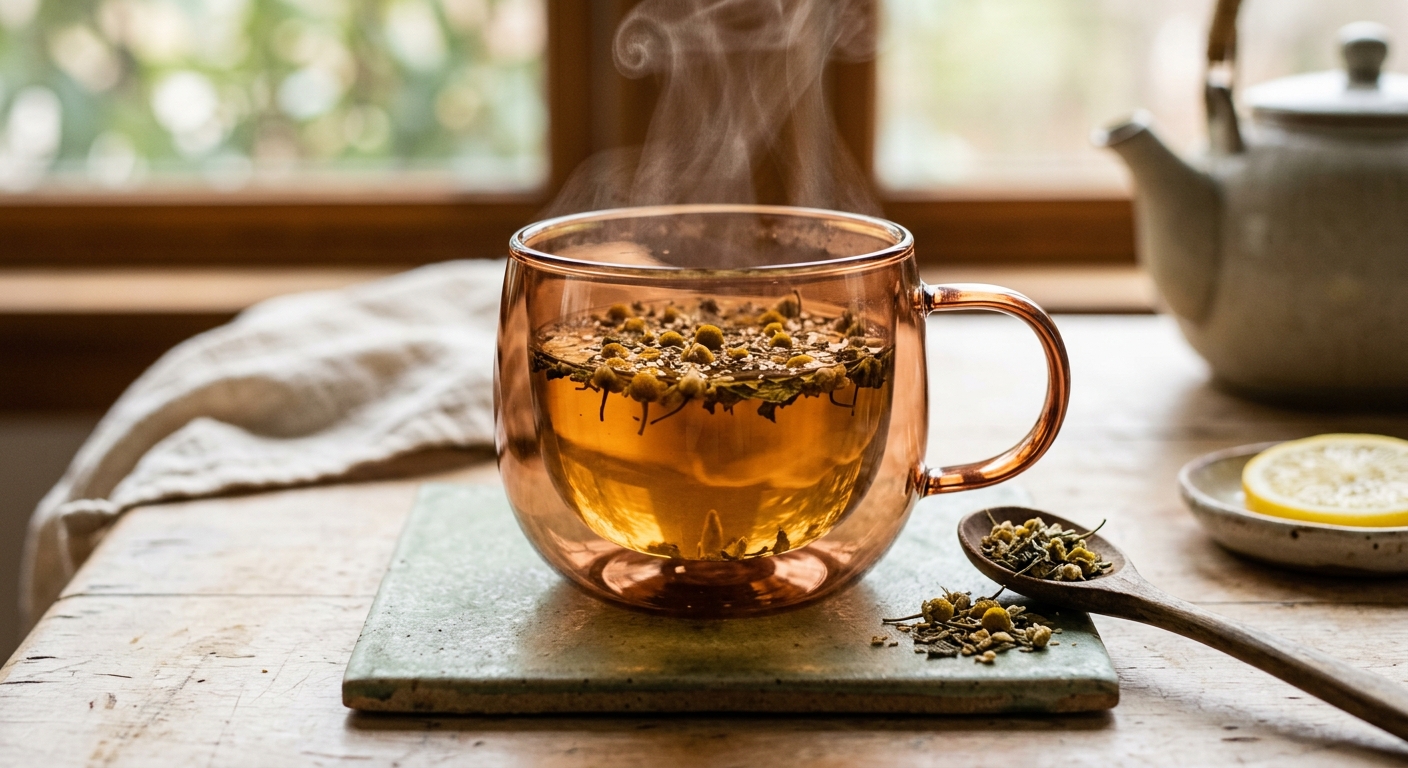
What makes this blend special is the intentional pairing of nervines with carminatives. Nervines ease the nervous system directly, while carminatives relieve the bloating, cramping, and nausea that stress so often triggers. The result is a tea that tastes as bright and comforting as it is effective. Pale gold with a hint of green, it carries aromas of fresh citrus, apple blossom, and cool mint, and it transitions naturally from a warming bedtime ritual to a refreshing cold brew for anxious afternoons.
2
cups
Ingredients
- 2 tspdried lemon balm leaves
- 1.5 tspdried chamomile flowers
- 1 tspdried peppermint leaves
- 480 mlwater (90°C / 194°F)
- —raw honey or lemon slice to taste (optional)
How to Brew
Click on an item below to shop for the recommended items for this recipe on Amazon.
As an Amazon Associate, we earn from qualifying purchases.
- Heat filtered water to 90 to 95°C (194 to 203°F). If you do not have a temperature-controlled kettle, bring water to a full boil and let it rest off the heat for 2 minutes before using.
- Combine 2 tsp dried lemon balm, 1.5 tsp dried chamomile flowers, and 1 tsp dried peppermint in a mesh tea infuser or loose-leaf basket set inside your mug or teapot.
- Pour the hot water slowly over the herbs, making sure all the plant material is saturated. Cover the mug or teapot with a lid or small plate to trap the volatile aromatic oils that would otherwise escape as steam.
- Steep for 5 to 7 minutes. Taste at 5 minutes for a lighter, brighter cup or extend to 7 minutes for a deeper, more herbaceous brew.
- Remove the infuser and press gently with a spoon to release the last of the beneficial plant compounds. Add raw honey or a squeeze of lemon if desired, and sip slowly while the tea is warm.
- Measure out 3 tsp dried lemon balm, 2 tsp dried chamomile flowers, and 1.5 tsp dried peppermint into a clean glass jar. The cold brew ratio is approximately 1.5 times the hot brew amount to compensate for slower, lower-temperature extraction.
- Pour 600 ml of cold, filtered water over the herbs. Do not use warm water, as the goal is a slow, gentle cold extraction that produces a smoother, more delicate flavour without releasing bitter tannins.
- Stir the herbs gently to ensure they are fully submerged, then loosely cover the jar with a lid or cloth secured with a rubber band. Let it sit at room temperature for 30 minutes to begin extraction, then transfer to the refrigerator.
- Steep in the refrigerator for 8 to 12 hours. An overnight steep is convenient and produces a well-rounded flavour. Do not exceed 14 hours, as peppermint can become overpowering.
- Strain through a fine-mesh strainer or cheesecloth into a clean glass. Serve over ice, and add a thin slice of lemon or a few fresh mint leaves as a garnish. The tea will keep refrigerated for up to 24 hours.
- Double the herb quantities: use 4 tsp dried lemon balm, 3 tsp dried chamomile flowers, and 2 tsp dried peppermint. Place the herbs in a small saucepan or a large heatproof pitcher with a lid.
- Heat 480 ml of filtered water to 90°C (194°F) and pour it over the herbs. Cover immediately with a lid to retain volatile oils. The goal is a concentrated brew using half the usual water volume for the same herb-to-serving ratio.
- Steep covered for 15 minutes, stirring once at the halfway point to encourage even extraction from the densely packed herbs.
- Strain the concentrate through a fine-mesh strainer into a clean glass jar, pressing the herbs firmly to extract all liquid. Discard the spent herbs.
- To serve hot, combine equal parts concentrate and freshly heated water (1:1 ratio) in a mug. To serve iced, pour the concentrate over a tall glass of ice and top with cold water or a splash of sparkling water for a calming spritzer. The concentrate keeps refrigerated for up to 3 days.
Health Benefits
Rosmarinic acid in lemon balm inhibits the enzyme GABA-transaminase, slowing the breakdown of GABA and sustaining its calming effect in the brain. A double-blind, placebo-controlled study published in Nutrients (2014) found that lemon balm extract significantly reduced anxiety and improved mood within a single dose.
Peppermint’s menthol relaxes the smooth muscle of the gut wall, directly countering the cramping, bloating, and urgency that anxiety triggers through the gut-brain axis. Multiple meta-analyses have confirmed peppermint oil’s efficacy for irritable bowel syndrome, and the same carminative mechanisms apply in tea form.
Chamomile’s apigenin binds to benzodiazepine receptor sites on GABA-A channels, promoting relaxation and reducing sleep-onset anxiety. A 2017 randomized controlled trial in the journal Phytomedicine found chamomile extract significantly improved sleep quality in elderly patients compared to placebo.
Bisabolol and apigenin in chamomile, combined with rosmarinic acid in lemon balm, reduce pro-inflammatory cytokines in the gut and brain. Chronic low-grade gut inflammation has been directly linked to elevated anxiety and depression via cytokine signaling through the vagus nerve.
The polyphenols in this blend, particularly rosmarinic acid and eriocitrin, act as prebiotics by selectively feeding beneficial Lactobacillus and Bifidobacterium species. These bacteria produce short-chain fatty acids and serotonin precursors, contributing to the roughly 90 percent of serotonin that is manufactured in the gut.
🧪 Key Bioactive Compounds
The Science Behind Lemon Balm
The gut-brain axis is a bidirectional communication network linking the central nervous system to the enteric nervous system of the gastrointestinal tract. It operates through three primary channels: the vagus nerve, which carries signals directly between the gut and the brainstem; the hypothalamic-pituitary-adrenal (HPA) axis, which governs the cortisol stress response; and the gut microbiome, which synthesizes neurotransmitters and communicates with immune cells throughout the body. When chronic stress activates the HPA axis, it increases intestinal permeability and disrupts microbial balance, triggering a cycle where gut dysfunction amplifies the anxiety that caused it in the first place. The herbs in this blend intervene at multiple points in that cycle simultaneously.
Lemon balm’s most studied active compound, rosmarinic acid, inhibits GABA-transaminase, the enzyme that degrades gamma-aminobutyric acid in the synaptic cleft. By extending GABA’s availability, rosmarinic acid produces an anxiolytic effect that is mechanistically similar to, but far gentler than, pharmaceutical benzodiazepines. Chamomile’s apigenin achieves a complementary effect by binding directly to the benzodiazepine site on GABA-A receptors, further lowering neuronal excitability. Both compounds also downregulate NF-kB-mediated inflammatory signaling, which is relevant because neuroinflammation is now understood to be a key driver of treatment-resistant anxiety and depression. Peppermint contributes through an entirely different pathway: menthol’s activation of smooth muscle calcium channels reduces the hypercontractility of the gut that stress induces, breaking the physical feedback loop between abdominal discomfort and mental agitation.
Emerging microbiome research adds another dimension to this blend’s effects. Polyphenols such as rosmarinic acid and luteolin are poorly absorbed in the small intestine and arrive largely intact in the colon, where they serve as substrates for beneficial bacteria. Studies have shown that these polyphenols increase populations of Lactobacillus and Bifidobacterium species, which in turn produce gamma-aminobutyric acid, short-chain fatty acids like butyrate, and tryptophan metabolites used to synthesize serotonin. Because approximately 90 percent of the body’s serotonin is produced in the gut and communicates with the brain via the vagus nerve, supporting a healthy microbiome with each cup of this tea is not merely a digestive act. It is a meaningful contribution to emotional resilience.
Brewing Tips
- Always cover your mug or teapot while steeping this blend. Lemon balm and peppermint contain highly volatile aromatic oils that evaporate quickly in open-air steeping, and those oils carry a significant portion of the calming and carminative compounds.
- Use herbs that have been stored in airtight, opaque containers away from heat and light. Lemon balm in particular loses its rosmarinic acid content rapidly when exposed to humidity or oxygen, and pale, odourless dried herbs should be replaced before use.
- For maximum gut-brain benefit, drink one cup 30 minutes before a known stressful event and a second cup in the evening before bed. This two-dose rhythm aligns with the HPA axis’s natural cortisol fluctuation and supports the overnight gut microbiome restoration cycle.