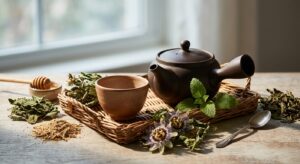
Passionflower is one of the most visually extraordinary plants in the herbal world. Its intricate blooms, with their fringed coronas and radiating filaments, struck Spanish missionaries in the 16th century as a symbol of the Passion of Christ, which is how the plant earned its name. Long before European contact, however, Indigenous peoples of the Americas, including the Cherokee and the Aztec, were already using Passiflora incarnata as a calming remedy, applying it to soothe nervous agitation and to ease restless nights.
By the 19th century, passionflower had found its way into American Eclectic medicine and European herbal practice, where it was prescribed for insomnia, nervous exhaustion, and what was then called neurasthenia. Today it remains a staple in herbal traditions across the world and is still listed in several European pharmacopoeias as a mild sedative for nervous restlessness.
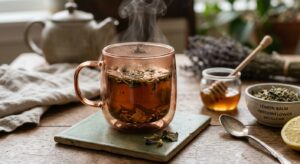
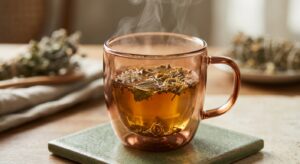
What makes passionflower so well suited to the end of the working day is its particular quality of calm. Rather than flattening the senses, it tends to loosen the grip of looping, repetitive thoughts, the kind that follow us home from a demanding day. The tea itself is soft, green, and gently sweet, with a slightly hay-like warmth that makes it a pleasing ritual for winding down.
2
cups
Ingredients
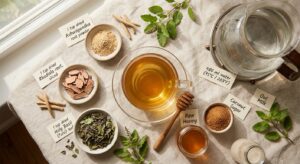
- 2 tspdried passionflower aerial parts (Passiflora incarnata)
- 480 mlfreshly boiled water, cooled slightly (95°C / 203°F)
- —raw honey to taste (optional)
- —thin slice of lemon (optional)
How to Brew
Click on an item below to shop for the recommended items for this recipe on Amazon.
As an Amazon Associate, we earn from qualifying purchases.
- Bring fresh water to a full boil in a kettle, then let it rest for about 30 seconds so it settles just below boiling at roughly 95°C (203°F).
- Measure 2 teaspoons of dried passionflower into a tea infuser or directly into a warmed teapot. Lightly crush the dried leaves between your fingers first to help release their compounds.
- Pour the hot water over the herb, filling the pot or mug with about 480 ml in total, and immediately cover with a saucer or lid.
- Steep for 10 to 15 minutes. Passionflower is a leafy aerial herb that needs a longer steep than delicate flowers to extract its flavonoids.
- Strain thoroughly, pressing the herb gently against the infuser to extract the last of the liquid.
- Sweeten with a little raw honey if desired and sip slowly, ideally 30 to 60 minutes before bed.
- Add 3 tablespoons of dried passionflower to a clean glass jar. Cold extraction is gentler, so a slightly higher herb ratio is used than in the hot method.
- Pour 1 liter of cold filtered water over the herb and stir once to ensure all the plant material is submerged.
- Seal the jar and place it in the refrigerator. Allow it to steep for 8 to 12 hours, which makes it ideal to prepare in the morning for evening drinking.
- Strain the tea through a fine mesh sieve or a layer of muslin into a clean pitcher, discarding the spent herb.
- Serve over ice with a slice of lemon or a sprig of fresh mint. Drink within 48 hours and keep refrigerated.
- Prepare a double-strength brew by steeping 4 teaspoons of dried passionflower in 480 ml of 95°C (203°F) water, covered, for 10 minutes.
- Strain the hot concentrate into a heatproof jug, pressing the herb lightly to extract all the liquid.
- While still warm, stir in honey or a little maple syrup so it dissolves fully. Skip this step if you prefer it unsweetened.
- Fill two tall glasses with ice and pour the warm concentrate over the top, allowing it to chill rapidly and dilute to the right strength.
- Garnish with a lemon wheel or a few fresh berries and serve immediately.
Health Benefits
Several small clinical trials, including studies in pre-surgical and generalized anxiety settings, found passionflower preparations comparable to some conventional anxiolytics, likely through modulation of the GABA system. More large-scale research is still needed.
In a small randomized trial, adults who drank passionflower tea for a week reported improved sleep quality compared with placebo tea. Its effect on GABA activity is the proposed mechanism.
Traditionally used for the mental chatter and tension that accompany stress, passionflower is thought to lower excitatory nerve signaling, which can make it easier to mentally switch off after work.
By reducing nervous system arousal, passionflower may indirectly relax the physical tightness in the neck, jaw, and shoulders that many people carry through a stressful day.
Herbalists have long used passionflower for nervous stomach and stress-related digestive upset, linking calm in the mind to calm in the gut.
🧪 Key Bioactive Compounds
The Science Behind Passionflower
The calming reputation of passionflower rests largely on its flavonoid content, particularly vitexin, isovitexin, apigenin, and chrysin. Research suggests these compounds interact with the GABA system, the brain’s primary inhibitory network. By gently enhancing GABA signaling, passionflower may reduce neuronal excitability, which is the physiological backdrop to feelings of anxiety and racing thoughts. This is a similar pathway, though a much milder one, to that targeted by many prescription anti-anxiety medicines.
Human evidence, while promising, is still modest. A well-cited randomized trial compared passionflower extract with the benzodiazepine oxazepam in people with generalized anxiety disorder and found similar symptom relief over four weeks, with less impairment of job performance in the passionflower group. Another small trial found that a week of nightly passionflower tea improved subjective sleep quality. Most studies, however, used standardized extracts rather than home-brewed tea, so the strength of a cup can vary considerably.
It is also worth noting that the alkaloid content of passionflower, including harmane and harmine, is very low in a typical cup of tea and is unlikely to be the main driver of its effects. Brewing for a full 10 to 15 minutes and keeping the vessel covered helps extract the water-soluble flavonoids and retain aromatics, giving you the most reliable cup from simple dried herb.
Brewing Tips
- Brew your passionflower tea about an hour before bed rather than right at bedtime, giving its calming effects time to settle in and reducing the chance of a late-night bathroom trip.
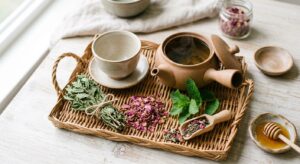
- Choose dried passionflower that still looks green and leafy rather than brown and dusty. Fresh-smelling, grassy-scented herb is more likely to be potent.
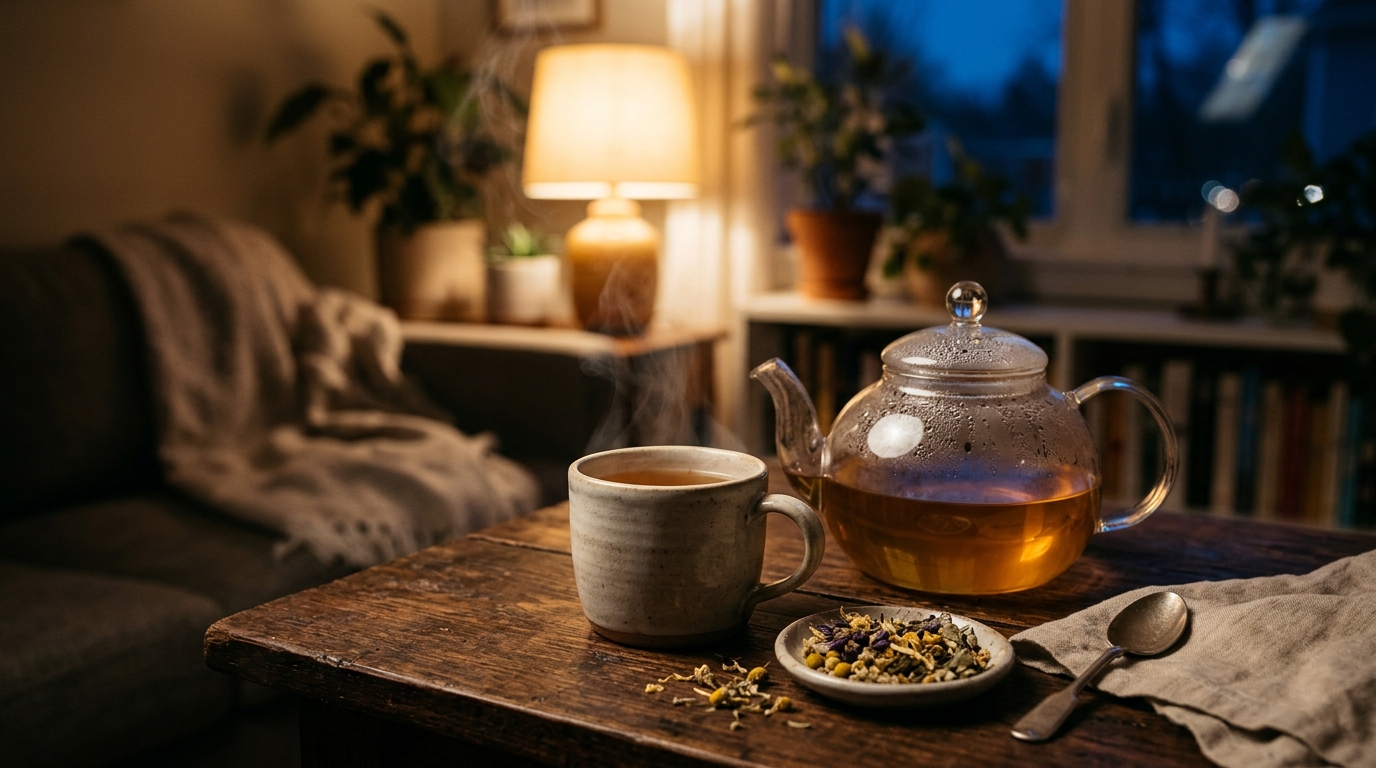
- Make your evening cup a ritual: dim the lights, put your phone away, and sip slowly. The behavioral cue of a repeated ritual can amplify the herb’s calming effect.
- Store dried passionflower in an airtight, opaque container away from heat and light, and use within 12 months for best flavor and potency.