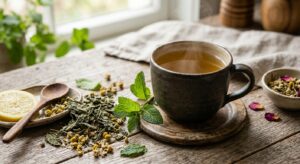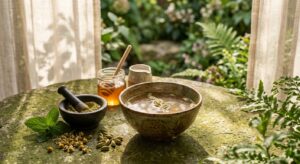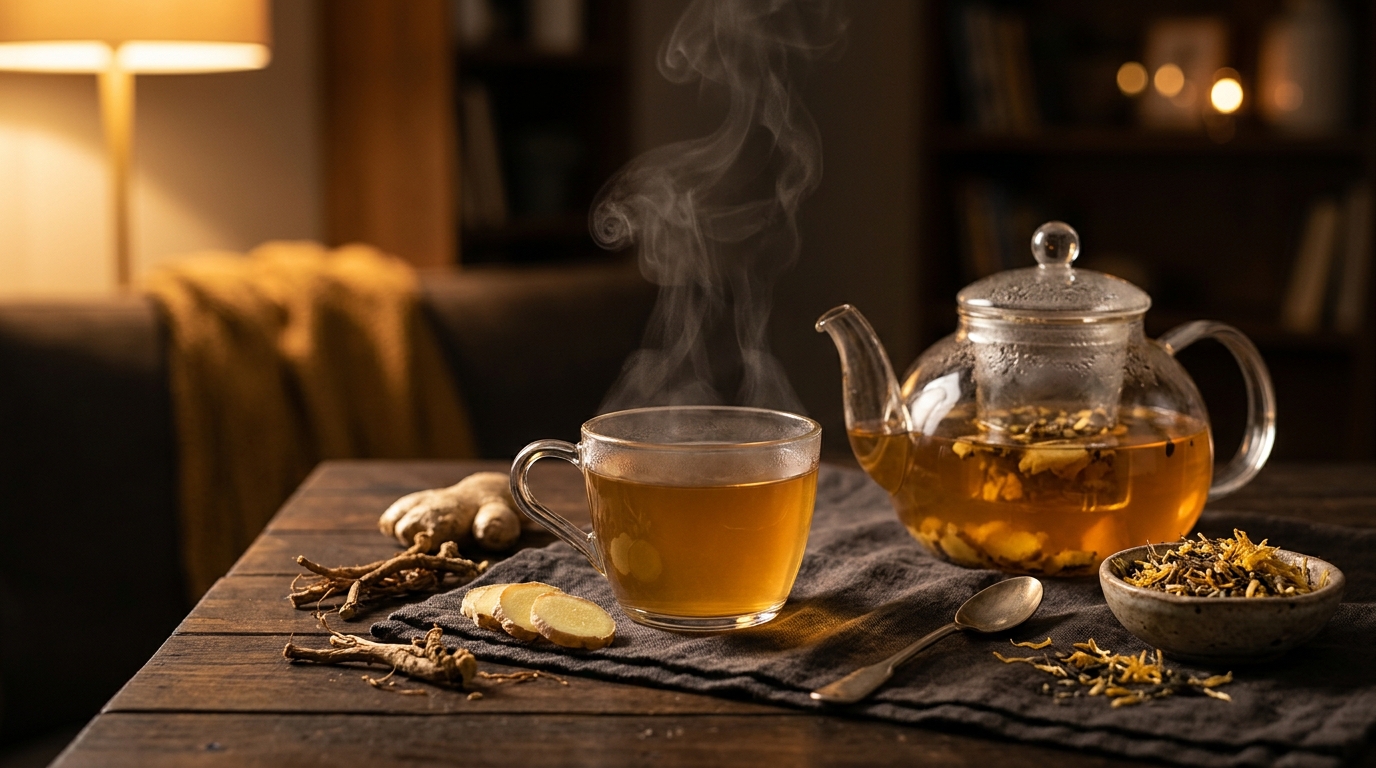
Ginger has been prized for more than 5,000 years, first cultivated in the tropical forests of Southeast Asia and carried along ancient trade routes to India, China, Greece, and Rome. In Ayurveda it is called vishwabhesaj, the universal medicine, and in Traditional Chinese Medicine it is used to warm the middle and settle the stomach. Roman physicians recommended it after heavy feasts, and medieval Europeans kept it on the table beside salt and pepper. The tingling heat of a fresh ginger slice in hot water is one of the oldest comforts in herbal medicine.
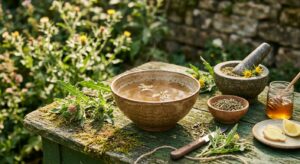
Dandelion, often dismissed today as a lawn nuisance, has a long and respectable history as a digestive ally. The name comes from the French dent de lion, lion’s tooth, a nod to its jagged leaves. Arabic physicians of the 10th and 11th centuries wrote of dandelion as a remedy for liver and spleen complaints, and European folk herbalism embraced the roasted root as a bitter tonic taken after meals. Bitter flavors are thought to awaken the digestive reflexes, encouraging the release of saliva, stomach acid, and bile before and after eating.
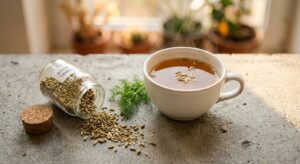
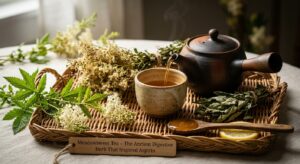
Combined, the two herbs complement one another beautifully. Ginger brings warmth, spice, and a gentle prokinetic action that helps the stomach empty, while dandelion adds a mellow, coffee-like bitterness that supports bile flow and a sense of lightness. Served in the evening, this tea is a soothing ritual for anyone who tends to feel full, bloated, or sluggish after dinner, and it is naturally caffeine-free so it will not interfere with sleep.
2
cups
Ingredients
- 2 tspfresh ginger root, thinly sliced or grated
- 2 tspdried dandelion root (roasted or raw), chopped
- 1 tspdried dandelion leaf
- 500 mlwater (95°C / 203°F for hot brew)
- —raw honey to taste (optional)
- —a squeeze of fresh lemon juice (optional)
How to Brew
Click on an item below to shop for the recommended items for this recipe on Amazon.
As an Amazon Associate, we earn from qualifying purchases.
- Fill a kettle with fresh, filtered water and bring it to a full boil, then let it rest for about 30 seconds so it settles near 95°C (203°F).
- Peel the ginger lightly with the edge of a spoon, then slice it into thin coins or grate it coarsely. Thinner pieces release more of the pungent gingerols into the water.
- Place the ginger, dandelion root, and dandelion leaf into a teapot or large mug with an infuser basket.
- Pour the hot water over the herbs, cover immediately with a lid or saucer, and steep for 10 to 12 minutes. The longer steep is needed to extract the bitter compounds from the tougher dandelion root.
- Strain into two mugs, pressing gently on the herbs to release the last of the liquid.
- Stir in honey and a squeeze of lemon if desired, and sip slowly about 20 to 30 minutes after your evening meal.
- Slice the ginger very thinly and lightly crush the dandelion root with the flat of a knife or a mortar to expose more surface area.
- Combine the ginger, dandelion root, and dandelion leaf in a clean glass jar.
- Pour in 500 ml of cold, filtered water, stir once, and seal the jar with a lid.
- Let the jar sit on the counter for 1 hour, then transfer it to the refrigerator and steep for 8 to 10 hours or overnight.
- Strain through a fine mesh sieve or cloth into a clean bottle, discarding the herbs.
- Serve over ice or at cool room temperature, adding a small drizzle of honey if you prefer a sweeter cup. Drink within 48 hours.
- Add the sliced ginger and chopped dandelion root to a small saucepan with 500 ml of cold water. Starting cold helps draw out the compounds as the water heats.
- Bring the water slowly to a boil over medium heat, then immediately reduce to the lowest simmer and partially cover the pot.
- Simmer gently for 15 to 20 minutes, stirring once or twice, until the liquid has reduced slightly and turned a deep amber color.
- Remove the pan from the heat, add the dandelion leaf, cover completely, and let it steep off the heat for 5 minutes. The delicate leaf should not be boiled.
- Strain through a fine sieve into mugs, pressing the roots to extract every bit of flavor.
- Sweeten with honey or add a splash of milk or oat milk if desired, and enjoy warm.
Health Benefits
Ginger is one of the best-studied herbal remedies for nausea, with clinical trials supporting its use for motion sickness, morning sickness, and post-meal queasiness. Its gingerols act on serotonin receptors in the gut and speed gastric emptying.
Ginger promotes faster movement of food from the stomach into the intestines, which can relieve the heavy, overfull feeling that follows a large dinner. Dandelion’s bitter compounds further stimulate digestive secretions.
Dandelion root has a long traditional reputation as a cholagogue, a herb that encourages bile release. While human trials are limited, animal studies and its traditional use support a gentle role in fat digestion and liver support.
Dandelion root is a rich source of inulin, a prebiotic fiber that selectively feeds beneficial bacteria in the colon. Regular intake of inulin-rich foods is associated with improved stool regularity and microbial balance.
Both ginger’s shogaols and dandelion’s flavonoids show anti-inflammatory activity in research, which may help soothe a sensitive or irritated digestive tract over time.
🧪 Key Bioactive Compounds
The Science Behind Ginger
The digestive reputation of ginger rests largely on its gingerols and shogaols. These pungent phenolic compounds interact with receptors in the gastrointestinal tract, including serotonin 5-HT3 receptors and transient receptor potential channels, which influence nausea signaling and gut motility. Clinical studies have shown that ginger can accelerate gastric emptying and improve symptoms of functional dyspepsia, the vague discomfort and fullness many people feel after eating. Heating converts some gingerol into shogaol, which is why a simmered ginger tea often tastes spicier and may be more potent.
Dandelion works through a different but complementary pathway. Its bitter sesquiterpene lactones, including taraxacin, activate bitter taste receptors found not only on the tongue but also throughout the digestive tract. This activation is thought to trigger the cephalic and gastric phases of digestion, increasing saliva, gastric juice, and bile release. Dandelion root is also one of nature’s richest sources of inulin, often making up a large share of its dry weight in autumn. As a prebiotic fiber, inulin passes undigested to the colon where it is fermented by beneficial bacteria, producing short-chain fatty acids that nourish the cells lining the gut.
While the traditional uses of this pairing are well documented, it is worth noting that much of the evidence for dandelion comes from animal and laboratory studies, and high-quality human trials remain limited. Ginger has the stronger clinical backing. Taken together, the tea offers a gentle, food-like approach to digestive support rather than a dramatic pharmacological effect, which is precisely why it suits a calm evening routine.
Brewing Tips
- Use fresh ginger rather than powdered whenever possible, as it delivers a brighter flavor and a fuller range of gingerols.
- Choose roasted dandelion root for a smoother, coffee-like taste, or raw root for a lighter, more herbaceous and slightly more bitter cup.
- Sip the tea 20 to 30 minutes after dinner rather than before bed, so the digestive benefits can work while you wind down.
- Make a double batch of decoction and refrigerate half for up to two days, gently reheating it for a quick evening cup.
- Start with a small amount of dandelion if you are new to bitter herbs, then increase gradually as your palate adjusts.