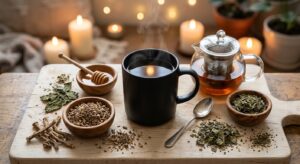
Ashwagandha (Withania somnifera) has been used in Ayurvedic medicine for more than 3,000 years. Its Sanskrit name roughly translates to “smell of the horse,” a nod to the root’s earthy, musky aroma and to the traditional belief that it imparts the strength and vitality of a stallion. Classified as a rasayana, or rejuvenating tonic, it was prescribed to restore energy in the depleted, calm the restless mind, and support healthy sleep.
Golden milk, or haldi doodh, is an equally ancient tradition. Indian households have long served warm milk spiced with turmeric to children and adults alike at bedtime, as a remedy for colds, aches, and sleeplessness. Combining ashwagandha with this beloved drink is a natural marriage: the milk’s fats help carry the fat-soluble compounds in turmeric, while the gentle spices soften the root’s distinctly bitter, earthy character.
The result is a velvety, amber-gold cup that feels like a hug in a mug. Sipped slowly an hour or so before bed, it becomes more than a beverage. It is a ritual that signals to the body that the day is done, which may be just as valuable as any single compound in the cup.
2
cups
Ingredients
- 1 tspashwagandha root powder
- 1 tspground turmeric
- 0.5 tspground cinnamon
- 0.5 tspfreshly grated ginger
- 480 mlmilk of choice (dairy, oat, or almond)
- 1 pinchfreshly ground black pepper
- —1 tsp raw honey or maple syrup to taste (optional)
- —1 tsp coconut oil or ghee (optional, for richness and absorption)
How to Brew
Click on an item below to shop for the recommended items for this recipe on Amazon.
As an Amazon Associate, we earn from qualifying purchases.
- Pour the milk into a small saucepan and warm over medium-low heat. Stir occasionally so a skin does not form on the surface.
- Once small bubbles appear around the edges of the pan, add the ashwagandha powder, turmeric, cinnamon, grated ginger, and the pinch of black pepper. Whisk vigorously to break up any clumps, as ashwagandha powder tends to float in little islands at first.
- Reduce the heat to low and let the mixture simmer gently for 8 to 10 minutes, whisking every couple of minutes. The liquid should deepen to a rich golden color and smell warm and toasty.
- Stir in the coconut oil or ghee if using, which helps carry the fat-soluble curcumin from the turmeric.
- Strain through a fine-mesh sieve into two mugs to remove the ginger fibers and any undissolved powder.
- Sweeten with honey or maple syrup while the tea is warm but not scalding, then sip slowly about an hour before bed.
- Combine the ashwagandha powder, turmeric, cinnamon, and black pepper in a jar. Add a splash of room-temperature milk and stir into a smooth paste, which prevents clumping.
- Slowly pour in the remaining cold milk while stirring, then add the grated ginger. Seal the jar tightly.
- Shake the jar vigorously for 30 seconds, then refrigerate for 8 to 12 hours, shaking once or twice if you pass by.
- In the morning, shake again to redistribute any settled powder, then strain through a fine-mesh sieve or a nut-milk bag. Pressing gently will squeeze out the last of the flavor.
- Sweeten to taste, pour over ice, and stir. The finished drink keeps in the refrigerator for up to 48 hours.
- Add 2 tablespoons of dried, cut ashwagandha root and 360 ml of water to a small pot. Add the sliced fresh ginger and a cinnamon stick.
- Bring to a boil, then reduce the heat to a low simmer. Partially cover and simmer for 20 to 30 minutes until the water has reduced by about one third and turned a deep tan color.
- Pour in 240 ml of milk, then add the ground turmeric and black pepper. Warm gently for 5 minutes without letting it boil, whisking to blend.
- Strain thoroughly through a fine-mesh sieve, pressing the root pieces to extract the remaining liquid.
- Stir in honey and a teaspoon of ghee, then serve warm in two mugs. The root pieces can be simmered a second time for a lighter second batch.
Health Benefits
Several randomized controlled trials have found that standardized ashwagandha root extract lowered serum cortisol and perceived stress scores in chronically stressed adults compared with placebo. Effects typically appeared after 6 to 8 weeks of consistent use.
Clinical studies suggest ashwagandha may shorten the time it takes to fall asleep and improve overall sleep quality, particularly in people with stress-related insomnia. The warm milk ritual adds a calming behavioral cue on top of the herb’s effects.
Meta-analyses of human trials report modest but meaningful reductions in anxiety symptoms with ashwagandha supplementation. Researchers believe it may influence GABA signaling and the hypothalamic-pituitary-adrenal axis.
Curcumin from turmeric and gingerols from ginger both have anti-inflammatory activity, which may help ease the physical tightness and aches that accompany a stressful day.
Warm spices like ginger and cinnamon have a long tradition of soothing the stomach and aiding digestion, making this tea a gentle companion after an evening meal.
🧪 Key Bioactive Compounds
The Science Behind Ashwagandha
Ashwagandha’s reputation rests largely on a group of steroidal lactones called withanolides. These compounds appear to act as adaptogens, meaning they help the body maintain balance under stress rather than pushing it strongly in one direction. In human trials, standardized root extracts have been associated with lower morning cortisol, the hormone released by the adrenal glands during the stress response. Chronically elevated cortisol is linked to poor sleep, anxious mood, and fatigue, so even modest reductions may translate into noticeable day-to-day comfort.
It is important to be honest about the evidence. Most clinical trials use concentrated extracts at doses of 300 to 600 mg daily, often for 8 weeks or longer, which is a different proposition from a teaspoon of raw root powder simmered in milk. A cup of golden milk delivers a smaller and less standardized dose, so it is best viewed as a gentle, supportive daily ritual rather than a substitute for clinical-grade supplementation. Consistency matters more than any single cup.
The supporting cast of spices genuinely earns its place. Curcumin has poor bioavailability on its own, but piperine from black pepper can increase its absorption dramatically, and dietary fat further improves uptake because curcumin is fat-soluble. This is why traditional golden milk, made with whole milk or ghee and a pinch of pepper, is a surprisingly well-designed delivery system. Combined with the soothing effect of warmth and the calming predictability of a nightly routine, the whole becomes greater than the sum of its parts.
Brewing Tips
- Whisk ashwagandha powder into a small amount of cool liquid first to make a paste. This prevents stubborn clumps when you add it to hot milk.
- Always include a pinch of black pepper. It is not just for flavor, it meaningfully boosts how well your body absorbs curcumin from the turmeric.
- Drink it consistently, ideally 30 to 60 minutes before bed. Adaptogens work gradually, and the repeated ritual itself reinforces a sleep-ready routine.
- Start with half a teaspoon of ashwagandha for the first week to see how your body responds, then work up to a full teaspoon.
- Use a dark mug or old towel you do not mind staining, since turmeric tints everything it touches a vivid yellow.