Astragalus (Astragalus membranaceus), known in China as huang qi or ‘yellow leader,’ is one of the most revered tonic herbs in Traditional Chinese Medicine. The earliest records of its use appear in the Shennong Bencao Jing, an ancient materia medica compiled around the first or second century CE, where it was classified among the superior herbs taken to nourish vitality over time rather than treat sudden illness. Practitioners prized it for supporting wei qi, the protective energy believed to circulate at the body’s surface and guard against cold, wind, and seasonal invaders.
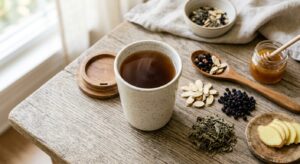
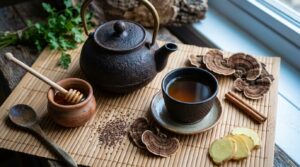
The part used is the dried root, sold as flat, pale yellow slices that look like wooden tongue depressors. Once simmered, they release a mellow, faintly sweet flavor, somewhere between sweet corn, toasted grain, and fresh peas. Astragalus is not a stimulant, which is exactly why it suits an evening ritual. Unlike ginseng, which can feel energizing, astragalus is considered a gentle, steadying tonic that works quietly in the background.
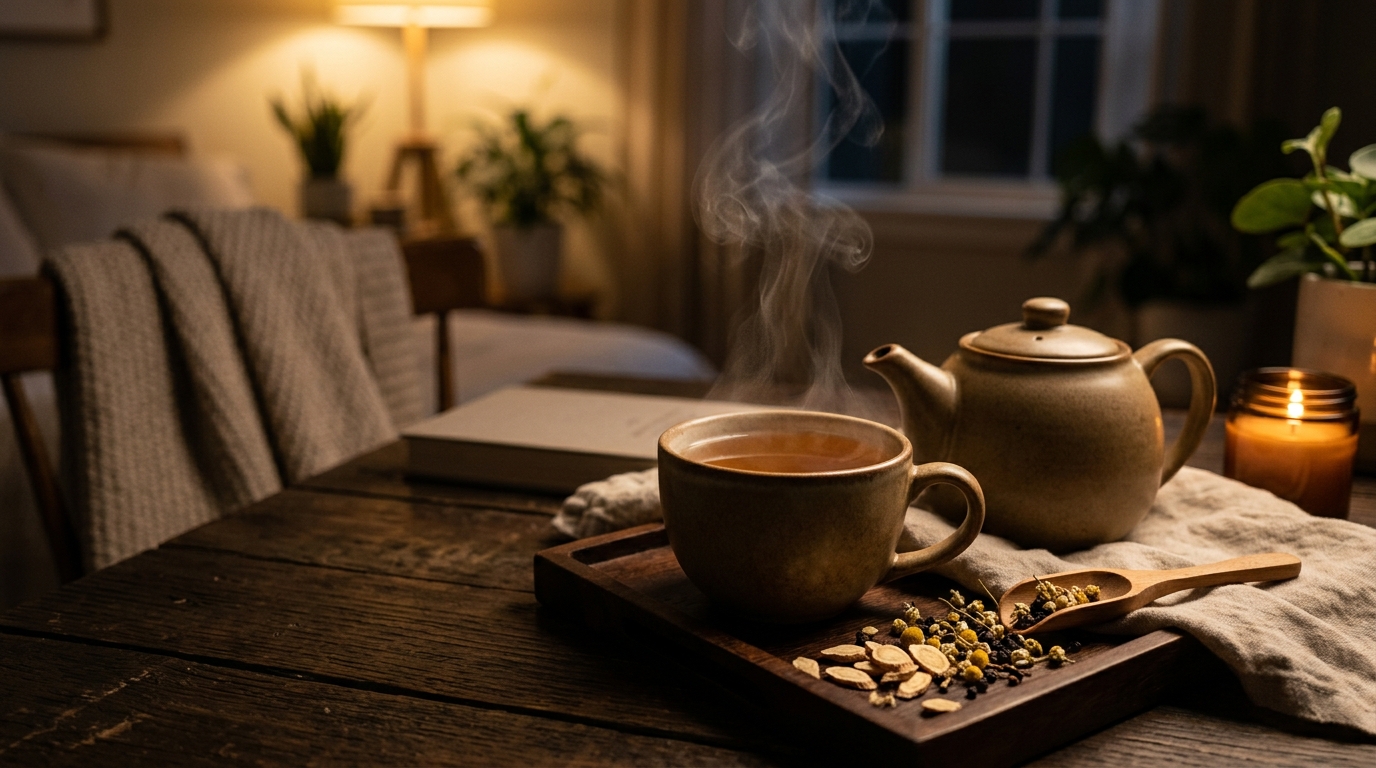
Modern herbalists classify astragalus as an adaptogen and an immune-modulating herb, meaning it is thought to help the body adapt to stress and keep immune responses balanced rather than simply pushing them into overdrive. Drinking a warm cup before bed pairs a centuries-old tradition with a practical rhythm: a slow, grounding moment at the end of the day, during the hours when the body does much of its repair work.
2
cups
Ingredients
- 6 slicesdried astragalus root (about 10 g)
- 500 mlfiltered water
- 2 slicesfresh ginger (optional, for warmth)
- —raw honey or a few dried goji berries to taste (optional)
How to Brew
Click on an item below to shop for the recommended items for this recipe on Amazon.
As an Amazon Associate, we earn from qualifying purchases.
- Rinse the astragalus root slices briefly under cool running water to remove any surface dust.
- Add the slices and 500 ml of filtered water to a small saucepan. If using fresh ginger, add it now.
- Bring the water to a boil over medium-high heat, then immediately reduce to the lowest heat that maintains a gentle, steady simmer.
- Partially cover the pot and simmer for 20 to 30 minutes. The liquid should reduce slightly and turn a pale golden yellow.
- Turn off the heat and let the tea rest, covered, for 5 minutes so the flavors settle and the temperature becomes comfortable for sipping.
- Strain into two mugs, discarding the root slices (or saving them for a second, lighter simmer). Stir in honey if desired and drink slowly about an hour before bed.
- Lightly crush or break 8 slices of astragalus root into smaller pieces to increase surface area, since cold water extracts more slowly.
- Place the pieces in a clean glass jar and pour over 750 ml of cool filtered water.
- Seal the jar and shake gently for a few seconds, then refrigerate for 10 to 12 hours.
- Strain the tea through a fine mesh sieve into a clean bottle or pitcher.
- Serve the tea cool, or pour a portion into a mug and warm it gently on the stove without boiling if you prefer a warm evening cup. Keep the remainder refrigerated and finish within 2 days.
- Combine 30 g (about 15 to 18 slices) of astragalus root with 1 liter of filtered water in a heavy-bottomed pot.
- Bring to a boil, then lower the heat until the surface barely trembles, and partially cover.
- Simmer for 45 to 60 minutes, until the liquid has reduced by roughly half and turned a deeper golden amber.
- Strain through a fine mesh sieve into a clean glass jar, pressing the slices gently to release the remaining liquid.
- Cool to room temperature, seal, and refrigerate for up to 5 days.
- To serve, mix 120 ml of concentrate with 120 to 180 ml of freshly boiled water, or gently reheat on the stove, and sweeten lightly if desired.
Health Benefits
Astragalus polysaccharides have been shown in laboratory and some clinical research to modulate immune cell activity, and the herb is widely used to help the body resist seasonal colds. Human evidence is promising but still limited, so it is best viewed as a supportive tonic rather than a treatment.
Traditionally used to help the body cope with physical and mental stress, astragalus is non-stimulating and steadying. This makes it more suitable for evening use than energizing adaptogens such as ginseng.
Its flavonoids and saponins help neutralize free radicals in laboratory studies, which may contribute to its long-standing reputation as a protective tonic.
Preliminary studies, particularly on astragaloside IV, suggest potential benefits for cardiovascular function and kidney protection. More large human trials are needed to confirm these effects.
While astragalus is not a sedative, the ritual of slowly sipping a warm, mildly sweet tea signals the body to wind down. Pairing it with calming habits can improve how restful your evening feels.
🧪 Key Bioactive Compounds
The Science Behind Astragalus
The immune-supporting reputation of astragalus rests largely on two groups of compounds: polysaccharides and saponins. Astragalus polysaccharides are large, water-soluble sugar molecules that are extracted effectively through long simmering, which is why the traditional decoction method remains the best way to prepare the root. In cell and animal studies, these polysaccharides have been shown to influence macrophages, natural killer cells, and T lymphocytes, helping to modulate the signals the immune system uses to coordinate its response.
The saponin astragaloside IV, along with isoflavonoids like calycosin and formononetin, contributes antioxidant and anti-inflammatory activity. Astragaloside IV is often used as the standardization marker in commercial extracts and has been studied for effects on oxidative stress, cardiac function, and kidney tissue. Another compound, cycloastragenol, has attracted attention for its potential interaction with telomerase, an enzyme linked to cellular aging, though this research is early and mostly preclinical.
It is important to keep expectations realistic. Much of the evidence comes from laboratory work, animal studies, and small clinical trials, often using concentrated extracts rather than tea. A cup of astragalus tea delivers a milder dose, so its value lies in consistent, long-term, gentle support and in the calming ritual itself rather than in a dramatic effect.
Brewing Tips
- Simmer, do not just steep. A quick infusion barely extracts the polysaccharides, while 20 to 30 minutes of gentle simmering produces a fuller, sweeter tea.
- Reuse the root slices for a second, lighter simmer. Add a few extra minutes the second time and you will get another pleasant cup.
- Drink it about an hour before bed so the warmth and ritual become part of your wind-down routine, and try it for several weeks to appreciate its tonic nature.
- Buy whole, pale yellow slices with a faint sweet smell. Avoid pieces that look dark, brittle, or musty, and store the dried root in an airtight container away from light and moisture.