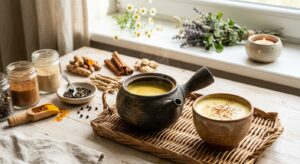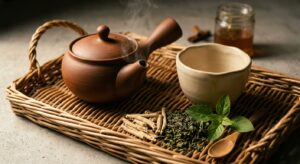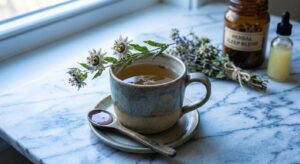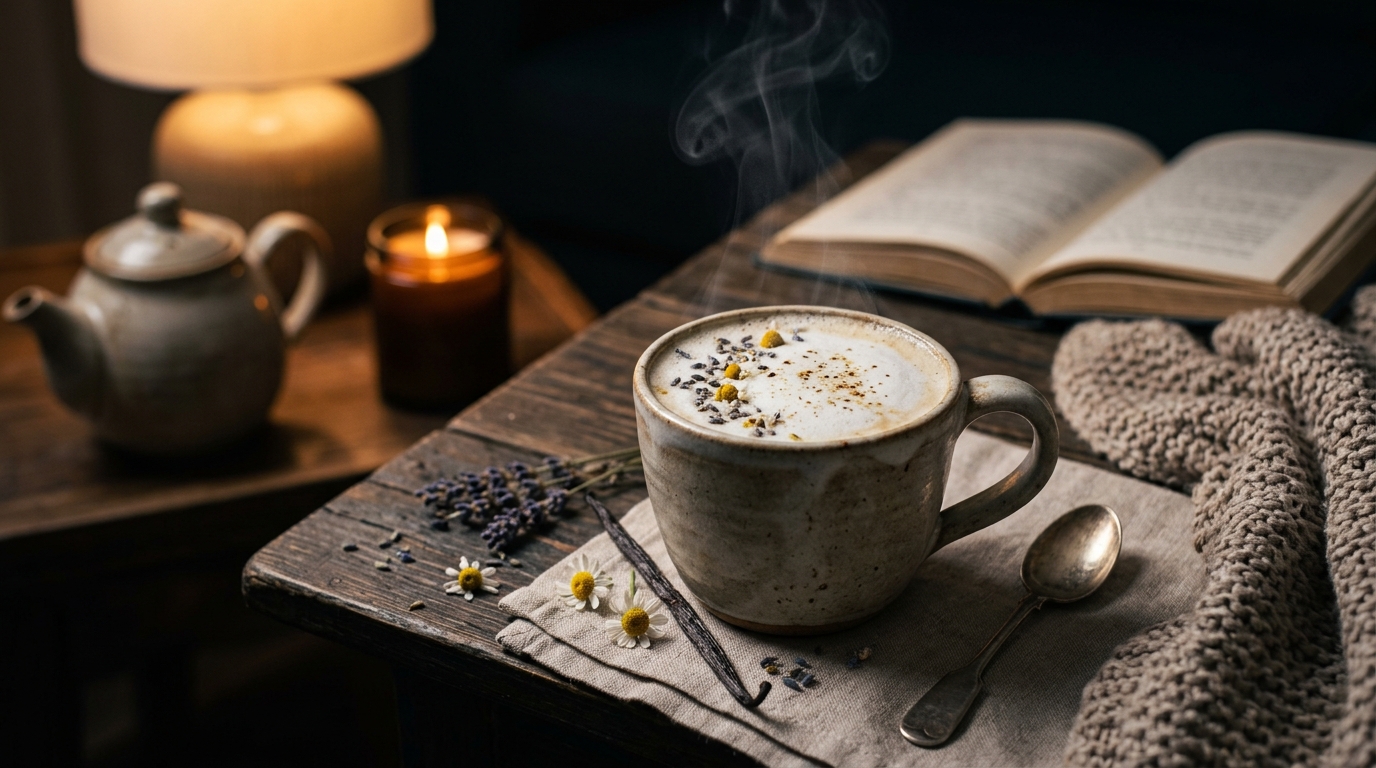
Chamomile has been steeped as a bedtime comfort for thousands of years. Ancient Egyptians dedicated it to their sun god and used it for fevers and restlessness, while Greek and Roman physicians prescribed it for digestive upset and nervous tension. The name itself comes from the Greek khamaimelon, meaning ‘earth apple,’ a nod to the sweet, apple-like fragrance of the tiny daisy-like blossoms. To this day, a warm cup of chamomile remains one of the most trusted evening remedies in kitchens around the world.
Lavender joins the blend with an equally storied past. Romans scented their baths with it (the name derives from the Latin lavare, to wash), and European folk traditions tucked sachets of the purple buds beneath pillows to invite peaceful dreams. Its floral, faintly camphorous aroma pairs beautifully with chamomile, adding depth and a spa-like calm. Real vanilla rounds everything out, lending a creamy sweetness that makes the cup feel more like a dessert than a remedy.
Turning this trio into a latte transforms a simple tea into a true ritual. Concentrated tea is steeped strong, then combined with gently warmed and frothed milk, creating a velvety, cafe-style drink with no caffeine at all. The act of steeping, whisking, and sipping slowly becomes a signal to your body that the day is done, which is half the magic of any good bedtime tea.
2
cups
Ingredients
- 2 tbspdried chamomile flowers
- 1 tspdried culinary lavender buds
- 1 tsppure vanilla extract (or 1/2 vanilla bean, split)
- 240 mlwater (95°C / 203°F)
- 240 mlmilk of choice (oat, whole, or almond)
- —raw honey or maple syrup to taste (optional)
How to Brew
Click on an item below to shop for the recommended items for this recipe on Amazon.
As an Amazon Associate, we earn from qualifying purchases.
- Bring fresh water to a near boil, then let it rest for 30 seconds so it settles at about 95°C (203°F). Water that is too hot can pull bitterness from lavender.
- Add the chamomile flowers, lavender buds, and vanilla (the split bean or the extract) to a teapot or mug with an infuser. Pour the hot water over the herbs.
- Cover with a lid or small saucer to trap the aromatic oils and steep for 7 to 8 minutes. The liquid should turn a deep golden color with a strong floral scent.
- While the tea steeps, gently warm the milk in a small saucepan over low heat until steaming but not boiling, about 65°C (150°F). Froth with a handheld frother or whisk vigorously until foamy.
- Strain the concentrated tea into a wide mug, pressing the herbs lightly to release the last of their flavor.
- Slowly pour the frothed milk over the tea, spooning the foam on top. Sweeten with honey or maple syrup, and finish with a few lavender buds as garnish.
- Add the chamomile, lavender, and vanilla bean (split lengthwise) to a clean glass jar. Use a slightly higher ratio of herbs, about 3 tablespoons chamomile to 2 cups cold filtered water.
- Pour in cold or room-temperature filtered water, stir gently, and seal the jar with its lid.
- Refrigerate for 8 to 12 hours, or overnight. Avoid steeping longer than 12 hours, as lavender can turn soapy over time.
- Strain through a fine mesh sieve or cheesecloth into a clean pitcher, discarding the herbs and vanilla bean.
- To serve, fill a tall glass with ice, pour in the cold tea until about two-thirds full, and top with cold milk or cold-frothed milk.
- Stir in a little honey syrup (honey dissolved in warm water) since honey will not dissolve well in cold liquid. Keeps refrigerated for up to 48 hours.
- Combine 1/3 cup dried chamomile, 1 tablespoon lavender buds, and 1 split vanilla bean in a heatproof jar or saucepan with a lid.
- Pour 2 cups of just-boiled water over the herbs. This ratio is deliberately strong, roughly three times a normal cup.
- Cover and steep for a full 15 minutes, stirring once halfway through to keep the herbs submerged.
- Strain through a fine sieve lined with cheesecloth, pressing the herbs firmly to extract every drop of flavor. Stir in 2 to 3 tablespoons of honey or maple syrup while still warm if you like it sweet.
- Cool completely, then store in a sealed bottle in the refrigerator for up to 5 days.
- To make a latte, combine 1/3 cup of concentrate with 3/4 cup frothed warm milk. Adjust the ratio to taste, and gently reheat the concentrate if you prefer a hotter cup.
Health Benefits
Chamomile’s apigenin interacts with GABA receptors to promote drowsiness, and clinical studies have found chamomile extract improved sleep quality in older adults and postpartum women.
Both chamomile and lavender have been studied for anxiolytic effects, with trials showing reduced generalized anxiety symptoms, and linalool in lavender appearing to calm the nervous system.
Chamomile has a long history as a carminative and antispasmodic, helping relax the smooth muscle of the gut and reduce bloating or cramping after an evening meal.
A consistent, warm, sensory wind-down routine helps cue the body for sleep, and the aroma and warmth of a latte reinforce this signal through behavioral conditioning.
Chamomile flavonoids such as apigenin, luteolin, and quercetin show antioxidant and anti-inflammatory activity in laboratory studies, though human evidence is still developing.
🧪 Key Bioactive Compounds
The Science Behind Chamomile
The sleep-supporting reputation of this latte rests mostly on two plants. Chamomile’s key flavonoid, apigenin, has been shown in laboratory research to bind to benzodiazepine receptors on GABA-A channels in the brain. This is the same general system targeted by sedative medications, though apigenin’s effect is far milder. Human trials have been encouraging but modest: studies in older adults and postpartum women reported improved subjective sleep quality after several weeks of chamomile extract, while evidence for a single cup acting as a sleeping aid is more anecdotal than clinical.
Lavender contributes through its volatile oils, chiefly linalool and linalyl acetate. Inhalation and oral studies of lavender oil preparations (such as the standardized capsule Silexan) have shown reductions in anxiety and improvements in sleep disturbance. While tea contains far smaller amounts than these extracts, the aroma rising from a warm cup delivers a pleasant dose through the olfactory system, which connects directly to the brain’s emotional centers.
It is worth noting that steeping temperature matters. Chamomile’s volatile oils, including bisabolol and chamazulene, are delicate and escape readily with steam, which is why covering the cup while it steeps preserves both flavor and potency. The milk adds a further gentle benefit: its creamy fat helps carry fat-soluble aromatic compounds across the palate, and the warmth itself relaxes muscles and signals the body to slow down.
Brewing Tips
- Always cover your cup or teapot while steeping to keep chamomile’s volatile oils from escaping with the steam.
- Use a light hand with lavender. Too much turns the tea soapy or perfumey, so start with 1 teaspoon per two servings and adjust.
- Oat milk froths beautifully and its natural sweetness complements vanilla, making it an excellent dairy-free choice.
- Choose whole, creamy-looking chamomile flowers rather than powdery tea-bag dust for a sweeter, more complex flavor.
- Drink your latte 30 to 60 minutes before bed and dim the lights while you sip to reinforce your wind-down routine.