Long before echinacea filled the shelves of modern pharmacies, the Plains Indigenous peoples, including the Lakota, Cheyenne, and Kiowa, were using the purple coneflower (Echinacea purpurea and E. angustifolia) as one of their most valued medicinal plants. Chewed fresh or brewed into infusions, it was applied to sore throats, infections, and wounds. Goldenseal (Hydrastis canadensis), a woodland perennial of the eastern forests, held a comparable place among the Cherokee and Iroquois, who used its bright yellow root as a dye and as a remedy for mouth sores, digestive complaints, and seasonal illness.
The two herbs traveled together into the Eclectic medical tradition of the 19th and early 20th centuries, when American physicians prescribed them side by side for colds, sore throats, and sluggish recoveries. That pairing endures in herbal shops today, partly out of habit and partly because the herbs seem to complement one another: echinacea brings a tingling, slightly numbing freshness, while goldenseal brings a deep, resinous bitterness.
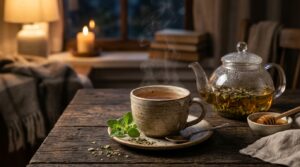
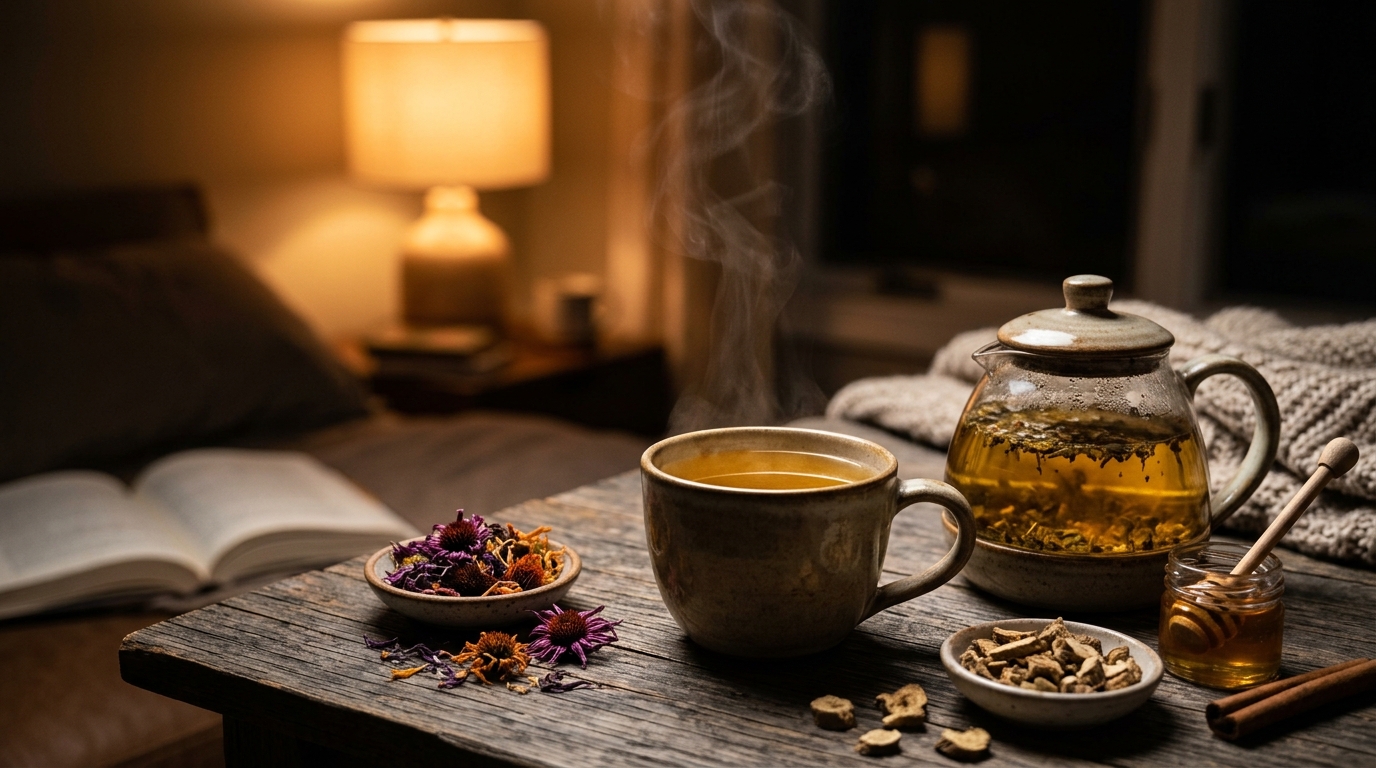
Taken as an evening tea, this combination becomes a quiet ritual at the first scratch in the throat or the first sniffle of the season. The flavor is bold and unapologetically medicinal, so this recipe softens it with a touch of licorice root and lemon. Think of it as a warm, golden-green cup that tastes like a walk through an autumn meadow and a damp woodland floor at once.
2
cups
Ingredients
- 2 tspdried echinacea root and aerial parts, coarsely cut
- 1 tspdried goldenseal root, coarsely cut
- 0.5 tspdried licorice root, cut and sifted
- 480 mlfiltered water (95°C / 203°F)
- —fresh lemon juice to taste (optional)
- —raw honey to taste (optional)
How to Brew
Click on an item below to shop for the recommended items for this recipe on Amazon.
As an Amazon Associate, we earn from qualifying purchases.
- Measure the echinacea, goldenseal, and licorice root into a teapot or large mug with a built-in infuser. Because these are roots and tougher plant parts, a coarse cut works better than a fine powder, which turns muddy and overly bitter.
- Bring filtered water just to a gentle boil, then let it rest for about 30 seconds so it settles near 95°C (203°F). Pour the water over the herbs.
- Cover immediately with a lid or small saucer and steep for 10 to 15 minutes. Roots need longer than leaves or flowers to release their compounds. Ten minutes gives a milder cup, while fifteen yields a stronger, more bitter infusion.
- Strain the tea through a fine mesh strainer into your serving mug, pressing the herbs gently to extract the last of the liquid.
- Stir in a squeeze of fresh lemon and a small spoonful of raw honey if desired, then sip slowly about 30 to 60 minutes before bed.
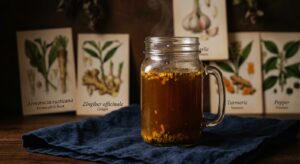
- Combine 2 tsp echinacea, 1 tsp goldenseal, and 1/2 tsp licorice root in a clean glass jar. Add 480 ml of cool filtered water and stir well so all the herbs are fully submerged.
- Seal the jar and place it in the refrigerator for 8 to 10 hours, or overnight. Give it a gentle shake once or twice if you happen to open the fridge.
- In the morning, strain the infusion through a fine mesh strainer lined with a piece of muslin or a coffee filter to catch the tiny root particles.
- Pour into a glass and drink chilled, or warm a portion gently in a small saucepan over low heat. Do not let it boil, since high heat dulls the delicate flavors that cold brewing preserves.
- Store any extra in a sealed container in the refrigerator and drink within 48 hours for best flavor and freshness.
- Add 2 tsp echinacea root, 1 tsp goldenseal root, and 1/2 tsp licorice root to a small stainless steel or enamel saucepan. Avoid aluminum, which can react with some plant compounds.
- Pour in 600 ml of cold filtered water. Starting with cold water lets the roots warm gradually and helps draw out their constituents more evenly.
- Bring to a gentle simmer over medium heat, then reduce to low. Cover with a lid slightly ajar and simmer for 15 minutes. The liquid will reduce by about a quarter and turn a deep, golden amber.
- Remove from the heat, keep the lid on, and let the decoction rest for 10 minutes so the flavors settle and the aroma deepens.
- Strain through a fine mesh strainer into a warmed mug. Add lemon and honey to taste. This version is concentrated, so sip it slowly and consider diluting with a splash of hot water if the bitterness is too intense.
Health Benefits
Several clinical trials and meta-analyses suggest that certain echinacea preparations may modestly reduce the duration or severity of the common cold when started at the first sign of symptoms, though results vary by species, plant part, and preparation.
Laboratory research shows that echinacea alkamides and polysaccharides can influence macrophage and natural killer cell activity, which may help explain its traditional reputation as an immune-supportive herb.
The astringent, antimicrobial nature of goldenseal’s berberine, combined with the demulcent quality of licorice, offers traditional relief for scratchy throats and irritated tissues.
Cichoric acid, echinacoside, and other phenolic compounds in echinacea help neutralize free radicals in laboratory models, contributing to its overall protective profile.
While neither herb is sedating, the act of sipping a warm, aromatic tea before bed encourages a slower pace and supports the wind-down routine that helps the body rest and recover.
🧪 Key Bioactive Compounds
The Science Behind Echinacea
Echinacea’s reputation rests on a complex mix of constituents rather than a single active compound. The alkamides, found in highest concentration in E. purpurea roots and E. angustifolia roots, are lipophilic molecules that have been shown in laboratory studies to bind to CB2 cannabinoid receptors on immune cells, influencing the release of inflammatory signaling molecules such as TNF-alpha and various interleukins. Cichoric acid and caffeic acid derivatives add antioxidant capacity, and high-molecular-weight polysaccharides appear to stimulate macrophage activity. Clinical findings are mixed, largely because products differ so widely in species, plant part, extraction method, and dose, but a number of well-designed trials suggest a modest benefit when echinacea is taken early in a cold.
Goldenseal’s activity centers on its isoquinoline alkaloids, chiefly berberine, hydrastine, and canadine. Berberine has demonstrated broad antimicrobial activity against bacteria, fungi, and protozoa in vitro, and it concentrates well in mucosal tissues, which fits with the herb’s traditional use for the mouth, throat, and digestive tract. It is worth noting that most of the robust research on berberine uses isolated or standardized preparations, and a cup of tea delivers a much smaller and more variable dose than a supplement.
When brewed together, the water-soluble phenolics from echinacea and the alkaloids from goldenseal are both extracted to a meaningful degree, particularly with the longer, hotter methods like decoction. Many alkamides, however, extract better in alcohol than in water, which is why tinctures are a common companion to tea in herbal practice. The honest takeaway is that this tea is best seen as a gentle, traditional, supportive drink that complements rest, hydration, and good nutrition, not as a stand-in for medical treatment.
Brewing Tips
- Start drinking the tea at the very first sign of a scratchy throat or sniffle, since the evidence for echinacea is strongest when it is taken early.
- Use organically grown or ethically wildcrafted goldenseal, as the plant is at risk in the wild due to overharvesting. Look for cultivated sources.
- Coarsely cut roots brew better than fine powder, which can make the tea cloudy and harshly bitter.
- Limit use to one to two weeks at a time, then take a break, as is traditional with both herbs.
- If the bitterness is too strong, shorten the steep time, reduce the goldenseal to half a teaspoon, or lean on the licorice, lemon, and honey.