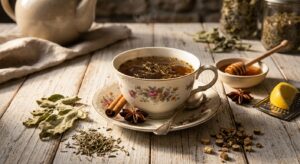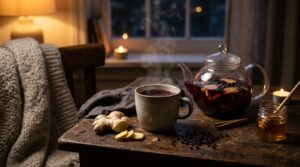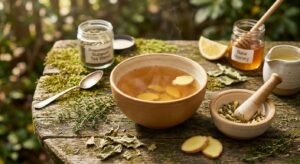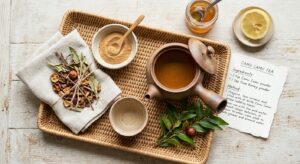
Few herbal trios have as long a pedigree as this one. Elder (Sambucus nigra) has been called the medicine chest of country people in Europe for centuries, with its berries simmered into syrups and cordials to ease winter colds. Rose hips, the fruit left behind when a wild rose blooms and fades, were prized in wartime Britain when citrus was scarce, and children were sent into the hedgerows to gather them for vitamin C syrup. Hibiscus (Hibiscus sabdariffa), the crimson calyces known as sorrel in the Caribbean and karkade in Egypt, has been brewed for centuries as a cooling, tart tonic.
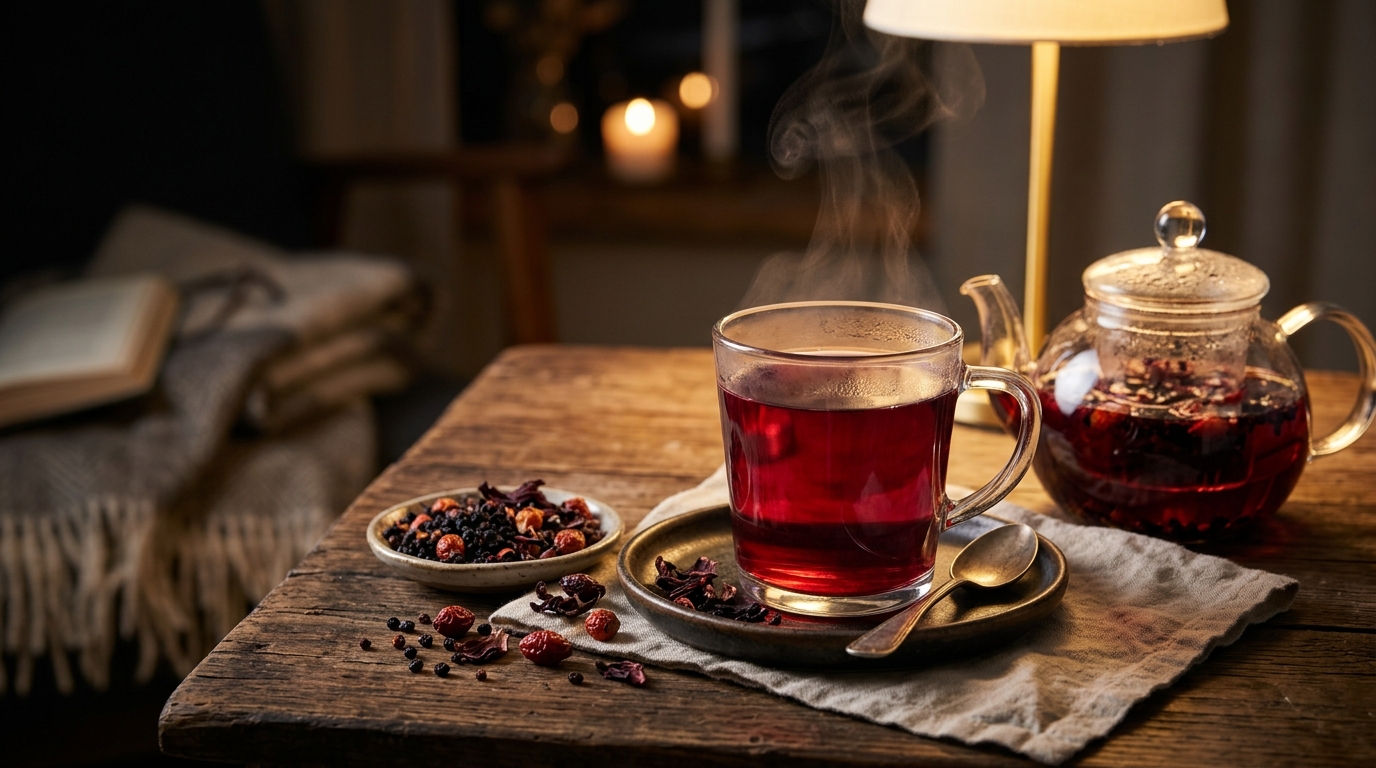
Together they make a tea that looks like a jewel and tastes like a handful of tart red berries. The elderberries bring a deep, wine-like body, the rose hips add a gentle fruity sweetness with a hint of apple skin, and the hibiscus contributes a bright cranberry tang. It is naturally caffeine-free, which makes it a lovely evening ritual when the first sniffles of the season arrive.
One note on timing: this is a nightcap in the sense of a calming, caffeine-free wind-down drink, not a sedative blend. The vitamin C and anthocyanins are the stars here, and the slow, warm ritual of sipping does the rest.
2
cups
Ingredients
- 1 tbspdried elderberries
- 1 tbspdried rose hips, roughly crushed
- 1 tspdried hibiscus calyces
- 480 mlwater
- —raw honey or maple syrup to taste (optional)
- —1 thin slice of fresh orange or a cinnamon stick (optional)
How to Brew
Click on an item below to shop for the recommended items for this recipe on Amazon.
As an Amazon Associate, we earn from qualifying purchases.
- Measure the dried elderberries, crushed rose hips, and hibiscus into a teapot or large mug. Crushing the rose hips lightly with the back of a spoon exposes the inner flesh and helps release their flavor.
- Bring fresh water to a full boil, then let it rest for 30 seconds so it is just off the boil. Elderberries need genuinely hot water to extract their pigments and to make them safe to drink.
- Pour the hot water over the herbs, cover the pot or mug with a saucer to trap the volatile aromas, and steep for 10 to 15 minutes. The longer end gives a deeper, more wine-like cup.
- Strain through a fine mesh strainer, pressing gently on the berries to release the last of the liquid.
- Sweeten with honey or maple syrup while the tea is still warm, add an orange slice or cinnamon stick if desired, and sip slowly. Hibiscus is quite tart, so start with a small amount of sweetener and adjust.
- Add the elderberries, crushed rose hips, and hibiscus to a large glass jar.
- Pour 120 ml of just-boiled water over the herbs and let them sit for 5 minutes. This short hot pre-steep makes the elderberries safe to drink and kick-starts the extraction.
- Top up with 360 ml of cold, filtered water, stir once, and cover the jar with a lid.
- Refrigerate for 8 to 12 hours. The cold brew pulls out the bright fruit and floral notes of the hibiscus and rose hips with less sharp acidity than a hot steep.
- Strain through a fine mesh strainer into a clean jar or pitcher and serve over ice. The tea keeps for up to 3 days in the refrigerator.
- Combine the elderberries, crushed rose hips, and 480 ml of cold water in a small saucepan. Add a cinnamon stick or a few slices of fresh ginger now if you want a spiced version.
- Bring to a gentle simmer over medium heat, then reduce the heat to low. Keep the lid on, and simmer for 15 minutes. The liquid will darken to a deep purple-red and reduce slightly.
- Turn off the heat, stir in the hibiscus, cover again, and let it rest for 10 minutes. Adding the hibiscus at the end keeps its tartness bright rather than harsh.
- Strain through a fine mesh strainer into mugs, pressing the softened berries to release their juice.
- Sweeten to taste. For a richer, syrupy nightcap, simmer an extra 5 minutes before adding the hibiscus.
Health Benefits
Rose hips are one of the richest natural sources of vitamin C, a nutrient essential to immune cell activity. Elderberry extract has also shown promise in clinical studies for shortening the duration of cold symptoms.
Anthocyanins from elderberry and hibiscus, together with the flavonoids in rose hips, give this blend a high antioxidant capacity that helps counter oxidative stress.
Several randomized trials have found that regular hibiscus tea can modestly lower blood pressure in adults with mild hypertension, likely through its anthocyanins and organic acids.
This tea delivers a flavorful way to drink more fluids during illness without caffeine, which suits an evening routine and avoids interfering with sleep.
Rose hip powder has been studied for mild osteoarthritis discomfort, with its galactolipid GOPO and vitamin C content thought to contribute to its anti-inflammatory effects.
🧪 Key Bioactive Compounds
The Science Behind Elderberry
The ruby color of this tea is more than decoration. Both elderberries and hibiscus are loaded with anthocyanins, water-soluble pigments in the flavonoid family. Elderberry is dominated by cyanidin glycosides, while hibiscus provides delphinidin-based compounds. Laboratory studies show these pigments scavenge free radicals and influence inflammatory signaling, and anthocyanin-rich foods are associated with cardiovascular and metabolic benefits in population research.
Rose hips contribute the vitamin C. Depending on the species and how the hips are dried, they can contain many times the vitamin C of an orange by weight, though heat and long storage degrade it. This is one reason a gentle steep, rather than a prolonged boil, helps preserve more of the vitamin in the cup. Vitamin C supports immune cells such as neutrophils and lymphocytes, and while it does not prevent colds in the general population, it may modestly reduce their duration.
Elderberry’s reputation for cold and flu support rests on several small clinical trials of standardized extracts, which suggest a shorter duration of upper respiratory symptoms. The evidence for tea specifically is less robust than for concentrated syrups, so think of this blend as a pleasant, hydrating, nutrient-rich supplement to rest and good care rather than a treatment. Its real strength is combining three complementary fruits into one antioxidant-dense, caffeine-free evening cup.
Brewing Tips
- Crush the rose hips lightly before brewing. Their tough outer skin and inner flesh release flavor and vitamin C far more readily when broken open.
- Go easy on the hibiscus if you are sensitive to tartness. One teaspoon gives a bright tang, and more can overpower the gentler elderberry and rose hip flavors.
- Strain rose hips through a very fine mesh or a paper filter, since the tiny hairs inside the seeds can irritate the throat if they slip into your cup.
- Store the dried herbs in an airtight, opaque jar away from light and heat to keep the color and vitamin content vibrant for up to a year.
- Simmer leftover berries a second time for a milder second cup, or pour the strained tea into ice cube trays for festive iced drinks.