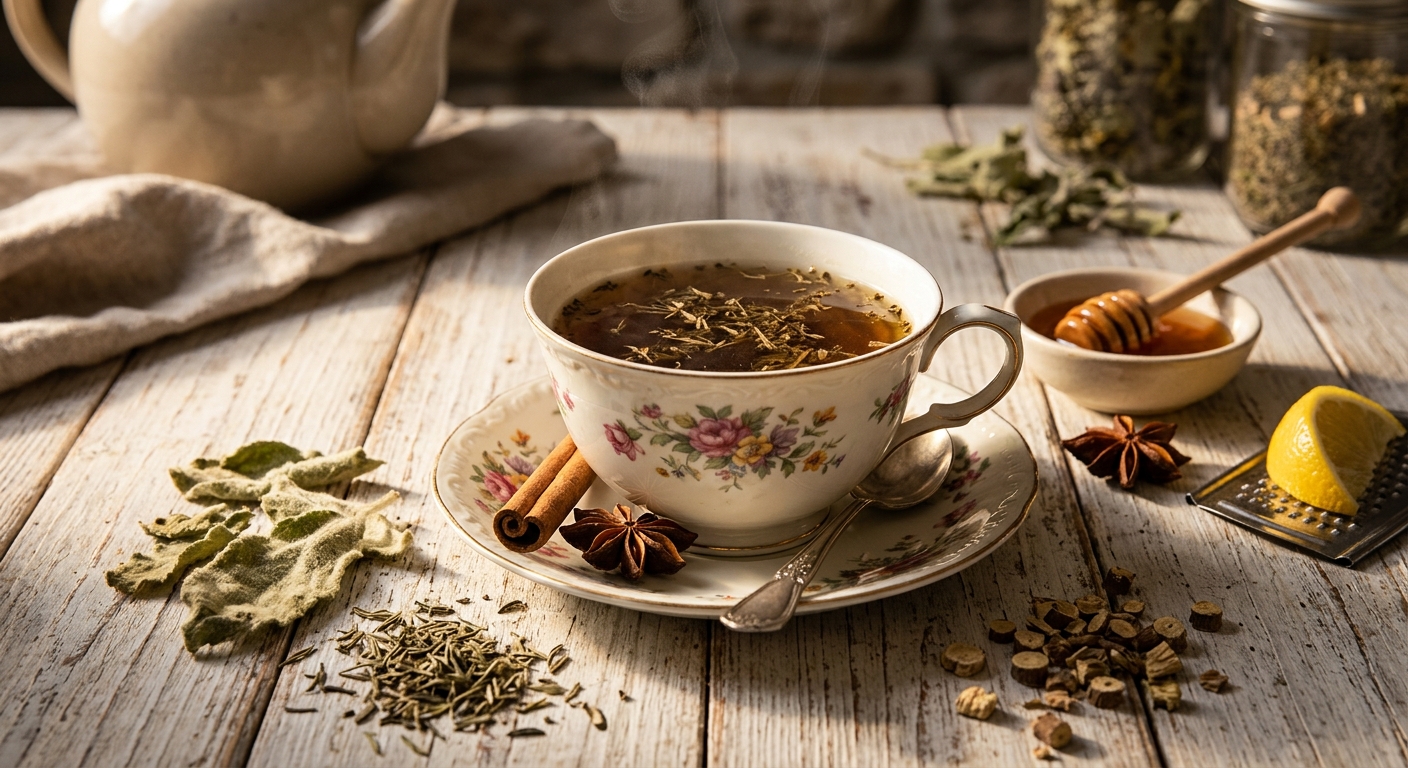
Bronchitis, whether acute or the lingering chronic kind, leaves the bronchial tubes raw, swollen, and clogged with thick mucus. For centuries, healers across Europe, the Middle East, and the Americas turned to the plant world for relief, long before pharmaceutical expectorants and bronchodilators existed. Mullein (Verbascum thapsus) was smoked and steeped by Native American tribes to calm lung complaints. Thyme (Thymus vulgaris) was prescribed by Greek physicians and medieval apothecaries alike for coughs and chest congestion. Licorice root (Glycyrrhiza glabra) appears in ancient Egyptian papyri and Chinese medicinal texts as a premier herb for the respiratory tract. Together, they form one of the most historically validated herbal formulas for bronchitis relief.
What makes this blend particularly effective is how its herbs address bronchitis from multiple angles. Mullein coats and soothes irritated mucous membranes while acting as a gentle expectorant to help dislodge stubborn phlegm. Thyme brings potent antimicrobial and antispasmodic properties that reduce the bacterial load driving infection and calm the relentless bronchospasm that produces that deep, rattling cough. Licorice root ties the formula together with its demulcent and anti-inflammatory action, softening the harsh edges of bronchial irritation and making the other herbs more bioavailable through its synergistic compounds.
Beyond the therapeutic synergy, this tea is a genuinely comforting sensory experience. The brew steeps to a warm amber-gold, carrying the earthy, slightly hay-like depth of mullein, the sharp herbal bite of thyme, and the unmistakable sweet, anise-like warmth of licorice root. Sipped slowly over a cold evening, it is the kind of tea that seems to reach directly into the chest and begin its work. Whether you are in the acute phase of a chest infection or managing the lingering cough of chronic bronchitis, this blend offers meaningful botanical support backed by both tradition and modern pharmacology.
2
cups
Ingredients
- 2 tspdried mullein leaf
- 1 tspdried thyme
- 0.5 tspdried licorice root (cut and sifted)
- 480 mlwater (95°C / 203°F)
- —raw honey to taste (optional, also soothes the throat)
- —fresh lemon juice to taste (optional)
How to Brew
Click on an item below to shop for the recommended items for this recipe on Amazon.
As an Amazon Associate, we earn from qualifying purchases.
- Heat filtered water to 93 to 96°C (200 to 205°F). A rolling boil is acceptable here since these are hardy herbs and roots, but allow a 30-second rest after boiling before pouring if you want a slightly softer extraction.
- Combine 2 tsp dried mullein leaf, 1 tsp dried thyme, and 0.5 tsp licorice root in a tea infuser or directly in a heat-safe pitcher. For 2 servings, use 480 ml of water.
- Pour the hot water over the herbs and cover immediately with a lid or small saucer. Trapping the steam preserves the volatile thyme oils that carry much of its antimicrobial and antispasmodic benefit.
- Steep for 10 to 15 minutes. A longer steep produces a more potent, medicinal cup; 10 minutes is gentler and milder in flavor. Do not exceed 15 minutes as bitterness from the licorice root can become pronounced.
- Strain through a fine-mesh strainer lined with cheesecloth or a coffee filter to remove all mullein leaf hairs. Pour into warmed mugs and add raw honey and lemon to taste. Sip slowly while still hot, inhaling the steam as you drink for added bronchial relief.
- Combine 3 tsp dried mullein leaf, 1.5 tsp dried thyme, and 0.5 tsp licorice root in a clean glass jar. Use slightly more herb than you would for a hot brew since cold water extracts more slowly and less aggressively.
- Pour 480 ml of filtered room-temperature water over the herbs. Stir gently to ensure all plant material is fully submerged. Place a lid or cover loosely on the jar to prevent refrigerator odors from affecting the tea.
- Refrigerate for 10 to 12 hours, or overnight. Avoid exceeding 14 hours as licorice root can become unpleasantly sweet and slightly bitter with prolonged cold extraction.
- Remove from the refrigerator and strain twice through a fine-mesh strainer lined with cheesecloth to catch all mullein leaf hairs. Press the spent herbs gently to recover the mucilaginous liquid clinging to the plant material.
- Gently warm the strained tea on the stovetop to a comfortable drinking temperature (around 55 to 60°C / 131 to 140°F) without boiling. This preserves the mucilage while making the tea therapeutically warming for the chest. Add honey to taste and sip slowly.
- Add 0.75 tsp licorice root (cut and sifted) to a small saucepan with 540 ml of cold filtered water. Bring to a gentle simmer over medium heat. Allow the licorice root to begin its decoction alone for 5 minutes before adding the other herbs, since its woody structure requires longer extraction.
- After the initial 5-minute simmer, add 2 tsp dried mullein leaf and 1 tsp dried thyme directly to the saucepan. Reduce heat to maintain a gentle, steady simmer of around 85 to 90°C (185 to 194°F). Do not allow a vigorous rolling boil at this stage, which would drive off thyme’s volatile therapeutic oils.
- Simmer uncovered for 20 to 25 minutes, keeping an eye on the liquid level. The brew will reduce by approximately 80 to 100 ml during this time, concentrating the medicinal compounds. Add a small splash of water if the reduction becomes too aggressive.
- Remove from heat and allow the blend to rest, covered, for an additional 5 minutes. This resting period allows the volatile compounds that remain to reincorporate into the cooling liquid.
- Strain thoroughly through a fine-mesh strainer lined with cheesecloth into a heat-proof measuring jug, pressing the herbs firmly to extract every drop of the rich, concentrated decoction. The yield should be approximately 360 to 400 ml of a deep amber liquid.
- Pour into mugs and add raw honey generously. The decoction is strong and slightly bitter, so honey is highly recommended both for palatability and its own throat-soothing benefits. Drink 1 cup up to 3 times daily during acute bronchitis. Store any remainder in the refrigerator for up to 24 hours and gently reheat before drinking.
Health Benefits
Mullein’s saponins and licorice root’s glycyrrhizin both act through complementary pathways to thin bronchial secretions and stimulate the mucociliary clearance mechanism, making it significantly easier to cough up and expel the thick mucus that obstructs inflamed bronchial tubes. This dual-action expectorant effect is one of the most clinically relevant benefits of this blend for bronchitis sufferers.
Glycyrrhizin from licorice root inhibits key inflammatory mediators including arachidonic acid metabolites and pro-inflammatory cytokines, while mullein’s flavonoids and thyme’s phenols provide additional antioxidant protection to bronchial tissues. A 2019 review in the Journal of Ethnopharmacology highlighted glycyrrhizin’s significant anti-inflammatory activity in respiratory conditions.
Thyme’s volatile oil constituents, particularly thymol and carvacrol, have demonstrated inhibitory activity against Streptococcus pneumoniae, Haemophilus influenzae, and Moraxella catarrhalis, three of the most common bacterial drivers of acute bronchitis exacerbations. Clinical studies on thyme-ivy syrup preparations have shown statistically significant reductions in bronchitis symptoms compared to placebo.
Thymol acts on bronchial smooth muscle to reduce bronchospasm, the involuntary airway constriction that produces the relentless, fatiguing cough of bronchitis. Glycyrrhizin also demonstrates mild antispasmodic activity, contributing to a calmer, less reactive bronchial environment that allows the airways to rest and recover.
Mullein’s abundant mucilage creates a physical protective layer over raw, inflamed mucous membranes throughout the respiratory tract from throat to bronchi, reducing pain and sensitivity to inhaled irritants. This demulcent action is enhanced by licorice root’s own soothing compounds, making the blend particularly effective for the sore, scratchy, post-infectious cough that lingers after acute bronchitis resolves.
🧪 Key Bioactive Compounds
The Science Behind Mullein
The therapeutic core of this bronchitis blend is driven by two complementary classes of action: mucoactive compounds that physically alter the viscosity and movement of bronchial secretions, and anti-inflammatory or antimicrobial compounds that address the underlying pathology driving symptom production. Mullein’s mucilaginous polysaccharides represent the former category in its purest form. When these long-chain complex carbohydrates contact water, they swell into a viscous gel that coats exposed mucosal surfaces. Research published in the Journal of Ethnopharmacology has documented mullein’s traditional use across dozens of cultures for respiratory ailments, with its saponin content (particularly verbascosaponin) demonstrating surfactant-like properties that reduce the adhesiveness of thick bronchial mucus to airway walls, facilitating ciliary transport and expectoration.
Thymol and carvacrol, the principal volatile phenols of thyme’s essential oil, have been the subject of considerable pharmacological investigation. Both compounds demonstrate inhibitory minimum concentrations against a wide panel of respiratory pathogens at concentrations achievable through therapeutic tea consumption. A landmark 2006 randomized controlled trial published in Arzneimittelforschung evaluated a thyme-ivy combination preparation against acute bronchitis and found it clinically non-inferior to the pharmaceutical expectorant ambroxol, with a favorable safety profile. Beyond direct antimicrobial effects, thymol’s action on bronchial smooth muscle involves modulation of calcium channel activity, producing measurable relaxation of airway muscles and a reduction in bronchospasm frequency. This dual mechanism makes thyme uniquely valuable in a bronchitis formula: it fights the infection while simultaneously calming the symptomatic cough it provokes.
Licorice root’s glycyrrhizin operates through a sophisticated anti-inflammatory cascade. It inhibits 11-beta-hydroxysteroid dehydrogenase, the enzyme responsible for breaking down cortisol in peripheral tissues, effectively amplifying the body’s own endogenous anti-inflammatory signaling in the bronchial mucosa. It also suppresses nuclear factor kappa-B (NF-kB) activation, a central transcription factor that governs the production of pro-inflammatory cytokines including TNF-alpha, IL-6, and IL-1beta. These are precisely the cytokines elevated in both viral and bacterial bronchitis, responsible for the swelling, hypersecretion, and hyperreactivity that characterize the condition. Additionally, glycyrrhizin’s saponin structure gives it expectorant properties by stimulating respiratory tract fluid secretion through reflex action on the gastric mucosa, a well-documented pharmacological mechanism it shares with other saponin-rich expectorant herbs.
Brewing Tips
- Use a kitchen scale rather than measuring spoons when possible. Dried herbs vary significantly in density and leaf size, so 2 tsp of loosely packed mullein leaf can represent a very different dose from one bag to another. Weighing to approximately 2 grams of mullein and 1 gram of thyme ensures consistency between batches.
- Source organic or wildcrafted mullein leaf whenever possible and verify that the product has been cleaned and sifted by the supplier. Lower-quality bulk mullein sometimes contains stems and uncleaned material with a higher density of irritating trichomes, making thorough home straining even more essential.
- Drink this tea in 3 to 4 small servings spaced throughout the day rather than 1 to 2 large cups. Sustained low-level presence of thyme’s volatile oils and mullein’s mucilage in the respiratory tract provides more consistent therapeutic coverage than infrequent large doses, and it reduces the likelihood of experiencing glycyrrhizin-related effects from concentrated licorice root intake.