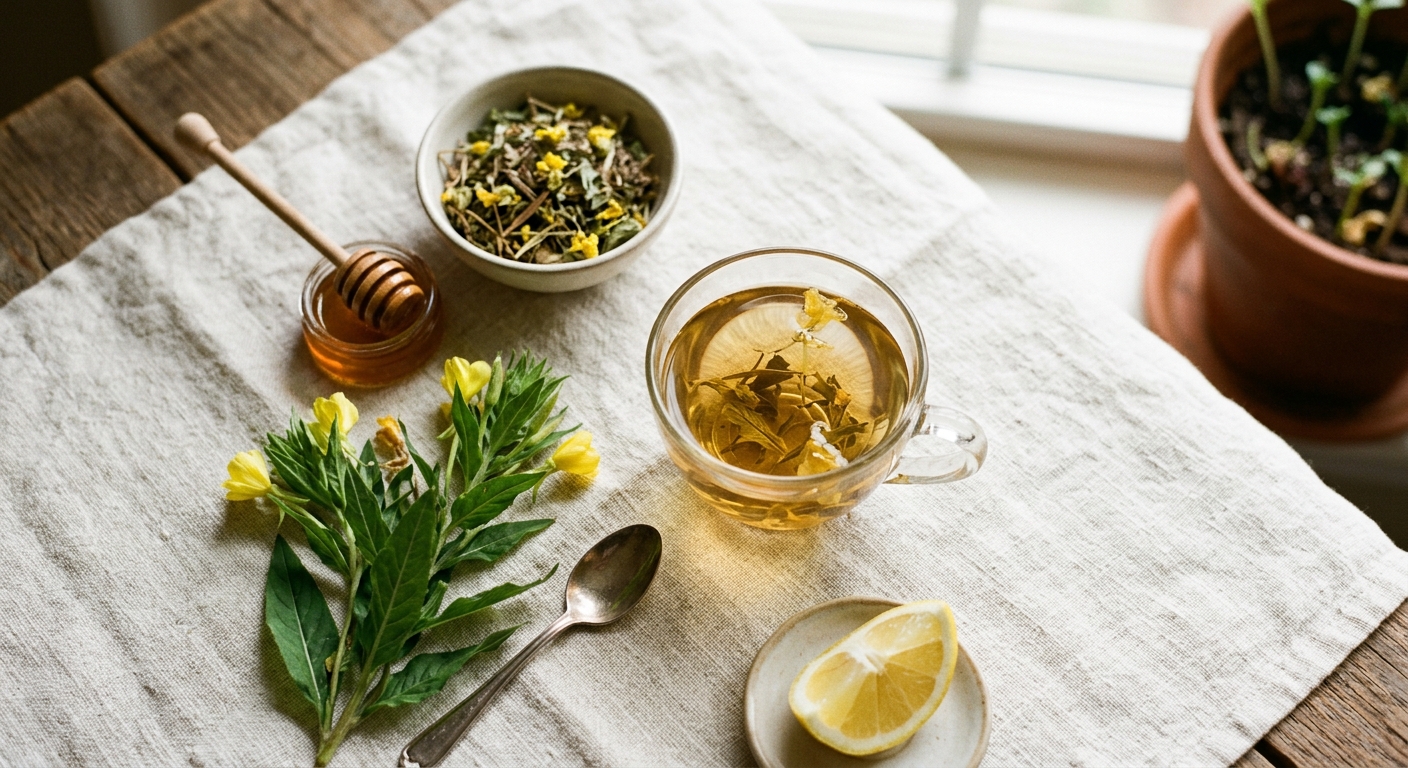
Evening primrose has enchanted herbalists and storytellers for centuries. Native to North America, Oenothera biennis earned its poetic name from the way its luminous yellow blossoms unfurl at dusk, releasing a sweet, honeyed fragrance that draws nocturnal moths for pollination. Indigenous communities across North America, including the Cherokee and Ojibwe, used various parts of the plant, from its edible roots and leaves to its tiny oil-rich seeds, as food and medicine long before European botanists catalogued it in the seventeenth century. When European settlers brought the plant back across the Atlantic, it quickly naturalized across the continent and became a fixture in cottage gardens and apothecary traditions alike.
In traditional Western herbalism, evening primrose has long been associated with the feminine cycle. Herbalists historically prepared teas and infusions from the leaves and flowers to soothe menstrual cramping, ease premenstrual tension, and support women through the transition of menopause. While much of the modern research attention has focused on evening primrose oil (EPO), which is concentrated from the seeds and rich in gamma-linolenic acid, a whole-herb tea made from the dried aerial parts offers its own distinct range of beneficial compounds, including flavonoids, tannins, and phenolic acids that exert gentle anti-inflammatory and antioxidant effects.
What makes evening primrose tea particularly special is its quiet, understated character. It is not a bold or bracing brew but rather a delicate, mildly floral infusion that invites slow, intentional sipping. Many women incorporate it into an evening ritual, perhaps alongside journaling or meditation, as a way of honoring their bodies during times of hormonal change. Whether you are navigating the rhythms of your monthly cycle, the perimenopause transition, or simply seeking a calming, nourishing cup, evening primrose tea offers a gentle and time-tested form of botanical support.
2
cups
Ingredients
- 2 tspdried evening primrose leaves and flowers
- 480 mlwater (90°C / 194°F)
- —raw honey to taste (optional)
- —a squeeze of fresh lemon juice (optional)
How to Brew
Click on an item below to shop for the recommended items for this recipe on Amazon.
As an Amazon Associate, we earn from qualifying purchases.
- Heat your water to approximately 90°C (194°F). If you do not have a temperature-controlled kettle, bring water to a full boil and then allow it to rest off the heat for 2 to 3 minutes before using.
- Measure 1 teaspoon of dried evening primrose leaves and flowers per 240 ml (1 cup) of water. Place the herb into a tea infuser or directly into a warmed teapot.
- Pour the heated water over the dried herb, ensuring all plant material is fully submerged. Cover the cup or teapot with a lid or small saucer to trap the volatile aromatic compounds and prevent them from escaping with the steam.
- Steep for 7 to 10 minutes. For a lighter, more floral cup, remove the herb closer to the 7-minute mark. For a fuller-bodied infusion with more pronounced astringency, steep for the full 10 minutes.
- Strain thoroughly into your mug. Sweeten with a small drizzle of raw honey if desired, and add a light squeeze of lemon to brighten the floral notes. Sip slowly and enjoy warm.
- Measure 2 teaspoons of dried evening primrose leaves and flowers per 480 ml (2 cups) of cold, filtered water. A slightly higher herb-to-water ratio compensates for the slower extraction at low temperatures.
- Combine the dried herb and cold water in a clean glass jar. Stir gently to ensure the plant material is fully moistened and no dry clumps remain floating on the surface.
- Seal the jar with a lid and leave it on the countertop at room temperature for 1 hour to begin the initial extraction, then transfer it to the refrigerator.
- Allow the tea to cold-brew in the refrigerator for a total of 8 to 12 hours, or overnight. The longer the steep, the more nuanced and full-flavored the infusion will become, though it remains notably gentler and sweeter than its hot-brewed counterpart.
- Strain the infusion through a fine-mesh sieve into a serving glass filled with ice. Sweeten with a light honey syrup if desired, and garnish with a slice of lemon or a few fresh mint leaves for an elegant, refreshing finish.
- Select a clear glass jar with a tight-fitting lid. Ensure the jar is thoroughly clean, as the warm but sub-boiling temperatures of sun tea do not sterilize the water the way hot brewing does.
- Measure 3 teaspoons of dried evening primrose leaves and flowers per 480 ml (2 cups) of cold, filtered water. Place the herb directly into the jar, then fill with cold water. The higher ratio of herb accounts for the moderate extraction temperatures.
- Seal the jar and place it in a spot that receives direct sunlight for at least 3 to 5 hours, such as a south-facing windowsill or an outdoor table. Rotate the jar once or twice during steeping to encourage even extraction.
- Check the color and aroma after 3 hours. The tea should be a warm pale gold with a noticeable floral fragrance. If you prefer a slightly stronger brew, leave it for up to 5 hours total, but do not exceed this to minimize any risk of bacterial proliferation.
- Once steeped to your liking, strain the infusion through a fine-mesh sieve into a serving pitcher and refrigerate immediately. Serve chilled over ice within 24 hours. Sweeten with honey or a few drops of rose water to complement the floral character of the brew.
Health Benefits
The flavonoids and phenolic acids in evening primrose leaf and flower tea have anti-inflammatory properties that may help reduce the prostaglandin-driven cramping and breast tenderness associated with premenstrual syndrome. Traditional herbalists have long prescribed evening primrose preparations specifically during the luteal phase of the cycle.
Evening primrose has a long history of use for managing hot flashes, night sweats, and mood fluctuations during perimenopause and menopause. Phytoestrogenic flavonoids such as kaempferol may interact gently with estrogen receptors, helping to moderate symptoms associated with declining estrogen levels.
The rich phenolic content of evening primrose, including gallic acid, ellagitannins, and quercetin, contributes meaningful antioxidant activity. Regular consumption of antioxidant-rich botanical teas is associated with reduced oxidative stress, which plays a role in chronic inflammation and cellular aging.
Anti-inflammatory compounds in the tea, combined with trace amounts of GLA from any seed material, may support skin hydration and elasticity. Herbalists have traditionally recommended evening primrose preparations for eczema-prone and hormonally reactive skin conditions.
Consumed as part of an evening ritual, the mild sedative and anxiolytic properties of the flavonoids in evening primrose tea may help calm the nervous system, making it a thoughtful choice for women who experience hormonally driven insomnia or nighttime anxiety.
🧪 Key Bioactive Compounds
The Science Behind Evening Primrose
The health effects of evening primrose tea are rooted primarily in its rich array of polyphenolic compounds. Chief among these are the ellagitannins, particularly oenothein B, a macrocyclic ellagitannin unique to the Onagraceae family. Research published in phytochemistry and pharmacognosy journals has identified oenothein B as a meaningful inhibitor of 5-alpha-reductase, an enzyme involved in steroid hormone metabolism, and has demonstrated immunomodulatory and anti-inflammatory activity in cell-based models. This compound, alongside gallic acid and other ellagitannins present in the leaves, contributes to the herb’s antioxidant capacity and its traditional reputation as a hormonal regulator.
Flavonoids including quercetin and kaempferol are also well represented in evening primrose leaf and flower preparations. Both compounds have been studied for their interactions with estrogen receptors: they can act as selective estrogen receptor modulators (SERMs), meaning they may gently occupy estrogen receptor sites and exert a mild estrogenic effect in tissues where estrogen is deficient, such as during menopause, while potentially exerting a mildly anti-estrogenic effect in tissues where estrogen excess is a concern. This nuanced, bidirectional activity is characteristic of many phytoestrogens and helps explain the herb’s traditional use for hormonal balance rather than hormonal stimulation. Quercetin has additionally been shown to inhibit the release of pro-inflammatory prostaglandins, which is directly relevant to its role in easing menstrual cramping.
Gamma-linolenic acid (GLA), the compound for which evening primrose oil is most famous, is present primarily in the seeds of the plant. While a standard leaf-and-flower tea will contain only trace amounts compared to a concentrated seed oil supplement, any seed material included in a whole-herb preparation will contribute some GLA. In the body, GLA is converted to dihomo-gamma-linolenic acid (DGLA), a direct precursor to the anti-inflammatory prostaglandin E1 (PGE1). Adequate PGE1 production is associated with reduced menstrual pain, improved mood regulation, and healthier inflammatory responses, making GLA one of the most pharmacologically significant reasons evening primrose has remained a cornerstone of women’s herbal medicine for generations.
Brewing Tips
- Use dried evening primrose leaves and flowers harvested before the flowers fully open for the most potent flavonoid content, as polyphenol concentrations tend to be highest in younger plant material.
- Always cover your cup or teapot while the tea steeps to prevent the delicate volatile aromatic compounds from escaping with the steam, which preserves both the fragrance and some of the medicinal value of the brew.
- For hormonal support, many herbalists recommend drinking evening primrose tea consistently during the luteal phase of the menstrual cycle, approximately from ovulation through the first day of menstruation, rather than daily throughout the month.