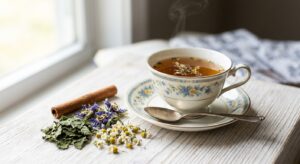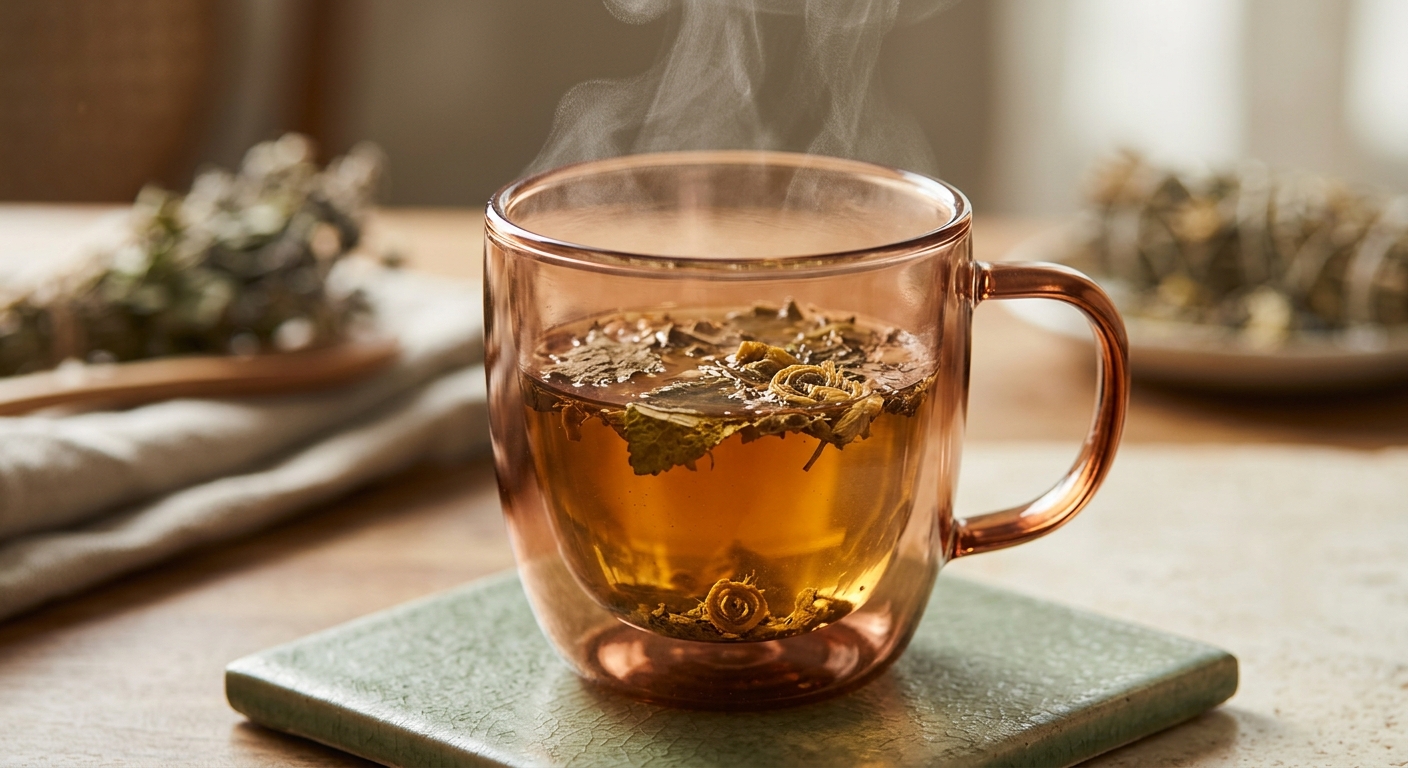
Long before modern wellness culture coined the term mindfulness, herbalists across cultures were prescribing moments of stillness through the ritual of brewing tea. From Ayurvedic practitioners in India steeping tulsi as a sacred act of presence, to European apothecaries prescribing lemon balm for melancholy and anxious hearts, the herbs in this blend carry centuries of wisdom about the relationship between plants and a calmer nervous system. Together, they form what many herbalists call a nervine blend, a combination of plants that tone, soothe, and nourish the nervous system rather than simply sedate it.
What sets this mindfulness blend apart from a generic relaxation tea is the intentional layering of its four primary herbs. Lemon balm and tulsi work at the surface level, gently lifting mood and reducing the mental chatter that accumulates throughout a stressful day. Passionflower works deeper, quieting anxious thought loops and supporting a transition into calm alertness. Ashwagandha, an adaptogenic root, works at the systemic level, helping the body regulate its response to cortisol over time. When brewed together, these herbs complement each other in both flavor and function, creating a synergistic effect that is greater than any single herb alone.
The sensory experience of this blend is as much a part of its power as its biochemistry. The bright citrus notes of lemon balm and tulsi open the cup, giving way to the soft floral warmth of passionflower and a grounding, faintly earthy undertone from ashwagandha. It smells like a walk through an herb garden at dusk. Whether you brew it hot on a winter evening or cold-steep it for a midday moment of calm, this blend invites you to pause, breathe, and return to yourself.
2
cups
Ingredients
- 2 tspdried lemon balm leaf
- 1 tspdried tulsi (holy basil) leaf
- 1 tspdried passionflower herb
- 0.5 tspashwagandha root powder
- 480 mlwater (90°C / 194°F)
- —raw honey or maple syrup to taste (optional)
- —a slice of fresh lemon (optional)
How to Brew
Click on an item below to shop for the recommended items for this recipe on Amazon.
As an Amazon Associate, we earn from qualifying purchases.
- Heat filtered water to 90 to 93°C (194 to 200°F). If you do not have a temperature-controlled kettle, bring water to a full boil and let it rest for 2 minutes before using.
- Add 2 tsp dried lemon balm, 1 tsp tulsi, 1 tsp passionflower, and 0.5 tsp ashwagandha powder to a tea infuser or teapot strainer. Combine the herbs gently before placing in your vessel.
- Pour the hot water over the herbs, cover your mug or teapot immediately with a lid or a small saucer. Covering the brew traps the aromatic volatile oils that would otherwise escape as steam.
- Steep for 7 to 10 minutes. Taste at 7 minutes for a lighter cup. Allow the full 10 minutes for a more robust, grounding brew with stronger ashwagandha presence.
- Remove the infuser and stir gently to redistribute any settled ashwagandha powder. Add raw honey and a squeeze of lemon if desired. Sip slowly and without distraction.
- Measure out a double-strength herb ratio: 4 tsp dried lemon balm, 2 tsp tulsi, 2 tsp passionflower, and 1 tsp ashwagandha powder for every 480 ml of cold filtered water. A stronger herb ratio compensates for the slower, cooler extraction.
- Combine all herbs in a clean glass jar. Pour room-temperature or cold filtered water directly over the herbs. Do not use warm or hot water, as this changes the extraction chemistry that makes cold brew uniquely smooth.
- Stir the mixture gently with a long spoon to ensure the ashwagandha powder disperses rather than clumping at the surface. Secure the jar with a lid.
- Allow the jar to sit at room temperature for 1 hour to begin extraction, then transfer to the refrigerator. Steep for a total of 8 to 12 hours. Steeping overnight is ideal and makes a convenient morning ritual.
- Strain the blend through a fine-mesh sieve or cheesecloth into a clean glass, pressing the herbs lightly to release remaining liquid. Serve over ice with a sprig of fresh mint or a lemon slice. Stir before each sip to re-integrate any settled powder.
- Use a triple-strength herb ratio: 6 tsp dried lemon balm, 3 tsp tulsi, 3 tsp passionflower, and 1.5 tsp ashwagandha powder for every 480 ml of water. This concentrated batch will ultimately yield 4 to 6 servings when diluted.
- Heat filtered water to 95°C (203°F) and pour over the combined herbs in a small saucepan or heatproof glass pitcher. Cover tightly and steep for 15 to 20 minutes. The higher temperature and extended steep time are appropriate here because you are deliberately extracting a fuller, more potent infusion.
- Strain the concentrate through a fine-mesh sieve or cheesecloth, pressing the herbs firmly to extract all liquid. Discard the spent herbs and allow the concentrate to cool to room temperature.
- Transfer the cooled concentrate to a glass jar and refrigerate. It will keep for up to 4 days. To serve, dilute one part concentrate with one to two parts hot water, cold water, or your preferred plant-based milk for a creamy, latte-style mindfulness drink.
- Shake or stir the jar before each use, as ashwagandha powder may settle. Sweeten the diluted serving with honey or a dash of cinnamon for added warmth and a complementary adaptogenic boost.
Health Benefits
Ashwagandha’s withanolides have been studied in multiple double-blind, placebo-controlled trials showing significant reductions in serum cortisol and self-reported stress scores after 8 weeks of daily use. Combined with the GABA-supporting rosmarinic acid in lemon balm and tulsi, this blend addresses stress at both the hormonal and neurochemical levels.
Passionflower has been compared to low-dose pharmaceutical anxiolytics in clinical settings, with one study finding it equally effective for generalized anxiety disorder with fewer side effects related to job performance. Lemon balm has also been shown in human trials to reduce anxiety and improve mood within a single dose, making this blend effective both acutely and over time.
Unlike sedative herbs such as valerian, the herbs in this blend promote calm alertness during the day and support the transition into restful sleep at night without causing grogginess. Passionflower in particular has been studied for improving sleep quality scores, while lemon balm has been shown to reduce insomnia symptoms when used consistently.
Tulsi is classified as a nootropic adaptogen in Ayurvedic medicine, and modern research supports its ability to reduce cognitive impairment caused by chronic stress. By helping the body adapt to stress rather than simply suppressing symptoms, the adaptogenic herbs in this blend allow for clearer thinking and better decision-making under pressure.
Chronic stress suppresses immune function, and several herbs in this blend help counter that effect. Ashwagandha has been shown to stimulate immune cell activity, and tulsi contains immunomodulatory compounds including eugenol and ursolic acid. Lemon balm contributes antiviral rosmarinic acid, making this blend supportive of the immune system as an indirect benefit of its stress-reducing action.
🧪 Key Bioactive Compounds
The Science Behind Lemon Balm
The calming effects of this blend are rooted in a well-studied but elegantly simple neurochemical mechanism: the enhancement of gamma-aminobutyric acid (GABA) activity in the brain. GABA is the nervous system’s primary inhibitory neurotransmitter, the chemical signal that says slow down, rest, and quiet the noise. Rosmarinic acid, found in significant concentrations in both lemon balm and tulsi, works by inhibiting the enzyme GABA transaminase, which is responsible for breaking down GABA after it is used. By slowing GABA degradation, rosmarinic acid effectively prolongs and intensifies the brain’s natural calming signal without the receptor dependency associated with pharmaceutical anxiolytics. Chrysin and vitexin from passionflower take this further by directly binding to GABA-A receptor sites, the same receptors targeted by benzodiazepine medications, though with a far gentler and non-habit-forming effect.
Ashwagandha operates on a different but complementary axis: the hypothalamic-pituitary-adrenal (HPA) system, the body’s central stress-response pathway. When the brain perceives a threat, the HPA axis triggers the release of cortisol from the adrenal glands. In acute situations this is protective, but chronically elevated cortisol is linked to anxiety, sleep disruption, immune suppression, weight gain, and cognitive decline. Withanolides, the bioactive steroidal lactones unique to ashwagandha, have been shown in peer-reviewed trials to measurably reduce serum cortisol and to downregulate excessive HPA axis reactivity. This means that with regular daily use, the body literally becomes less reactive to the same stressors over time, a hallmark property of a true adaptogen.
Tulsi adds a third dimension through its action as a nootropic adaptogen, a plant that both reduces stress and enhances cognitive function under pressure. Eugenol, one of its primary bioactive phenylpropanoids, inhibits the pro-inflammatory enzyme COX-2 and helps regulate the release of stress hormones at the neurological level. Research in both animal models and human observational studies has linked regular tulsi consumption to improvements in memory, attention, and mood stability. When all four herbs are combined in a single cup, they address the stress response across at least three distinct biological pathways simultaneously: GABA enhancement, HPA axis modulation, and neuroinflammation reduction. This multi-pathway approach is why traditional herbalists have long favored blended nervine formulas over single-herb preparations for sustained stress and anxiety relief.
Brewing Tips
- Always cover your mug or teapot while steeping this blend. Lemon balm and tulsi are rich in volatile aromatic compounds that carry a significant portion of their therapeutic and flavor value. Allowing steam to escape freely can reduce both the potency and the sensory pleasure of your cup.
- Buy ashwagandha root powder from a reputable supplier that tests for heavy metals and withanolide content. The quality of ashwagandha on the market varies enormously, and low-grade root powder may contain little to no active withanolides. Look for products standardized to at least 5 percent withanolides for consistent results.
- Brew this blend as part of a consistent daily practice rather than only on high-stress days. The adaptogenic herbs, particularly ashwagandha, accumulate benefit over time and are most effective when taken regularly. Even a 5-minute brewing ritual done daily creates a mindfulness anchor that itself becomes a stress-regulating habit.