Long before modern wellness culture discovered adaptogens, healers in ancient China, Korea, and the Middle East were combining ginseng and licorice root in complex herbal formulas. Ginseng, known in Traditional Chinese Medicine as rén shēn (人参), was considered the king of herbs, revered for its ability to restore vital energy and fortify the body against the ravages of stress and aging. Licorice root, or gān cǎo (甘草), was called the “great harmonizer,” added to formulas not only for its distinctive sweetness but for its ability to amplify and balance the effects of companion herbs. Together, they form one of the most time-honored pairings in the herbal pharmacopoeia.
What makes this blend so remarkable is the complementary nature of its two main players. Ginseng, particularly Panax ginseng, delivers a gently stimulating, grounding energy that sharpens focus without the jitteriness of caffeine. Licorice root tempers any harshness from ginseng’s intensity, contributes its own adaptogenic properties, and sweetens the cup without a single gram of added sugar. The result is a tea that feels simultaneously energizing and calming, a balance that is notoriously difficult to achieve with a single herb alone.
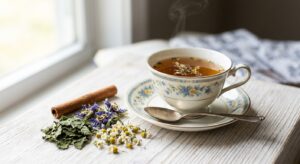
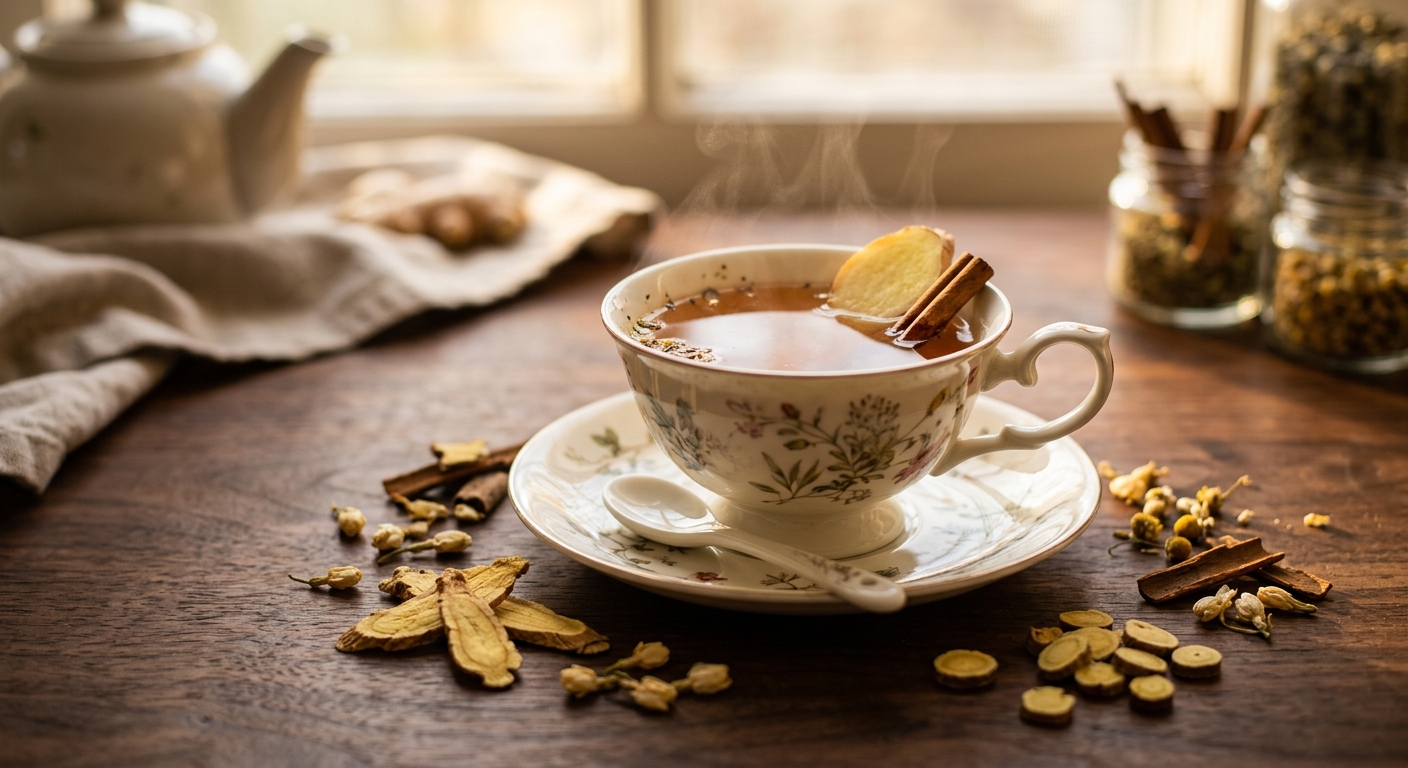
Beyond its storied history, this blend is remarkably sensory. The brew pours a rich amber-brown, filling the room with a sweet, woody aroma that hints at vanilla and earth. The taste opens with a warm, slightly bitter ginseng note before licorice root sweeps in with a lingering, anise-tinged sweetness. Whether you need to steady your nerves before a demanding day or unwind from the tension of a long afternoon, a cup of this ancient blend offers a moment of genuine, grounded calm.
2
cups
Ingredients
- 2 tspdried ginseng root (sliced or granulated)
- 1 tspdried licorice root (sliced)
- 500 mlwater (95°C / 203°F)
- —cinnamon stick (optional, for extra warmth)
- —thin slice of fresh ginger (optional)
How to Brew
Click on an item below to shop for the recommended items for this recipe on Amazon.
As an Amazon Associate, we earn from qualifying purchases.
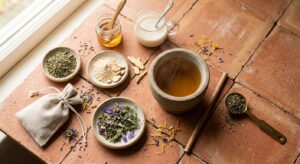
- Measure 2 teaspoons of dried ginseng root and 1 teaspoon of dried licorice root. If using whole sliced roots, lightly crush the pieces with the back of a spoon to crack the surface and help release compounds more readily.
- Bring 500 ml of filtered water to 95°C (203°F). If you do not have a temperature-controlled kettle, bring the water to a full boil and allow it to rest for 30 seconds before pouring.
- Place the ginseng and licorice root into your tea infuser or directly into a small saucepan. Pour the hot water over the herbs and cover the vessel with a lid or small plate to trap volatile aromatic compounds.
- Steep for 10 to 15 minutes. A 10-minute steep gives a lighter, sweeter cup dominated by licorice. Extending to 15 minutes deepens the ginseng presence and increases bitterness. Taste at 10 minutes and adjust to your preference.
- Strain through a fine mesh strainer into two mugs. Add an optional cinnamon stick or fresh ginger slice for the last 5 minutes of steeping if desired. Serve immediately while hot.
- Measure 3 teaspoons of dried ginseng root and 1.5 teaspoons of dried licorice root. Cold water extracts less efficiently than hot, so increase the herb quantity by roughly 50 percent compared to the hot brew method.
- Place the herbs loosely into a glass jar or cold brew pitcher. Pour 600 ml of cold, filtered water directly over the herbs at room temperature. Do not use hot water at any stage.
- Stir the mixture gently with a long spoon to ensure all the herb material is fully submerged. Place the lid on the jar and leave it at room temperature for 1 hour to begin the extraction process.
- Transfer the jar to the refrigerator and allow it to steep for a further 11 to 17 hours, for a total steeping time of 12 to 18 hours. The longer the steep, the richer and sweeter the brew.
- Strain the cold brew through a fine mesh strainer or cheesecloth into a clean pitcher. Press the herb solids gently to extract the remaining liquid. Serve over ice. The cold brew keeps refrigerated for up to 3 days.
- Measure 2 teaspoons of dried ginseng root and 1 teaspoon of dried licorice root per serving. For this decoction serving two people, use 4 teaspoons of ginseng and 2 teaspoons of licorice root. If you have whole dried root pieces, break them into smaller fragments for greater surface area exposure.
- Combine the herbs with 700 ml of cold, filtered water in a small stainless steel or ceramic saucepan. Starting with cold water and allowing it to heat gradually with the herbs encourages a more complete extraction of complex compounds.
- Place the saucepan over medium heat and bring the liquid to a gentle boil uncovered. Watch carefully and as soon as a rolling boil begins, immediately reduce the heat to low so the liquid holds a steady, quiet simmer.
- Simmer uncovered or partially covered for 20 to 30 minutes. As the liquid reduces, it will deepen in color to a dark amber-brown and the aroma will become noticeably more intense. Aim for a final volume of approximately 400 ml after reduction.
- Remove from heat and allow the decoction to cool for 3 to 5 minutes. Strain through a fine mesh strainer into two small mugs or teacups, pressing the root solids firmly to extract every drop. This brew is intentionally concentrated, so sip it slowly. It can also be diluted with an equal portion of hot water if a lighter cup is preferred.
Health Benefits
Both ginseng and licorice root act on the hypothalamic-pituitary-adrenal axis, the body’s central stress regulation system. Ginsenosides help normalize cortisol release during periods of prolonged stress, while glycyrrhizin from licorice root helps sustain appropriate cortisol activity so the adrenal glands are not overworked.
Unlike valerian or passionflower, this blend calms nervous system reactivity without inducing drowsiness. Liquiritin from licorice root has demonstrated anxiolytic effects in clinical models, and ginsenosides support neurotransmitter balance, making the blend well suited for daytime stress management.
Panax ginseng has been studied extensively for its nootropic properties. Ginsenoside Rg1 in particular has been shown to improve working memory and attention in adults under mental fatigue by enhancing acetylcholine activity and reducing oxidative stress in the brain.
Glycyrrhetinic acid, the metabolite of glycyrrhizin, has well-documented anti-inflammatory effects on mucous membranes throughout the digestive tract. This makes the blend useful for easing stress-related digestive complaints such as cramping, bloating, and mild gastric irritation.
Chronic stress suppresses immune function, and ginseng polysaccharides like Ginsan directly counteract this effect by stimulating natural killer cell activity and modulating cytokine production, helping maintain immune resilience during demanding periods.
🧪 Key Bioactive Compounds
The Science Behind Ginseng
The stress-relieving power of this blend is rooted in its dual action on the body’s primary stress response system: the hypothalamic-pituitary-adrenal (HPA) axis. When we experience stress, the HPA axis triggers a cascade of hormonal signals that culminate in the release of cortisol from the adrenal glands. Ginsenosides, the primary bioactive triterpenoid saponins in Panax ginseng, have been shown in multiple clinical and preclinical studies to act as bidirectional modulators of this axis. They help prevent cortisol from spiking excessively during acute stress and support the axis’s ability to return to baseline after the stressor has passed, a quality central to the definition of a true adaptogen.
Licorice root’s main compound, glycyrrhizin, works through a complementary but distinct mechanism. It inhibits the enzyme 11-beta-hydroxysteroid dehydrogenase type 2 (11-beta-HSD2), which normally inactivates cortisol in peripheral tissues. By slowing this inactivation, glycyrrhizin extends the local activity of cortisol at the tissue level, effectively making whatever cortisol the adrenal glands do produce work harder and longer. This is why licorice root has traditionally been used in herbal medicine to support recovery from adrenal fatigue, where cortisol output is low and individuals feel chronically exhausted and overwhelmed. The flavonoid liquiritin adds another layer of benefit, modulating serotonin and dopamine reuptake in ways that research suggests may directly reduce anxiety without causing sedation.
The neuroprotective effects of ginseng add a further dimension to this blend’s profile. Ginsenoside Rg1 has been studied for its ability to enhance long-term potentiation in the hippocampus, a process fundamental to learning and memory formation. It also exhibits antioxidant activity that protects neurons from the oxidative damage that chronic stress accelerates. Meanwhile, the complex polysaccharide Ginsan has demonstrated immunomodulatory effects in research settings, activating natural killer cells and promoting a balanced cytokine environment. Taken together, the compounds in this blend work across multiple physiological systems to address not just the feeling of stress, but several of its downstream biological consequences.
Brewing Tips
- Source your ginseng carefully. Panax ginseng (Asian ginseng) and Panax quinquefolius (American ginseng) have different energy profiles. Asian ginseng is more warming and stimulating, making it better for morning use. American ginseng is cooler and more relaxing, better suited to afternoon or evening blends.
- Do not discard your ginseng roots after the first brew. Dried ginseng root retains significant potency and can be re-steeped one or two more times. Expect each subsequent brew to be slightly lighter in flavor and compound concentration.
- If you find the licorice flavor too sweet or dominant, reduce the licorice root to half a teaspoon per cup and compensate with a small pinch of dried orange peel, which brightens the brew and adds complexity without overpowering the ginseng.