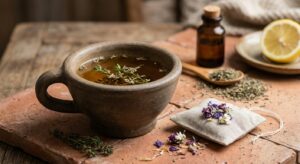
Long before oregano became the sprinkle on pizza, it was a revered medicinal plant. The name comes from the Greek oros ganos, meaning “joy of the mountain,” a nod to the sun-drenched hillsides of Greece where wild oregano (Origanum vulgare) thrives. Ancient Greek physicians, including Hippocrates, prescribed it for respiratory complaints and digestive upsets, while Roman cooks and healers carried it across Europe. In Mexico and Turkey, related species are still steeped as household remedies when a cold is coming on.
What makes oregano leaf tea so distinctive is its boldness. Unlike gentle chamomile or mellow lemon balm, oregano brings a peppery, resinous, almost savory character to the cup. That punch comes from volatile oils rich in carvacrol and thymol, compounds that give the herb its famous aroma and much of its traditional reputation as a cold-season ally. A warm cup in the evening feels like a hug with an edge, clearing the sinuses with its steam while the body winds down.
This guide treats oregano tea as a pungent nightcap: a short, intentional ritual to enjoy when the weather turns damp, when a scratchy throat appears, or whenever you want a deeply aromatic alternative to sweet, floral blends. It pairs beautifully with a little honey and lemon, and as you will see, it can be brewed hot, cold, or as a concentrated decoction to keep on hand through the winter.
2
cups
Ingredients
- 2 tspdried oregano leaf (Origanum vulgare)
- 480 mlfreshly boiled water (95°C / 203°F)
- 1 tspraw honey, or to taste
- 2 slicesfresh lemon
- —a thin slice of fresh ginger (optional, for extra warmth)
How to Brew
Click on an item below to shop for the recommended items for this recipe on Amazon.
As an Amazon Associate, we earn from qualifying purchases.
- Bring fresh, cold water to a full boil in a kettle, then let it rest for about 30 seconds so it settles near 95°C (203°F).
- Place 2 teaspoons of dried oregano leaf into a tea infuser, a teapot, or directly into a mug. Gently crush the leaves between your fingers first to release their oils.
- Pour the hot water over the leaves and immediately cover the vessel with a lid or small saucer to trap the aromatic steam.
- Steep for 7 to 10 minutes. Seven minutes gives a balanced cup, while ten delivers a stronger, more medicinal brew.
- Strain out the leaves, then stir in the honey while the tea is still hot so it dissolves fully.
- Add a slice of lemon and, if you like, a thin slice of ginger. Sip slowly in the evening, inhaling the steam between sips.
- Add 3 teaspoons of dried oregano leaf to a clean glass jar. Use slightly more herb than in the hot method, since cold water extracts more slowly.
- Pour 700 ml of cool filtered water over the leaves and stir gently to wet all of the herb.
- Seal the jar and refrigerate for 8 to 10 hours, or overnight, so the flavor develops without the harsh, bitter edge.
- Strain the tea through a fine mesh sieve or a cloth-lined strainer into a clean pitcher, pressing lightly on the leaves.
- Serve over ice with a squeeze of lemon and a drizzle of honey, or pour a portion into a saucepan and warm it very gently (do not boil) for a mellow evening cup.
- Store any remaining tea in the refrigerator and drink within 48 hours for the best flavor and freshness.
- Combine 4 tablespoons of dried oregano leaf with 500 ml of cold water in a small saucepan.
- Bring the mixture slowly to a gentle simmer over medium-low heat. Avoid a rolling boil, which drives off the delicate aromatic oils.
- Simmer with the lid on for 10 minutes, then turn off the heat and let the pot sit, still covered, for another 10 minutes.
- Strain through a fine mesh sieve into a clean glass jar, pressing the leaves to extract every last drop of liquid.
- To serve, dilute 100 ml of concentrate with 150 ml of hot water per cup, then stir in honey and a slice of lemon.
- Refrigerate the sealed jar and use within 3 days. Gently reheat single portions rather than the whole batch.
Health Benefits
Oregano’s carvacrol and thymol have shown antimicrobial effects in laboratory studies, and its high antioxidant load may help the body cope with oxidative stress during cold season. Human clinical evidence is still limited, so it is best viewed as supportive rather than curative.
The warm steam and aromatic oils traditionally help ease congestion and a scratchy throat. Compounds like luteolin and rosmarinic acid may add mild anti-inflammatory support for irritated airways.
Oregano has a long folk history as a digestive aid, helping settle bloating and gas after heavy meals. Its volatile oils may gently stimulate digestive secretions and relax the gut.
Oregano consistently ranks among the highest culinary herbs for antioxidant capacity, thanks to its phenolic acids and flavonoids. These compounds help counter free-radical damage linked to chronic inflammation.
While oregano is not a sedative, the act of sipping a warm, aromatic tea can promote relaxation and a sense of winding down. Pairing it with honey adds comfort without caffeine.
🧪 Key Bioactive Compounds
The Science Behind Oregano
The flavor and function of oregano tea come down to its essential oil, which can make up 1 to 4 percent of the dried leaf by weight. The star compounds are carvacrol and thymol, two phenolic monoterpenoids that disrupt the cell membranes of certain bacteria and fungi in laboratory settings. This membrane-disrupting action is the main reason oregano oil is such a popular subject in antimicrobial research. However, the concentration of these compounds in a cup of tea is far lower than in concentrated oil extracts, so the tea should be seen as a gentle, supportive beverage rather than a treatment.
Beyond its volatile oils, oregano is rich in water-soluble polyphenols such as rosmarinic acid, caffeic acid, and flavonoids like luteolin and apigenin. These extract readily into hot water and are responsible for much of the herb’s measurable antioxidant capacity. Antioxidants help neutralize reactive oxygen species, and some studies suggest they may modulate inflammatory pathways, which is relevant when the body is under the stress of a seasonal illness.
It is worth being honest about the state of the evidence. Most data on oregano’s antimicrobial and anti-inflammatory effects come from test-tube and animal studies, and well-controlled human trials on oregano tea specifically remain scarce. Brewing technique also matters: because carvacrol and thymol are volatile, covering your cup while it steeps helps retain them, and simmering too hard or too long can drive them off. This is why the hot brew method here uses a lid, and the concentrate method relies on a gentle simmer rather than a boil.
Brewing Tips
- Always cover your cup or pot while steeping to trap the volatile oils that carry both the flavor and the aromatic benefits.
- Gently crush dried oregano between your fingers before brewing to release more of its essential oils.
- Start with 1 teaspoon per cup if you are new to oregano tea, since its flavor is strong, then adjust upward to taste.
- Choose organic, culinary-grade dried oregano from a fresh source, as old, faded leaves lose much of their aroma and potency.
- Sweeten with raw honey and brighten with lemon to balance the herb’s bitterness without masking its character.