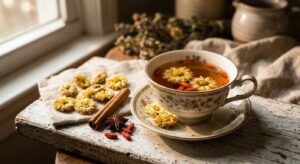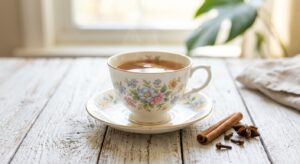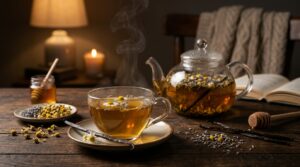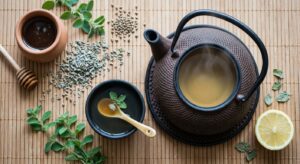
Lavender and rose are two of the most beloved aromatic plants in the history of herbal medicine. Lavender (Lavandula angustifolia) takes its name from the Latin lavare, meaning ‘to wash,’ a nod to the Romans who scented their baths, linens, and laundry with its blossoms. Medieval European apothecaries stuffed pillows with lavender to encourage sleep and ward off nightmares, a practice that survives in sachets and sleep sprays today.
Rose (Rosa damascena and Rosa gallica) has an equally long pedigree. Persian, Ayurvedic, and Unani physicians prized rose petals as a cooling, heart-soothing herb, using them in teas, syrups, and elixirs to calm emotional agitation and ease digestive discomfort. In traditional Persian medicine, rose was considered a remedy for a restless spirit as much as a tense body.
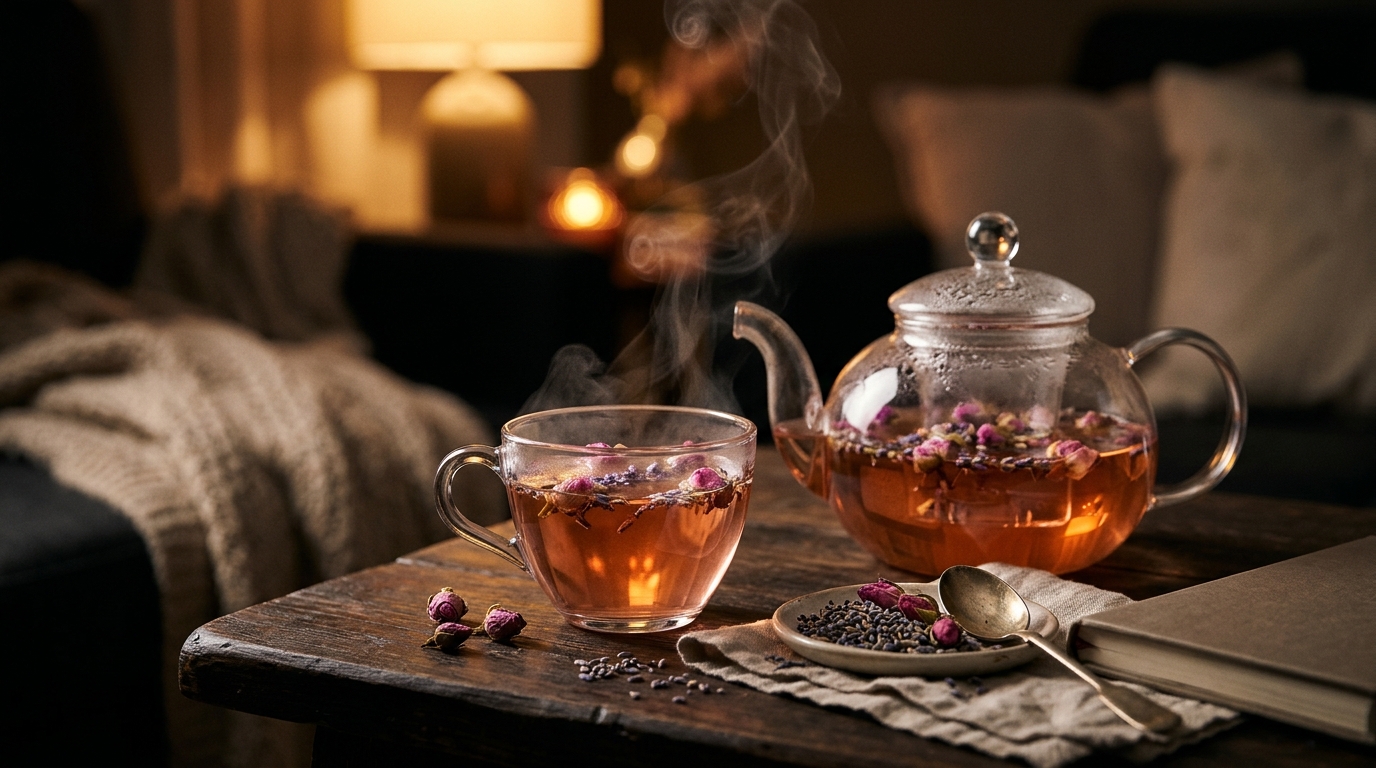
Combined, the two make a tea that engages the senses before the first sip. Lavender brings a clean, slightly camphorous, softly sweet aroma, while rose rounds it with a velvety, honeyed fragrance and a faint tannic grip. It is a quiet, unhurried drink, and the act of preparing it, watching the pale petals unfurl and breathing in the steam, is itself part of the wind-down ritual.
2
cups
Ingredients
- 2 tspdried culinary lavender buds
- 2 tbspdried edible rose petals
- 480 mlfiltered water (85°C / 185°F)
- —raw honey or a slice of lemon to taste (optional)
How to Brew
Click on an item below to shop for the recommended items for this recipe on Amazon.
As an Amazon Associate, we earn from qualifying purchases.
- Bring filtered water to a boil, then let it rest for about 2 minutes until it reaches roughly 85°C (185°F). This protects the delicate volatile oils in both flowers.
- Place the dried lavender buds and rose petals into a tea infuser or directly into a warmed teapot. Warming the pot first helps hold temperature during steeping.
- Pour the hot water over the flowers, cover the vessel with a lid or saucer to trap the aromatic steam, and set a timer for 5 to 7 minutes.
- Gently press the botanicals with a spoon at the 5-minute mark if you want a stronger floral note, then strain into two mugs.
- Sweeten lightly with raw honey if desired, then sip slowly in a dimly lit room, breathing in the steam between sips.
- Add the lavender buds and rose petals to a clean glass jar. Because cold water extracts more slowly, use a slightly higher ratio: 3 teaspoons of lavender and 3 tablespoons of rose petals per 1 liter of water.
- Pour cold filtered water over the flowers, stir once gently to wet all the petals, and seal the jar with a lid.
- Refrigerate for 8 to 12 hours, or overnight. Avoid steeping longer than 12 hours, as the flavor can turn grassy.
- Strain through a fine mesh sieve into a clean pitcher or glass, pressing lightly on the petals to release the last of the liquid.
- Serve over ice with a slice of lemon or a drizzle of honey. Drink within 48 hours and keep refrigerated.
- Sterilize a large glass jar by rinsing it with boiling water, then let it cool completely before use.
- Add 2 teaspoons of lavender buds and 2 tablespoons of rose petals to the jar, then fill with 1 liter of room-temperature filtered water.
- Cover with a lid and place the jar in direct, warm sunlight, such as a sunny windowsill or patio table, for 2 to 3 hours. The sun should warm the water gently without making it hot.
- Once the water has turned a soft golden pink and smells fragrant, bring the jar indoors and strain out the flowers.
- Chill for 30 minutes in the refrigerator and serve over ice. Discard any leftover tea after 24 hours.
Health Benefits
Clinical studies on oral lavender preparations, such as Silexan, have shown reductions in anxiety symptoms, and the linalool in lavender is believed to act on calming neurotransmitter pathways. Drinking the tea also adds the benefit of ritual and aroma.
Lavender aromatherapy has been associated with improved sleep quality in several small trials, and the warm, fragrant ritual of an evening cup helps cue the body that it is time to rest.
Both lavender and rose have a long traditional use as carminatives, easing bloating and nervous stomach. Rose petals are also mildly astringent, which can help settle an irritable gut.
Rose petals are rich in phenolic compounds and flavonoids, and lavender contains rosmarinic acid, all of which help neutralize free radicals in laboratory studies.
Lavender has traditionally been used to relieve stress-related headaches, and its muscle-relaxing and mildly analgesic properties may help release the physical tension that builds up during a long day.
🧪 Key Bioactive Compounds
The Science Behind Lavender
The calming reputation of lavender tea rests largely on two terpenoids: linalool and linalyl acetate. Laboratory and animal research suggests linalool interacts with GABA-A receptors and dampens glutamate signaling, a combination that produces a mild sedative and anxiolytic effect. Human trials of standardized oral lavender oil have reported meaningful reductions in generalized anxiety, though it is important to note that a cup of tea contains far lower concentrations than a standardized capsule, so the effect is gentler and more cumulative.
Rose petals contribute a different set of compounds. Their scent comes from geraniol, citronellol, and phenylethyl alcohol, volatile molecules that reach the brain through the olfactory system and are linked to relaxation in aromatherapy research. Rose petals are also rich in polyphenols, including flavonoids and gallic acid derivatives, which provide antioxidant activity and give the petals their subtle astringency.
Beyond the chemistry, there is a strong behavioral component. Warm beverages raise core body temperature slightly, and the subsequent cooling helps signal the body toward sleep. Pairing that physiological cue with a consistent, aromatic ritual builds a reliable association between the tea and rest, which may be as valuable as any single compound.
Brewing Tips
- Always use culinary-grade lavender and edible rose petals. Floral or craft-grade products may carry pesticides or fragrance oils.
- Keep the ratio of lavender to rose balanced. Too much lavender can taste soapy or medicinal, while rose softens and sweetens the cup.
- Cover your mug or teapot while steeping to trap the volatile aromatic oils, which are responsible for much of the tea’s calming effect.
- Make the tea 30 to 60 minutes before bed and pair it with dim lighting and no screens to deepen the wind-down ritual.
- Store dried flowers in an airtight, opaque container away from heat and light. They keep their fragrance for about a year.