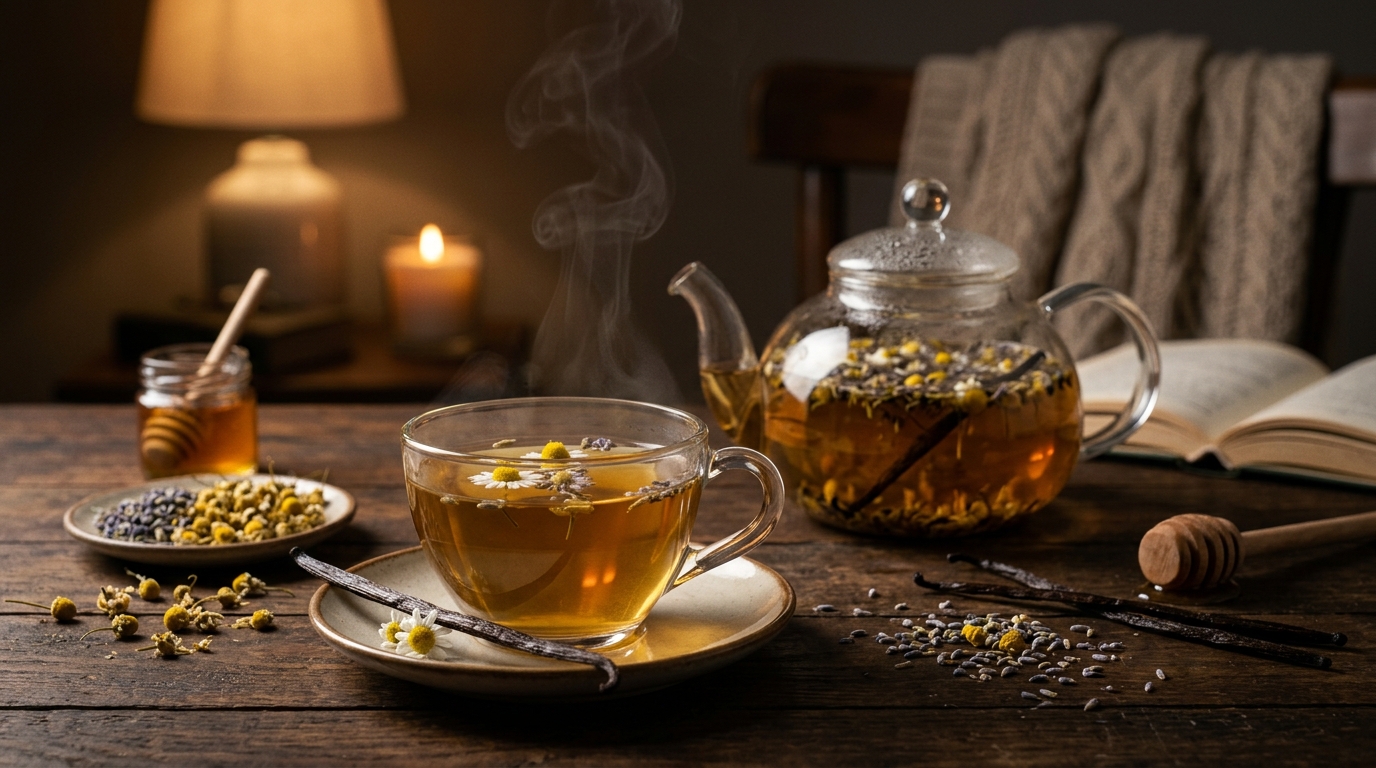
Chamomile has been steeped for evening calm since the days of ancient Egypt, where it was dedicated to the sun god Ra and prized as a remedy for fevers and restlessness. The Romans and Greeks followed, and the name itself comes from the Greek chamaimelon, meaning ‘earth apple,’ a nod to the sweet, apple-like fragrance of its tiny daisy flowers. Across Europe, a cup of chamomile at bedtime became a household ritual, offered to children and grandparents alike.
Lavender joined the tradition through a different path. Used in Mediterranean bathhouses and linen cupboards, Lavandula angustifolia was long associated with cleansing and calm. Herbalists tucked it into dream pillows and brewed it for tension headaches and frayed nerves. In tea, a small amount of lavender adds a perfumed, almost lilting top note that lifts chamomile’s honeyed softness.
Vanilla is the finishing touch that turns this blend from a simple herbal infusion into something that tastes like dessert. A little vanilla bean, or a few drops of pure extract, rounds the floral edges with creamy sweetness and a cozy, bakery-warm aroma. Together, the trio makes an evening tea that signals to your senses that the day is done, no sugar or caffeine required.
2
cups
Ingredients
- 2 tbspdried chamomile flowers
- 1 tspdried culinary lavender buds
- 1 piecevanilla bean pod, split lengthwise (or 1/2 tsp pure vanilla extract)
- 480 mlwater (90°C / 194°F)
- —raw honey or maple syrup to taste (optional)
- —splash of oat or whole milk (optional)
How to Brew
Click on an item below to shop for the recommended items for this recipe on Amazon.
As an Amazon Associate, we earn from qualifying purchases.
- Bring fresh, filtered water to a near boil, then let it rest for about 30 seconds so it sits around 90 to 95°C. Water that is too hot can pull bitterness from the lavender.
- Add the dried chamomile flowers and lavender buds to a teapot or large mug. If using a vanilla bean, scrape the seeds from the split pod into the herbs and drop in the pod as well.
- Pour the hot water over the herbs, then cover the pot or mug with a lid or saucer to trap the volatile aromatic oils that give chamomile its apple scent.
- Steep for 5 to 7 minutes. Check at 5 minutes: if you prefer a more delicate floral cup, stop there; for a deeper, more sedative-feeling brew, go to 7.
- Strain through a fine-mesh strainer or infuser into your cup. If using vanilla extract instead of a bean, stir it in now.
- Sweeten with a drizzle of honey and add a splash of warm milk if you want a custard-like finish. Sip slowly about 30 to 60 minutes before bed.
- Combine the chamomile, lavender, and split vanilla bean (seeds scraped in) in a clean glass jar or pitcher.
- Add 720 ml of cold, filtered water. Cold brew uses a slightly higher water ratio, so the flavor stays gentle and not overly floral.
- Stir once, seal with a lid, and place in the refrigerator for 8 to 12 hours. Overnight is perfect.
- Strain through a fine-mesh sieve or a coffee filter to remove all petals and buds, pressing gently to extract the last drops.
- Remove the vanilla pod and add sweetener to taste. Stir well, since honey dissolves poorly in cold liquid unless first mixed with a spoonful of warm water.
- Serve over ice or straight from the fridge. Keep covered for up to 3 days.
- Pour 360 ml of whole milk, oat milk, or almond milk into a small saucepan and add 120 ml of water to keep the flavor balanced rather than overly rich.
- Add the chamomile, lavender, and vanilla bean pod with its scraped seeds. Warm over low heat, stirring occasionally, until small bubbles form at the edges and steam begins to rise.
- Reduce the heat to the lowest setting and hold at a bare simmer for 8 to 10 minutes. Do not allow a rolling boil, which can scorch the milk and turn the lavender harsh.
- Remove from the heat, cover, and let rest for 2 minutes so the flavors settle.
- Strain through a fine-mesh sieve into two mugs, pressing the herbs lightly to release their liquid.
- Sweeten with honey or maple syrup and finish with a tiny pinch of cinnamon or nutmeg if you like. Froth with a whisk for a café-style cup.
Health Benefits
Apigenin in chamomile interacts with GABA receptors, and small clinical studies have linked chamomile extract to improved sleep quality, particularly in older adults and postpartum women.
Both chamomile and lavender have been studied for mild anxiety relief. Clinical trials of chamomile extract showed reductions in generalized anxiety symptoms, and lavender’s linalool is well documented for its calming effect.
Chamomile is a traditional carminative that relaxes smooth muscle in the gut, which may reduce bloating and cramping after an evening meal.
The sensory cues of warmth, scent, and slow sipping help cue the nervous system to shift toward rest, and the sweet vanilla aroma enhances that comforting association.
Bisabolol and chamazulene in chamomile show anti-inflammatory activity in lab and animal studies, which may contribute to its traditional use for minor aches and skin or gut irritation.
🧪 Key Bioactive Compounds
The Science Behind Chamomile
Chamomile’s calming reputation is anchored largely in apigenin, a flavonoid that appears to bind to benzodiazepine-like sites on GABA-A receptors. GABA is the brain’s primary inhibitory neurotransmitter, so gentle modulation of this system can quiet mental chatter and ease the transition to sleep. The effect of a single cup of tea is mild compared with pharmaceutical sedatives, but regular use has shown benefits in several small trials, including improved sleep quality scores and reduced symptoms of generalized anxiety.
Lavender contributes a different but complementary mechanism. Its main volatile compounds, linalool and linalyl acetate, have been shown to influence neurotransmitter activity and reduce markers of anxiety in both inhaled and oral forms. Silexan, a standardized lavender oil preparation, has been studied extensively for anxiety, and while tea delivers far smaller doses, the aroma alone can help lower perceived stress and heart rate.
Vanilla’s role is more sensory than pharmacological, but not insignificant. Vanillin has antioxidant properties, and the scent of vanilla is consistently rated as comforting across cultures, which supports the psychological side of a bedtime routine. Because relaxation is partly learned association, a reliably sweet, warm, floral cup can become a powerful cue that tells the body it is safe to power down.
Brewing Tips
- Use culinary-grade lavender only, and measure carefully. A little goes a long way, and too much turns the tea soapy and bitter.
- Cover your cup or teapot while steeping to keep chamomile’s volatile oils from escaping with the steam.
- Look for whole, golden chamomile flower heads rather than dusty tea-bag fannings for a sweeter, more apple-like cup.
- Used vanilla bean pods can be rinsed, dried, and reused once or twice, or tucked into a jar of sugar to make vanilla sugar.
- Make the cold brew version in a big batch on Sunday and keep it in the fridge for easy weeknight pours.