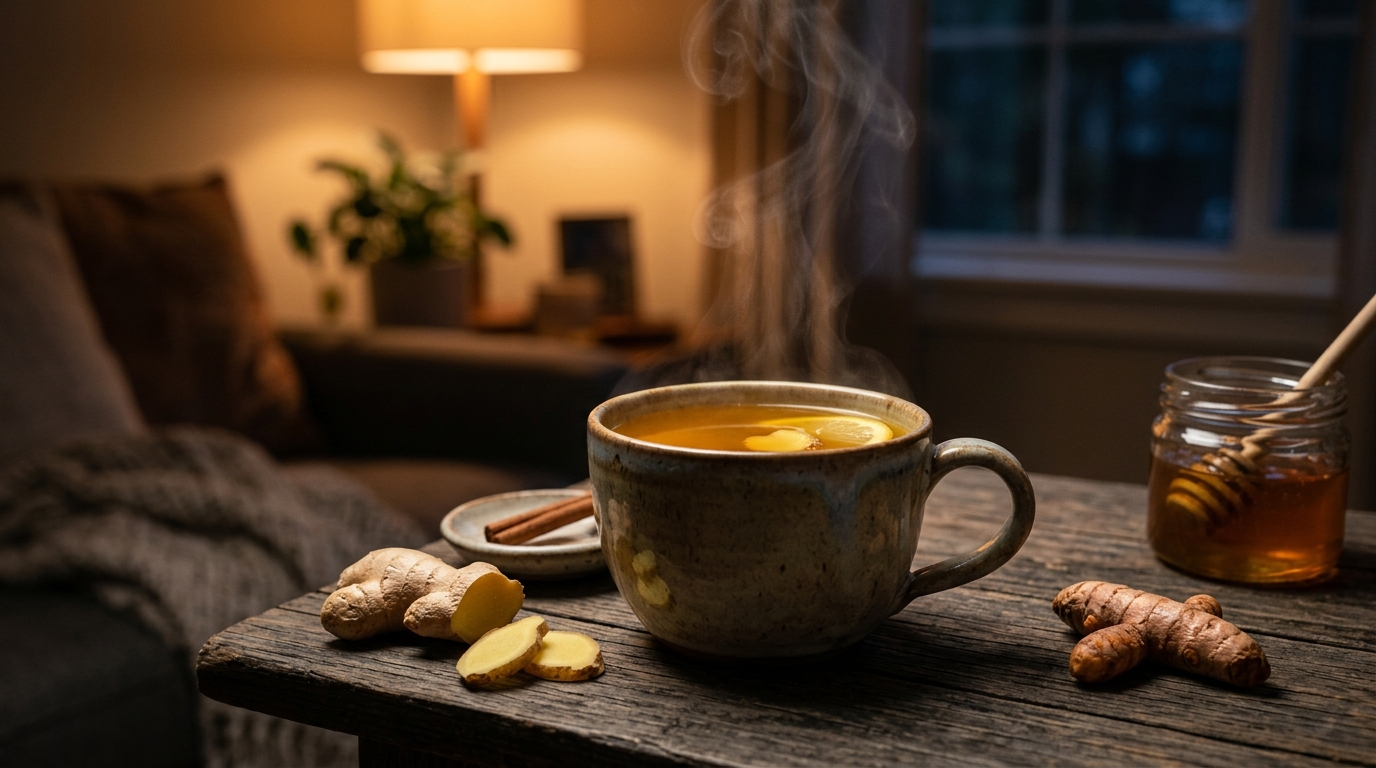
Ginger (Zingiber officinale) and turmeric (Curcuma longa) are close botanical cousins, both members of the Zingiberaceae family, and both have been cornerstones of healing traditions for well over four thousand years. In Ayurveda, ginger is called vishwabhesaj, the universal medicine, while turmeric earned the nickname “the golden healer” for its use in wound care, digestive complaints, and seasonal illness. Traditional Chinese medicine used fresh ginger to expel cold from the body at the first sign of a chill, and turmeric to move stagnant blood and ease aching joints.
Together they make a natural pairing for the evening hours. Ginger brings a bright, peppery heat that warms the body from the inside, while turmeric lends an earthy, faintly bitter depth and that unmistakable sunset color. In Indian households, “golden milk” served before bed is a time-honored remedy for coughs, sore throats, and the general sluggishness of early cold season. This tea is a lighter, water-based cousin of that tradition, perfect when you want the benefits without the richness of milk.
What makes this blend special is how well the two herbs complement each other chemically. Turmeric’s curcumin is notoriously hard for the body to absorb, but a pinch of black pepper and a little fat can dramatically improve its uptake, and ginger’s own warming compounds support circulation and digestion. The result is a nightcap that feels like a hug in a mug and gives your immune system a gentle, nourishing nudge as the day ends.
2
cups
Ingredients
- 2 tbspfresh ginger root, thinly sliced or grated
- 1 tbspfresh turmeric root, thinly sliced or grated (or 1 tsp ground turmeric)
- 480 mlwater (95°C / 203°F)
- 1 pinchfreshly cracked black pepper
- —juice of 1/2 lemon (optional)
- —raw honey or maple syrup to taste (optional)
- —a small splash of coconut milk or a few drops of coconut oil to aid curcumin absorption (optional)
How to Brew
Click on an item below to shop for the recommended items for this recipe on Amazon.
As an Amazon Associate, we earn from qualifying purchases.
- Wash the ginger and turmeric roots well. There is no need to peel them if they are organic, but peel if the skin looks thick or dry. Slice them into thin coins, or grate them for a stronger and faster extraction.
- Bring fresh water to a full boil, then let it rest for about 30 seconds so it sits just below boiling.
- Place the ginger, turmeric, and a pinch of cracked black pepper in a teapot or large mug. If using ground turmeric, stir it into a small amount of hot water first to prevent clumping.
- Pour the hot water over the roots, cover tightly with a lid or small plate, and steep for 10 to 15 minutes. Longer steeping gives a spicier, more potent cup.
- Strain into mugs through a fine-mesh strainer, pressing the roots gently to release the last of the liquid.
- Stir in lemon juice and honey while the tea is warm but no longer scalding, so the honey’s delicate enzymes are preserved. Add a splash of coconut milk if you like.
- Slice or finely grate 3 tablespoons of fresh ginger and 1.5 tablespoons of fresh turmeric. Grating exposes more surface area, which matters because cold water extracts more slowly.
- Add the roots and a pinch of cracked black pepper to a clean glass jar, then pour in 480 ml of cold, filtered water.
- Seal the jar, give it a good shake, and refrigerate for 8 to 12 hours. Shake once or twice if you remember.
- Strain through a fine-mesh sieve or nut milk bag to remove all root particles, which can turn bitter if left in.
- Serve over ice with a squeeze of lemon and a drizzle of honey. Drink within 2 days and keep refrigerated.
- Slice 2 tablespoons of ginger and 1 tablespoon of turmeric into thin coins, or crush them lightly with the flat of a knife to rupture the fibers.
- Add the roots and 600 ml of cold water to a small saucepan. Starting with cold water lets heat penetrate the roots gradually.
- Bring to a boil over medium-high heat, then immediately reduce to the lowest simmer. Add a pinch of black pepper and, if you like, a cinnamon stick or two green cardamom pods.
- Simmer gently with the lid slightly ajar for 15 to 20 minutes, until the liquid has reduced by about a fifth and turned a deep golden orange.
- Strain through a fine-mesh strainer into mugs, discarding the spent roots.
- Finish with lemon, honey, and a small splash of coconut milk. The fat helps your body absorb the curcumin.
Health Benefits
Curcumin and gingerols both suppress key inflammatory signaling molecules, and clinical trials show turmeric extracts can ease inflammatory discomfort such as joint stiffness. A tea delivers a much lower dose than a concentrated supplement, so expect gentle, supportive effects.
Both roots have antimicrobial and antioxidant activity, and curcumin appears to modulate immune cells such as T cells and macrophages. Ginger’s traditional use at the first sign of a cold is supported by its warming, circulation-boosting, and mildly antiviral properties in lab studies.
Ginger is among the best-studied natural remedies for nausea and speeds gastric emptying, which can ease bloating and the heaviness that disturbs sleep. Turmeric stimulates bile flow, further aiding digestion.
The warm liquid and pungent compounds help loosen mucus and soothe irritated throat tissue, which is why this tea is a favorite during cold and flu season.
Curcuminoids and gingerols neutralize free radicals and support the body’s own antioxidant enzymes, helping to limit oxidative stress that accompanies chronic inflammation.
🧪 Key Bioactive Compounds
The Science Behind Ginger
The tea’s benefits come mainly from two families of compounds. In ginger, the pungent phenolics called gingerols are most abundant in fresh root, while heat converts them into shogaols, which are stronger anti-inflammatory agents. This is why simmering or drying ginger often yields a spicier, more potent tea. Gingerols interact with receptors involved in pain and warmth sensation and inhibit enzymes such as COX-2, mirroring, in a milder way, how some anti-inflammatory drugs work.
Turmeric’s star compound, curcumin, makes up roughly 2 to 5 percent of the dried root and gives it its golden color. Curcumin has been shown in laboratory and clinical research to dampen NF-kB signaling and reduce inflammatory markers such as C-reactive protein and interleukin-6. The challenge is bioavailability: curcumin is poorly soluble in water, rapidly metabolized, and quickly eliminated. Piperine from black pepper can raise curcumin levels in the blood several-fold in some studies, and curcumin dissolves far better in fat, which is why traditional preparations pair turmeric with oil, ghee, or milk.
It is worth being honest about the evidence. Much of the strongest data comes from concentrated extracts, not tea. A brewed cup contains a smaller, more variable dose, and much of the research on immune effects is from cell or animal studies. Still, regular consumption of these roots as part of a balanced diet is well supported by both tradition and emerging science, and the warming, hydrating ritual of an evening cup offers real comfort during cold season.
Brewing Tips
- Use fresh roots whenever possible. Fresh ginger and turmeric have a brighter flavor and a fuller range of volatile oils than pre-ground powders, though ground turmeric works well in a pinch.
- Wear gloves or rinse your cutting board and hands right away when handling fresh turmeric. Its pigment stains skin, countertops, and wooden utensils stubbornly.
- Make a batch of strong decoction concentrate, store it in the fridge for up to 4 days, and simply reheat a cup each evening with a splash of milk and honey.
- Add a thin slice of lemon peel or a few cloves while steeping for extra immune-supporting aromatics and a more complex flavor.
- Drink the tea warm about an hour before bed. Ginger is gently stimulating to circulation for some people, so see how it affects your own sleep.