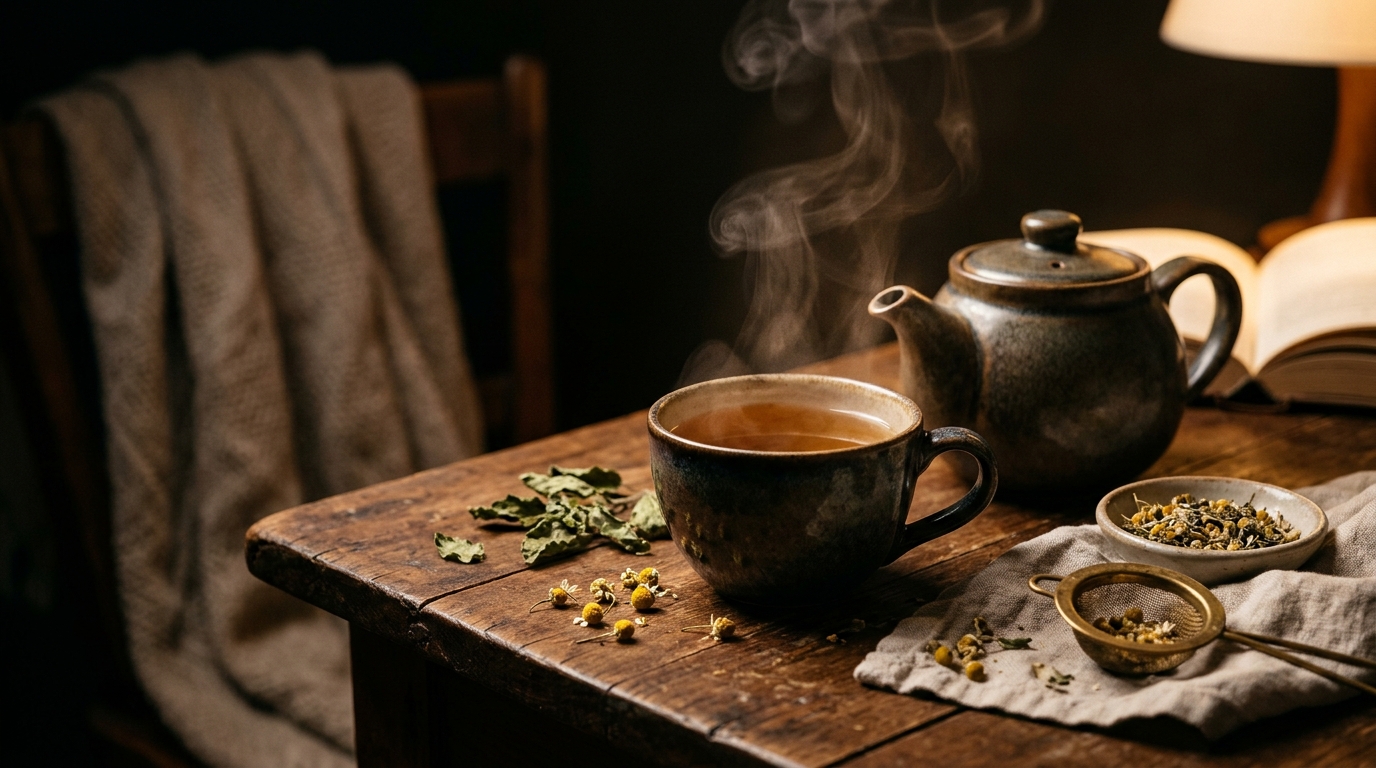
Chamomile (Matricaria chamomilla) has been brewed for thousands of years, from the temples of ancient Egypt, where it was dedicated to the sun god Ra, to the apothecaries of medieval Europe. Its small daisy-like flowers have long been a household remedy for restless nights, upset stomachs, and frayed nerves. The name itself comes from the Greek chamaimelon, meaning ground apple, a nod to the soft, apple-like fragrance that rises from a freshly steeped cup.
Holy basil, known as tulsi (Ocimum tenuiflorum), holds a very different but equally revered place in plant medicine. In India it is considered a sacred plant and has been grown in courtyards and temples for millennia. Ayurvedic practitioners call it the Queen of Herbs and use it as an adaptogen, a plant believed to help the body adapt to physical and mental stress. Its flavor is warm and spicy, with notes of clove, mint, and a faint peppery brightness.
When the two are brewed together, something lovely happens. The floral sweetness of chamomile softens the clove-like edge of tulsi, while tulsi adds depth and a gentle lift that keeps the blend from tasting flat. Chamomile quiets the nervous system in the moment, and tulsi works on the longer arc of the stress response. It makes an ideal evening ritual: a warm, aromatic pause between the demands of the day and the rest that follows.
2
cups
Ingredients
- 2 tbspdried chamomile flowers
- 2 tbspdried holy basil (tulsi) leaves
- 480 mlfresh filtered water
- —raw honey to taste (optional)
- —a thin slice of lemon or a small piece of fresh ginger (optional)
How to Brew
Click on an item below to shop for the recommended items for this recipe on Amazon.
As an Amazon Associate, we earn from qualifying purchases.
- Bring fresh filtered water to a boil, then let it rest for about 30 seconds so it settles near 95°C (203°F). Water that is too violent can make tulsi taste sharp.
- Place the chamomile flowers and tulsi leaves in a teapot or directly into a mug fitted with a tea infuser. Gently crush the tulsi leaves between your fingers first to wake up their oils.
- Pour the hot water over the herbs, cover immediately, and set a timer for 5 to 7 minutes. Closer to 5 gives a lighter, more floral cup, while 7 brings out the tulsi’s spicy depth.
- Strain the herbs, stir in honey if you like, and add a lemon slice or ginger for brightness.
- Sip slowly in a quiet spot, ideally 30 to 60 minutes before bed, breathing in the steam between sips.
- Combine the chamomile and tulsi in a clean glass jar. There is no need to crush the tulsi, since slow extraction will draw out its flavor gently.
- Pour in cold filtered water, using slightly more herb than for hot brewing: about 3 tablespoons of each herb per 500 ml of water.
- Seal the jar, give it a gentle swirl to saturate the herbs, and place it in the refrigerator for 8 to 12 hours, or overnight.
- Strain through a fine mesh sieve or cheesecloth into a clean pitcher, pressing lightly on the herbs to release the last of the liquid.
- Serve over ice or straight from the fridge, with a drizzle of honey and a sprig of fresh mint or a lemon wheel. It keeps well for up to 48 hours.
- Use a stronger ratio than a standard cup: 4 tablespoons each of chamomile and tulsi to 500 ml of just-boiled water.
- Combine the herbs and water in a heatproof jar or teapot, cover tightly, and steep for 15 to 20 minutes. The longer steep builds body and intensity.
- Strain thoroughly through a fine sieve, pressing the herbs to extract every drop of the infusion.
- Stir in honey while the liquid is still warm if you want a lightly sweetened concentrate, then let it cool fully before bottling.
- Store in a sealed bottle in the refrigerator for up to 4 days. To serve, dilute 1 part concentrate with 2 to 3 parts hot water for a warm cup, or with sparkling or still cold water over ice.
Health Benefits
Chamomile’s apigenin interacts with GABA receptors, and clinical trials of chamomile extract have shown meaningful reductions in generalized anxiety symptoms. Tulsi adds adaptogenic support that may help temper the body’s stress response.
Chamomile has a long tradition as a bedtime herb, and studies suggest it can modestly improve subjective sleep quality. Its calming effect on the nervous system helps the mind settle before bed.
Holy basil is classified as an adaptogen, and small human trials suggest it may reduce perceived stress and support healthy cortisol levels. Evidence is promising but still developing.
Chamomile’s bisabolol and flavonoids have antispasmodic and anti-inflammatory properties that can relax the gut, which is helpful when stress shows up as a tight or unsettled stomach.
Both herbs are rich in polyphenols such as rosmarinic acid and apigenin, which help protect cells from oxidative stress.
🧪 Key Bioactive Compounds
The Science Behind Chamomile
The calming reputation of chamomile rests largely on apigenin, a flavonoid that crosses into the brain and binds to benzodiazepine sites on GABA-A receptors. This action is far gentler than that of pharmaceutical sedatives, but it is thought to account for chamomile’s mild anxiolytic and sleep-promoting effects. A randomized, placebo-controlled trial of chamomile extract in people with generalized anxiety disorder found a significant reduction in anxiety scores compared with placebo, and other studies have noted modest improvements in sleep quality, particularly in older adults and postpartum women.
Holy basil works through a different pathway. As an adaptogen, it is believed to modulate the hypothalamic-pituitary-adrenal (HPA) axis, the system that governs cortisol release. Compounds like ursolic acid, eugenol, and rosmarinic acid contribute antioxidant and anti-inflammatory effects, and small clinical trials have reported lower self-rated stress, improved mood, and better sleep with tulsi supplementation over several weeks. Much of this research uses concentrated extracts rather than tea, so the effects of a single cup are best understood as gentle and cumulative.
Together, the herbs complement each other well. Chamomile offers a relatively fast, soothing effect on the nervous system and gut, while tulsi supports steadier resilience to stress over time. Drinking the blend as a nightly ritual may matter as much as its chemistry: the warmth, the aroma, and the deliberate pause are themselves proven ways to lower arousal and signal to the body that it is time to rest.
Brewing Tips
- Use whole chamomile flowers rather than finely powdered tea bag dust. Whole flowers hold more volatile oil and give a sweeter, less bitter cup.
- Look for tulsi sold as Rama, Krishna, or Vana varieties and blend them if you can. Rama is mild and sweet, Krishna is peppery, and Vana is bright and citrusy, so each changes the character of the blend.
- Steep covered to trap the aromatic oils, and avoid over-steeping chamomile past 10 minutes, since it can turn bitter and grassy.
- Store both herbs in airtight, opaque containers away from heat and light, and use within 12 months for the best flavor and potency.
- Make it a ritual: dim the lights, put your phone away, and drink the tea slowly in the same place each evening to strengthen the calming association.