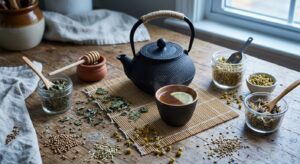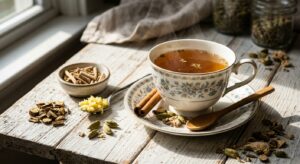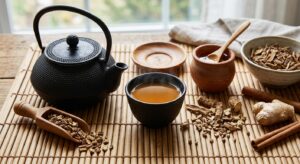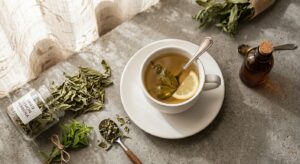
Lemon balm has been cherished for more than two thousand years. The ancient Greeks named it Melissa, the word for honeybee, because bees swarm to its small, nectar-rich flowers. Greek physician Dioscorides recommended it for ‘melancholy,’ and medieval herbalists planted it in monastery gardens as a remedy for low spirits and restlessness. The Carmelite monks of Paris even built a famous tonic water around it in the 1600s, Eau de Melisse des Carmes, which was prized as a cure for nervous complaints.
In traditional European herbal medicine, lemon balm earned a reputation as a ‘gladdening’ herb, one that lifts the mood while quieting the mind. Gardeners know it as a vigorous, generous plant: crush a single leaf between your fingers and the air fills with a clean, lemony fragrance that is somehow both uplifting and soothing. Unlike true citrus, there is no sharp acidity here, just a soft, herbaceous brightness with a faint minty undertone.
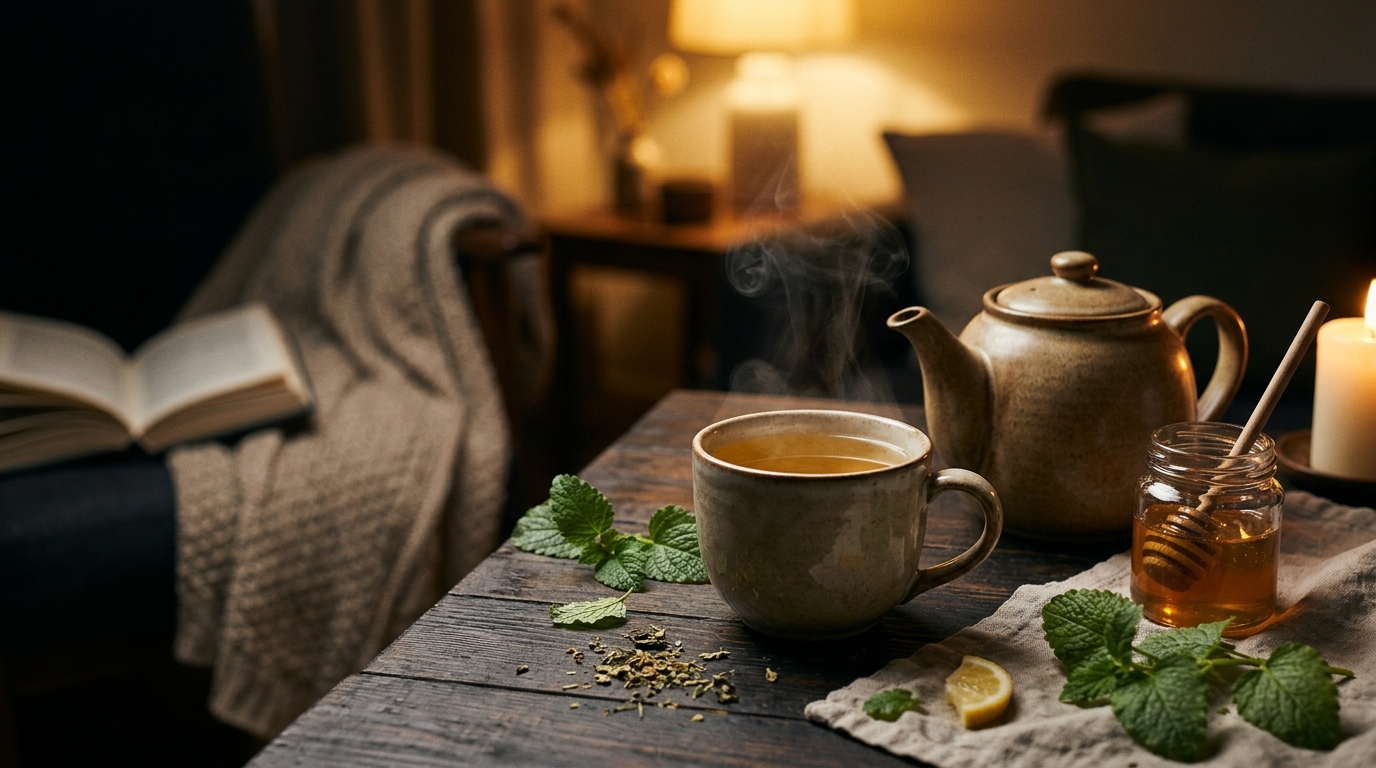
That unusual combination makes lemon balm an ideal evening companion. It is caffeine free, gentle enough to drink nightly, and pleasant enough that a cup becomes a ritual rather than a chore. If your shoulders creep toward your ears by 6 p.m. and your thoughts refuse to power down, this is the tea to reach for.
2
cups
Ingredients
- 2 tbspdried lemon balm leaves (or 4 tbsp fresh, lightly bruised)
- 480 mlwater (95°C / 203°F)
- —raw honey to taste (optional)
- —a thin slice of fresh lemon (optional)
How to Brew
Click on an item below to shop for the recommended items for this recipe on Amazon.
As an Amazon Associate, we earn from qualifying purchases.
- Bring fresh water to just below a full boil, then let it rest for about 30 seconds so it settles near 95°C (203°F). Water that is too violently boiling can dull the delicate citrus aroma.
- Measure the lemon balm into a teapot or large mug. If using fresh leaves, gently clap them between your palms or roll them once to bruise them and release their oils.
- Pour the hot water over the leaves and immediately cover the vessel with a lid or small plate to trap the aromatic steam.
- Steep for 7 to 10 minutes. Because lemon balm is a gentle leaf, a longer steep deepens its calming quality without turning it bitter.
- Strain the leaves, then stir in a little honey if you like. Sip slowly in a quiet spot about 30 to 60 minutes before bed.
- Place 3 tablespoons of dried lemon balm (or a generous handful of fresh sprigs) into a clean glass jar. This ratio is slightly stronger than hot brew because cold water extracts more slowly.
- Pour 500 ml of cool filtered water over the herb and stir gently to submerge all the leaves.
- Seal the jar and refrigerate for 6 to 8 hours. Do not exceed 12 hours, as the flavor can turn flat.
- Strain through a fine mesh sieve into a clean pitcher, pressing lightly on the leaves to release the last of the liquid.
- Serve over ice with a slice of lemon. Drink within 48 hours and keep refrigerated.
- Heat 240 ml of water to 95°C (203°F) and pour it over 3 tablespoons of dried lemon balm (or 6 tablespoons fresh) in a heatproof jug. This makes a double-strength brew.
- Cover and steep for 10 minutes, then strain out the leaves and stir in honey while the tea is still warm so it dissolves fully.
- Let the concentrate cool at room temperature for about 15 minutes, then fill two tall glasses with ice.
- Divide the concentrate between the glasses, letting the ice dilute it to the right strength.
- Top each glass with a splash of sparkling water, add a lemon wheel and a fresh lemon balm sprig, and serve at once.
Health Benefits
Small clinical studies using lemon balm extract have found reductions in self-reported anxiety and improved calmness, likely through modulation of GABA activity. Evidence is promising but largely based on concentrated extracts rather than tea.
Lemon balm is often combined with valerian or chamomile, and trials suggest this pairing can improve sleep quality and reduce restlessness. Its mild sedative action helps the body shift toward rest.
Research in healthy adults has linked lemon balm to improved calmness and mood, with some studies also noting better focus under mild stress. This fits its traditional role as a ‘gladdening’ herb.
Its volatile oils have an antispasmodic effect on smooth muscle, which is why lemon balm is traditionally used for stress-related stomach upset, bloating, and cramping.
Topical lemon balm preparations have shown activity against the herpes simplex virus in laboratory and small clinical studies, though this relates to creams rather than tea.
🧪 Key Bioactive Compounds
The Science Behind Lemon Balm
Lemon balm’s calming reputation has a plausible biochemical basis. The herb is rich in rosmarinic acid, a polyphenol that laboratory studies suggest inhibits GABA transaminase, the enzyme that breaks down gamma-aminobutyric acid (GABA). GABA is the brain’s main inhibitory neurotransmitter, responsible for dampening excessive neural firing. By slowing its breakdown, rosmarinic acid may help sustain a calmer neurochemical state.
The essential oil fraction, dominated by citral isomers (geranial and neral) and citronellal, adds a second layer. These volatile compounds give lemon balm its signature scent and have shown mild sedative and spasm-relieving properties in animal and in vitro studies. Inhaling the aroma while sipping the warm tea may contribute to the relaxing experience, though the olfactory effects are harder to measure than the herb’s biochemical ones.
It is worth being honest about the evidence. Many of the most encouraging human trials used standardized extracts at fixed doses, not a cup of tea, and sample sizes were small. A properly steeped, covered cup delivers a modest but real dose of these compounds, and combined with the calming ritual of drinking it, many people find it a worthwhile and low-risk part of an evening routine.
Brewing Tips
- Always cover your cup while steeping. The calming volatile oils in lemon balm evaporate easily, and a lid keeps them in your tea instead of in the air.
- Use fresh leaves when you can. Home-grown lemon balm is more fragrant than most store-bought dried herb, and one plant will produce far more than you can drink.
- Store dried lemon balm in an airtight, opaque container away from light and heat, and use it within 6 to 12 months, since its lemony character fades faster than that of sturdier herbs.
- Drink your cup 30 to 60 minutes before bed and pair it with dimmed lights and no screens to make the most of its relaxing effects.