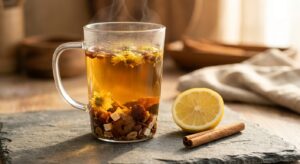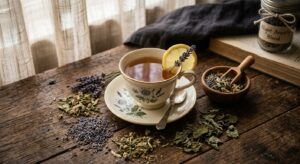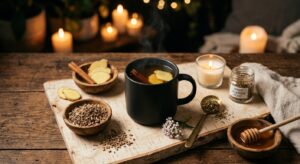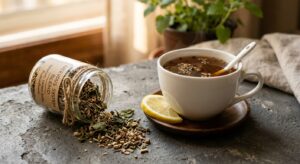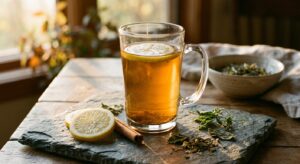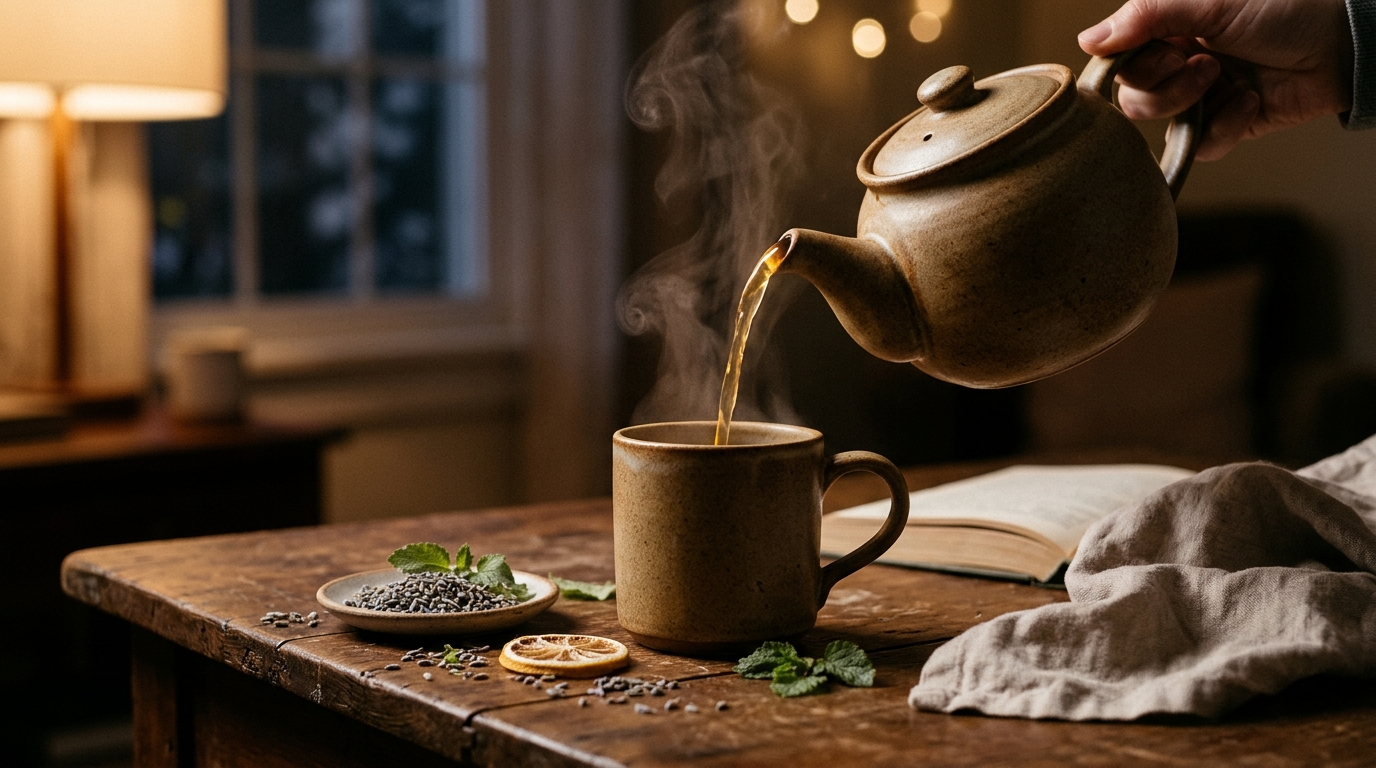
Lavender (Lavandula angustifolia) has been woven into human bedtime rituals for thousands of years. The Romans scented their baths with it, medieval Europeans tucked sachets under pillows, and the very name comes from the Latin lavare, meaning to wash. Its purple spikes carry a perfume so strongly associated with calm that it is hard to smell it without feeling your shoulders drop.
Lemon balm (Melissa officinalis) has an equally storied past. Greek and Roman beekeepers planted it near their hives because bees adore it, and the genus name Melissa is the Greek word for honeybee. Medieval monks brewed it as a cordial for melancholy and restlessness, and the Carmelite nuns of Paris famously distilled it into Carmelite Water, prized as a tonic for nerves and digestion. Its leaves smell like lemon candy and taste bright, green, and gently sweet.
When the two herbs meet in a teapot, something lovely happens. Lemon balm lifts and brightens, while lavender adds a deep floral, almost honeyed softness that keeps the cup from tasting like pure lemon. The result is a restful evening drink that tastes like a summer garden at dusk, and one that makes a perfect last ritual before lights out.
2
cups
Ingredients
- 1 tspdried culinary lavender buds
- 2 tbspdried lemon balm leaves (or 4 tbsp fresh, lightly bruised)
- 480 mlwater (90°C / 194°F)
- —raw honey to taste (optional)
- —thin lemon slice or fresh lemon balm sprig for garnish (optional)
How to Brew
Click on an item below to shop for the recommended items for this recipe on Amazon.
As an Amazon Associate, we earn from qualifying purchases.
- Measure 1 teaspoon of dried lavender buds and 2 tablespoons of dried lemon balm leaves into a teapot or a large mug with an infuser. Rub the lemon balm gently between your fingers as you add it to release some of its oils.
- Bring fresh water to a boil, then let it rest for about 30 seconds so it cools to roughly 90°C (194°F). Water at a full rolling boil can scorch the delicate lemon balm and pull out a harsh, soapy edge from the lavender.
- Pour the hot water over the herbs, then cover immediately with a lid or small saucer to trap the aromatic steam.
- Steep for 5 to 8 minutes. Start tasting at 5 minutes. Beyond 8 minutes the lavender can turn perfumey and slightly bitter, overwhelming the lemon balm.
- Strain into two cups, discarding the herbs. Sweeten with a small spoonful of honey if you like, then sip slowly about 30 to 60 minutes before bed.
- Add 1 teaspoon of dried lavender buds and 3 tablespoons of dried lemon balm leaves to a clean glass jar. Use a slightly higher amount of lemon balm than in the hot brew, since cold water extracts more slowly.
- Pour in 750 ml of cool filtered water, stir gently with a spoon, and seal the jar with its lid.
- Place the jar in the refrigerator and let it steep for 8 to 12 hours, ideally overnight. Give it a gentle swirl once or twice if you pass by.
- Strain through a fine mesh sieve or a coffee filter into a clean pitcher or bottle, pressing lightly on the herbs to release the last of the liquid.
- Serve over ice with a lemon slice or a sprig of fresh lemon balm. Keep refrigerated and drink within 2 days for the best flavor.
- Combine 2 teaspoons of dried lavender buds and 4 tablespoons of dried lemon balm leaves in a heatproof jar or teapot.
- Pour 360 ml of freshly boiled water (about 95°C / 203°F) over the herbs to create a concentrate that is roughly twice as strong as a normal cup. Cover tightly.
- Steep for 10 minutes, then strain out the herbs and stir in honey or a little simple syrup while the liquid is still warm so it dissolves completely.
- Let the concentrate cool for 15 minutes at room temperature, then pour it into a pitcher over a generous amount of ice and top with 360 ml of cold water.
- Stir, taste, and adjust with more cold water or a squeeze of fresh lemon. Serve in tall glasses over fresh ice, garnished with a lavender sprig or lemon wheel.
Health Benefits
Clinical trials on oral lavender preparations such as Silexan have shown meaningful reductions in anxiety symptoms, and lemon balm has been shown to improve calmness and mood in small human studies. Tea delivers a gentler dose than concentrated extracts, but the aroma itself adds to the calming effect.
Lavender aroma and oral preparations have been linked to improved subjective sleep quality in several trials, while lemon balm is commonly combined with valerian or hops in traditional sleep blends. The tea works best as part of a consistent wind-down routine.
Lemon balm has a long history as a carminative, easing gas, cramping, and nervous stomach. Its antispasmodic compounds may help relax the smooth muscle of the digestive tract when stress is the culprit.
Small studies using lemon balm extract found improvements in calmness and alertness at moderate doses, suggesting it relaxes without heavy sedation. Lavender’s aroma adds to the sense of ease.
Rosmarinic acid, caffeic acid, and flavonoids in both herbs show antioxidant activity in laboratory studies, though the clinical significance of drinking tea is still being explored.
🧪 Key Bioactive Compounds
The Science Behind Lavender
The calming reputation of this blend rests largely on a few well-studied aromatic compounds. Lavender’s linalool and linalyl acetate have been shown in laboratory and human research to interact with GABA-A receptors and to dampen excitatory glutamate signaling, a pattern consistent with reduced anxiety and mild sedation. Oral lavender oil preparations have performed well in randomized trials for anxiety, and inhaled lavender has been associated with improved sleep in several small studies. A cup of tea delivers a much lower dose than those standardized capsules, so its effect is best understood as gentle and supportive, helped along by the soothing aroma and the ritual itself.
Lemon balm brings a different but complementary mechanism. Its rosmarinic acid appears to inhibit GABA transaminase, the enzyme that breaks down GABA, which may let this calming neurotransmitter stay active longer. Human studies using lemon balm extracts have reported improved mood and calmness, and some work suggests it may help with stress-related restlessness. Its citral and citronellal contribute both the lemony fragrance and mild antispasmodic action, which helps explain its traditional use for tension-related digestive discomfort.
It is worth being honest about the limits of the evidence. Much of the research uses concentrated extracts or essential oils rather than brewed tea, and many trials are small. Still, the combination of pharmacologically active compounds, centuries of traditional use, and the genuine psychological benefit of a warm, fragrant bedtime ritual makes this tea a sensible, low-risk addition to an evening routine for most healthy adults.
Brewing Tips
- Use culinary-grade lavender only, never lavender sold for crafts or potpourri, which may be treated or unsuitable for consumption.
- Go easy on the lavender. Too much quickly tastes soapy, so start with 1 teaspoon per 480 ml and adjust upward only if you want a more floral cup.
- If you have fresh lemon balm, use about double the volume of dried and bruise the leaves gently before steeping to release their oils.
- Store dried herbs in airtight, opaque containers away from light and heat, and replace them after about a year since their volatile oils fade over time.
- Drink the tea 30 to 60 minutes before bed and pair it with screen-free time to get the full benefit of the ritual.