Long before modern sleep aids lined pharmacy shelves, healers across China, Japan, and Korea were turning to the reishi mushroom, known as Ganoderma lucidum and revered as the “Mushroom of Immortality,” to quiet the mind and restore the body overnight. In Traditional Chinese Medicine, reishi has been prescribed for over 2,000 years to calm the shen, the spirit seated in the heart, and to address restlessness, palpitations, and the kind of anxious wakefulness that keeps a racing mind spinning long past midnight. Its reputation was so profound that ancient herbalists reserved dried reishi for emperors and nobility, believing it conferred not just longevity but a quality of deep, untroubled rest that allowed the body to truly heal.
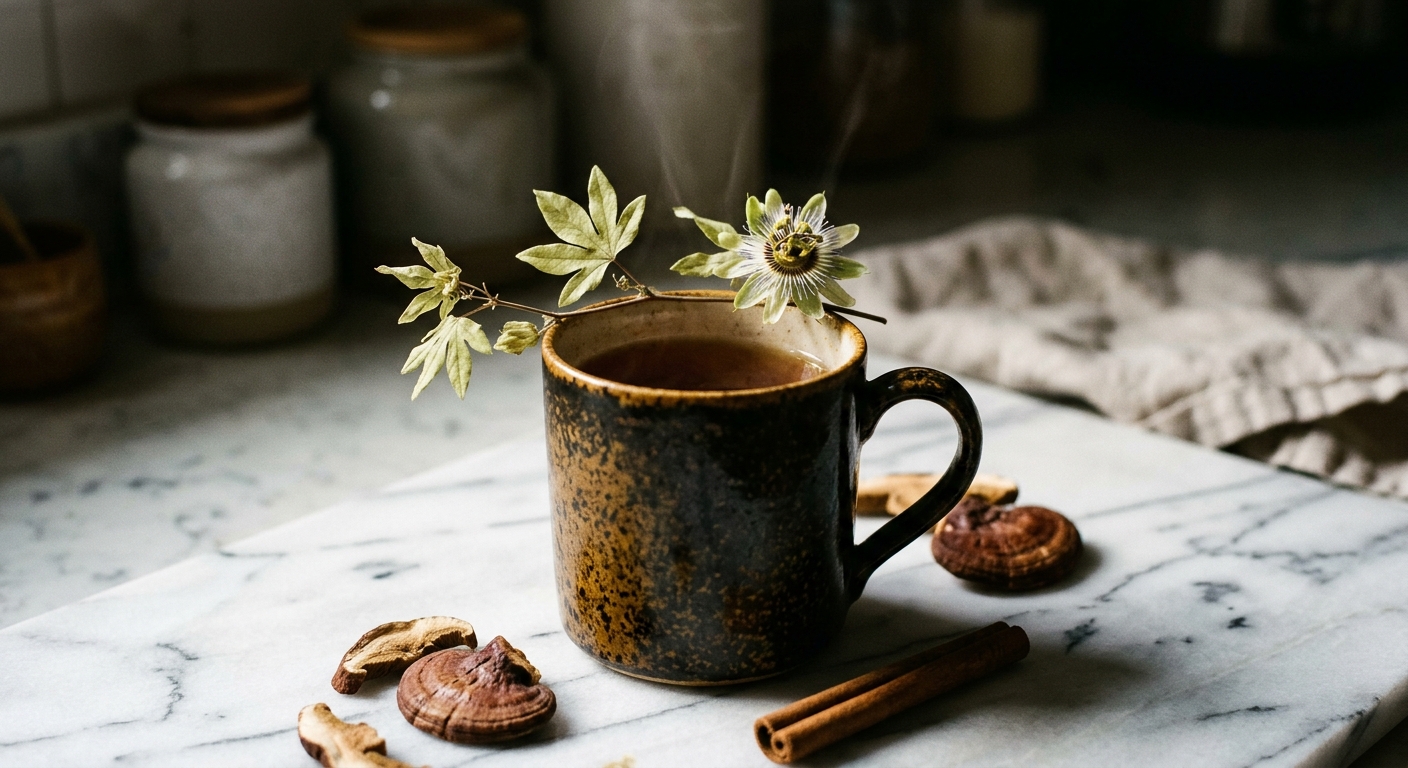
What makes Deep Sleep Mushroom Tea genuinely distinct from chamomile or valerian blends is its adaptogenic foundation. Reishi does not simply sedate the nervous system the way a pharmaceutical sleeping pill might. Instead, it works over time to modulate the stress response, lowering elevated cortisol levels that are one of the most common culprits behind difficulty falling asleep and staying asleep. Paired with supporting herbs like ashwagandha root, passionflower, and a whisper of cinnamon, this blend creates a layered, warming cup that tastes like the forest floor in the best possible way: earthy, slightly bitter, faintly spiced, and deeply grounding.
This post covers everything you need to brew a proper cup, from the slow hot decoction that extracts the most from the tough mushroom material to a cold-brew method for warm-weather evenings when you want the same benefits without the heat. You will also find a breakdown of the key bioactive compounds behind reishi’s sleep-supporting reputation, honest notes on what the science says, and practical tips for making this tea a sustainable part of your nightly wind-down ritual.
2
cups
Ingredients
- 2 tspdried reishi mushroom slices or powder
- 1 tspdried passionflower herb
- 0.5 tspashwagandha root powder
- 1 stickcinnamon (or 0.25 tsp ground cinnamon)
- 500 mlfiltered water
- —raw honey or coconut sugar to taste (optional)
- —splash of oat milk for creaminess (optional)
How to Brew
Click on an item below to shop for the recommended items for this recipe on Amazon.
As an Amazon Associate, we earn from qualifying purchases.
- Add 500 ml of cold filtered water to a small saucepan along with the dried reishi slices or powder and the cinnamon stick. If using reishi slices, breaking or crushing them slightly before adding will increase the surface area and improve extraction.
- Bring the water to a full boil over medium-high heat, then immediately reduce the heat to a gentle, steady simmer. You want small, consistent bubbles, not a rolling boil that rapidly evaporates your liquid.
- Simmer uncovered for 20 to 25 minutes, stirring occasionally. The liquid will deepen from pale gold to a rich amber or mahogany brown as the compounds are drawn out. If the liquid reduces by more than a third, add a small splash of hot water to maintain your volume.
- In the last 5 minutes of simmering, add the dried passionflower herb directly to the saucepan. Passionflower’s delicate volatile compounds are best preserved with a shorter, lower-heat exposure.
- Remove the saucepan from heat and whisk in the ashwagandha root powder, ensuring it disperses evenly rather than clumping at the bottom.
- Strain the liquid through a fine mesh strainer or cheesecloth into two mugs, pressing the spent herbs gently to extract every last drop. Sweeten with raw honey if desired, and add a splash of oat milk to round out the bitterness. Drink 30 to 45 minutes before bed.
- Place the reishi mushroom powder or very finely crumbled dried slices into a clean glass jar. Because cold water extracts less efficiently from tough mushroom material, increase the reishi amount to 3 teaspoons per 500 ml of water to compensate for the gentler extraction.
- Add the passionflower, cinnamon stick, and ashwagandha powder directly to the jar. Pour 500 ml of room-temperature filtered water over the herbs and stir well to ensure the powders are incorporated and not sitting dry at the surface.
- Seal the jar with a lid and leave it at room temperature for 1 hour to allow the extraction to begin at a slightly warmer temperature, which helps initiate compound release before the cold slow-down.
- Transfer the sealed jar to the refrigerator and allow it to cold-brew for a minimum of 10 hours and up to 12 hours. Overnight from evening to morning works well for a next-evening batch.
- When ready to serve, strain the liquid through a fine mesh strainer or nut milk bag into a glass or pitcher, pressing the solids firmly to extract the remaining liquid. Discard the spent herbs.
- Pour over a small amount of ice or serve lightly chilled. Stir in raw honey while the liquid is still at room temperature so it dissolves easily. Consume within 48 hours and store the strained liquid in the refrigerator.
- Combine 4 tablespoons of dried reishi slices or 2 tablespoons of reishi powder with 1 liter of cold filtered water in a medium saucepan. Add 2 cinnamon sticks and 1 teaspoon of ashwagandha powder. This larger ratio will produce a concentrated liquid intended for dilution, not for drinking straight.
- Bring to a full boil over medium-high heat, then reduce to a low simmer. Allow the mixture to simmer uncovered, stirring every 10 to 15 minutes, for 45 to 60 minutes. The goal is to reduce the original 1 liter down to approximately 400 to 500 ml of deeply concentrated liquid.
- In the final 8 minutes of simmering, add 2 teaspoons of dried passionflower to the saucepan, stir gently, and allow it to infuse before the heat is turned off.
- Remove from heat and strain the concentrate through a fine mesh strainer lined with cheesecloth into a clean glass jar or pitcher, pressing firmly on the spent solids. Allow the concentrate to cool to room temperature before sealing.
- To serve each evening, dilute 60 to 80 ml of the concentrate with 180 to 200 ml of hot water or warm unsweetened oat milk in a mug. Adjust the dilution ratio to your taste preference and desired potency. Sweeten lightly if desired.
- Store the sealed concentrate jar in the refrigerator for up to 5 days. Shake or stir before each use as some natural sediment may settle at the bottom.
Health Benefits
Reishi contains adenosine and ganoderic acids that together lower neurological arousal and cortisol levels, with a 2021 study in Frontiers in Pharmacology demonstrating that Ganoderma lucidum polysaccharides significantly increased total sleep time and non-REM sleep duration in rodent models. The passionflower component adds GABAergic activity that further reduces the time needed to fall asleep.
Both reishi and ashwagandha are classified as adaptogens, meaning they help the body resist the biochemical effects of prolonged stress. Ashwagandha’s withanolides have been shown in double-blind human trials, including a 2019 study published in Medicine, to significantly reduce serum cortisol levels and self-reported stress scores over an 8-week period.
Unlike pharmaceutical sleep aids that suppress REM sleep and often cause next-day cognitive fog, passionflower’s flavonoid compounds modulate GABA receptors in a gentler, partial-agonist manner. A clinical trial published in Phytotherapy Research found that passionflower extract was as effective as oxazepam for treating generalized anxiety disorder, with fewer side effects including less reported grogginess.
Reishi’s high beta-glucan content stimulates natural killer cell activity and macrophage function during the overnight hours when the immune system carries out much of its restorative repair work. Regular consumption has been associated with improved immune resilience in immunocompromised populations in several peer-reviewed studies.
Cinnamon’s active compound cinnamaldehyde improves insulin sensitivity and slows carbohydrate absorption, which helps prevent the nocturnal blood sugar dips that cause the body to release adrenaline, a primary cause of 2 to 4 a.m. wakings in people who eat refined carbohydrates close to bedtime.
🧪 Key Bioactive Compounds
The Science Behind Reishi Mushroom
The sleep-supporting reputation of reishi mushroom is no longer confined to ancient texts. Researchers have identified several distinct mechanisms through which Ganoderma lucidum influences sleep architecture. Chief among these is the role of its triterpene compounds, collectively called ganoderic acids, which appear to modulate activity of the hypothalamic-pituitary-adrenal (HPA) axis, the hormonal cascade responsible for the body’s stress response. Elevated evening cortisol is one of the most well-documented physiological barriers to sleep onset, and ganoderic acids have shown dose-dependent inhibitory effects on cortisol synthesis in multiple in vitro and animal studies. A 2021 review in Frontiers in Pharmacology also highlighted reishi polysaccharides’ ability to increase total sleep time and slow-wave sleep duration in rodent models by modulating gut microbiota composition, pointing to an unexpected gut-brain axis pathway for the herb’s sedative effects.
Passionflower’s contribution to this blend is primarily pharmacological in a very specific and well-mapped way. Its principal active flavonoids, vitexin and isovitexin, act as partial agonists at the GABA-A receptor, the same receptor targeted by benzodiazepine drugs, but with a gentler binding affinity that produces anxiolysis without significant respiratory depression or dependency risk. This makes passionflower a particularly useful addition to a sleep blend for people whose primary obstacle to rest is a restless, worrying mind rather than physical restlessness. A randomised controlled trial published in Phytotherapy Research demonstrated that a standardised passionflower extract was non-inferior to the benzodiazepine oxazepam in treating generalised anxiety disorder over a 4-week period, with patients in the passionflower group reporting significantly less impairment of job performance, an indirect measure of lower morning sedation.
Ashwagandha rounds out the blend with its now extensively studied adaptogenic activity. Its steroidal lactone compounds, the withanolides, appear to act primarily on the adrenal glands to regulate the cortisol stress response, but more recent research has pointed to a direct role in GABAergic signalling as well. A 2019 double-blind, placebo-controlled trial published in Medicine found that 240 mg of standardised ashwagandha root extract taken daily for 60 days produced significant reductions in morning serum cortisol, perceived stress scores, and self-reported sleep quality compared to placebo. The synergy between these three botanicals in one cup creates a multi-pathway approach to sleep support that addresses cortisol excess, GABAergic calming, immune-mediated neuroinflammation, and blood sugar stability all at once, which may explain why traditional herbalists who worked with reishi long before any of this biochemistry was mapped still consistently paired it with calming companion herbs rather than using it alone.
Brewing Tips
- Use reishi slices rather than powder when time allows. Slices produce a cleaner, less sediment-heavy cup, and a longer decoction time with whole pieces extracts a broader spectrum of triterpenes than a quick powder steep.
- Drink this tea 30 to 45 minutes before your intended sleep time rather than right at bedtime. The GABAergic effects of passionflower and the cortisol-lowering action of ashwagandha work best when given a short window to take effect before your head hits the pillow.
- Build the habit gradually. Reishi is an adaptogen and its benefits compound over consistent daily use. Most clinical studies showing meaningful sleep improvement used reishi for a minimum of 4 to 8 weeks, so do not judge its effectiveness after just a few cups.