Few herbs carry a name as evocative as motherwort. Leonurus cardiaca, whose Latin name translates roughly to “lion-hearted,” has been a cornerstone of traditional herbal medicine for over two thousand years. Ancient Greek and Roman herbalists prescribed it to calm heart palpitations and soothe women experiencing anxiety tied to childbirth and menstruation. Medieval European herbalists planted it near doorways and in cottage gardens, believing it to drive away evil spirits and bring peace to troubled households. Its common name, motherwort, speaks directly to its most celebrated traditional role: offering comfort and steadiness to mothers, and indeed to anyone whose heart felt burdened or unsettled.
In Traditional Chinese Medicine, motherwort is known as Yi Mu Cao, meaning “benefit mother herb,” and it appears in classical texts dating back to the Tang Dynasty. Chinese practitioners used it primarily to regulate the female reproductive cycle, invigorate blood circulation, and reduce edema. Simultaneously in Europe, herbalists from Nicholas Culpeper to Hildegard von Bingen praised its ability to settle trembling hearts and dissolve melancholy. What unites these traditions across continents is a shared recognition of motherwort as a plant that speaks to the nervous system and the cardiovascular system in equal measure, restoring a sense of calm resilience rather than simple sedation.
Today, modern herbalists and researchers are finding genuine scientific footing beneath these ancient claims. The alkaloids and iridoids in motherwort interact with the autonomic nervous system and cardiac tissue in measurable ways, offering a compelling blend of tradition and emerging evidence. Brewed as a tea, motherwort delivers these compounds in a form that is bioavailable, warming, and deeply grounding. Its taste is intensely bitter, a quality herbalists regard not as a flaw but as a signal: bitterness activates the vagus nerve and digestive system, amplifying the herb’s calming and restorative effects before you have even set down your cup.
2
cups
Ingredients
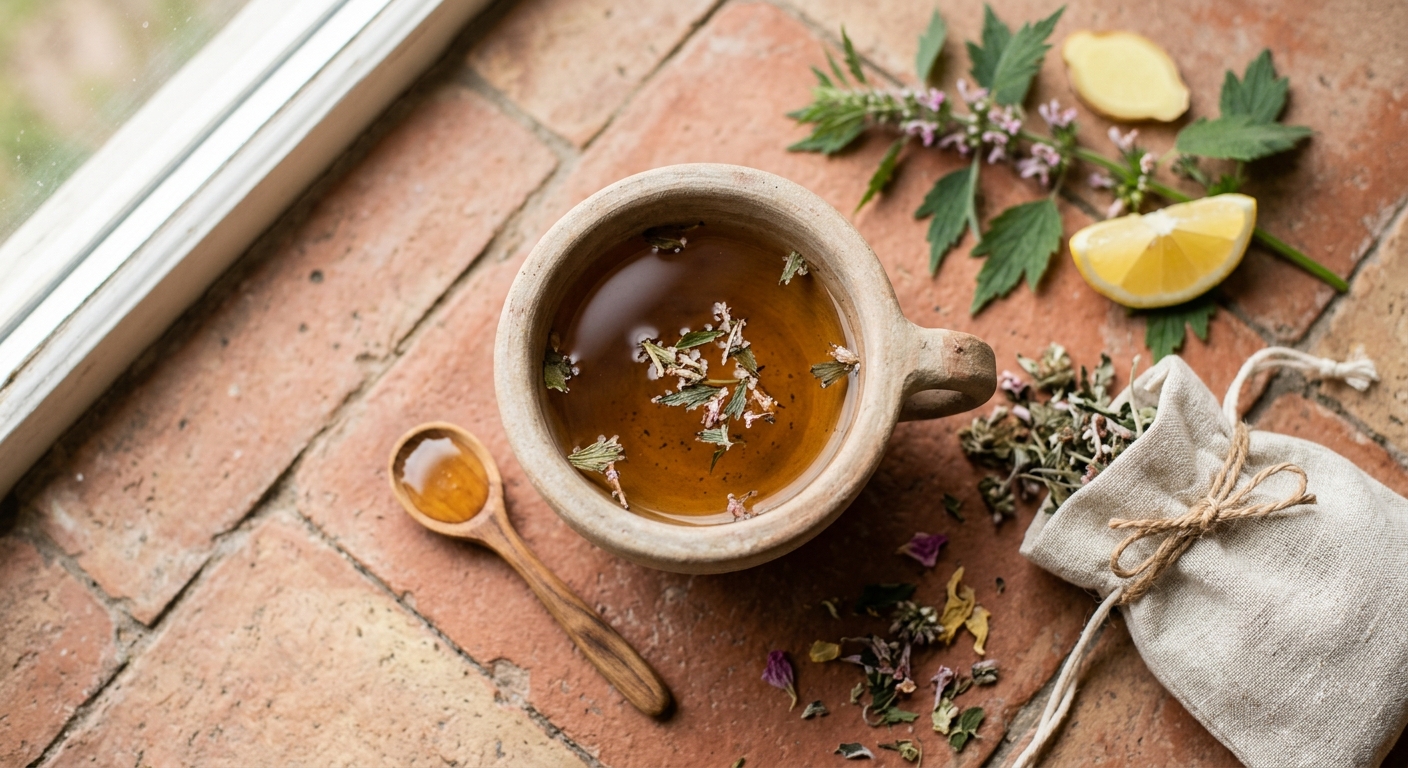
- 2 tspdried motherwort aerial parts (leaves and stems)
- 480 mlwater (90°C / 194°F)
- —raw honey or maple syrup to taste (strongly recommended to balance bitterness)
- —a thin slice of fresh ginger (optional, to warm and balance the flavor)
- —fresh lemon wedge (optional, to brighten the finish)
How to Brew
Click on an item below to shop for the recommended items for this recipe on Amazon.
As an Amazon Associate, we earn from qualifying purchases.
- Heat filtered water to 90 to 95°C (194 to 203°F). If you do not have a temperature-controlled kettle, bring water to a full boil then allow it to rest for 60 to 90 seconds before pouring.
- Measure 1 teaspoon of dried motherwort aerial parts per cup (approximately 240 ml) and place them in a tea infuser, muslin bag, or directly into a heatproof teapot with a built-in strainer.
- If using fresh ginger, add one or two thin slices directly to the infuser alongside the motherwort. The ginger adds gentle warmth and rounds out the bitterness without masking the herb’s therapeutic qualities.
- Pour the hot water over the herb and cover the cup or teapot immediately with a lid or small plate. Covering is important: it traps the volatile aromatic compounds that would otherwise escape as steam.
- Steep for 10 to 15 minutes. The longer end of this range produces a more potent, deeply bitter brew; the shorter end is more approachable for beginners. Set a timer and resist the urge to steep longer, as over-steeping intensifies bitterness without meaningfully increasing beneficial compounds.
- Remove the infuser and stir in raw honey or maple syrup while the tea is still hot, starting with one teaspoon and adjusting to taste. Squeeze in a little lemon juice if desired. Sip slowly, ideally 30 to 60 minutes before bed or during a stressful moment in the day.
- Measure 2 teaspoons of dried motherwort aerial parts per 480 ml of cold, filtered water. Because cold water extracts less efficiently than hot water, a slightly higher herb-to-water ratio is used to achieve a comparable strength.
- Place the motherwort in a clean glass jar or a cold-brew pitcher fitted with a filter basket. Add any optional additions at this stage: a few thin slices of fresh ginger or a strip of lemon peel pair beautifully with the cold-brewed profile.
- Pour the cold filtered water over the herb, making sure all plant material is fully submerged. Gently stir with a long spoon to ensure even saturation, then seal the jar with a lid.
- Place the jar in the refrigerator and allow it to steep for 8 to 12 hours. An overnight cold brew is the most practical approach: prepare it before bed and it will be ready by morning.
- Once steeping is complete, strain the liquid through a fine mesh sieve or cheesecloth into a clean pitcher or jar. Press the spent herbs gently to extract the remaining liquid without forcing too many fine particles through.
- Serve over ice in a tall glass. Sweeten with a drizzle of honey stirred in beforehand (while the liquid is still slightly cool, honey dissolves best when gently warmed first in a small amount of hot water and then added). Cold brew keeps refrigerated for up to 48 hours.
- Measure your herb blend per cup (approximately 240 ml): 1 teaspoon dried motherwort aerial parts, 1 teaspoon dried passionflower (Passiflora incarnata), and half a teaspoon of dried lemon balm (Melissa officinalis). This ratio keeps motherwort as the primary botanical while the others provide flavor balance and complementary relaxant activity.
- Heat filtered water to 90 to 95°C (194 to 203°F), the same range used for the hot brew. Combine all three dried herbs in a roomy teapot or a 2-cup infuser basket to give the blend enough space to expand and fully release its compounds.
- Pour the hot water over the blended herbs and cover the teapot immediately to preserve the volatile lemon balm aromatics, which are particularly sensitive to steam loss. The lemon balm will contribute a fresh, citrusy top note that lifts the overall aroma considerably.
- Steep for 12 to 15 minutes. The passionflower and lemon balm soften the bitter edge of the motherwort as they infuse, creating a more rounded, complex flavor. Check the brew at the 12-minute mark and taste: if you prefer a lighter flavor, strain at this point; for a more potent evening dose, extend to 15 minutes.
- Strain into warmed mugs and sweeten lightly with honey if desired. The lemon balm in the blend often reduces the need for as much sweetener as a plain motherwort brew requires. Drink this blend no earlier than one hour before bed, in a calm environment, to allow the herbs to work with your natural wind-down process.
Health Benefits
Leonurine and stachydrine, two of motherwort’s primary alkaloids, have been shown in pharmacological studies to produce a negative chronotropic effect on the heart, meaning they gently slow an elevated heart rate without meaningfully lowering blood pressure in healthy individuals. Traditional herbalists have used motherwort specifically for heart palpitations tied to anxiety or emotional stress, a use now supported by modern cardiovascular research.
Motherwort contains rosmarinic acid and iridoid glycosides that interact with the GABAergic system, the brain’s primary inhibitory network, producing measurable anxiolytic effects in animal studies. A 2011 study published in the journal Phytotherapy Research found that motherwort extract significantly reduced anxiety and depression scores in participants taking it over a four-week period.
The mild sedative properties of leonurine and the GABAergic activity of rosmarinic acid and quercetin combine to ease the transition into sleep, particularly for individuals whose insomnia is driven by rumination, tension, or an overactive nervous system. Unlike synthetic sedatives, motherwort acts gently without creating dependence or causing grogginess the following morning.
Motherwort’s uterotonic compounds, particularly leonurine, have a mild antispasmodic effect on uterine smooth muscle, helping to reduce cramping and regulate irregular or delayed menstruation. This is one of its oldest documented uses, appearing in European herbals from the 9th century onward and in Chinese medical texts where Yi Mu Cao is a classic remedy for menstrual irregularity.
The combination of rosmarinic acid, ursolic acid, rutin, and quercetin gives motherwort a meaningful antioxidant profile. These compounds help neutralize free radicals, reduce systemic inflammation, and protect cardiovascular tissue from oxidative damage, supporting long-term resilience rather than acute therapeutic effects alone.
🧪 Key Bioactive Compounds
The Science Behind Motherwort
The therapeutic activity of motherwort tea is anchored in a rich and chemically complex mix of alkaloids, iridoids, phenolic acids, and flavonoids that work through multiple overlapping pathways. The most pharmacologically significant compound is leonurine, a guanidine alkaloid unique to the Leonurus genus. Research published in journals including the European Journal of Pharmacology has demonstrated that leonurine acts on cardiac smooth muscle to produce a mild negative chronotropic effect, gently reducing heart rate and arterial tension without causing hypotension in normotensive individuals. Simultaneously, leonurine interacts with the central nervous system to produce mild sedation, partly through mechanisms involving serotonergic and dopaminergic signaling pathways, explaining why the herb has historically been used for both heart palpitations and anxiety as if the two were understood to share a common root in nervous system dysregulation.
Rosmarinic acid, shared with other Lamiaceae family herbs such as lemon balm and rosemary, contributes significantly to motherwort’s anxiolytic profile. This well-studied phenolic acid inhibits the enzyme GABA transaminase, which normally breaks down the inhibitory neurotransmitter GABA. By slowing GABA’s degradation, rosmarinic acid effectively prolongs the calming signals already present in the brain, producing a measurable reduction in anxiety-related behavior in both animal models and preliminary human studies. The flavonoids quercetin and rutin reinforce this effect by directly modulating GABA-A receptor activity, the same receptor family targeted by benzodiazepine drugs, though with far greater selectivity and without the same risk of dependence or tolerance.
The iridoid glycosides found in motherwort, particularly leonuride and ajugol, are responsible for much of the herb’s characteristic bitterness and contribute to its autonomic nervous system effects. Bitter compounds are now understood by researchers to trigger the release of hormones including cholecystokinin and to stimulate the vagus nerve, the primary nerve governing the parasympathetic (rest-and-digest) branch of the autonomic nervous system. This vagal stimulation helps shift the body away from a stress-activated sympathetic state toward one of calm and recovery, an effect that is amplified by the bioactive alkaloids acting centrally. Together, these compounds create a multidimensional relaxation response that operates on the heart, the brain, and the gut simultaneously, which may explain why traditional herbalists across so many cultures arrived independently at the same conclusion: motherwort is a herb for those who carry too much tension in too many places at once.
Brewing Tips
- Always cover your cup or teapot while motherwort steeps. The aromatic volatile compounds rise easily in steam, and covering the brew preserves both the therapeutic potency and the subtle herbal aroma that makes the tea more enjoyable.
- If the bitterness is too intense, reduce the amount of herb slightly rather than cutting the steep time. A shorter steep still extracts significant bitterness but delivers fewer of the beneficial alkaloids. A slightly smaller amount of herb steeped for the full time gives a better therapeutic result with a more manageable flavor.
- Store dried motherwort in an airtight glass jar away from light and heat. The alkaloids in motherwort are sensitive to prolonged light exposure and humidity, and properly stored herb will retain its potency for 12 to 18 months.