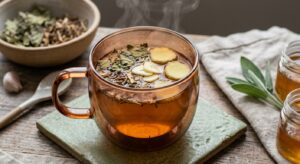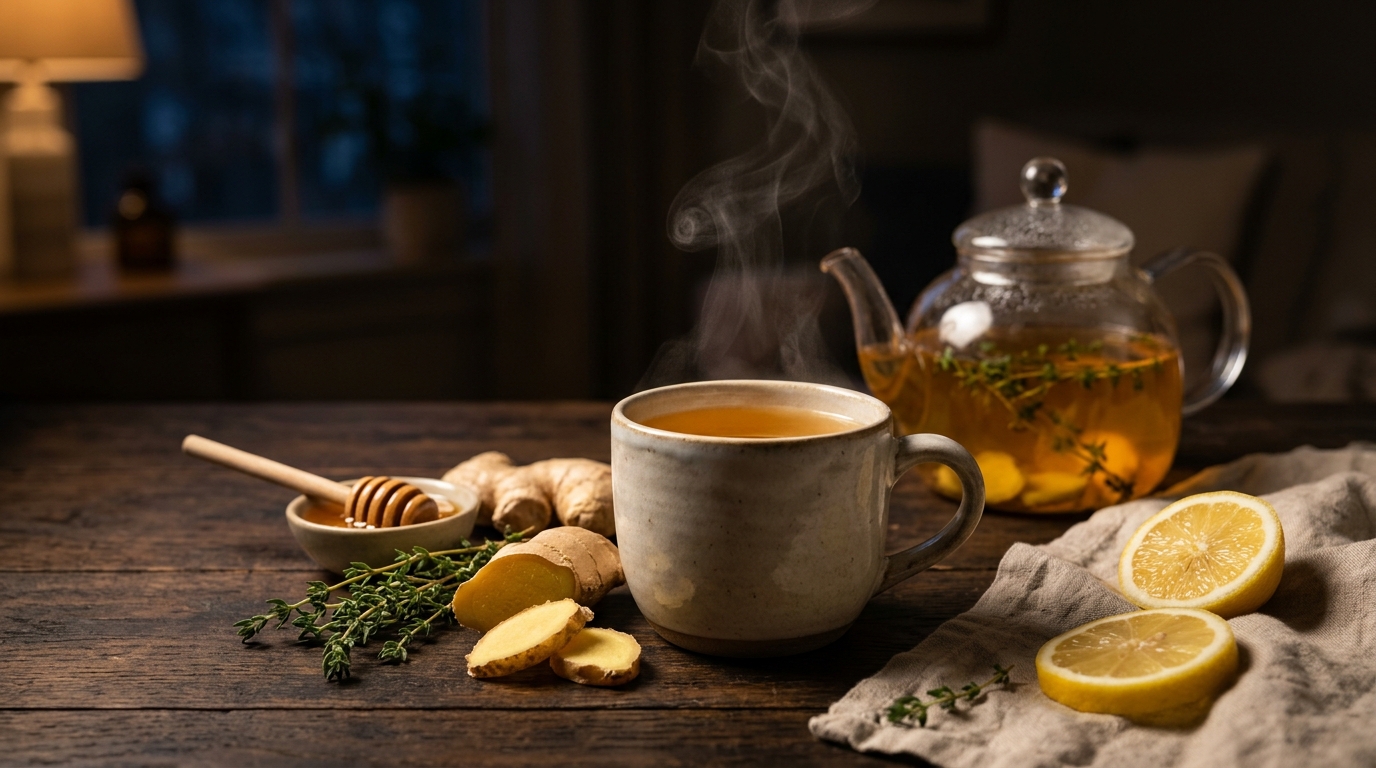
Thyme has been a cornerstone of European folk medicine for centuries. Ancient Egyptians used it in embalming, Greek physicians prescribed it for respiratory complaints, and medieval herbalists tucked it into pillows to ward off nightmares and illness. Today, thyme is one of the best-studied culinary herbs for coughs and bronchial congestion, and it features in German-approved herbal cough preparations alongside ivy and primrose.
Ginger, the knobby rhizome that has anchored Ayurvedic and Traditional Chinese Medicine for thousands of years, brings a very different but wonderfully complementary energy. Where thyme works on the airways, ginger warms the body from the inside, encourages gentle sweating at the onset of a cold, calms nausea, and lowers inflammatory signaling. In Chinese tradition, fresh ginger is classically used to dispel ‘wind-cold,’ the shivery, achy, congested state that comes with an oncoming chill.
Together they make an ideal evening tea. The aroma alone, resinous and herbaceous from the thyme with a bright, peppery lift from the ginger, begins to open the sinuses before you take a sip. It is naturally caffeine-free, so it will not interfere with sleep, and the steam rising from the mug offers its own comfort when your chest feels tight and heavy.
2
cups
Ingredients
- 2 tspdried thyme leaves (or 6 to 8 fresh sprigs)
- 1 tbspfresh ginger root, thinly sliced or grated
- 480 mlwater (95°C / 203°F)
- —raw honey to taste (optional)
- —fresh lemon juice, a squeeze per cup (optional)
How to Brew
Click on an item below to shop for the recommended items for this recipe on Amazon.
As an Amazon Associate, we earn from qualifying purchases.
- Slice the ginger into thin coins or grate it for a stronger, spicier brew. There is no need to peel it if the skin is clean and fresh.
- Place the thyme and ginger into a teapot or directly into two mugs with an infuser basket.
- Bring fresh water to a full boil, then let it rest for about 30 seconds so it sits near 95°C (203°F). Pour it over the herbs.
- Cover immediately with a lid or saucer and steep for 8 to 10 minutes. The longer steep extracts the ginger’s gingerols and the thyme’s thymol.
- Strain into mugs. Stir in a spoonful of raw honey and a squeeze of lemon if desired, then inhale the steam deeply for a few breaths before sipping slowly.
- Slice the ginger into very thin coins to expose maximum surface area, since cold water extracts more slowly than hot.
- Lightly bruise the dried thyme between your fingers to release its oils, then add it with the ginger to a clean glass jar.
- Pour 480 ml of cold, filtered water over the herbs, stir once, and seal the jar.
- Refrigerate for 8 to 10 hours, or overnight. Give the jar a gentle shake once or twice if you remember.
- Strain through a fine mesh sieve into a glass. Serve cool over ice, or gently warm a portion in a saucepan over low heat without boiling, which preserves the delicate flavor.
- Slice or lightly crush the fresh ginger and place it in a small saucepan with 480 ml of cold water.
- Bring to a gentle boil, then reduce the heat to low, cover, and simmer for 10 minutes. The liquid should turn a deeper gold and smell sharply spicy.
- Remove the pan from the heat and immediately add the thyme leaves. Stir once and cover again.
- Let the thyme steep off the heat for 5 minutes. This protects its aromatic volatile oils from being boiled away.
- Strain into mugs, pressing the ginger gently against the sieve. Sweeten with honey and add lemon juice if you like. This is the strongest, most warming version of the tea and works well when congestion is at its worst.
Health Benefits
Thyme is recognized as an expectorant, and studies on thyme-based cough preparations suggest it helps thin mucus and ease its clearance from the airways. The warm steam from the tea provides additional mechanical relief.
Thymol and flavonoids in thyme relax bronchial smooth muscle, while ginger’s anti-inflammatory compounds and a spoonful of honey coat and calm an irritated throat.
Both herbs show antimicrobial and antioxidant activity in laboratory research. While not a cure, they support the body and make cold symptoms easier to tolerate.
Ginger has strong clinical evidence for reducing nausea, which can accompany colds and heavy mucus swallowing. Thyme also has a mild carminative effect on the gut.
The ritual of sipping a warm, aromatic, caffeine-free tea, combined with easier breathing, can help you settle more comfortably into sleep.
🧪 Key Bioactive Compounds
The Science Behind Thyme
The respiratory reputation of thyme rests largely on its essential oil, which is rich in thymol and carvacrol. Laboratory studies show these phenolic compounds inhibit the growth of a range of bacteria and fungi, and clinical trials of standardized thyme extracts, often combined with ivy or primrose, have reported reduced cough frequency and improved mucus clearance in people with acute bronchitis. Thyme’s flavonoids, including luteolin and apigenin, appear to relax smooth muscle in the airways, which may explain its traditional use for spasmodic, tickling coughs.
Ginger contributes through a different set of chemistry. The gingerols in fresh root, which convert partially to shogaols when heated, inhibit enzymes involved in inflammatory pathways such as cyclooxygenase. This is why ginger is studied for pain, nausea, and inflammation. Its pungent, warming sensation also stimulates circulation and may encourage mild perspiration, a response traditional systems have long valued at the first sign of a chill.
It is worth being honest about the limits of the evidence. Most thyme research uses concentrated, standardized extracts rather than a cup of tea, so the effect of a brewed infusion is milder. Still, the combination of aromatic steam, hydration, warmth, and gentle plant compounds offers real comfort, and keeping the tea covered while it steeps helps retain the volatile oils that make it effective.
Brewing Tips
- Cover your cup or teapot while steeping to trap the volatile thyme oils that would otherwise escape as steam.
- Use fresh ginger rather than powdered whenever possible. It has a brighter flavor and a higher content of gingerols.
- Drink the tea about 30 to 60 minutes before bed, and sip slowly while it is still hot to benefit from the aromatic steam.
- If the flavor feels too savory, add honey and lemon, or a few slices of apple while steeping for natural sweetness.