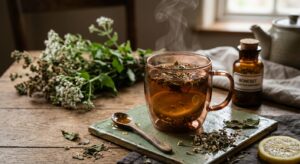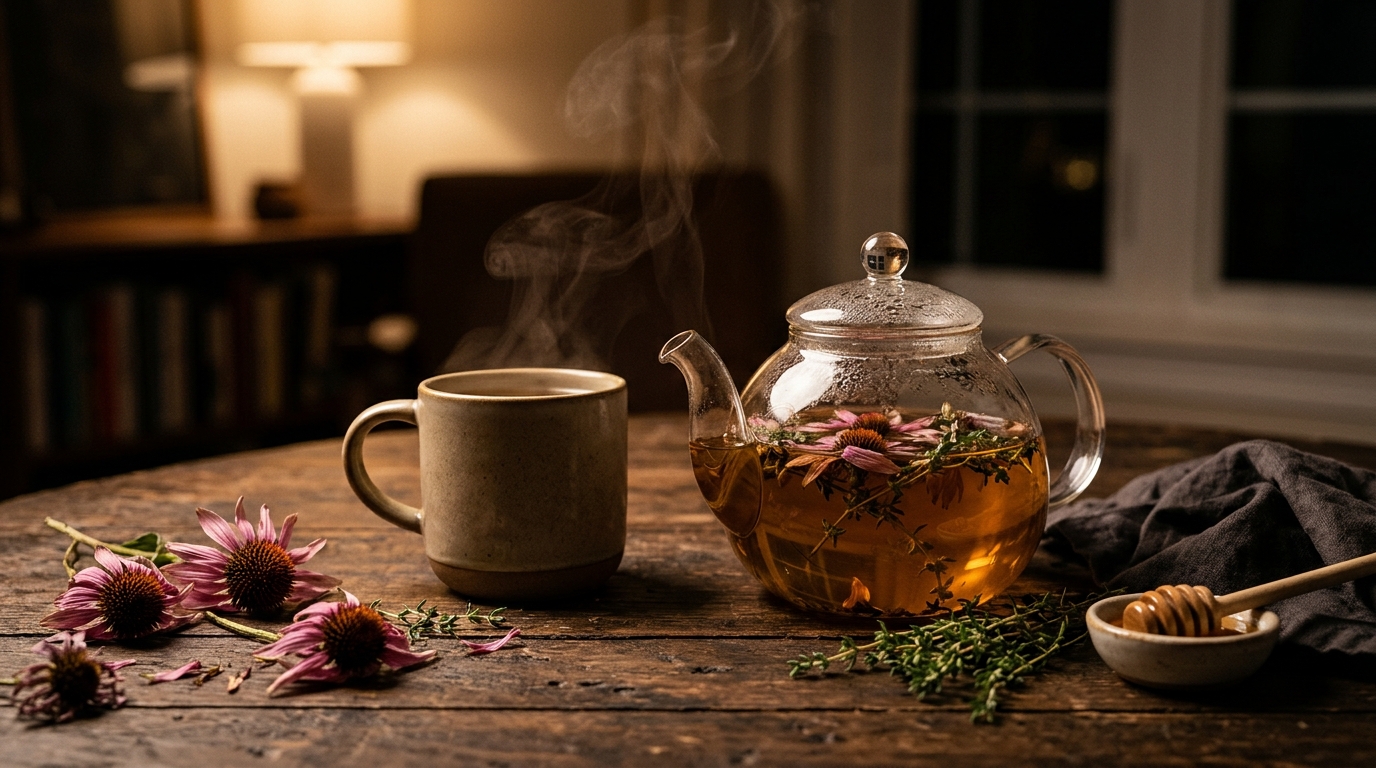
Long before it became a staple on pharmacy shelves, echinacea was a cornerstone of Plains Indian medicine. The Lakota, Cheyenne, Kiowa, and many other nations used the purple coneflower for toothaches, snakebites, sore throats, and infections of all kinds. When European settlers learned of it in the late 1800s, echinacea quickly became the most popular herbal remedy in American medicine, and it remains one of the top-selling herbs in the world today. Its roots, leaves, and flowers all carry the plant’s signature quality: a faintly sweet, earthy flavor followed by a tingling sensation on the tongue that tells you the plant is doing something.
Thyme comes from a very different tradition. For the ancient Greeks and Romans, thyme was a symbol of courage and a purifying herb burned as incense and steeped as a tonic. By the Middle Ages, European herbalists were relying on it for coughs, bronchial congestion, and sore throats, a use that modern phytotherapy still supports. German health authorities approve thyme for catarrh of the upper respiratory tract and bronchitis, and its volatile oils are a key ingredient in many commercial cough syrups.
Together, the two herbs make a natural partnership for the first sniffle. Echinacea brings its centuries-old reputation for supporting the body’s defenses, while thyme adds aromatic, throat-soothing, expectorant action and a savory depth that keeps the cup from tasting like medicine. Brewed in the evening, this tea becomes a gentle ritual: a warm mug, a fragrant steam, and a signal to your body that it is time to rest and recover.
2
cups
Ingredients
- 2 tspdried echinacea aerial parts or chopped root
- 2 tspdried thyme leaves
- 480 mlwater (95°C / 203°F)
- —raw honey to taste (optional)
- —fresh lemon slice or squeeze of lemon juice (optional)
How to Brew
Click on an item below to shop for the recommended items for this recipe on Amazon.
As an Amazon Associate, we earn from qualifying purchases.
- Measure 2 teaspoons of dried echinacea and 2 teaspoons of dried thyme into a teapot or a large mug fitted with an infuser. If you are using echinacea root, chop or crush it into small pieces first so the water can reach the inner tissue.
- Bring fresh water to a full boil, then let it rest for about 30 seconds to bring it down to roughly 95°C (203°F). Water that is too violently boiling can drive off the delicate thyme aromatics.
- Pour the hot water over the herbs, filling the pot or mug with about 480 ml in total. Immediately cover with a lid or saucer to trap the steam and volatile oils.
- Steep for 10 to 15 minutes. A longer steep draws out more of the echinacea’s alkamides, which create that signature tingle, but past 15 minutes the thyme can turn slightly bitter.
- Strain into two cups. Stir in a spoonful of raw honey and a squeeze of lemon if you like, which also helps soothe a scratchy throat.
- Sip slowly, ideally an hour before bed. Inhale the rising steam between sips for a little extra aromatic comfort.
- Combine 2 tablespoons of dried echinacea and 2 tablespoons of dried thyme in a large glass jar. This is a higher ratio than the hot brew because cold water extracts more slowly.
- Pour in 1 liter of cool, filtered water. Stir once with a spoon to make sure all the herbs are wet and submerged.
- Cover the jar and place it in the refrigerator for 8 to 10 hours, or overnight. Avoid leaving it on the counter, since a long warm steep with plant material can encourage unwanted bacterial growth.
- Strain through a fine mesh strainer or a piece of muslin to catch the small thyme leaves, pressing gently on the herbs to release the last of the liquid.
- Serve over ice with a slice of lemon, or gently warm a single portion on the stove to just below a simmer for a cozy evening cup with a softer flavor.
- Store any remaining tea in a sealed container in the refrigerator and drink within 48 hours.
- Place 1 tablespoon of chopped dried echinacea root and 480 ml of cold water into a small saucepan. Starting with cold water allows the heat to penetrate the root gradually.
- Bring the pot slowly to a gentle simmer over medium heat, then reduce the heat to low. Partially cover and simmer for 15 minutes, watching that it never reaches a hard rolling boil.
- Remove the saucepan from the heat. Immediately add 2 teaspoons of dried thyme leaves, since the delicate aromatic oils would be lost if simmered for the full time.
- Cover the pan and let the thyme steep for 5 minutes in the hot decoction.
- Strain the tea through a fine mesh strainer into mugs, pressing the roots lightly to extract every bit of liquid.
- Sweeten with honey if desired. The decoction will be deeper, earthier, and more pronounced in flavor than the hot brew, with a noticeable tingle on the tongue.
Health Benefits
Several clinical trials and meta-analyses suggest that echinacea taken at the first sign of symptoms may modestly reduce the length and severity of the common cold, though study results vary depending on the species, plant part, and preparation used.
Thyme is approved by the German Commission E for coughs and bronchitis, and its thymol and carvacrol content gives it expectorant and antispasmodic effects that can ease a tickly, irritated throat.
Echinacea’s alkamides and polysaccharides have been shown in laboratory and some human studies to stimulate immune cells such as macrophages and natural killer cells, helping the body respond to early infection.
Both herbs are rich in phenolic compounds like cichoric acid and rosmarinic acid, which help neutralize free radicals and reduce oxidative stress that accompanies illness.
A warm, aromatic drink before bed encourages fluid intake and a calming evening routine, both of which are valuable when your body is fighting off a bug and needs quality sleep.
🧪 Key Bioactive Compounds
The Science Behind Echinacea
Echinacea’s reputation rests on a complex mix of compounds rather than a single active ingredient. The alkamides, fat-soluble molecules responsible for the tingling sensation, appear to interact with the body’s endocannabinoid system and influence the release of inflammatory messengers called cytokines. Meanwhile, water-soluble constituents such as cichoric acid and certain polysaccharides are thought to stimulate immune cells. Because these compounds dissolve differently in water, alcohol, and fat, the way you prepare echinacea matters, and a simmered decoction of the root tends to capture more of its alkamides than a quick infusion of the leaves.
The clinical evidence for echinacea is genuinely mixed, which is worth stating plainly. Large reviews, including those from the Cochrane Collaboration, have found that results depend heavily on the product used, with some preparations showing a small benefit for preventing or shortening colds and others showing little effect. The most consistent signal appears when echinacea is started at the very first symptoms, which is exactly the moment this tea is designed for. It should be viewed as supportive comfort rather than a cure.
Thyme’s benefits are more firmly established for respiratory symptoms. Its essential oil is dominated by thymol and carvacrol, two phenolic compounds with proven antimicrobial effects against many bacteria and fungi in laboratory settings. Clinical studies on thyme preparations, often combined with ivy or primrose, have shown meaningful reductions in cough frequency and severity in people with acute bronchitis. In a tea, the steam carries these volatile oils to the airways as you sip, adding an aromatherapeutic effect to the warming drink itself.
Brewing Tips
- Start drinking this tea at the very first sign of a scratchy throat or sniffle, since echinacea appears to work best when begun early.
- Always cover your cup or pot while steeping to trap thyme’s volatile oils, which are the source of much of its respiratory benefit.
- Limit echinacea use to about a week at a time and take breaks between courses rather than drinking it daily for months.
- If you cannot find dried echinacea root, the aerial parts (leaves, stems, and flowers) also make a pleasant and effective tea, with a slightly milder flavor.
- Use fresh thyme sprigs if you have them, doubling the amount and bruising them gently between your fingers before steeping to release the oils.