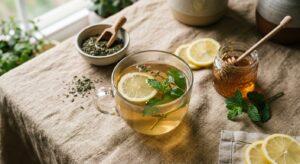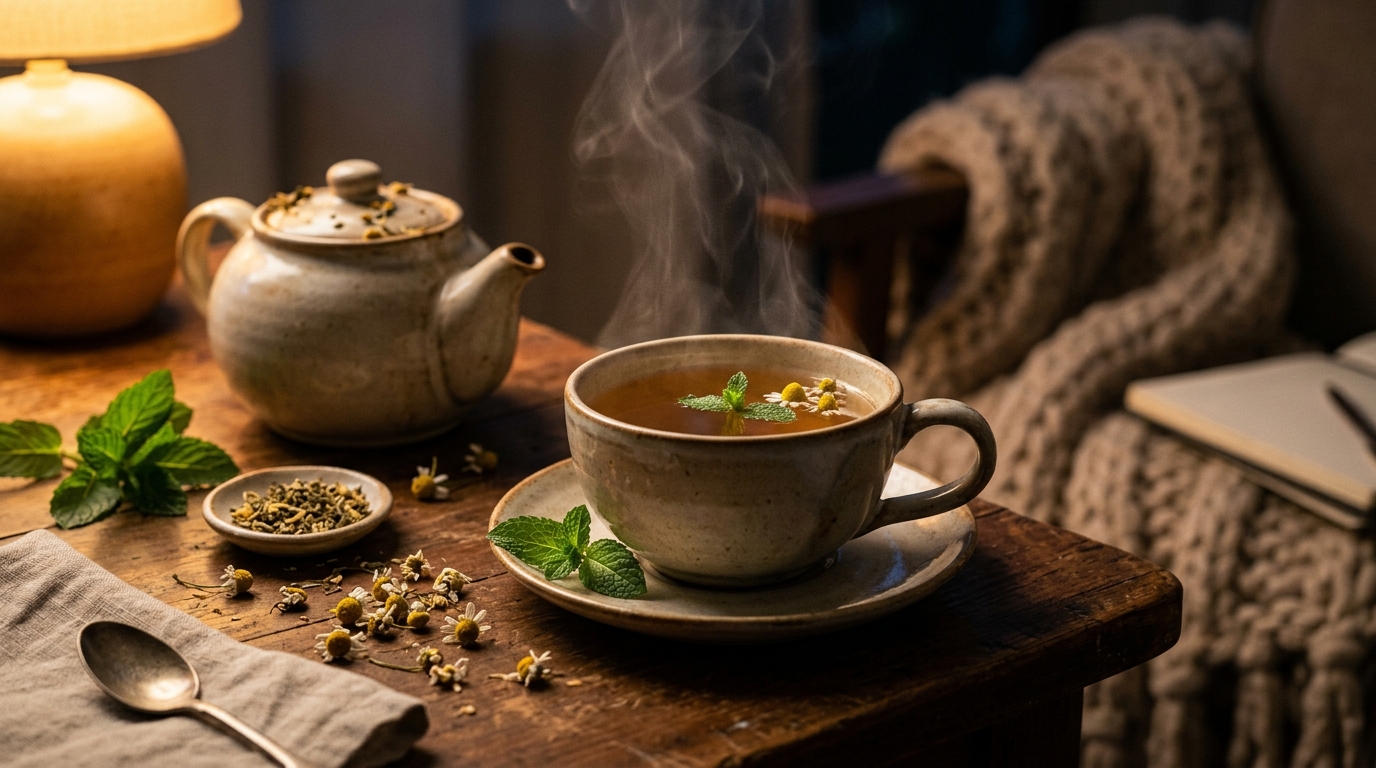
Spearmint (Mentha spicata) has been steeped in kitchens and apothecaries for thousands of years. Ancient Greeks and Romans scattered it through banquet halls and rubbed it on tables to welcome guests, and medieval herbalists prized it for settling the stomach. Its gentler, sweeter profile sets it apart from peppermint. Spearmint contains far less menthol and instead gets its signature taste from carvone, which gives it that soft, rounded mint flavor that feels more like a hug than a blast of cold air.
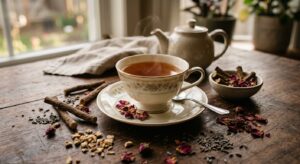
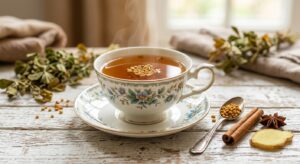
Chamomile (Matricaria chamomilla) is perhaps the most beloved bedtime herb in the Western world. Egyptian physicians dedicated it to the sun god Ra, and Roman soldiers drank it before battle. Across Europe, grandmothers have handed down the same advice for centuries: when sleep will not come, brew chamomile. Its tiny golden-centered flowers smell faintly of apples and honey, and a warm cup is one of the most reliable sensory signals that the day is done.
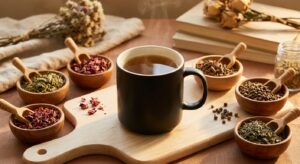
Together, the two herbs form a pairing that is both pleasant and purposeful. Spearmint brings a clean, bright sweetness and has a growing body of research around its effects on excess androgens, which is of interest to women managing hormonal skin concerns or symptoms associated with PCOS. Chamomile rounds out the blend with its relaxing, sleep-supportive qualities. The result is an evening tea that tastes like a garden at dusk and gently supports both body and mind.
2
cups
Ingredients
- 2 tspdried spearmint leaves
- 2 tspdried chamomile flowers
- 480 mlwater (95°C / 203°F)
- —raw honey to taste (optional)
- —thin lemon slice (optional)
How to Brew
Click on an item below to shop for the recommended items for this recipe on Amazon.
As an Amazon Associate, we earn from qualifying purchases.
- Bring fresh filtered water to a near boil, then let it rest for about 30 seconds so it settles around 95°C (203°F). Water that is too violently boiling can make chamomile taste slightly bitter.
- Combine the dried spearmint and chamomile in a teapot or infuser basket. Gently crush the spearmint leaves between your fingertips as you add them to release their oils.
- Pour the hot water over the herbs, then immediately cover the pot or mug with a saucer or lid to trap the aromatic vapors.
- Steep for 5 to 7 minutes. Closer to 5 gives a lighter, minty cup; closer to 7 draws out more of chamomile’s floral depth.
- Strain into mugs, add honey or a thin lemon slice if desired, and sip slowly about an hour before bed.
- Add 2 tablespoons of dried spearmint and 2 tablespoons of dried chamomile to a clean 1-liter glass jar.
- Fill the jar with cold filtered water and stir once gently so all the herbs are submerged.
- Seal the jar and refrigerate for 8 to 12 hours. Overnight works well, so the tea is ready to enjoy the next evening.
- Strain through a fine mesh sieve or cheesecloth into a clean pitcher, pressing the herbs lightly to release the last of the liquid.
- Serve over ice or straight from the fridge, and consume within 24 hours for the best flavor and freshness.
- Heat 240 ml of water to 95°C (203°F) and pour it over 3 teaspoons of spearmint and 3 teaspoons of chamomile, which is a concentrated ratio.
- Cover and steep for 10 minutes to build a strong, full-flavored base.
- Strain the concentrate into a heatproof pitcher and stir in honey while it is still warm, if you like, so it dissolves fully.
- Fill two tall glasses with ice and pour the warm concentrate over it. The ice will melt and dilute it to a perfect drinking strength.
- Top with a splash of sparkling water, garnish with a fresh spearmint sprig and a lemon wheel, and serve immediately.
Health Benefits
Chamomile’s apigenin interacts with GABA receptors, and clinical studies have linked regular chamomile intake with improved subjective sleep quality, particularly in people experiencing poor sleep.
Small human studies, including research on women with PCOS-related hirsutism, found that drinking spearmint tea twice daily reduced free and total testosterone levels. More large-scale trials are needed, but the findings are promising.
Spearmint’s carvone and chamomile’s bisabolol both relax smooth muscle in the digestive tract, which may relieve bloating, gas, and cramping after an evening meal.
Chamomile has been studied for mild-to-moderate anxiety, with trials showing reductions in anxiety symptoms. The warm, aromatic ritual of the tea itself also helps cue the body to relax.
Rosmarinic acid in spearmint and flavonoids in chamomile help neutralize free radicals, supporting general cellular health.
🧪 Key Bioactive Compounds
The Science Behind Spearmint
The most intriguing research on spearmint centers on its effect on androgen hormones. In a small randomized study published in Phytotherapy Research, women with hirsutism who drank spearmint tea twice daily for five days during the follicular phase of their cycle showed significant decreases in free and total testosterone, along with increases in luteinizing hormone and follicle-stimulating hormone. A longer-term trial in women with PCOS reported improvements in hirsutism scores after one month. While these studies are small and short-term, they give a plausible scientific basis for spearmint’s long-standing traditional reputation as a women’s herb.
Chamomile’s reputation as a sleep aid rests largely on apigenin, a flavonoid that binds to benzodiazepine-site GABA receptors in the brain. This produces a gentle sedative effect without the heaviness of pharmaceutical sleep aids. A systematic review of chamomile trials found modest but consistent benefits for sleep quality and anxiety, though researchers note that results vary by preparation and dose. Chamomile also contains bisabolol and chamazulene, which have been shown in laboratory studies to reduce inflammation and relax smooth muscle.
The synergy here is as much practical as it is biochemical. Both herbs are caffeine-free, both have mild digestive-soothing actions, and both are traditionally associated with evening calm. Sipping a warm, aromatic tea also engages the parasympathetic nervous system through warmth, scent, and slowed breathing, so the ritual itself amplifies the effects of the herbs.
Brewing Tips
- Use whole dried leaves and flowers rather than finely cut tea-bag fannings. They hold their essential oils longer and produce a smoother, more fragrant cup.
- For hormone-focused use, many traditional and study protocols involve two cups daily, with the evening cup being this blend. Consistency over several weeks matters more than a single strong cup.
- Store both herbs in airtight, opaque containers away from light and heat. Properly stored, they stay vibrant for 6 to 12 months.
- If you grow your own spearmint, dry the leaves in small bundles hung upside down in a dark, airy spot, and use them within the year for the best flavor.
- Pair the tea with a screen-free wind-down routine, such as gentle stretching or journaling, to strengthen the sleep-supportive ritual.