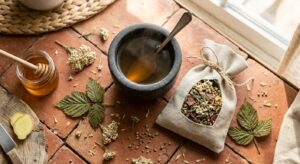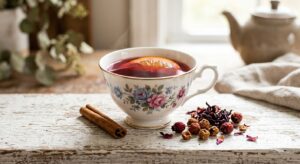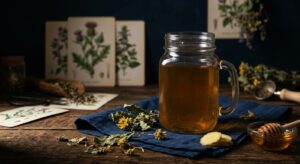
Red clover (Trifolium pratense) has been growing along roadsides and in meadows across Europe and Asia for thousands of years, and herbalists have long valued its pink-purple blossoms as a gentle, nourishing remedy. In traditional European folk medicine, the flowering tops were brewed for coughs, skin complaints, and as a general ‘blood purifier.’ Early American settlers and several Native American communities adopted the plant as well, using it as a soothing tea and a tonic for women’s wellbeing. By the nineteenth century, red clover appeared in eclectic medical texts as an alterative herb, valued for supporting the body’s natural cleansing processes.
What brought red clover into the modern wellness conversation is its remarkable concentration of isoflavones, notably formononetin, biochanin A, daidzein, and genistein. These phytoestrogens have a molecular shape similar to the body’s own estrogen, allowing them to interact gently with estrogen receptors. Because hot flashes are driven in part by the decline of estrogen during the menopausal transition, women and herbalists alike have turned to red clover as a plant-based ally for midlife comfort.
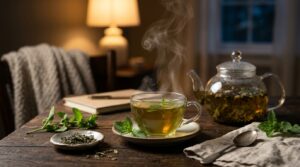
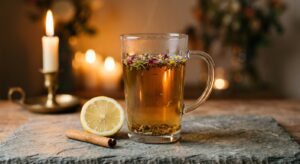
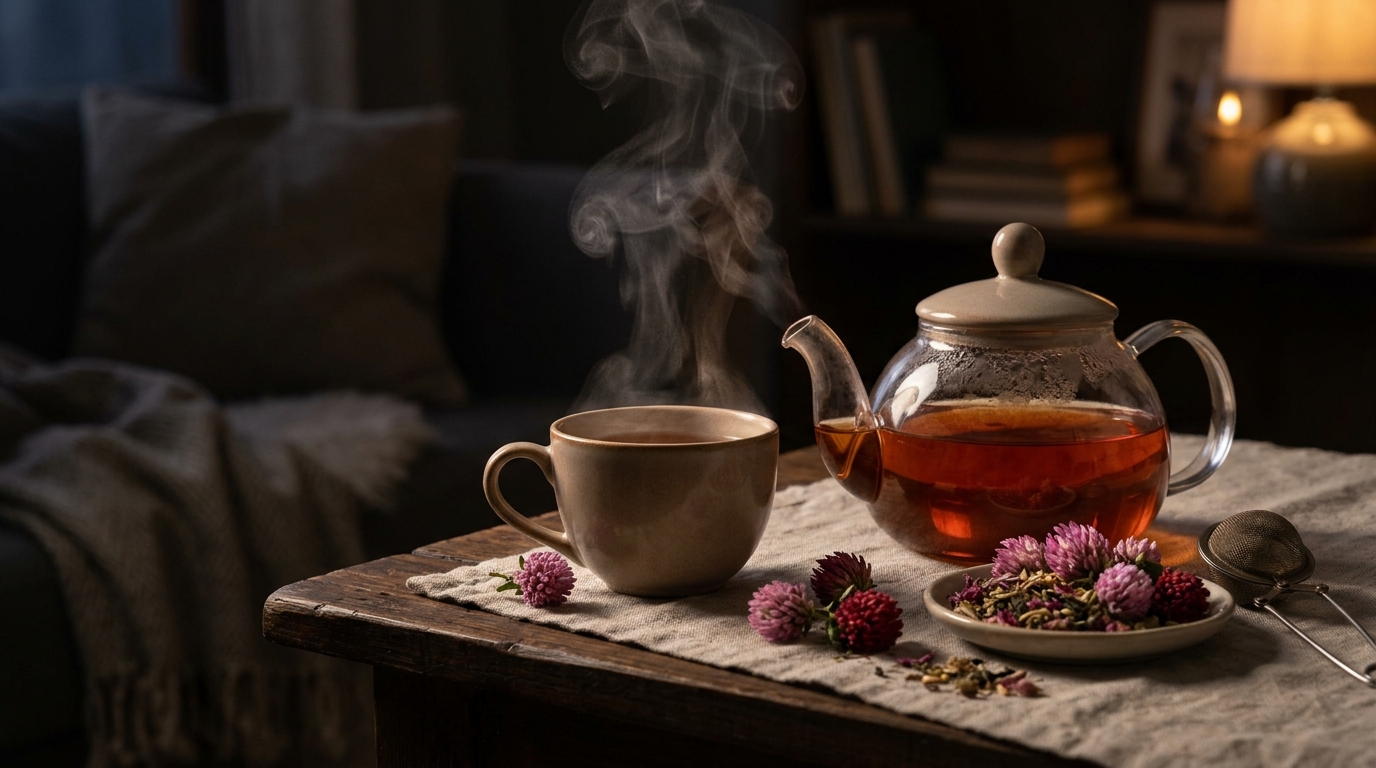
There is something quietly ceremonial about brewing a cup of red clover in the evening. The blossoms bloom open in the water, the infusion turns a warm golden-rose, and the scent is soft, sweet, and hay-like, like a summer meadow at dusk. Making it a nightly ritual, a slow cup sipped before bed, signals to the body that the day is done, which is especially helpful when night sweats and hot flashes disrupt rest. Think of this tea as a daily practice rather than a quick fix, one that works best when woven steadily into your evenings.
2
cups
Ingredients
- 2 tbspdried red clover blossoms
- 480 mlwater (95°C / 203°F)
- —fresh lemon slice (optional)
- —raw honey to taste (optional)
How to Brew
Click on an item below to shop for the recommended items for this recipe on Amazon.
As an Amazon Associate, we earn from qualifying purchases.
- Measure 2 tablespoons of dried red clover blossoms into a teapot or a large mug with an infuser. Gently crumble any large blossoms between your fingers to release more surface area.
- Bring fresh filtered water to a near boil, then let it rest for about 30 seconds so it settles around 95°C (203°F). Red clover is a soft flower, so you do not need a rolling boil.
- Pour the hot water over the blossoms and immediately cover with a lid or small saucer to hold in the steam and aroma.
- Steep for 10 to 15 minutes. This longer window is important for pulling out the isoflavones and mineral content, giving a fuller, deeper infusion than a typical flower tea.
- Strain into two cups. Sip warm or let it cool slightly, as very hot drinks can themselves trigger a hot flash. Add a slice of lemon or a little honey if desired.
- Add 3 tablespoons of dried red clover blossoms to a clean glass jar. The ratio is slightly higher than hot brew because cold water extracts more slowly.
- Pour 1 liter of cool filtered water over the blossoms and stir gently with a spoon to saturate all the flowers.
- Seal the jar and place it in the refrigerator. Let it steep for 8 to 12 hours, ideally prepared in the morning for evening drinking or the night before for the next day.
- Strain through a fine mesh sieve or muslin cloth into a clean pitcher, pressing the blossoms lightly to release the last of the liquid.
- Serve over ice in a tall glass. Keep any extra refrigerated and enjoy within 48 hours for best flavor and freshness.
- Prepare a double-strength brew by steeping 3 tablespoons of dried red clover blossoms in 400 ml of 95°C (203°F) water for 10 minutes, covered.
- Strain the infusion into a heatproof pitcher, pressing the blossoms gently to extract every drop of concentrate.
- Immediately stir in 400 ml of cold water to bring the temperature down and dilute the concentrate to normal strength.
- Add a few slices of fresh cucumber and a couple of fresh mint leaves, both traditionally cooling, and refrigerate for 1 to 2 hours until thoroughly chilled.
- Pour over plenty of ice in a tall glass and garnish with a lemon wheel. Sip slowly as part of your evening wind-down.
Health Benefits
The isoflavones in red clover act as weak estrogen mimics, which may help stabilize the body’s temperature regulation as natural estrogen declines. Some clinical trials show modest reductions in hot flashes, though results across studies are mixed.
Declining estrogen accelerates bone loss after menopause, and isoflavones have shown potential to slow this process. Small studies suggest red clover may help preserve bone mineral density in perimenopausal and postmenopausal women.
While red clover is not a sedative, the warm, unhurried ritual of an evening cup helps lower stress and prepares the body for sleep. Easing night sweats may also indirectly improve sleep quality.
Isoflavones may support arterial flexibility and healthy cholesterol levels, benefits that become increasingly relevant as heart disease risk rises after menopause. Evidence is promising but still developing.
Red clover’s flavonoids help combat oxidative stress, and its traditional use for skin conditions like eczema reflects its long reputation as a gentle cleansing herb.
🧪 Key Bioactive Compounds
The Science Behind Red Clover
The therapeutic interest in red clover centers on its four main isoflavones: formononetin, biochanin A, daidzein, and genistein. These compounds are classified as phytoestrogens because their structure resembles 17-beta estradiol, the body’s primary estrogen. Rather than replacing estrogen outright, they bind to estrogen receptors with much weaker affinity, and they show a preference for estrogen receptor beta, which is found in bone, blood vessels, and the brain’s temperature-regulating regions. This selective, gentle action is why researchers have studied red clover as a milder alternative for easing menopausal discomfort.
Clinical research on red clover and hot flashes has produced mixed but cautiously encouraging results. Several randomized trials have reported modest reductions in hot flash frequency compared with placebo, while others have found little difference, likely due to variations in extract strength, dosage, and participants. It is also worth noting that individual gut bacteria influence how isoflavones are metabolized. Some women convert daidzein into equol, a more potent compound, and these ‘equol producers’ may experience stronger benefits.
An important point is that most clinical trials use standardized extracts delivering a specific daily dose of isoflavones, whereas a cup of tea provides a smaller, more variable amount. Tea should therefore be seen as a supportive, gentle ritual rather than a substitute for medical treatment. Consistency matters, as phytoestrogens work gradually, and many herbalists suggest giving the practice at least four to eight weeks of nightly use before judging its effects.
Brewing Tips
- Be consistent: drink one to two cups nightly for at least four to eight weeks, since phytoestrogens work gradually rather than immediately.
- Let hot tea cool slightly before sipping, as very hot beverages can trigger a hot flash in sensitive individuals.
- Buy organic, whole dried blossoms from a reputable supplier and store them in an airtight, opaque jar away from light and heat for up to one year.
- Keep a simple symptom journal while you drink the tea so you can notice subtle changes in the frequency and intensity of hot flashes over time.