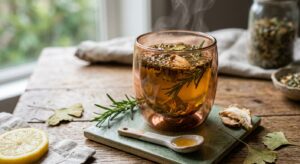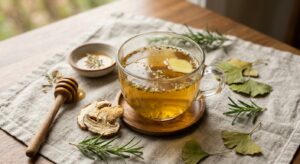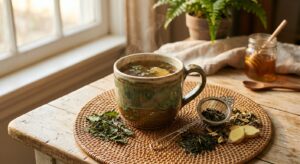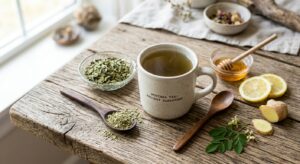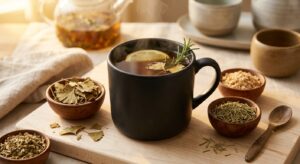
The botanical name Salvia comes from the Latin salvere, meaning “to save” or “to heal,” and few herbs have earned that name as thoroughly as sage. Greek physicians such as Dioscorides recorded its uses nearly two thousand years ago, and medieval European monasteries grew it as a cornerstone of their physic gardens. An old English saying asks, “Why should a man die while sage grows in his garden?” Herbalists in the 16th and 17th centuries, including John Gerard and Nicholas Culpeper, specifically recommended sage for strengthening the memory and quickening the senses, a tradition that has fascinated modern researchers.
In Chinese medicine, a related species called danshen (Salvia miltiorrhiza) has a long history of its own, but it is common garden sage that has become the centerpiece of the evening study ritual. Scholars in European folk tradition were said to steep sage leaves before long nights of reading, believing the herb cleared mental fog and steadied the nerves. In the Mediterranean, sage tea remains an everyday household drink, sipped after meals and in the quiet hours of the evening.
What makes sage special for night study is its unusual combination of qualities. It is gently stimulating to the mind yet entirely free of caffeine, so it supports focus without competing with sleep. Its flavor is bold, savory, and slightly camphoraceous, a cup that feels grounding and deliberate. Brewing it becomes a small ritual: the steam carries a resinous, herbal aroma that signals to the brain that it is time to settle in and concentrate.
2
cups
Ingredients
- 2 tspdried sage leaves (or 6 to 8 fresh leaves)
- 480 mlwater (95°C / 203°F)
- —a squeeze of fresh lemon (optional)
- —raw honey to taste (optional)
How to Brew
Click on an item below to shop for the recommended items for this recipe on Amazon.
As an Amazon Associate, we earn from qualifying purchases.
- Bring fresh water to a near boil, then let it rest for about 30 seconds so it settles around 95°C (203°F). Fully boiling water can push the tea toward harsh bitterness.
- Place the dried sage leaves in a tea infuser or directly into a warmed teapot. If using fresh leaves, gently bruise them between your fingers first to release their oils.
- Pour the hot water over the leaves and immediately cover the vessel with a saucer or lid to hold in the volatile aromatics.
- Steep for 5 minutes for a gentle, balanced cup, or up to 8 minutes for a stronger, more resinous brew. Sage can turn astringent if left much longer.
- Remove the leaves, give the tea a stir, and add lemon or a small spoonful of honey if you like to soften the savory edge.
- Sip slowly at your desk as you begin your study session, breathing in the steam between sips.
- Add 3 tablespoons of dried sage leaves (or a generous handful of fresh sprigs) to a clean glass jar. Cold extraction is gentler, so you need more herb per liter than in a hot brew.
- Fill the jar with 1 liter of cold, filtered water and stir once to submerge all the leaves.
- Seal the jar and refrigerate for 8 to 10 hours. There is no need to shake or stir during this time.
- Strain through a fine mesh sieve or a coffee filter to remove every leaf fragment, which keeps the tea from turning bitter as it sits.
- Serve over ice with a lemon wheel or a few fresh mint leaves. The cold tea keeps well in the refrigerator for up to 3 days.
- Preheat a vacuum-insulated thermos by rinsing it with hot water, then discard the water.
- Add 1 tablespoon of dried sage leaves per 250 ml of water directly into the thermos, using a loose infusion basket if your thermos has one.
- Pour in water heated to about 90°C (194°F), a little cooler than a standard hot brew to reduce bitterness over the longer steep, and seal the lid tightly.
- Let the infusion work for 20 to 30 minutes. The sealed environment preserves the volatile oils far better than an open cup.
- Strain the tea into your mug at the 30-minute mark, or remove the infuser basket. Pour small servings throughout your study session, keeping the remainder sealed and warm.
Health Benefits
Several small human trials have found that sage extracts and essential oil improved word recall and memory in healthy young and older adults, likely through inhibition of acetylcholinesterase, the enzyme that breaks down acetylcholine.
Studies have reported improved attention and mood after sage administration, offering a stimulant-free way to stay mentally sharp during evening work without interfering with sleep.
Rosmarinic acid, carnosic acid, and luteolin help neutralize free radicals, and oxidative stress is considered one factor in age-related cognitive decline.
Sage’s astringent and antimicrobial properties have long been used in gargles and teas for sore throats, and German health authorities recognize sage leaf for inflammation of the mouth and throat.
Traditionally taken after heavy meals, sage’s bitter and aromatic compounds are thought to stimulate digestive secretions and relieve bloating.
🧪 Key Bioactive Compounds
The Science Behind Sage
The most compelling research on sage and cognition centers on its ability to influence the cholinergic system. Acetylcholine is a neurotransmitter essential for learning and memory, and drugs used to treat early Alzheimer’s disease work by blocking acetylcholinesterase, the enzyme that degrades it. In laboratory studies, extracts of Salvia officinalis and its aromatic compounds, particularly 1,8-cineole, have shown the same inhibitory activity, providing a plausible mechanism for the memory-enhancing reputation sage has carried for centuries.
Human trials have been modest but encouraging. Researchers at Newcastle and Northumbria Universities in the UK found that healthy volunteers given sage essential oil or extract showed improved performance on memory and attention tasks, with some studies also noting elevated mood and calmness. It is important to note that most of these studies used concentrated extracts or standardized oils rather than tea, so the effect of a brewed cup is likely milder, and larger clinical trials are still needed.
Sage’s antioxidant profile adds a second layer of potential benefit. Rosmarinic acid and carnosic acid are among the most studied plant antioxidants, and both have shown neuroprotective effects in cell and animal models. Because the brain is highly vulnerable to oxidative damage, regular intake of polyphenol-rich herbs like sage is considered a reasonable supportive habit alongside sleep, exercise, and a balanced diet, rather than a substitute for them.
Brewing Tips
- Use dried sage that still smells strongly aromatic when you rub it between your fingers. Faded, dusty-smelling sage will produce a flat, disappointing cup.
- Steep covered. Sage’s most valuable aromatic oils are volatile, and a lid keeps them in your tea rather than in your kitchen air.
- Time your cup about 20 to 30 minutes before you begin studying so its aroma and gentle lift are working as you settle into your material.
- If the savory flavor is too intense at first, start with a one-teaspoon, 4-minute steep and add a splash of lemon, then build up gradually.