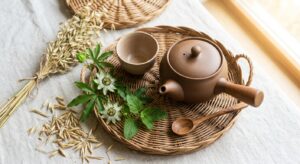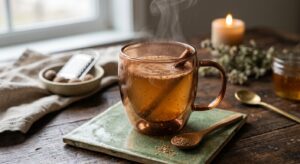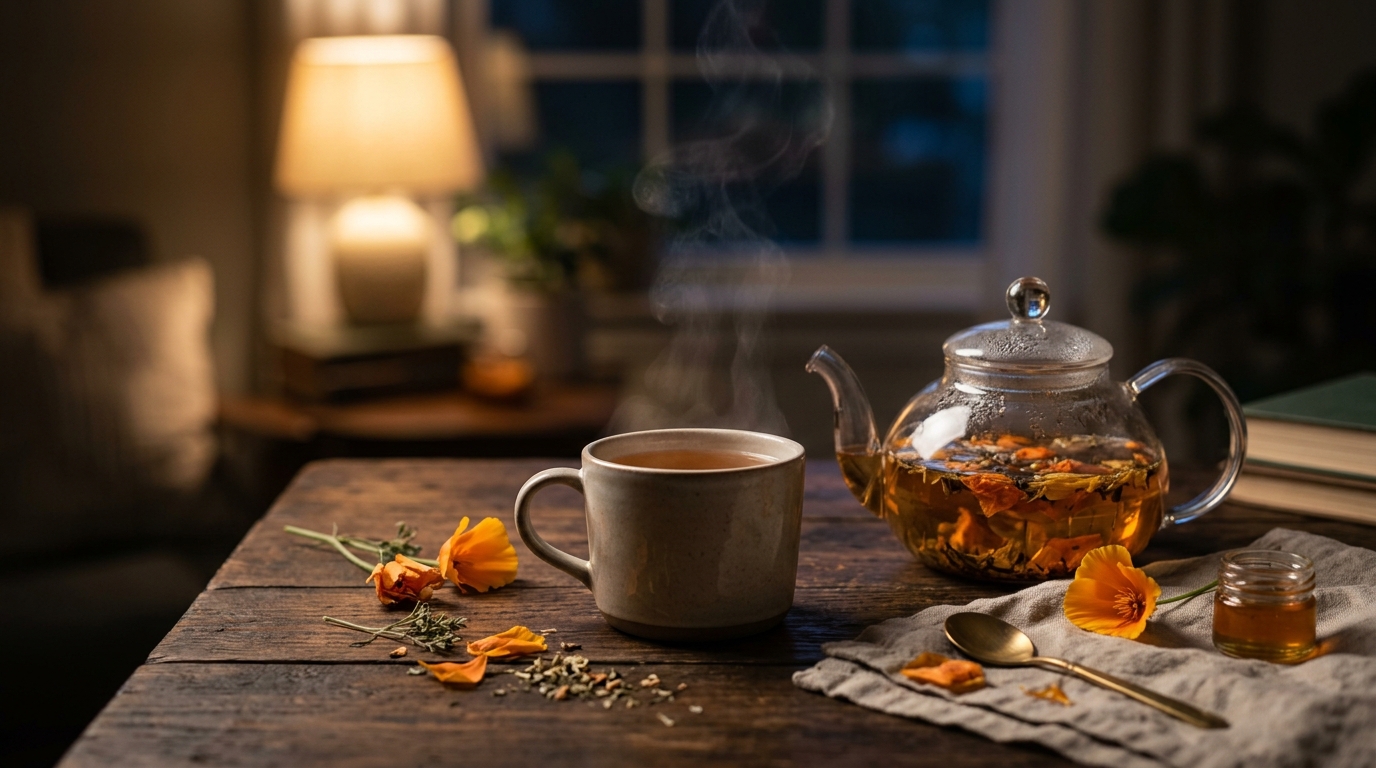
Every spring, the hillsides of California glow with the satin orange blooms of Eschscholzia californica, the state flower and one of the most photographed wildflowers in North America. Long before it became a garden favorite, Indigenous peoples of California and the Pacific Northwest used the plant in practical, hands-on ways. Poultices of the leaves and roots were applied for toothaches and sores, and preparations of the plant were used to calm restless children and help people sleep. Early Spanish settlers and later European herbalists took note, and the plant found its way into 19th-century eclectic medicine as a mild sedative and analgesic.
Although it belongs to the poppy family (Papaveraceae), California poppy is not the opium poppy and does not contain morphine, codeine, or the other narcotic alkaloids of Papaver somniferum. Its alkaloid profile is entirely different, dominated by compounds such as californidine, escholtzine, and protopine. These act far more subtly, which is why herbalists describe it as a nervine and gentle sedative rather than a strong sleep aid. It is often reached for when the mind is wound up at bedtime, when tension has settled into the body, or when a child or sensitive adult needs something mild.
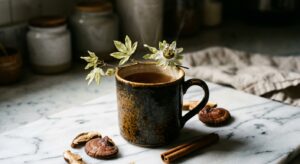
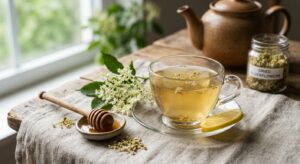
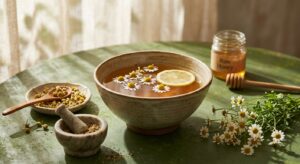
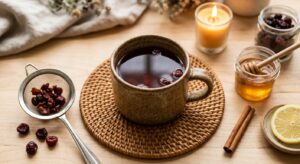
In the cup, California poppy is quiet and unassuming. The flavor is earthy and slightly bitter, with a faint green, almost grassy sweetness, and a pale golden-green color. Many people blend it with chamomile, lemon balm, or a little honey to soften the edges, turning it into a calming evening ritual. This guide walks you through three ways to brew it, what the science actually says, and how to use it wisely.
2
cups
Ingredients
- 2 tspdried California poppy aerial parts (flowers, leaves, and stems)
- 480 mlfreshly boiled water, cooled slightly (about 95°C / 203°F)
- —raw honey to taste (optional)
- —a slice of lemon or a pinch of dried lemon balm to soften the bitterness (optional)
How to Brew
Click on an item below to shop for the recommended items for this recipe on Amazon.
As an Amazon Associate, we earn from qualifying purchases.
- Measure 2 teaspoons of dried California poppy into a teapot or a large mug with an infuser basket. Because the plant material is light and leafy, lightly crumble any large pieces so they can release their compounds evenly.
- Bring fresh water to a boil, then let it rest for about 30 seconds so it settles just below boiling, around 95°C (203°F). Pour 240 ml over the herb for each cup you are making.
- Cover the vessel with a saucer or lid and steep for 10 to 15 minutes. The longer end of the range gives a stronger, more sedative infusion, though it also increases bitterness.
- Strain the tea through a fine mesh strainer, pressing the herb gently to extract the last of the liquid.
- Stir in a little honey if desired. Sip slowly about 30 to 60 minutes before bed, ideally in dim light and away from screens.
- Combine 2 tablespoons of dried California poppy with 1 liter of cool, filtered water in a glass jar. Use a slightly higher ratio than hot brewing, since cold water extracts more slowly.
- Stir well to wet all of the plant material, then seal the jar and place it in the refrigerator.
- Let the tea steep for 6 to 8 hours or overnight. Give the jar a gentle swirl once or twice if you are nearby.
- Strain through a fine mesh strainer or a muslin cloth into a clean jar or pitcher, discarding the spent herb.
- Serve over ice or straight from the fridge in the early evening. Drink within 24 hours for the best flavor and freshness.
- Add 3 tablespoons of dried California poppy to a small saucepan with 500 ml of water.
- Bring to a bare simmer over low heat, then cover and keep the liquid at a very gentle simmer for 20 minutes. Avoid a rolling boil, which can drive off the aromatic compounds.
- Remove the pan from the heat, keep it covered, and let the mixture rest for another 20 minutes so the herb continues to infuse as it cools.
- Strain thoroughly through a fine mesh strainer lined with muslin, squeezing out as much liquid as you can.
- Pour the concentrate into a clean glass bottle and refrigerate for up to 3 days. To serve, dilute 60 to 120 ml of concentrate with hot water or cold water and honey, and drink in the evening.
Health Benefits
California poppy is traditionally used to help people fall asleep, and its alkaloids appear to produce a mild sedative effect. Small clinical studies of combination products containing California poppy have reported improvements in sleep quality, though research on the herb alone is limited.
Animal studies and a few human trials of combination formulas suggest California poppy may reduce anxiety-like behavior, likely through effects on GABA signaling. It is typically described as a gentle anxiolytic suited to everyday stress rather than clinical anxiety disorders.
Traditional herbalists use California poppy as a mild analgesic and antispasmodic, and alkaloids such as protopine show muscle-relaxing activity in lab studies. This makes it a popular evening companion when tension keeps the body from settling.
Because it is much milder than stronger sedatives such as valerian or pharmaceutical sleep aids, California poppy is often chosen by herbalists for people who want a lighter touch. It is generally non-habit-forming at normal tea doses.
🧪 Key Bioactive Compounds
The Science Behind California Poppy
The sedative reputation of California poppy rests largely on its isoquinoline alkaloids. Unlike the opium poppy, whose morphinan alkaloids act on opioid receptors, California poppy’s principal alkaloids, including californidine, escholtzine, protopine, and allocryptopine, are structurally distinct and do not produce opiate-type effects. This is why the plant is not addictive in the way opium-derived substances are, and why it is legal to grow and use as a food and herbal remedy in most places.
Preclinical research suggests these alkaloids interact with the GABA system, the main inhibitory neurotransmitter network in the brain, as well as with other pathways involved in mood and arousal. In mouse models, extracts of California poppy have reduced anxiety-like behavior and promoted sedation, while protopine in particular has been studied for its ability to modulate neurotransmitter activity. These findings help explain the traditional use of the plant for nervous tension and sleeplessness.
It is worth being honest about the limits of the evidence. Most of the human data come from products that combine California poppy with other herbs, such as hawthorn, magnesium, or valerian, which makes it difficult to attribute benefits to the poppy alone. Tea is also a milder preparation than a standardized extract, so the effects are typically subtle. For many people that is exactly the appeal: a low-key, ritual-friendly way to wind down, best used as part of a broader routine of consistent sleep timing, low evening light, and relaxation.
Brewing Tips
- Harvest or buy the whole aerial parts (flowers, leaves, and stems) rather than flowers alone, as the alkaloids are found throughout the plant.
- Brew it 30 to 60 minutes before bed so the calming effect has time to build, and keep the rest of your evening routine quiet and screen-free.
- If the bitterness is off-putting, blend with chamomile, lemon balm, or spearmint, or add a little honey, rather than over-steeping to compensate.
- Store dried California poppy in an airtight, opaque jar away from heat and light, and use within 12 months for the best potency.