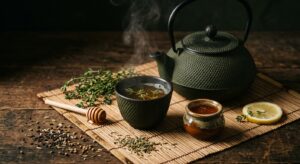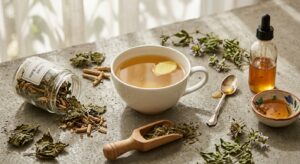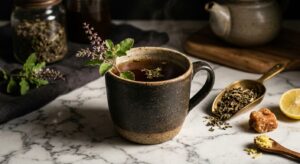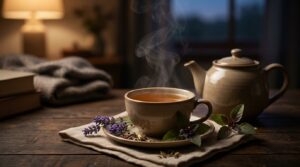
Few plants carry as much cultural weight as the rose. Long before it became a symbol of romance, the rose was a working medicinal plant. Persian physicians, including Avicenna in the 11th century, wrote about rose preparations for the heart, the digestion, and the spirit. In Ayurveda, rose petals (known as shatapatri) are considered cooling and soothing, and rose water and rose petal preserves have been part of Unani and Middle Eastern home medicine for generations. In traditional Chinese medicine, dried rosebuds (mei gui hua) are used to move stagnation and ease emotional tension, a concept closely tied to what we would now call stress.
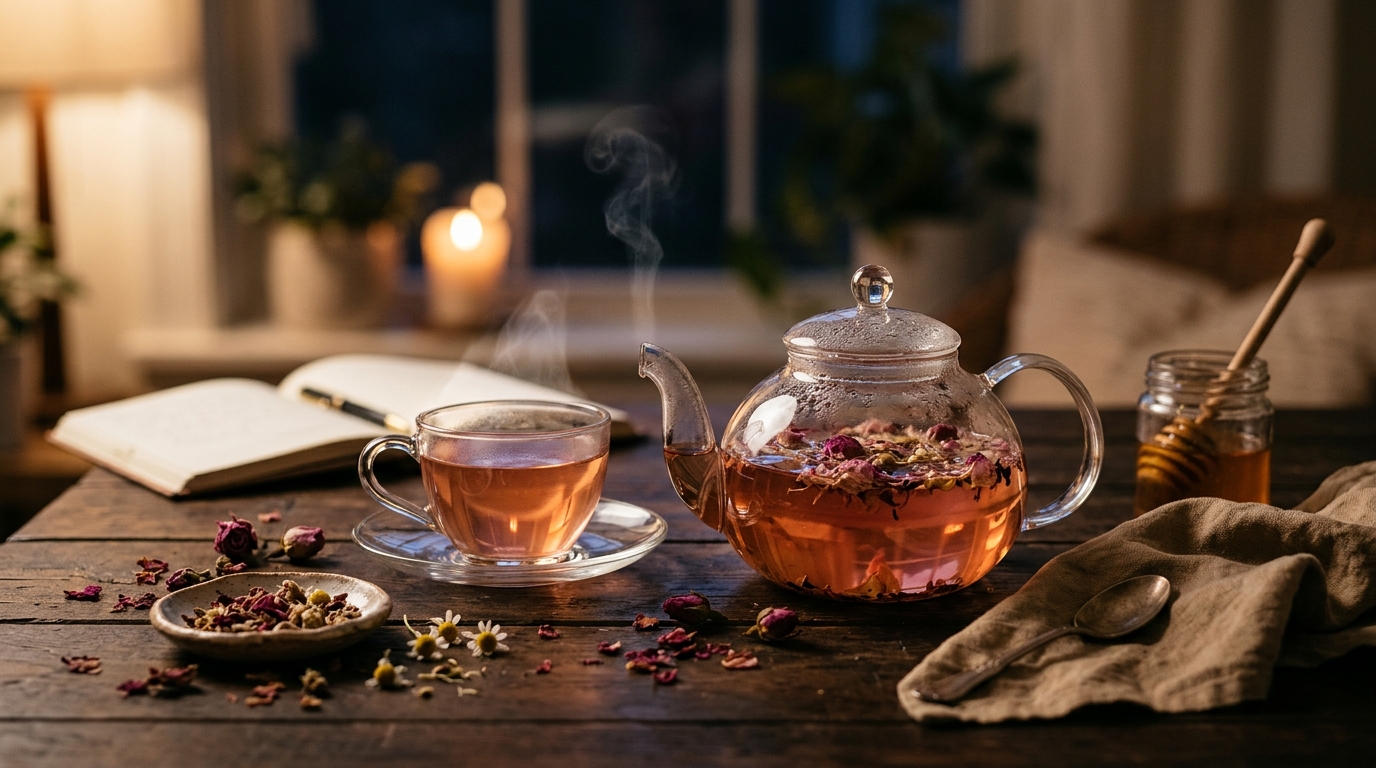
The tea itself is a quiet pleasure. Dried rose petals unfurl in hot water, releasing a perfume that is unmistakably floral yet softer and more rounded than many people expect. The flavor is lightly sweet, a little tannic, with a whisper of honeyed fruit. Because the aroma is such a large part of the experience, drinking rose tea becomes a ritual of the senses: the warmth of the cup, the rising steam, the scent that signals to the body that the day is over.
Modern interest in rose tea centers on its role as a gentle, caffeine-free wind-down drink. While it is not a sedative herb in the way valerian is, its aromatic compounds and polyphenols, combined with the simple act of slowing down to brew and sip a fragrant cup, can make it a genuinely supportive part of an evening routine. For best results, choose organically grown, culinary-grade petals, never florist roses, which are often sprayed with pesticides not meant for consumption.
2
cups
Ingredients
- 2 tbspdried organic rose petals (Rosa damascena or similar culinary variety)
- 480 mlwater (85°C / 185°F)
- —raw honey to taste (optional)
- —a few drops of lemon juice to brighten color and flavor (optional)
How to Brew
Click on an item below to shop for the recommended items for this recipe on Amazon.
As an Amazon Associate, we earn from qualifying purchases.
- Bring fresh water to a boil, then let it rest for about 1 minute so it cools to roughly 85 to 90°C (185 to 194°F).
- Place 2 tablespoons of dried rose petals into a teapot or a large mug fitted with an infuser. Gently crush a few petals between your fingers first to wake up their aroma.
- Pour the hot water over the petals and cover the vessel with a lid or small saucer to trap the volatile aromatic oils.
- Steep for 5 to 8 minutes. Shorter steeping gives a lighter, more floral cup; longer steeping brings out deeper color and a slightly more tannic structure.
- Strain the petals, add honey or a drop of lemon if desired, and sip slowly while the tea is still warm and fragrant.
- Add 3 tablespoons of dried rose petals to a clean glass jar or pitcher. Use slightly more than for hot brew, since cold water extracts more slowly.
- Pour 700 ml of cool, filtered water over the petals and stir once gently to submerge them.
- Cover the jar and place it in the refrigerator. Let it steep for 6 to 10 hours, or overnight.
- Strain through a fine mesh sieve or muslin cloth, pressing lightly on the petals to release the last of the liquid.
- Serve over ice or straight from the fridge, with a sprig of mint or a slice of cucumber if you like. Drink within 24 hours for best flavor.
- Heat 250 ml of water to about 85°C (185 °F) and pour it over 3 tablespoons of dried rose petals in a heatproof jug. This is roughly double the strength of the hot brew.
- Cover and steep for 6 minutes, then strain out the petals while the tea is still hot.
- Stir in 1 to 2 teaspoons of honey while the tea is warm so it dissolves fully, along with a squeeze of fresh lemon if you want a brighter flavor and a deeper pink tint.
- Fill two tall glasses generously with ice and pour the warm concentrate over it, allowing the ice to melt slightly and dilute the tea to a balanced strength.
- Garnish with a few whole rose petals or a lemon wheel and serve immediately.
Health Benefits
The aroma of rose, driven by compounds like citronellol and geraniol, has been associated with reduced anxiety and lowered stress responses in small human and animal studies of rose inhalation and aromatherapy. Sipping the warm tea also delivers this scent directly as part of a relaxing ritual.
Rose petals are rich in polyphenols, including quercetin, kaempferol, and gallic acid, which have demonstrated strong free-radical scavenging activity in laboratory assays. This contributes to overall cellular protection as part of a healthy diet.
Rose petals have a long traditional use as a mild digestive aid and gentle tonic, and their tannins have a mildly astringent, soothing effect. This makes a cup after dinner a pleasant way to settle the stomach.
A small number of clinical studies, including trials on rose aromatherapy and rose preparations, suggest a possible reduction in menstrual cramp severity. Evidence is still limited, so it is best viewed as a supportive comfort measure.
Rose tea is naturally caffeine-free, and the act of preparing and slowly sipping a fragrant, warm drink helps signal the body to shift into rest mode. This behavioral cue is a meaningful part of its calming effect.
🧪 Key Bioactive Compounds
The Science Behind Rose Petal
The appeal of rose tea starts with its volatile aromatic compounds. Fresh and dried rose petals contain monoterpene alcohols such as geraniol, citronellol, and nerol, which together create the unmistakable rose scent. Research into aromatherapy suggests that inhaling these fragrance molecules can influence the limbic system, the part of the brain involved in emotion, and may lower markers of stress such as heart rate and cortisol. Small studies on rose oil inhalation have reported reduced anxiety and improved mood, though most of this work uses concentrated essential oil rather than tea, so the effect from a cup is likely subtler.
Beyond aroma, rose petals are a notable source of polyphenols. Flavonoids such as quercetin and kaempferol, along with phenolic acids like gallic acid, show strong antioxidant activity in laboratory tests. Antioxidants help neutralize reactive oxygen species, which are linked to oxidative stress and chronic inflammation. Darker petals also contain anthocyanins, the pigments that give them their rich color and additional antioxidant capacity. Because many of these compounds are water-soluble, hot water extracts them readily, which is why a proper steep matters.
It is worth being honest about the limits of the evidence. Much of the research on rose is preclinical or based on aromatherapy and extracts rather than tea itself, and the clinical trials that exist are generally small. Rose tea is best understood as a gentle, pleasant, supportive beverage rather than a treatment. Its real strength lies in the combination of mild bioactive compounds, a soothing aroma, and the calming behavioral ritual of making and savoring a warm cup at the end of the day.
Brewing Tips
- Always buy culinary-grade, organically grown rose petals or rosebuds. Never use florist or garden-center roses, which are often treated with pesticides.
- Keep your water just below boiling, around 85 to 90°C (185 to 194°F), to protect the delicate aromatics and avoid a bitter, over-extracted cup.
- Cover your cup or teapot while steeping so the fragrant steam stays in the tea rather than escaping into the air.
- Store dried rose petals in an airtight, opaque container away from light and heat to keep their color and scent vibrant for up to a year.
- Make your evening cup a screen-free ritual: dim the lights, hold the warm mug, and take a few slow breaths of the steam before your first sip.