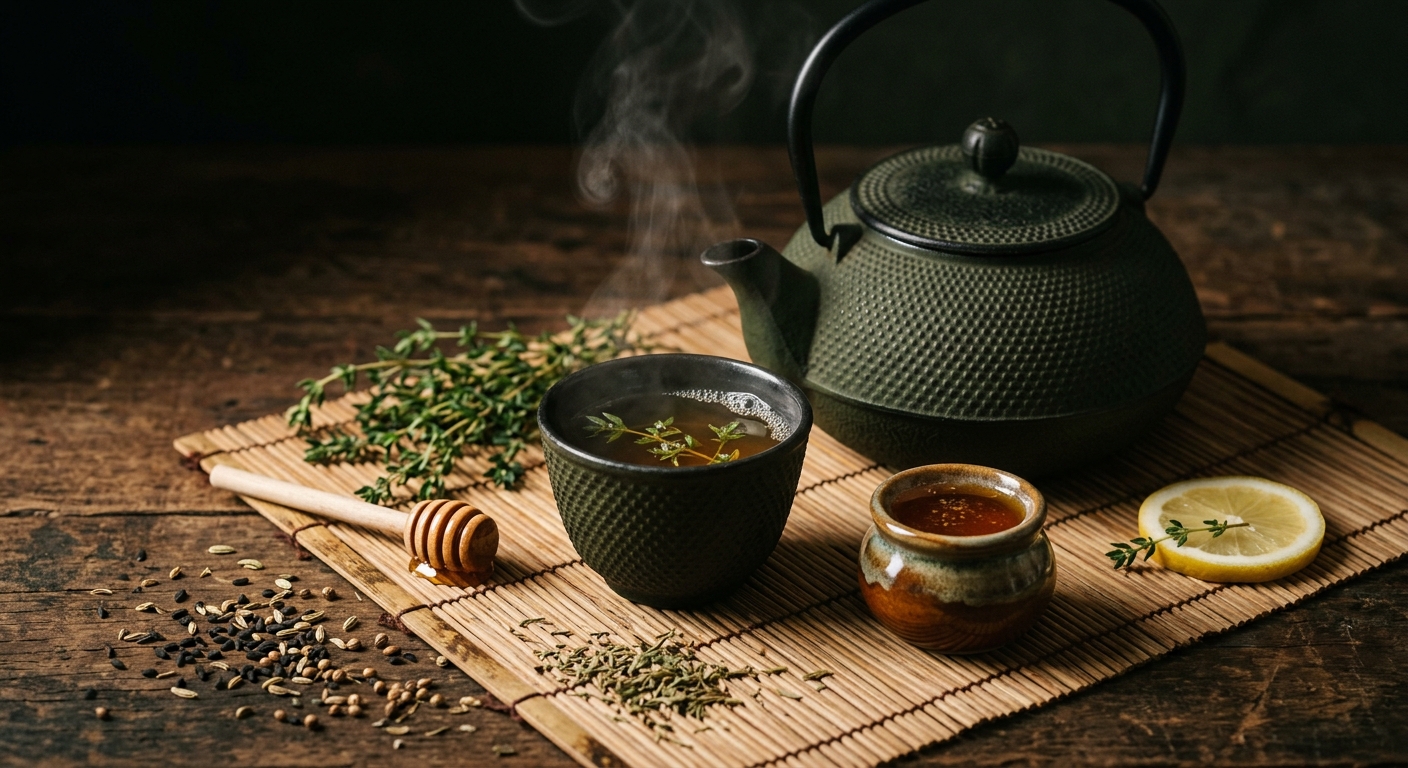
Long before thyme found its way into kitchen spice racks, it was a sacred herb of courage, purification, and healing. Ancient Greeks burned it as temple incense and believed it instilled bravery in warriors. Medieval European herbalists prescribed it for melancholy, nightmares, and what we might today recognize as anxiety. Its Latin name, Thymus vulgaris, is thought to derive from the Greek thymon, meaning to fumigate or to offer in sacrifice, pointing to its deep roots in ritual and medicine alike. For thousands of years, across cultures from the Mediterranean to Northern Europe, thyme was a first-reach remedy when breath was labored, spirits were low, or the body needed defending.
As a tea, thyme reveals a completely different character than it shows in cooking. The harsh, almost medicinal bite it carries raw softens beautifully with hot water, yielding a cup that is warmly herbaceous, faintly floral, and gently savory with a clean, camphor-tinged finish. It is a tea that smells like a sun-warmed hillside in Provence and tastes like something your grandmother might have brewed when you were sick and anxious at the same time. Brewed in the right way and at the right temperature, thyme tea unlocks a generous spectrum of volatile compounds, including thymol, carvacrol, and rosmarinic acid, each carrying distinct physiological effects on the nervous system, respiratory tract, and immune defenses.
What makes thyme genuinely compelling in the modern wellness conversation is the quality of the science supporting what traditional healers long observed. Studies have confirmed its antispasmodic effects on bronchial smooth muscle, its anxiolytic interactions with GABA receptors, and its potent antimicrobial activity against a wide range of pathogens. Whether you are reaching for it on a tense afternoon, brewing a nightcap after a stressful day, or seeking natural support during cold and flu season, thyme tea earns its place as one of the most versatile and underappreciated herbs in the cup.
2
cups
Ingredients
- 2 tspfresh thyme sprigs (or 1 tsp dried thyme leaves)
- 240 mlwater per serving (90°C / 194°F for hot brew)
- —raw honey to taste (optional)
- —fresh lemon slice (optional, brightens flavor and adds vitamin C)
How to Brew
Click on an item below to shop for the recommended items for this recipe on Amazon.
As an Amazon Associate, we earn from qualifying purchases.
- Heat filtered water to 90 to 95°C (194 to 203°F). If you do not have a temperature-controlled kettle, bring water to a full boil and allow it to rest for 60 to 90 seconds before pouring.
- Place 2 teaspoons of fresh thyme sprigs (or 1 teaspoon of dried thyme leaves) per serving into a tea infuser or small teapot. Lightly bruise fresh sprigs between your fingers to release the aromatic oils before adding them.
- Pour the heated water over the thyme and immediately cover the mug or teapot with a lid or small saucer. Covering is essential to trap the volatile oils that would otherwise evaporate into the air.
- Steep for 5 to 7 minutes. Five minutes produces a lighter, more floral cup. Seven minutes yields a fuller, more intensely savory and medicinal brew. Taste at the five-minute mark to find your preference.
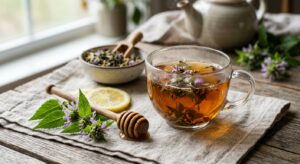
- Remove the infuser or strain out the thyme. Add raw honey and a squeeze of fresh lemon if desired. Sip slowly and inhale the steam before each sip for an added respiratory benefit.
- Use a higher herb ratio than hot brew to compensate for the slow, low-temperature extraction. Add 3 teaspoons of fresh thyme sprigs (or 1.5 teaspoons of dried thyme) per 240 ml of cold, filtered water.
- Combine the thyme and cold water in a clean glass jar. Stir gently to fully submerge the herbs. Do not cover tightly yet. Allow the jar to sit at room temperature for 1 hour so the initial extraction begins at ambient temperature, which helps release aromatic compounds before refrigeration slows the process.
- After 1 hour, cover the jar loosely with a lid or cloth and transfer it to the refrigerator. Allow the thyme to cold-steep for an additional 7 to 11 hours, for a total infusion time of 8 to 12 hours. Cold brewing overnight and enjoying it the next morning works perfectly.
- Strain out the thyme through a fine mesh strainer or cheesecloth, pressing the herbs gently to extract the remaining liquid. The resulting infusion will be pale gold with a delicate, aromatic clarity.
- Serve over ice with a slice of cucumber or a sprig of fresh mint. Sweeten lightly with honey simple syrup (honey dissolved in a small amount of warm water) if desired, as crystalline honey is difficult to dissolve in cold liquid. Consume within 48 hours and keep refrigerated.
- Use a generously sized, wide-mouthed mug for this method. Add 3 to 4 fresh thyme sprigs (or 1.5 teaspoons of dried thyme) directly to the bottom of the mug without an infuser, so that nothing obstructs the rising steam.
- Bring water to a near-full boil at 95 to 100°C (203 to 212°F). The higher temperature is intentional here because the primary goal of the initial pour is to generate a rich, volatile-oil-laden steam. Pour the near-boiling water directly over the thyme in one steady pour.
- Immediately lean over the mug at a comfortable distance of roughly 20 to 30 cm and drape a small towel over the back of your head to capture the steam. Close your eyes, breathe slowly and deeply through your nose for 60 to 90 seconds. This inhalation delivers thymol and carvacrol directly to the respiratory tract and nasal passages.
- After the steam inhalation, allow the tea to cool uncovered for 2 to 3 minutes, which also allows the temperature to drop to an optimal drinking range of around 60 to 70°C. Strain the tea through a fine mesh strainer into a second mug.
- Add raw honey and lemon to taste. The honey enhances thyme’s throat-soothing properties, and lemon juice adds a brightness that balances the savory depth of this more intensely brewed cup. Sip slowly and continue breathing deeply between sips.
Health Benefits
Carvacrol and luteolin in thyme both interact with GABA-A receptors in the brain, the same pathway targeted by pharmaceutical anti-anxiety medications, producing a measurable calming effect without sedation at typical tea-dose levels. A 2014 study found that carvacrol significantly reduced anxiety behaviors in animal models by modulating dopamine and serotonin activity in the prefrontal cortex and hippocampus.
Thyme has one of the strongest evidence bases among herbs for bronchial and respiratory support. Thymol and carvacrol have demonstrated antispasmodic effects on smooth bronchial muscle, reducing the frequency and intensity of coughing fits. A randomized clinical trial published in Arzneimittelforschung found a standardized thyme extract as effective as the pharmaceutical expectorant Ambroxol for acute bronchitis relief.
Thymol is so effective against bacteria, viruses, and fungi that it is the active ingredient in many commercial mouthwashes and surface disinfectants. As a tea, it provides a meaningful antimicrobial action in the mouth, throat, and gut, making it a practical choice during cold and flu season or for managing minor digestive infections.
Rosmarinic acid and ursolic acid are both powerful antioxidants that scavenge free radicals and inhibit key inflammatory enzymes including COX-2 and 5-LOX. Chronic psychological stress elevates these inflammatory markers, and regular consumption of thyme tea may help moderate this stress-driven inflammatory cascade.
Rosmarinic acid has been shown to inhibit the breakdown of acetylcholine, a neurotransmitter essential for memory, focus, and mood regulation. Combined with the flavonoid-mediated modulation of serotonin pathways, thyme tea may offer gentle support for mental clarity and emotional resilience on high-stress days.
🧪 Key Bioactive Compounds
The Science Behind Thyme
The therapeutic character of thyme tea is built on a rich matrix of volatile oils, polyphenols, and flavonoids that work through several distinct biological pathways simultaneously. The most pharmacologically active compounds are thymol and carvacrol, two monoterpene phenols that together typically account for 40 to 70 percent of the essential oil content in Thymus vulgaris. These compounds demonstrate a remarkable ability to disrupt the lipid bilayers of microbial cell membranes, which explains thyme’s broad-spectrum antimicrobial activity. But their relevance to stress and anxiety is newer and perhaps more surprising: carvacrol has been shown in preclinical research to modulate the activity of both dopaminergic and serotonergic neurotransmitter systems, while also potentiating GABA-A receptor function in a manner broadly analogous to pharmaceutical anxiolytics, but at a far gentler magnitude appropriate to herbal tea consumption.
Rosmarinic acid, a caffeic acid ester present in significant concentrations in thyme, contributes substantially to the herb’s anti-inflammatory and neuroprotective profile. It is a highly bioavailable polyphenol that crosses the blood-brain barrier and inhibits the enzyme acetylcholinesterase, thereby preserving the availability of acetylcholine for cognition and mood regulation. It also suppresses pro-inflammatory cytokines including interleukin-6 and tumor necrosis factor-alpha, both of which are chronically elevated under psychological stress. Luteolin and apigenin, the two primary flavonoids in thyme, round out the anxiolytic profile by binding directly to benzodiazepine recognition sites on GABA-A receptors, providing a pharmacological basis for the traditional use of thyme in calming nervous tension and promoting sleep.
The method of preparation matters significantly for which compounds are extracted and retained. Hot water at 90 to 95°C extracts the broadest spectrum of active compounds, but covering the cup during steeping is genuinely important because thymol and carvacrol are highly volatile and will escape into the air rapidly if the brew is left uncovered. Cold brewing shifts the extraction profile toward gentler phenolic compounds and produces a lower concentration of volatile oils but a smoother, more palatable cup with retained antioxidant activity. The steam inhalation method bypasses extraction chemistry almost entirely for the respiratory benefit, delivering volatile compounds directly to the mucous membranes of the nose and throat via inhalation, a delivery route with near-immediate local effect. Understanding these distinctions allows the drinker to choose the brewing method that best matches their specific wellness need on any given day.
Brewing Tips
- Always cover your mug or teapot while thyme steeps. Thymol and carvacrol are highly volatile aromatic compounds and will escape rapidly into the air if left uncovered, significantly reducing both the aroma and the therapeutic potency of your cup.
- Fresh thyme produces a more complex, floral, and nuanced cup than dried thyme, which tends to be more concentrated and sharper. If using dried thyme, use half the volume you would use of fresh and opt for a shorter steep time of 4 to 5 minutes to avoid bitterness.
- Thyme pairs exceptionally well with lemon balm or lavender if you want to amplify the anxiety-relieving effect. Add equal parts of either herb alongside the thyme in your infuser for a blended calm-support tea that softens thyme’s savory edge with floral sweetness.