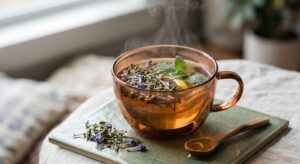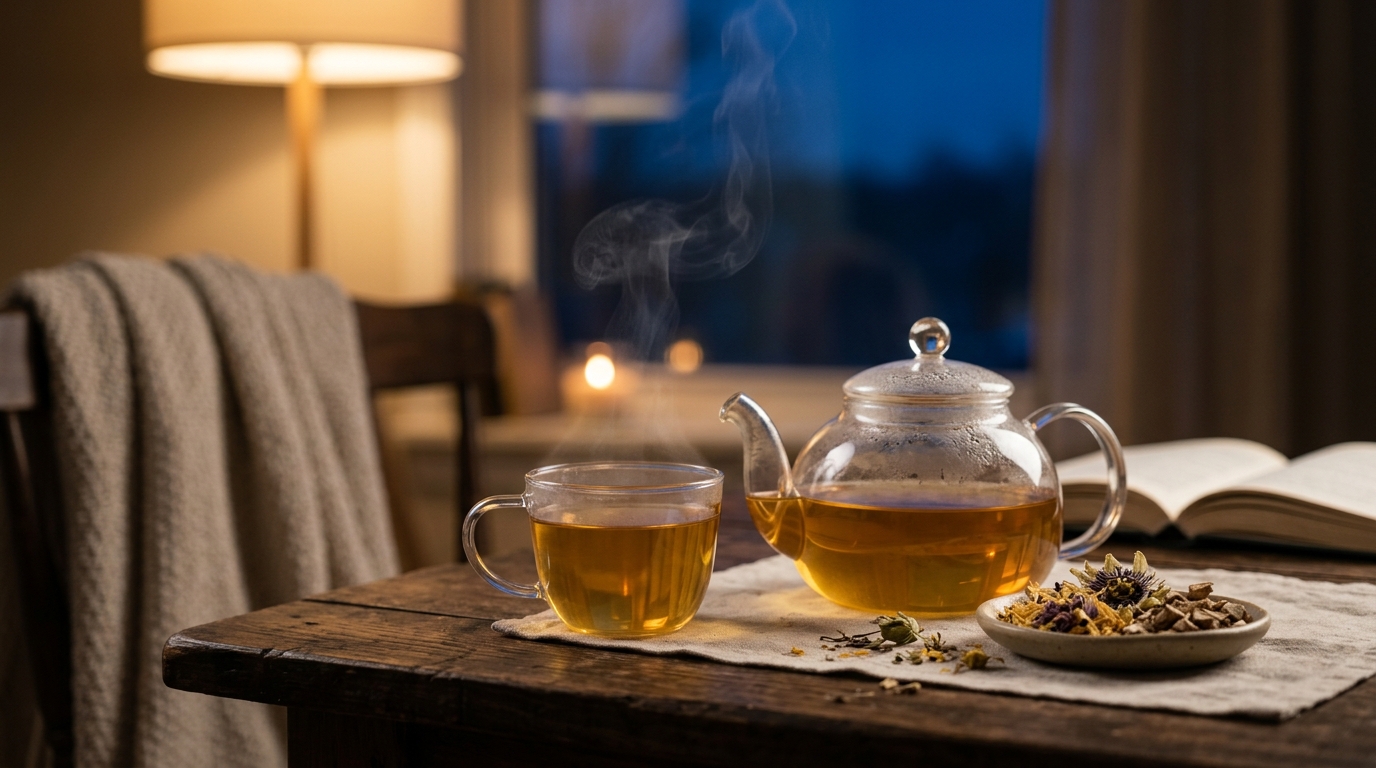
Few herbal pairings have as long a pedigree as passionflower and valerian. Valerian root has been used since the time of ancient Greece and Rome, when physicians like Hippocrates and Galen wrote about its calming properties. By the Middle Ages, it was a staple of European household remedies, prized for quieting nervous agitation and coaxing restless sleepers toward rest. Its name comes from the Latin valere, meaning ‘to be strong’ or ‘to be well.’
Passionflower (Passiflora incarnata) has a different story. Native to the southeastern United States, it was used by Indigenous peoples including the Cherokee as a calming tonic and poultice. Spanish missionaries in the 1500s gave the plant its name, seeing in its intricate, fringed blossom a symbol of the Passion of Christ. By the 19th century, American physicians were using passionflower for nervous restlessness, and it has since become a fixture in European herbal pharmacopoeias.
Together, the two herbs complement each other beautifully. Valerian brings a deep, grounding sedative quality, while passionflower softens the edge of an overactive mind with a gentler, more floral calm. The result is a tea for the kind of sleeplessness that comes not from physical wakefulness but from looping thoughts and a body that cannot quite let go of the day. Be prepared for the valerian: its smell is famously pungent, a warm, musky, wet-earth aroma some compare to old socks. A touch of honey and a little lemon balm or mint transforms the experience.
2
cups
Ingredients
- 2 tspdried passionflower (aerial parts)
- 1 tspdried valerian root, cut and sifted
- 480 mlwater (95°C / 203°F)
- —raw honey to taste (optional)
- —a few dried lemon balm leaves or a sprig of fresh mint to soften the valerian (optional)
How to Brew
Click on an item below to shop for the recommended items for this recipe on Amazon.
As an Amazon Associate, we earn from qualifying purchases.
- Measure 2 teaspoons of dried passionflower and 1 teaspoon of cut valerian root into a tea infuser or directly into a teapot. If you are using lemon balm or mint, add a small pinch now.
- Bring fresh water to a near boil, then let it rest for about 30 seconds to reach roughly 95°C (203°F). Valerian root is hardy and tolerates hot water, and the heat helps extract its valerenic acids.
- Pour the hot water over the herbs and immediately cover the vessel with a lid or small saucer to trap the volatile oils.
- Steep for 10 to 15 minutes. Stay closer to 10 if you are new to valerian’s strong flavor, and go toward 15 for a fuller-bodied, more potent cup.
- Strain thoroughly, pressing the herbs gently against the strainer to release the last of the liquid. Stir in honey to taste.
- Sip slowly about 30 to 45 minutes before bed, in a dimly lit room, with screens put away.
- Combine 2 teaspoons of dried passionflower and 1 teaspoon of cut valerian root in a clean glass jar. Add a few lemon balm leaves if desired.
- Pour in 480 ml (2 cups) of cold, filtered water and stir once to wet all the herbs.
- Seal the jar and leave it on the counter for the first hour, then transfer it to the refrigerator.
- Steep for 8 to 12 hours, or overnight. A longer steep builds a rounder, more herbal flavor without the harsh edge of a hot infusion.
- Strain through a fine mesh sieve or a coffee filter to catch the fine valerian particles.
- Drink chilled, or warm gently in a saucepan for a minute or two (do not boil) if you prefer a warm bedtime cup. Keeps in the refrigerator for up to 24 hours.
- Add 1 to 2 teaspoons of cut valerian root to a small saucepan with 480 ml (2 cups) of cold water.
- Bring to a boil, then immediately reduce the heat to the lowest setting. Cover with a lid and simmer gently for 15 minutes. This breaks down the tough root and releases its sesquiterpenes and valerenic acid.
- Remove the pan from the heat and let it cool for about 1 minute, until the water settles to roughly 90°C (194°F).
- Add 2 teaspoons of dried passionflower to the pan, cover again, and steep for 10 minutes. Adding the flowers off the heat protects their delicate flavonoids.
- Strain through a fine mesh sieve into a mug, pressing the herbs lightly to extract the remaining liquid.
- Sweeten with honey, and consider a slice of lemon or a pinch of cinnamon to round out the earthy flavor.
Health Benefits
Passionflower has been compared to oxazepam in small clinical trials for generalized anxiety, with fewer reports of job-impairing drowsiness. Its flavonoids appear to raise levels of GABA, the brain’s main inhibitory neurotransmitter.
Valerian has been studied for decades as a sleep aid, and several trials suggest it can reduce the time needed to fall asleep and improve subjective sleep quality, though results across studies are mixed.
A small clinical study found that passionflower tea taken for a week improved sleep quality ratings compared with a placebo, suggesting benefits even from the tea form.
Valerian has traditional and some experimental support as an antispasmodic, helping with the physical tightness and stress-related stomach discomfort that often accompany anxiety.
The combination is traditionally used for racing, repetitive thoughts at bedtime, where the sedative weight of valerian and the gentler anxiolytic action of passionflower work together.
🧪 Key Bioactive Compounds
The Science Behind Passionflower
The calming effects of this blend appear to center on the GABA system, the main inhibitory signaling network in the brain. Valerian’s valerenic acid has been shown to bind to a specific subunit of the GABA-A receptor, enhancing its inhibitory effect, while other valerian constituents may slow the breakdown of GABA itself. This is thought to quiet neural firing in a way that lowers arousal without the heavy sedation of many pharmaceuticals.
Passionflower works through a related but distinct route. Its flavonoids, including vitexin, isovitexin, and chrysin, have been shown in laboratory studies to modulate GABA receptors and to raise GABA availability. Animal studies also suggest an effect on anxiety-related behaviors without significant impairment of movement. Clinical research is smaller, but trials in generalized anxiety and preoperative anxiety have been encouraging.
It is worth being honest about the evidence. Systematic reviews of valerian for insomnia have produced inconsistent results, partly because preparations vary widely in their chemical content and partly because sleep studies are difficult to standardize. Passionflower tea has less clinical data behind it than valerian. Even so, the long traditional use, plausible mechanisms, and generally good tolerability make this blend a reasonable first step for mild, stress-related sleeplessness, ideally alongside good sleep habits.
Brewing Tips
- Always cover your cup or teapot while steeping to keep valerian’s volatile oils from escaping with the steam.
- Store dried valerian root in an airtight, opaque container away from heat and light. Its potency fades with age, and old root smells noticeably stronger and less pleasant.
- Drink the tea 30 to 45 minutes before bed rather than right as you lie down, giving the herbs time to take effect.
- Give it a few nights. Valerian often works more noticeably with consistent use over one to two weeks than with a single dose.
- If the smell is off-putting, try cold brew or blend with mint, lemon balm, or a cinnamon stick to mask the earthiness.