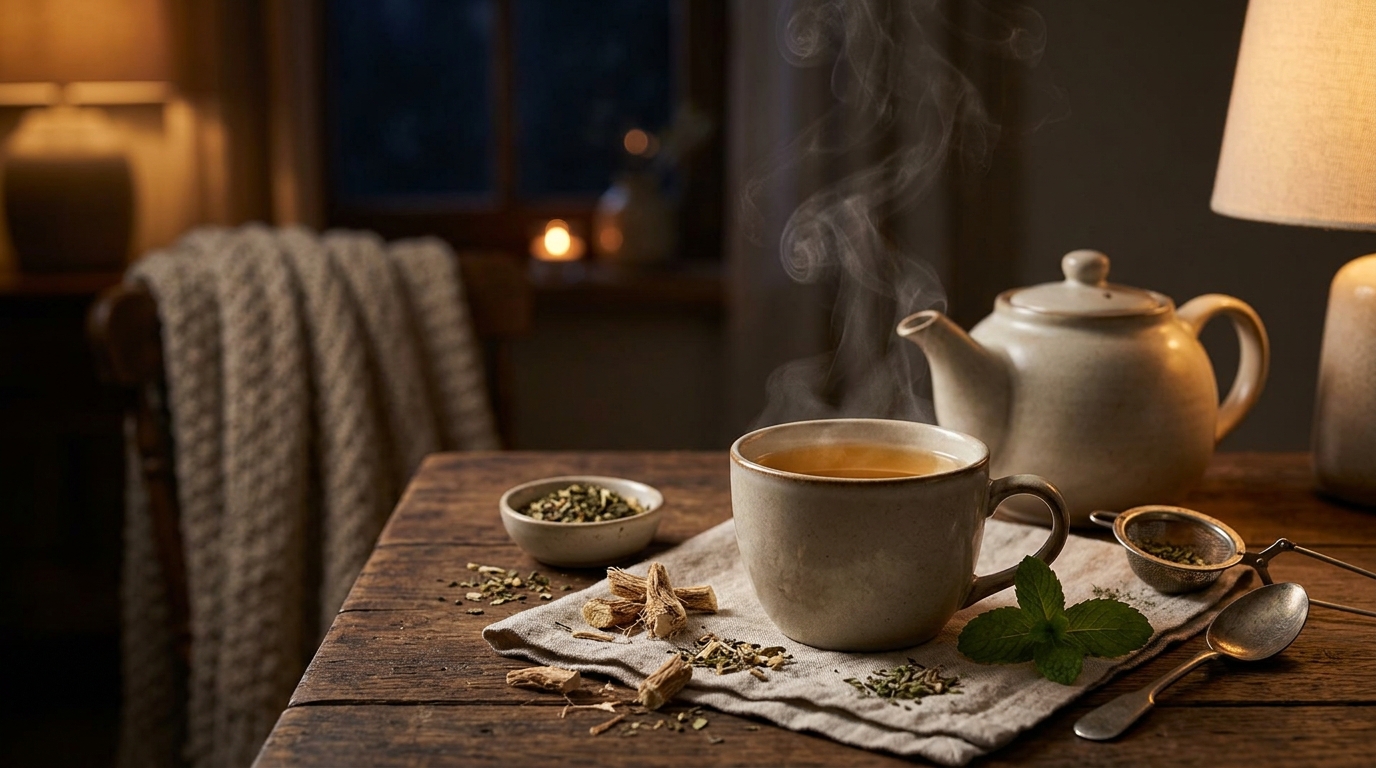
Peppermint (Mentha x piperita) has been a digestive companion for thousands of years. Dried peppermint leaves have been found in Egyptian tombs dating to roughly 1000 BCE, and the Greeks and Romans wove it into crowns and feast tables, partly for its fragrance and partly because they noticed how a few sprigs eased a heavy stomach. Modern herbalists still reach for it first when a meal sits too long, when gas builds, or when the belly feels tight and restless.
Marshmallow root (Althaea officinalis) comes from an entirely different corner of the herbal tradition. The plant grows in damp meadows and salt marshes across Europe and western Asia, and its pale, fleshy root has been used since antiquity as a soothing remedy for irritated mucous membranes. Its name in Greek, althaia, comes from a word meaning to heal. When steeped in water, the root releases a slippery, gel-like mucilage that gently coats the throat and gut lining, which is why it earned a place in traditional European and Middle Eastern medicine for coughs, sore throats, and digestive discomfort.
Brewed together, these two herbs create a beautifully balanced evening cup. Peppermint brings the bright, cooling aromatics and relaxes the smooth muscle of the digestive tract, while marshmallow root adds a soft, rounded sweetness and a velvety texture that makes each sip feel like a hug for the stomach. It is caffeine-free, gentle, and especially welcome after a rich or spicy dinner.
2
cups
Ingredients
- 2 tspdried peppermint leaf
- 2 tspdried marshmallow root, cut and sifted
- 480 mlwater (95°C / 203°F for hot brew)
- —raw honey to taste (optional)
- —a thin slice of fresh lemon (optional)
How to Brew
Click on an item below to shop for the recommended items for this recipe on Amazon.
As an Amazon Associate, we earn from qualifying purchases.
- Measure 2 teaspoons of dried peppermint leaf and 2 teaspoons of cut and sifted marshmallow root into a teapot or large mug with a built-in infuser. Cut root releases its mucilage more readily than whole pieces.
- Bring fresh water to a boil, then let it rest for about 30 seconds so it falls to roughly 95°C (203°F). Pour 480 ml over the herbs.
- Cover immediately with a lid or small saucer to keep the aromatic oils from escaping with the steam.
- Steep for 10 to 15 minutes. At 10 minutes the tea is lighter and more minty; at 15 minutes the marshmallow root has released more of its silky body and the flavor is rounder.
- Strain through a fine mesh strainer, pressing the herbs gently with the back of a spoon to release the last of the mucilage.
- Sweeten with a little raw honey if desired and sip slowly, ideally 20 to 30 minutes after your last bite of dinner.
- Combine 2 tablespoons of dried peppermint leaf and 2 tablespoons of cut and sifted marshmallow root in a clean glass jar. This ratio is higher than the hot brew because cold water extracts more slowly.
- Pour 1 liter of cool, filtered water over the herbs and stir gently for 10 seconds to make sure everything is wet.
- Seal the jar and leave it on the counter for the first hour, then transfer it to the refrigerator.
- Let it steep for 6 to 8 hours or overnight. The water will turn a soft pale green and take on a noticeably slick, viscous feel.
- Strain through a fine mesh strainer lined with a piece of muslin, squeezing the root gently to capture all the mucilage.
- Serve over ice or at cool room temperature. Drink within 24 hours and keep refrigerated.
- Place 1 tablespoon of cut and sifted marshmallow root in a small saucepan with 500 ml of cold water.
- Bring slowly to a gentle simmer over low heat. Keep it just below a rolling boil and let it simmer, uncovered, for about 15 minutes, stirring once or twice. The liquid will thicken slightly and turn a pale straw color.
- Remove the pan from the heat and add 2 teaspoons of dried peppermint leaf. Cover the pan immediately.
- Steep the peppermint in the hot root liquid for 5 minutes. This protects the menthol and other volatile oils, which would be lost with extended simmering.
- Strain through a fine mesh strainer into two mugs. The texture will be fuller and more syrupy than the other methods.
- Add a small squeeze of lemon or a spoonful of honey if you like, and sip warm.
Health Benefits
Menthol in peppermint has antispasmodic properties that relax the smooth muscle of the gut, which helps trapped gas move through more comfortably. Peppermint oil is among the better-studied herbal remedies for functional digestive discomfort.
Marshmallow root’s mucilage forms a protective layer over mucous membranes, which is why it has been used traditionally for sore throats and an irritated stomach lining. The evidence is largely traditional and mechanistic, but the demulcent effect is well recognized.
Peppermint is traditionally used as a carminative, a class of herbs that reduce fullness and promote the easy passage of food. A warm cup after dinner can also simply encourage you to slow down, which supports digestion on its own.
The warm, aromatic, caffeine-free cup signals the body to unwind. While peppermint is not a sedative, its gentle muscle-relaxing effect and the act of sipping slowly can help ease the transition toward sleep.
🧪 Key Bioactive Compounds
The Science Behind Peppermint
Peppermint’s digestive reputation rests largely on its essential oil, which is roughly 30 to 50 percent menthol and 15 to 30 percent menthone. Menthol acts on calcium channels in intestinal smooth muscle, reducing the strength of contractions and producing a spasm-relieving effect. This is the same mechanism studied in enteric-coated peppermint oil for irritable bowel syndrome, where several clinical trials and meta-analyses have reported meaningful symptom relief. A tea delivers a much lower dose than concentrated oil capsules, but it still provides a mild version of the same effect, along with the comfort of warmth and aroma.
Marshmallow root works through an entirely different principle. Its roots are rich in mucilage, a mix of large branched polysaccharides that swell and become slippery when mixed with water. When swallowed, this gel is thought to coat the mucous membranes of the mouth, throat, and digestive tract, creating a physical barrier that reduces irritation. Laboratory studies have also suggested that marshmallow polysaccharides may support the health of epithelial cells, though human clinical data remain limited and most evidence is traditional.
Combining the two is a classic example of herbal synergy by complementary action. Peppermint acts on the muscle layer of the gut and the sensation of fullness, while marshmallow addresses the surface of the tissue. The cooling aroma of peppermint and the silky texture of the root also make the tea unusually pleasant to drink, which matters: a remedy you enjoy is one you will actually return to.
Brewing Tips
- Always cover your cup or teapot while steeping to keep peppermint’s volatile oils from escaping with the steam.
- Use cut and sifted marshmallow root rather than powder, which can turn the tea gluey and clog your strainer.
- For the silkiest texture, try the cold brew method and warm it gently afterward rather than boiling it again.
- Drink the tea 20 to 30 minutes after eating, sipping slowly, to give your digestion a head start without rushing it.
- Store both dried herbs in airtight, light-proof containers away from heat so the menthol and mucilage stay potent for up to a year.