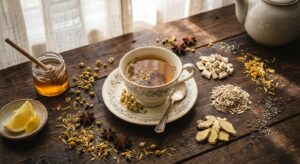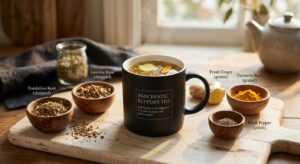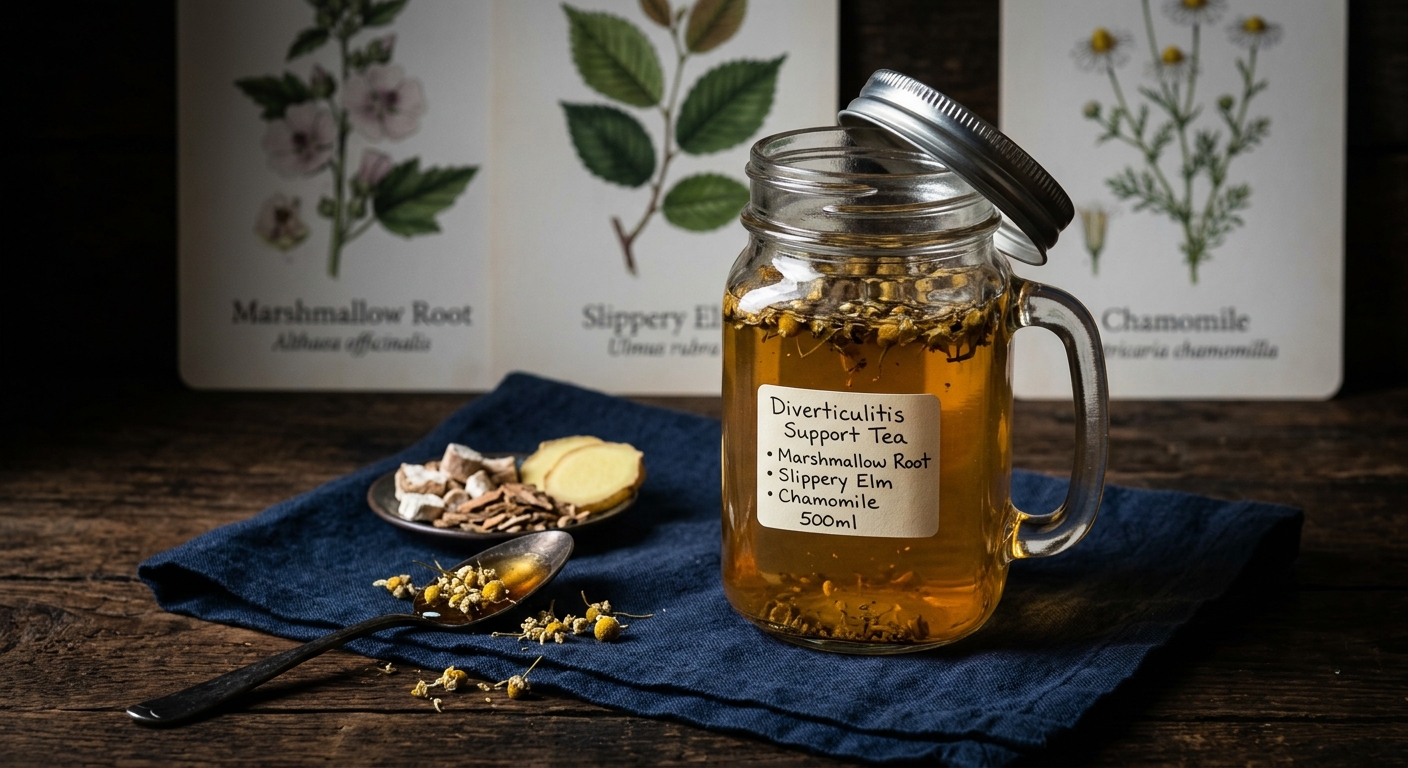
Diverticulitis, the inflammation of small pouches that form in the walls of the colon, affects millions of people worldwide and can cause significant discomfort, bloating, and digestive distress. While dietary changes and medical treatment remain essential, herbal medicine has long offered supportive remedies rooted in centuries of tradition. Herbalists across European, Native American, and Ayurvedic traditions have turned to mucilaginous and anti-inflammatory plants to soothe the gut lining, reduce irritation, and encourage healing during flares and recovery periods.
This blend centers on three time-honored digestive herbs. Marshmallow root, known botanically as Althaea officinalis, has been used since ancient Greece and medieval Europe as a demulcent, meaning it coats and soothes mucous membranes throughout the digestive tract. Slippery elm bark, revered by Indigenous North American peoples for generations, provides a thick, gel-like mucilage that protects irritated intestinal walls. Chamomile flowers, beloved across countless cultures for their gentle calming properties, contribute potent anti-inflammatory and antispasmodic actions that ease cramping and bloating commonly associated with diverticulitis.
What makes this blend particularly suited for diverticulitis support is its combination of protective, anti-inflammatory, and calming actions working in harmony. The mucilaginous herbs form a gentle barrier over sensitive tissue, while chamomile’s flavonoids work at the cellular level to quiet inflammation. This is not a curative remedy, and anyone experiencing acute diverticulitis symptoms should always consult a healthcare provider, but as a complementary, daily support tea during recovery and maintenance phases, this blend has deep roots in botanical healing traditions and growing scientific interest to support its use.
2
cups
Ingredients
- 2 tspdried marshmallow root
- 1 tspslippery elm bark powder or cut pieces
- 2 tspdried chamomile flowers
- 500 mlwater (85°C / 185°F)
- —raw honey to taste (optional)
- —a slice of fresh ginger (optional, for added anti-inflammatory support)
How to Brew
Click on an item below to shop for the recommended items for this recipe on Amazon.
As an Amazon Associate, we earn from qualifying purchases.
- Heat filtered water to approximately 85°C (185°F). If you do not have a temperature-controlled kettle, bring water to a full boil then allow it to rest for 3 to 4 minutes before using.
- Add the dried marshmallow root and slippery elm bark to your tea infuser or place directly into a small saucepan. These denser plant materials benefit from going in first.
- Pour 500 ml of the heated water over the marshmallow root and slippery elm. Allow them to steep for 5 minutes to begin releasing their mucilage.
- Add the dried chamomile flowers to the infuser or pot after the initial 5-minute steep. This staggered approach prevents the delicate chamomile from over-steeping while ensuring the roots release their full medicinal content.
- Continue steeping for a further 8 to 10 minutes. The liquid will take on a slightly thick, silky quality from the mucilage, which is the desired result.
- Strain thoroughly into a mug, pressing gently on the herbs to release remaining liquid. Add raw honey if desired and sip slowly while warm, ideally 20 to 30 minutes before a meal.
- Combine the dried marshmallow root, slippery elm bark, and dried chamomile flowers in a clean glass jar.
- Pour 500 ml of cold, filtered water directly over the herbs. Do not use hot or warm water for this method. The cold extraction preserves the full polysaccharide chains of the mucilage in a more intact, bioavailable form.
- Stir briefly to ensure all herbs are fully submerged, then place a lid or cover on the jar.
- Allow the jar to sit at room temperature for the first 2 hours, then transfer to the refrigerator and steep for a further 6 to 10 hours, or overnight.
- In the morning, strain the infusion through a fine mesh strainer or cheesecloth into a clean jar or pitcher. The liquid will be noticeably viscous and slightly cloudy, which signals a successful extraction.
- Drink cold or allow to come to room temperature before drinking. Consume within 24 hours and store any remainder in the refrigerator. Add honey after straining if desired.
- Place the marshmallow root and slippery elm bark pieces into a small saucepan with 600 ml of cold, filtered water. Starting in cold water allows the plant fibers to gradually release their constituents as the temperature rises.
- Bring the water to a gentle simmer over medium-low heat. Do not allow the liquid to reach a rolling boil. Maintain a temperature of approximately 85 to 90°C (185 to 194°F) throughout. Small bubbles rising slowly from the bottom of the pot indicate the correct temperature.
- Simmer the root and bark uncovered for 20 to 25 minutes, stirring occasionally. The liquid will reduce slightly and develop a richer, deeper golden color with increased viscosity.
- Remove the saucepan from heat and add the dried chamomile flowers directly to the pot. Cover with a lid and allow the chamomile to infuse into the hot decoction for 10 minutes. The lid traps the volatile aromatic oils from the chamomile that contribute to its antispasmodic effect.
- Strain the decoction through a fine mesh strainer into mugs, pressing gently on the spent herbs. You should yield approximately 400 ml after reduction, which is two generous servings.
- Allow to cool slightly until comfortable to drink. Sweeten with raw honey if desired and sip mindfully. This decoction can be divided into two doses taken morning and evening for sustained digestive support throughout the day.
Health Benefits
The combined mucilage from marshmallow root and slippery elm forms a physical protective layer over irritated diverticular tissue, reducing friction, shielding against digestive acids, and supporting epithelial repair. This demulcent action is among the most well-documented uses of both herbs in traditional and modern botanical medicine.
Chamomile’s apigenin and chamazulene compounds have demonstrated anti-inflammatory activity in multiple in vitro and animal studies, inhibiting key inflammatory mediators including prostaglandins and cytokines. This makes chamomile a rational botanical choice for managing the low-grade chronic inflammation associated with diverticular disease.
Alpha-bisabolol and the flavonoid content of chamomile act as antispasmodics on the smooth muscle of the gastrointestinal tract. Clinical and traditional evidence supports chamomile’s use for reducing the painful spasms, bloating, and discomfort that commonly accompany diverticulitis flares.
The prebiotic-like polysaccharides in marshmallow root and slippery elm may serve as a substrate for beneficial gut bacteria, gently encouraging a healthier microbiome environment. A balanced gut flora is increasingly understood to be central to managing diverticular disease and reducing recurrence rates.
Slippery elm bark has a gentle bulk-forming and lubricating effect on the intestines, helping to normalize bowel transit time without harsh laxative action. Regular, well-formed stools reduce the mechanical pressure on diverticular pouches that can contribute to inflammation and pain.
🧪 Key Bioactive Compounds
The Science Behind Marshmallow Root
The scientific rationale behind this blend begins with its mucilaginous herbs. Marshmallow root (Althaea officinalis) contains a complex mixture of acidic polysaccharides, most notably althaenan and pectin-like rhamnogalacturonans, that form a hydrophilic gel when combined with water. Research published in journals including the Journal of Ethnopharmacology has confirmed that these polysaccharides adhere to and protect gastrointestinal mucous membranes, reducing inflammatory markers and supporting mucosal repair. Interestingly, cold water extracts a higher yield of intact, high-molecular-weight mucilage than hot water, which explains why the cold brew method is particularly well-suited to maximizing the therapeutic potential of marshmallow root for those with active gut inflammation.
Slippery elm bark (Ulmus rubra) provides a closely analogous mucilaginous action through its rich content of hexose and pentose sugars forming a dense, slip-producing gel. Early clinical trials and traditional usage patterns support its role in conditions involving intestinal irritation, including inflammatory bowel conditions. Its fiber matrix also behaves in a prebiotic-like manner, selectively encouraging the growth of beneficial Lactobacillus and Bifidobacterium species in the colon, a finding with significant implications for long-term diverticular disease management given the central role gut flora play in mucosal immunity and inflammation regulation.
Chamomile (Matricaria chamomilla) brings a pharmacologically rich contribution to this blend. Apigenin, its primary flavonoid, has been shown to inhibit NF-kB, a master regulator of inflammatory gene expression, and to suppress cyclooxygenase-2 (COX-2), the enzyme that produces pro-inflammatory prostaglandins. Its volatile oil compound alpha-bisabolol has demonstrated direct antispasmodic effects on intestinal smooth muscle in multiple preclinical studies, providing a mechanistic explanation for chamomile’s traditional use in relieving gut cramping and spasms. Chamazulene, generated during the brewing process from the precursor compound matricine, contributes antiphlogistic activity that complements the flavonoid pathway. Together, these compounds address diverticulitis-related inflammation through at least three distinct biochemical pathways, making this blend far more than the sum of its individual parts.
Brewing Tips
- For best results during a flare, use the cold brew (overnight infusion) method, as cold water preserves the full polysaccharide chains of marshmallow root mucilage more effectively than heat, maximizing the protective coating action on your gut lining.
- Always source slippery elm bark from a reputable supplier who uses sustainably harvested material, as slippery elm is a protected species in some regions. Certified organic, ethically wildcrafted, or organically cultivated sources are preferred both for ecological and quality reasons.
- Drink this tea on an empty stomach or 20 to 30 minutes before meals to allow the mucilaginous herbs to coat and prepare the gastrointestinal lining before food arrives, maximizing the protective benefit during the digestive process.