Passionflower is one of the most visually striking plants in the herbal world, with intricate fringed blooms that look almost otherworldly. Spanish missionaries in 16th-century South America gave the plant its name, reading the flower’s corona, petals, and tendrils as symbols of the Passion of Christ. Long before that, Indigenous peoples of the Americas, including the Cherokee and the Aztecs, were using the vine as a calming tonic and a remedy for restlessness, nervous tension, and sleeplessness.
By the 19th century, American physicians known as Eclectics were prescribing passionflower for insomnia, hysteria, and nervous exhaustion, and it soon made its way into European herbal pharmacopoeias. Today it remains one of the most widely recommended nervine herbs for people whose minds will not switch off at bedtime. Unlike some sedating herbs that bring heavy drowsiness, passionflower tends to work by softening the mental chatter that keeps us awake, which is why so many people describe it as quieting rather than knocking them out.
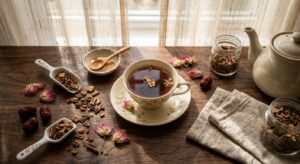
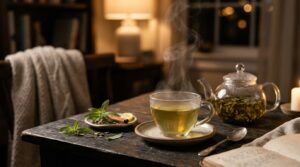
This Nightcap blend leans on that gift. Passionflower forms the heart of the cup, rounded out with a little lemon balm for brightness and chamomile for floral comfort. The result is a warm, grassy-sweet evening ritual that signals to your body that the day is done. Sip it slowly, dim the lights, and let the tea do its gentle work.
2
cups
Ingredients
- 2 tbspdried passionflower (aerial parts)
- 1 tbspdried lemon balm leaf
- 1 tbspdried chamomile flowers
- 480 mlwater (95°C / 203°F)
- —raw honey to taste (optional)
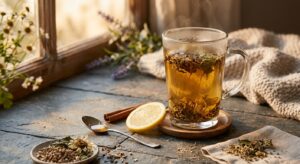
- —a thin slice of lemon (optional)
How to Brew
Click on an item below to shop for the recommended items for this recipe on Amazon.
As an Amazon Associate, we earn from qualifying purchases.
- Measure the passionflower, lemon balm, and chamomile into a teapot or large mug fitted with a fine mesh infuser. Gently crumble the passionflower with your fingers to expose more surface area.
- Bring fresh water to just under a boil, then let it rest for 30 seconds so it settles near 95°C (203°F). Fully boiling water can flatten the delicate floral notes.
- Pour the hot water over the herbs, then immediately cover with a lid or saucer to hold in the aromatic steam.
- Steep for 10 to 12 minutes. Passionflower is a leafy, fibrous herb and needs this longer window to release its flavonoids into the water.
- Strain thoroughly, stir in honey or a slice of lemon if you like, and sip slowly about 30 to 45 minutes before bed.
- Combine the passionflower, lemon balm, and chamomile in a clean glass jar. Use slightly more herb than the hot method, about 1.5 times the amount, to compensate for the gentler extraction.
- Pour 480 ml of cool filtered water over the herbs and stir once with a spoon so every piece is saturated.
- Seal the jar and refrigerate for 8 to 10 hours. Avoid leaving it at room temperature for long stretches, as damp plant material can spoil.
- Strain through a fine mesh sieve or a cloth-lined strainer into a fresh glass, pressing the herbs lightly to release the last of the liquid.
- Drink chilled, or pour into a mug and warm it gently on the stove without boiling if you want a cozy evening cup with a softer flavor.
- Place 4 tablespoons of passionflower, 2 tablespoons of lemon balm, and 2 tablespoons of chamomile in a heatproof jar or French press.
- Pour in 480 ml of water just off the boil, which is roughly double the herb strength of a standard cup, then cover and steep for 15 minutes.
- Strain through a fine sieve, pressing the herbs firmly to extract every drop of the dark golden liquid.
- Cool to room temperature, then transfer to a sealed bottle or jar and refrigerate for up to 4 days.
- To serve, dilute 120 ml of concentrate with 120 ml of hot water for a warm nightcap, or pour over ice and top with cold water for a refreshing evening drink.
Health Benefits
A small randomized trial in adults found that a week of passionflower tea improved subjective sleep quality compared with a placebo tea. The effect is thought to stem from enhanced GABA activity in the brain.
Clinical studies have compared passionflower extract with conventional anti-anxiety medication for generalized anxiety and found comparable relief with fewer side effects such as impaired job performance. Evidence for tea specifically is more limited.
Traditional herbalists prize passionflower for racing, repetitive thoughts at bedtime. Its GABA-supporting flavonoids likely help dampen the neural excitability behind this experience.
Combined with lemon balm and chamomile, passionflower has a long history of use for stress-related stomach tightness and restlessness, both of which can interfere with falling asleep.
Some studies have examined passionflower for reducing nervousness before surgery or dental work, suggesting a genuine if modest calming effect on acute stress.
🧪 Key Bioactive Compounds
The Science Behind Passionflower
The sleep-supporting reputation of passionflower rests largely on its flavonoid content, especially apigenin, vitexin, isovitexin, and chrysin. These compounds appear to interact with the GABA system, the brain’s main inhibitory signaling network. GABA acts like a brake pedal on neural activity, and herbs or medications that gently enhance it tend to produce feelings of calm and drowsiness. Laboratory work suggests passionflower flavonoids bind to GABA-A receptors and may also raise available GABA levels, which fits well with the quiet, unhurried sedation people describe.
Human evidence, while encouraging, is still modest. A well-cited trial from 2011 had adults drink passionflower tea for one week and found measurable improvements in subjective sleep quality over a placebo tea. Other studies using concentrated extracts rather than tea have shown anti-anxiety effects roughly comparable to some standard medications for generalized anxiety. Because a cup of tea delivers a lower and more variable dose than a standardized extract, results from tea can be subtler and may build over several nights rather than appearing instantly.
The companion herbs in this blend are chosen to complement that action. Lemon balm contains rosmarinic acid, which inhibits the enzyme GABA transaminase and so helps GABA linger longer, while chamomile supplies additional apigenin along with a familiar, comforting flavor. Together they offer a layered, synergistic approach, though it is worth remembering that herbal teas support a healthy sleep routine rather than replace one. Consistent bedtimes, dim light, and limited screens remain the foundation.
Brewing Tips
- Drink your Nightcap 30 to 45 minutes before bed so the calming effects have time to build and you are not woken by a full bladder.
- Use a covered cup or teapot while steeping to keep the delicate aromatic oils from escaping as steam.
- Source passionflower labeled Passiflora incarnata, the species with the strongest traditional and research backing for sleep.
- Make it a ritual: pair the tea with dim lighting, a few pages of a book, and no screens to reinforce the wind-down signal for your brain.
- Store dried herbs in an airtight, opaque container away from heat and light, and use within 12 months for the best flavor and potency.