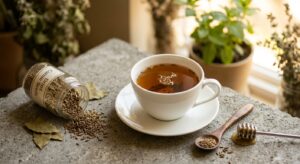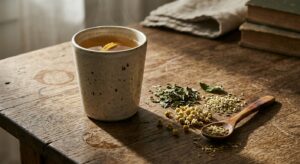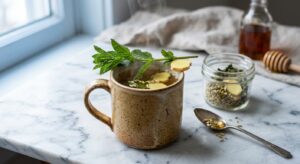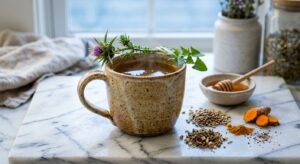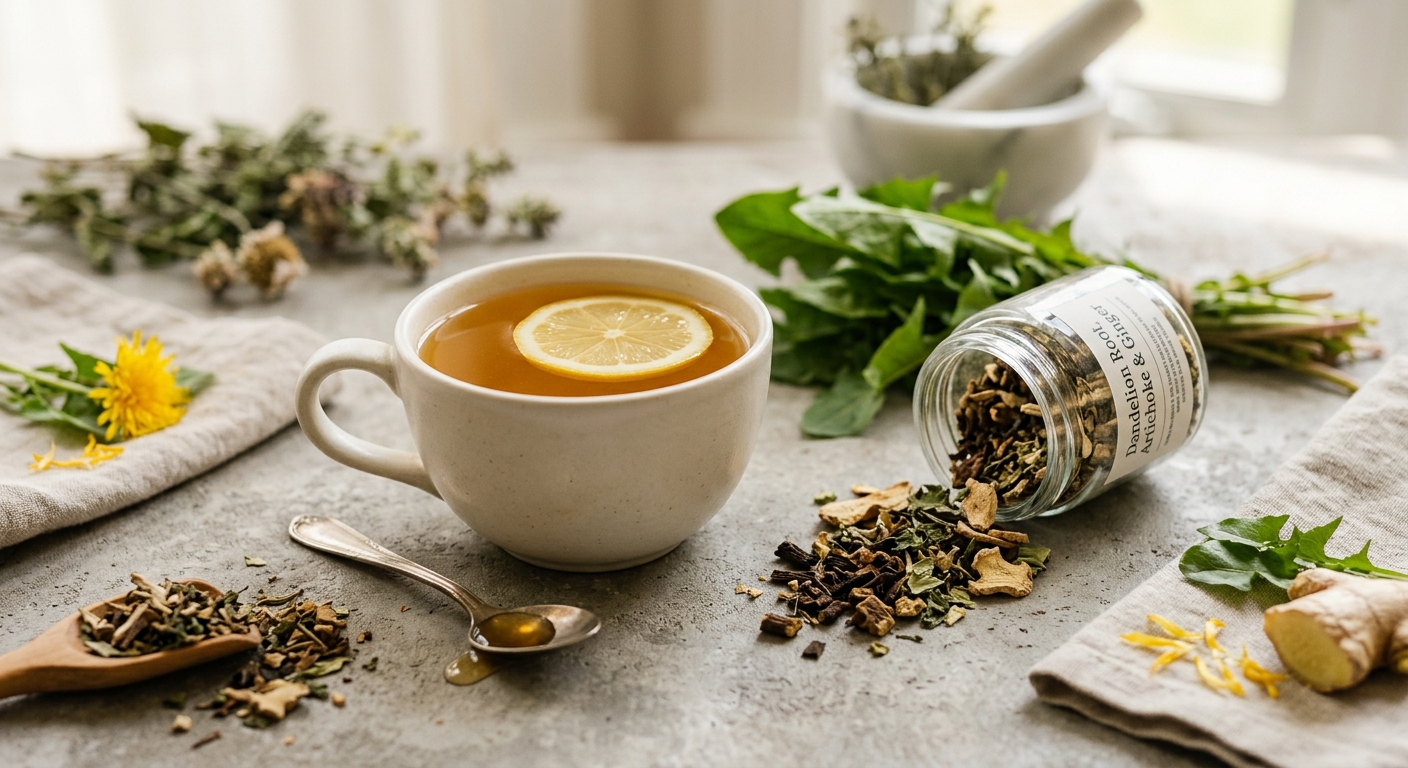
Long before modern digestive enzymes lined pharmacy shelves, herbalists across Europe, Asia, and the Americas turned to bitter plants to coax the liver and gallbladder into action. Bile, the greenish-yellow fluid produced by the liver and stored in the gallbladder, is essential for breaking down dietary fats, absorbing fat-soluble vitamins, and clearing waste products from the blood. When bile flow becomes sluggish, the result can be bloating, nausea after fatty meals, constipation, and a general sense of heaviness that persists long after eating. This blend of dandelion root, artichoke leaf, and ginger addresses that stagnation at its source, drawing on centuries of traditional use and a growing body of modern research.
Dandelion root has been used as a liver and digestive tonic in Traditional Chinese Medicine, Ayurveda, and European folk medicine for well over a thousand years. Medieval European herbalists classified it as a cholagogue, meaning a substance that promotes the flow of bile from the liver into the small intestine. Artichoke leaf, derived from the same plant that gives us the culinary vegetable, was a prized remedy in ancient Egyptian and Roman medicine, valued for its ability to stimulate liver secretions and ease indigestion. Ginger, meanwhile, has long served as the warming backbone of digestive formulas across cultures, accelerating gastric emptying and reducing nausea while complementing the bitter action of its botanical companions.
What makes this blend particularly effective is the way its three ingredients work together across different mechanisms. The bitter compounds in dandelion and artichoke trigger a reflexive release of bile through bitter taste receptors on the tongue and in the gut lining, while ginger’s pungent gingerols and shogaols warm digestive tissue and improve motility. The result is a tea that tastes complex and intentional, with an earthy bitterness softened by ginger’s gentle heat, best enjoyed before or after a rich meal when your digestive system needs the most support.
2
cups
Ingredients
- 2 tspdried dandelion root, chopped or ground
- 1 tspdried artichoke leaf, crumbled
- 1 tspfresh ginger root, thinly sliced (or 0.5 tsp dried ginger)
- 480 mlfiltered water
- —raw honey or maple syrup to taste (optional)
- —lemon slice for serving (optional)
How to Brew
Click on an item below to shop for the recommended items for this recipe on Amazon.
As an Amazon Associate, we earn from qualifying purchases.
- Place the dandelion root and sliced fresh ginger into a small saucepan with 480 ml of cold filtered water. Bring to a gentle boil over medium heat, then reduce to a low simmer.
- Simmer the dandelion root and ginger uncovered for 10 minutes, allowing the woody root material to fully release its bitter compounds, inulin, and essential oils into the water.
- Remove the saucepan from heat completely. Add the crumbled artichoke leaf directly to the hot liquid and cover the saucepan with a lid to trap the volatile aromatic compounds.
- Steep covered for an additional 5 minutes. This two-stage method ensures the heat-sensitive bitter glycosides in artichoke leaf are preserved while the root is fully decocted.
- Strain the tea through a fine mesh strainer into two warmed mugs. Press the plant material gently with a spoon to extract any remaining liquid.
- Add a squeeze of fresh lemon juice and a small amount of honey if desired. Drink warm, ideally 15 to 30 minutes before a meal to prime bile production, or immediately after a heavy meal for digestive relief.
- Combine the dandelion root, crumbled artichoke leaf, and sliced fresh ginger in a clean glass jar. Use the full ingredient amounts but add an extra 0.5 tsp of dandelion root to compensate for the slower cold extraction of woody root material.
- Pour 500 ml of cold, filtered water over the herbs. Stir briefly with a long spoon to ensure all plant material is submerged. Do not use hot or warm water, as the goal is a true cold extraction.
- Cover the jar loosely with a lid or a piece of cheesecloth secured with a rubber band. Allow it to sit at room temperature for 2 hours to begin extraction, then transfer to the refrigerator.
- Refrigerate for a further 10 to 12 hours, or overnight. The slow, cold extraction draws out polyphenols and bitter glycosides at a more gradual rate, resulting in a mellower flavor profile.
- In the morning, strain the brew through a fine mesh strainer or cheesecloth into a pitcher, pressing the plant material firmly to extract all liquid. Discard the spent herbs.
- Serve over ice in tall glasses with a slice of lemon, or gently warm a single portion in a small saucepan if you prefer a warm drink. The cold brew keeps refrigerated for up to 48 hours.
- Increase the herb amounts for a concentrate: use 4 tsp of dandelion root, 2 tsp of artichoke leaf, and 1.5 tsp of sliced fresh ginger per 480 ml of filtered water. This produces a 2x concentrate intended to be diluted before drinking.
- Combine the dandelion root and ginger with the cold water in a small saucepan. Bring to a full boil, then immediately reduce heat to the lowest setting that maintains a steady, gentle simmer.
- Simmer with the lid slightly ajar for 20 minutes, allowing a small amount of steam to escape to concentrate the brew. Check periodically and add a small splash of water if the liquid reduces by more than a third.
- After 20 minutes, remove from heat and add the artichoke leaf. Clamp the lid tightly and allow to steep off the heat for a full 5 minutes to preserve the artichoke’s cynaropicrin and chlorogenic acid content.
- Strain through a fine mesh strainer into a heatproof measuring cup or jar, pressing the herbs firmly. You should have roughly 300 to 350 ml of concentrated liquid.
- To serve, dilute each 60 to 80 ml of concentrate with 160 ml of hot water. Sip one small cup before the largest meal of the day. Store any remaining concentrate in the refrigerator in a sealed jar and use within 24 hours.
Health Benefits
Both dandelion root and artichoke leaf are well-established cholagogues and choleretics. A 2011 randomized controlled trial published in Phytotherapy Research found that artichoke leaf extract significantly increased bile secretion in healthy volunteers. Dandelion root has demonstrated similar choleretic activity in animal models, with bitter receptor activation driving the physiological response.
The chlorogenic acid, luteolin, and taraxacin in this blend have each shown hepatoprotective properties in experimental research, reducing liver enzyme markers associated with cellular damage. Improved bile flow itself serves a detoxifying function, as bile is the body’s primary route for excreting fat-soluble toxins, metabolic byproducts, and excess cholesterol.
Artichoke leaf extract has been studied in patients with functional dyspepsia, with a 2003 trial in Alimentary Pharmacology and Therapeutics finding significant reductions in nausea, bloating, and flatulence compared to placebo. Ginger compounds accelerate gastric emptying, reducing the stagnation that causes discomfort after large or fatty meals.
Several human trials have found that artichoke leaf extract modestly but significantly reduces total cholesterol and LDL levels, likely by increasing bile acid synthesis, which draws cholesterol out of the bloodstream. Chlorogenic acid from both dandelion and artichoke may contribute additional lipid-lowering activity through inhibition of hepatic cholesterol synthesis.
Dandelion root is one of the richest plant sources of inulin-type fructans, a category of prebiotic fiber that selectively feeds beneficial gut bacteria. A healthier microbiome improves bile acid recycling in the gut, reduces intestinal permeability, and supports the gut-liver axis, creating a positive feedback loop with the bile-stimulating effects of the other herbs in this blend.
🧪 Key Bioactive Compounds
The Science Behind Dandelion Root
The mechanism by which this tea stimulates bile flow begins on the tongue. Bitter taste receptors, known as T2R receptors, are densely distributed across the tongue and, surprisingly, throughout the gastrointestinal tract as well. When bitter compounds like taraxacin from dandelion root and cynaropicrin from artichoke leaf bind to these receptors, they trigger a cascade of neurological and hormonal signals, including the release of cholecystokinin (CCK) from the small intestine. CCK is one of the body’s primary signals for gallbladder contraction and bile release, as well as for pancreatic enzyme secretion. This explains why traditional bitter tonics, taken before meals, have been used instinctively across cultures as digestive preparations: they prime the digestive system through real, measurable physiological pathways.
Artichoke leaf’s clinical evidence is particularly compelling. Multiple randomized controlled trials have confirmed its ability to reduce symptoms of functional dyspepsia and improve lipid profiles, with researchers attributing these effects primarily to cynaropicrin and chlorogenic acid. Chlorogenic acid acts through several mechanisms: it is a potent antioxidant that protects hepatocytes from oxidative stress, it inhibits glucose-6-phosphatase (potentially reducing hepatic glucose output), and it modulates the expression of genes involved in bile acid synthesis. Dandelion root’s inulin content adds a prebiotic dimension rarely discussed in the context of bile-stimulating herbs, but which is physiologically significant. Gut bacteria metabolize primary bile acids secreted by the liver into secondary bile acids, and a diverse, inulin-fed microbiome performs this biotransformation more efficiently, improving the overall enterohepatic circulation of bile.
Ginger rounds out the blend’s scientific profile with well-characterized prokinetic activity. Gingerols and shogaols stimulate motility receptors throughout the gastrointestinal tract, accelerating the transit of food from the stomach into the small intestine. This action is particularly important in the context of bile stimulation: if the stomach empties slowly, the duodenal signal for bile release is delayed, compounding digestive sluggishness. By improving gastric emptying, ginger ensures that bile, once released, meets its fat substrates at the right time and in the right part of the gut. The synergy between ginger’s prokinetic compounds and the choleretic bitter glycosides of dandelion and artichoke makes this a physiologically coherent and well-calibrated herbal formula, not merely a traditional habit but a scientifically defensible digestive strategy.
Brewing Tips
- Drink this tea 20 to 30 minutes before your largest meal of the day to maximize the pre-meal bile priming effect, or sip it slowly in the 30 minutes following a heavy or fatty meal if you notice post-meal heaviness or bloating.
- Do not sweeten aggressively: the bitter taste is not a flaw but the functional mechanism. Bitter compounds must contact taste receptors on the tongue to trigger the full digestive reflex. A small amount of honey is fine, but masking the bitterness entirely with sweetener diminishes the tea’s effectiveness.
- Source whole, organically grown dandelion root and artichoke leaf from a reputable herb supplier. Dandelion root sold in commercial tea bags is often finely powdered and over-processed, reducing its taraxacin content. Chopped or whole dried root pieces retain more of the bitter sesquiterpene lactones that make the herb therapeutically valuable.