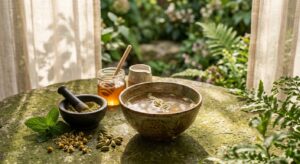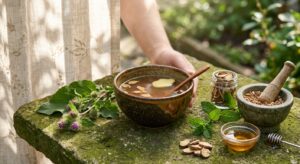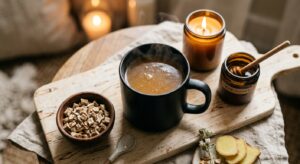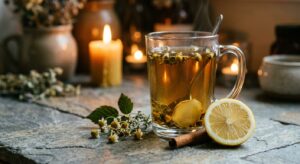
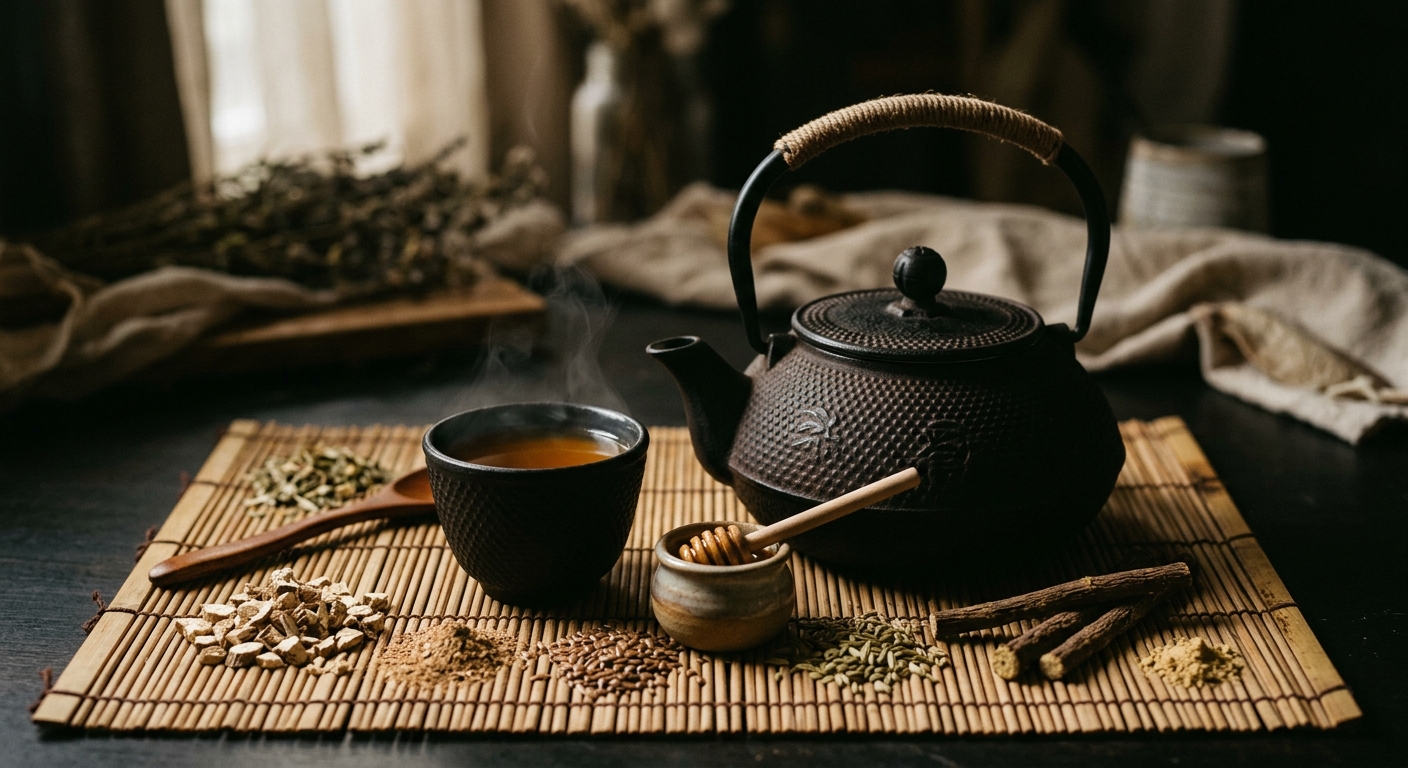
Long before modern gastroenterology gave us terms like “intestinal permeability” and “mucosal barrier function,” herbalists across Europe, Asia, and the Americas were reaching for a remarkable class of plants known as demulcents. These herbs share a defining quality: when steeped in water, they release thick, gel-like compounds called mucilages that coat and soothe inflamed or damaged mucous membranes. Marshmallow root (Althaea officinalis) has been used medicinally since ancient Greece, where Hippocrates documented its healing use for wounds and digestive complaints. Slippery elm (Ulmus rubra) was a cornerstone of Native American medicine, used to ease sore throats, stomach ulcers, and bowel inflammation. Together, these two roots form the backbone of a tea tradition that modern herbalists call gut lining repair.
The third pillar of this blend, licorice root (Glycyrrhiza glabra), adds both depth of flavor and meaningful therapeutic action. Traditional Chinese Medicine has used licorice root for over 3,000 years as a harmonizing herb, believed to guide the healing properties of other botanicals to their target organs. Modern research has confirmed that its key compound, glycyrrhizin, supports the production of mucin, the protective protein layer that lines the gut wall. When these three herbs are combined, the result is a tea that works on multiple levels: physically coating irritated tissue, reducing local inflammation, and encouraging the regeneration of healthy mucosal cells.
Whether you are recovering from a course of antibiotics, managing symptoms of irritable bowel syndrome, or simply looking to support your digestive health after a period of stress or poor eating, this blend offers a deeply nourishing ritual. The tea has a subtly sweet, earthy flavor with a satisfying viscosity that feels almost medicinal as it goes down. Many people who drink it regularly describe a noticeable reduction in bloating, post-meal discomfort, and the kind of low-grade digestive unease that is easy to normalize but does not have to be permanent.
2
cups
Ingredients
- 2 tspdried marshmallow root (cut and sifted)
- 1.5 tspslippery elm bark powder or cut bark
- 1 tspdried licorice root (cut and sifted)
- 500 mlwater (80°C / 176°F for hot brew)
- —raw honey or coconut sugar to taste (optional)
- —a pinch of ground ginger (optional, for added digestive warmth)
How to Brew
Click on an item below to shop for the recommended items for this recipe on Amazon.
As an Amazon Associate, we earn from qualifying purchases.
- Measure 2 tsp dried marshmallow root, 1.5 tsp slippery elm bark, and 1 tsp dried licorice root into a tea infuser, muslin bag, or small saucepan. If using slippery elm powder, use a muslin bag or fine-mesh infuser to prevent a gritty texture in the finished cup.
- Heat 500 ml of filtered water to 80 to 85°C (176 to 185°F). If you do not have a temperature-controlled kettle, bring water to a full boil and allow it to cool for 4 to 5 minutes before pouring.
- Pour the hot water over the herbs and cover your mug or pot with a lid or small plate. Covering is important because it traps the aromatic volatile compounds and holds heat steady, which encourages fuller mucilage extraction.
- Steep for 10 to 15 minutes. The longer the steep, the thicker and more viscous the tea will become as more mucilage is released. For a noticeable gut-coating effect, aim for the full 15 minutes.
- Remove the infuser or strain the liquid through a fine-mesh strainer into your mug. Notice the slightly silky, coating quality of the liquid as you pour. Add a small amount of raw honey or a pinch of ground ginger if desired, and sip slowly before or between meals.
- Add 2.5 tsp dried marshmallow root, 1.5 tsp slippery elm bark, and 1 tsp dried licorice root to a clean glass jar. Use a slightly higher ratio of marshmallow root compared to hot brewing, as cold extraction amplifies its mucilage yield.
- Pour 500 ml of room temperature filtered water over the herbs. Stir briefly to ensure all plant material is submerged. Do not use hot or warm water, as the goal is a slow, cool extraction that preserves the intact polysaccharide chains.
- Seal the jar with a lid and let it sit at room temperature for the first 1 to 2 hours, then transfer to the refrigerator for the remainder of the steeping time. Aim for a total infusion time of 8 to 12 hours, making this ideal to prepare before bed and enjoy in the morning.
- In the morning, strain the liquid through a fine-mesh strainer or cheesecloth into a glass or jar. The resulting tea will be noticeably more viscous and opalescent than the hot brew version. This is the mucilage at work.
- Drink the cold brew at room temperature or gently warmed to body temperature (below 40°C / 104°F) to preserve the mucilage structure. Sip slowly on an empty stomach for maximum gut-lining contact. Store any unused portion in the refrigerator for up to 24 hours.
- Combine a double-strength ratio of herbs in a small saucepan: 4 tsp dried marshmallow root, 3 tsp slippery elm bark, and 2 tsp dried licorice root. Add 700 ml of cold filtered water and allow the herbs to begin soaking for 10 minutes before applying any heat. This pre-soak begins the mucilage release process.
- Place the saucepan on the stovetop over medium heat and slowly bring the water up to just below a simmer, around 80 to 85°C (176 to 185°F). Watch carefully and do not allow the liquid to reach a rolling boil. If you see vigorous bubbling, reduce the heat immediately.
- Maintain a gentle, low simmer for 20 to 25 minutes with the lid slightly ajar to allow some steam to escape. Stir occasionally with a wooden spoon. The liquid will gradually deepen in color and take on a noticeably thick, slightly syrupy consistency.
- Remove from heat and allow to cool for 5 minutes with the lid on. Strain through a fine-mesh strainer or cheesecloth into a heatproof glass jar or pitcher, pressing the spent herbs gently with the back of a spoon to extract remaining liquid.
- This concentrate yields approximately 400 to 450 ml of strong tea. Dilute each serving with an equal part of warm water before drinking, or sip small amounts (100 ml at a time) throughout the day between meals. Store covered in the refrigerator for up to 48 hours and gently rewarm portions as needed.
Health Benefits
The mucilage polysaccharides from marshmallow root and slippery elm physically coat the mucosal surfaces of the digestive tract, reducing friction, inflammation, and irritant contact. This mechanical and biochemical protection creates the conditions needed for damaged epithelial cells to regenerate.
Quercetin from licorice root has been shown in multiple studies to upregulate the expression of tight junction proteins such as occludin and claudin-1, which are responsible for sealing the spaces between intestinal cells. A more intact tight junction network directly reduces the passage of undigested proteins and toxins into the bloodstream.
Glycyrrhizin and its metabolite 18-beta-glycyrrhetinic acid have demonstrated anti-ulcer activity in several human clinical trials, including increasing gastric mucus thickness and inhibiting the growth of Helicobacter pylori, the bacterium most commonly associated with peptic ulcers.
The mucilage complex found in slippery elm bark functions as a fermentable fiber substrate that selectively feeds beneficial bacterial species including Bifidobacterium and Lactobacillus strains. A 2012 pilot study found that slippery elm preparations significantly altered the gut microbiome composition of IBS patients in a beneficial direction.
When consumed before meals, the mucilaginous compounds in this blend coat the esophageal and gastric lining, creating a physical buffer against acid reflux. This effect is similar in mechanism to alginate-based antacids but is plant-derived and gentler on long-term use.
🧪 Key Bioactive Compounds
The Science Behind Marshmallow Root
The therapeutic core of this blend lies in a category of compounds called mucilage polysaccharides, specifically arabinogalactans from marshmallow root and rhamnogalacturonan from slippery elm bark. When these complex carbohydrates come into contact with water, they hydrate and expand into a viscous, gel-like substance. In the body, this gel adheres loosely to the mucosal surfaces of the esophagus, stomach, and intestines, forming a temporary but meaningful protective barrier. Research published in the Journal of Ethnopharmacology has confirmed that marshmallow root extracts significantly reduce mucosal irritation in models of gastric inflammation, with cold-water preparations consistently outperforming hot extracts in mucilage concentration and viscosity.
Licorice root contributes a different but complementary mechanism. Its primary compound, glycyrrhizin, is metabolized by gut bacteria into 18-beta-glycyrrhetinic acid, a potent anti-inflammatory triterpene. This compound inhibits the enzyme 11-beta-hydroxysteroid dehydrogenase, which modulates local cortisol activity in the gut wall, reducing inflammatory signaling at the mucosal level. Additionally, glycyrrhizin has been shown to upregulate the expression of mucin glycoproteins, the building blocks of the protective mucus layer that lines the stomach and intestines. A thinning of this mucus layer is one of the earliest events in peptic ulcer development, so supporting its maintenance is genuinely protective. Clinical trials using deglycyrrhizinated licorice (DGL) have demonstrated statistically significant reductions in both ulcer recurrence and gastritis symptoms, lending strong plausibility to the traditional use of licorice as a digestive healer.
The prebiotic dimension of slippery elm adds a systems-level benefit that goes beyond symptom relief. Because the mucilage polysaccharides in slippery elm are not digested by human enzymes, they reach the colon largely intact, where they serve as fermentable substrate for the gut microbiome. Fermentation by bacterial species such as Bifidobacterium longum produces short-chain fatty acids (SCFAs) including butyrate, acetate, and propionate. Butyrate in particular is the primary energy source for colonocytes (colon lining cells) and plays a critical role in maintaining the integrity of the tight junctions that prevent intestinal permeability. This means that regular consumption of this blend may support gut lining repair not just through direct coating and anti-inflammatory action, but through the deeper mechanism of feeding the microbial community that sustains the colon wall from within.
Brewing Tips
- Drink this tea on an empty stomach or at least 30 minutes before meals for maximum mucosal contact time. When consumed with food, the mucilage mixes with stomach contents and has less direct contact with the gut wall.
- If you are using slippery elm powder rather than cut bark, whisk it briskly with a small amount of cold water first to form a smooth paste before adding hot water. This prevents clumping and distributes the mucilage more evenly throughout the cup.
- For a therapeutic course targeting active gut inflammation or leaky gut symptoms, herbalists often recommend drinking two to three cups daily for four to six weeks, then reassessing. Rotate or take breaks from the licorice root if using for longer periods by substituting deglycyrrhizinated licorice (DGL) powder or simply increasing the marshmallow root ratio.