Few herbs carry as long and storied a legacy as gotu kola (Centella asiatica). For more than three thousand years, healers across India, Sri Lanka, China, and Southeast Asia have turned to this small, fan-shaped leaf as a tonic for the mind and nervous system. In Ayurveda it is classified as a medhya rasayana, a category of herbs specifically revered for sharpening intellect, calming the spirit, and extending healthy longevity. Sri Lankan folklore even credits elephants, known for their extraordinary memory, with grazing on gotu kola, giving rise to the saying that the plant grants a long and clear-minded life.
What sets gotu kola apart from many calming herbs is its dual reputation as both a relaxant and a cognitive enhancer. Unlike sedatives that simply dull alertness, gotu kola is described in traditional texts as producing a state of calm clarity, a quieting of nervous agitation without heaviness or fog. This makes it especially appealing to those who need to wind down after mentally demanding days without feeling groggy the next morning. Traditionally it was prepared as a fresh leaf infusion, blended into warm milk tonics, or simply eaten as a leafy green, and its gentle, mildly grassy flavor made it easy to incorporate daily.
Today, gotu kola tea is experiencing a well-deserved revival among wellness communities seeking plant-based support for stress, sleep, and cognitive resilience. Whether you are drawn to it for its calming properties before bed, its potential to ease anxious tension, or simply the ritual of sipping something ancient and nourishing, gotu kola offers a quiet, green-tasting cup that feels as grounding as the earth it grows in.
2
cups
Ingredients
- 2 tspdried gotu kola leaves
- 480 mlwater (85°C / 185°F)
- —raw honey or maple syrup to taste (optional)
- —fresh lemon slice to taste (optional)
How to Brew
Click on an item below to shop for the recommended items for this recipe on Amazon.
As an Amazon Associate, we earn from qualifying purchases.
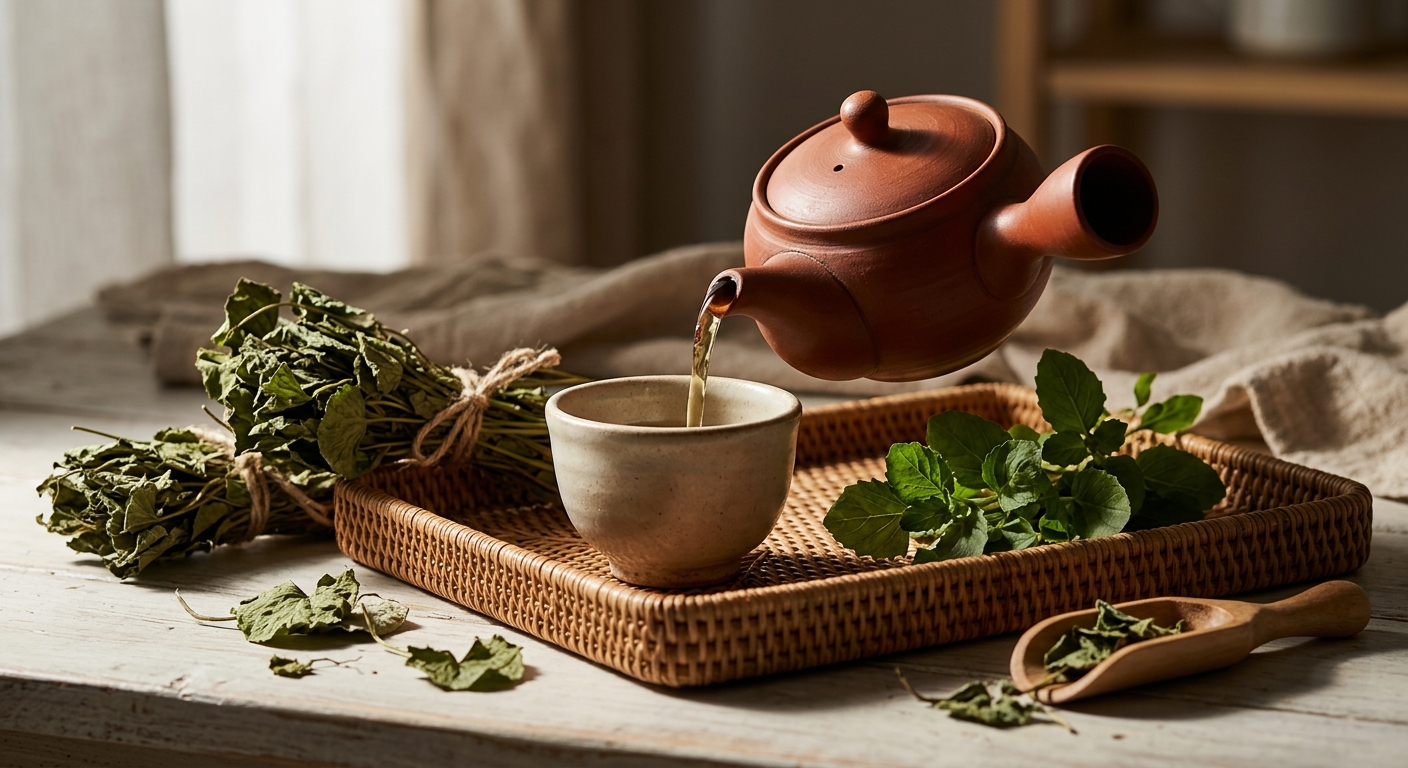
- Heat filtered water to 80 to 90°C (176 to 194°F). If you do not have a temperature-controlled kettle, bring water to a full boil and allow it to rest for 2 to 3 minutes before pouring.
- Place 1 teaspoon of dried gotu kola leaves per 240 ml of water into a tea infuser, strainer basket, or directly into a teapot.
- Pour the hot water gently over the leaves and cover the cup or teapot immediately with a lid or small saucer. Covering is important as it traps the aromatic volatile oils that would otherwise escape with the steam.
- Steep for 5 minutes for a lighter, sweeter cup or up to 10 minutes for a more robust, slightly more bitter brew. Start with 5 minutes if you are new to gotu kola.
- Remove the infuser or strain the leaves. Taste the tea before adding any sweetener. A small amount of raw honey or a squeeze of fresh lemon can brighten the natural earthiness. Drink warm, ideally 30 to 60 minutes before bed.
- Measure 1.5 teaspoons of dried gotu kola leaves per 240 ml of cold, filtered water. Cold brew benefits from a slightly higher leaf-to-water ratio to compensate for the slower, cooler extraction.
- Combine the leaves and cold water in a clean glass jar. Stir briefly to ensure all the leaves are fully submerged and making contact with the water.
- Cover the jar loosely with a lid or a piece of cheesecloth secured with a rubber band. This prevents contamination while allowing slight airflow.
- Leave the jar at room temperature for the first 30 minutes to begin the extraction, then transfer to the refrigerator and allow to steep for 8 to 12 hours or overnight.
- Strain through a fine mesh strainer or cheesecloth into a serving glass or pitcher. The resulting liquid should be a clear pale green. Serve over ice, optionally garnished with a sprig of fresh mint or a slice of cucumber for a cooling, spa-inspired drink.
- Gently warm 240 ml of whole milk or a full-fat plant milk such as oat or coconut milk in a small saucepan over low heat. Do not allow the milk to boil. Aim for a gentle simmer at around 70 to 80°C (158 to 176°F).
- Add 1 teaspoon of dried gotu kola leaves directly to the warm milk. You may also add a small pinch of ground cardamom or a half-teaspoon of ashwagandha powder to deepen the relaxing and Ayurvedic character of the tonic.
- Maintain a very gentle heat, stirring occasionally, and allow the herb to infuse into the milk for 10 to 15 minutes. Keep the heat low throughout to avoid scalding the milk or degrading the herb’s active compounds.
- Strain the infused milk through a fine mesh strainer into a warmed mug, pressing gently on the leaves to extract all the liquid.
- Sweeten with a teaspoon of raw honey added after straining, since honey’s beneficial enzymes are best preserved below 40°C (104°F). Drink slowly as a calming bedtime ritual, ideally 30 to 45 minutes before sleep.
Health Benefits
Clinical trials have found that gotu kola extracts significantly reduce startle responses and self-reported anxiety in healthy adults. Its triterpenoids appear to modulate the GABAergic system and lower circulating cortisol, producing a measurable calming effect without sedation.
By calming an overactive nervous system and reducing anxiety-driven wakefulness, gotu kola creates favorable conditions for falling and staying asleep. Traditional Ayurvedic formulas have long used it as a nightly tonic specifically for those whose racing minds interfere with rest.
Several human studies have shown that gotu kola supplementation improves working memory, attention, and processing speed, particularly in older adults. Its neuroprotective triterpenoids appear to support synaptic plasticity and protect neurons from oxidative damage.
The herb is rich in flavonoids including quercetin and rutin, which neutralize free radicals and reduce systemic inflammation. Chronic oxidative stress is increasingly linked to both poor sleep quality and cognitive decline, making this antioxidant action particularly relevant.
Asiaticoside and related compounds have been shown in clinical research to strengthen capillary walls, improve venous tone, and reduce lower limb swelling, supporting the healthy blood flow that underlies both restorative sleep and daytime mental energy.
🧪 Key Bioactive Compounds
The Science Behind Gotu Kola
The calming and cognitive effects of gotu kola are primarily attributed to a family of pentacyclic triterpenoids, most notably asiaticoside, madecassoside, asiatic acid, and madecassic acid. These compounds have been shown in both animal and human studies to modulate the central nervous system through multiple pathways. One key mechanism involves the upregulation of GABAergic activity: preclinical research suggests that gotu kola extracts increase the availability of GABA (gamma-aminobutyric acid), the brain’s principal inhibitory neurotransmitter, which produces the subjective feeling of reduced tension and anxious rumination. A notable 2000 clinical study published in the Journal of Clinical Psychopharmacology found that a single dose of gotu kola extract significantly reduced the acoustic startle response in healthy volunteers, providing direct evidence of anxiolytic activity in humans.
Beyond its effects on GABA, gotu kola’s neuroprotective properties are supported by robust preclinical evidence. Asiatic acid has been shown to reduce mitochondrial dysfunction in neuronal cells under oxidative stress, while madecassoside demonstrates the ability to suppress neuroinflammatory markers including TNF-alpha and interleukin-6. Chronic neuroinflammation is now understood to be a significant contributor to both mood dysregulation and disrupted sleep architecture, meaning gotu kola’s anti-inflammatory action may support sleep quality through a distinct but complementary pathway to its GABAergic effects. Additionally, animal studies have shown that gotu kola extracts can stimulate the growth of dendrites and axons, the structural components of neurons responsible for communication, which may partly explain the improvements in memory and learning observed in human trials.
The flavonoids present in gotu kola, particularly quercetin and kaempferol, add another layer of biological activity. These compounds are potent inhibitors of monoamine oxidase (MAO), the enzyme responsible for breaking down serotonin and dopamine. By mildly preserving serotonin availability, they may contribute to the mood-stabilizing effects reported by regular users. Research published in the Journal of Ethnopharmacology has also demonstrated that gotu kola extracts improve cognitive markers in models of age-related neurodegeneration, lending scientific credibility to the centuries-old Ayurvedic tradition of using this herb as a brain tonic. Together, these compounds create a multi-targeted botanical profile that supports the nervous system from multiple angles simultaneously, which is characteristic of the most effective adaptogenic and nervine herbs.
Brewing Tips
- Always buy gotu kola from reputable suppliers who test for heavy metals, as the plant readily absorbs contaminants from soil. Look for organically certified or third-party tested sources.
- Fresh gotu kola leaves, if you can find them at Asian grocery stores, make a more vibrant and noticeably less bitter tea than dried. Use 1 tablespoon of loosely packed fresh leaves in place of 1 teaspoon of dried.
- If you find the flavor of gotu kola too earthy or bitter on its own, blend it with milder herbs such as lemon balm, spearmint, or passionflower to create a more enjoyable evening tea blend without reducing its efficacy.
- To preserve potency, store dried gotu kola in an airtight glass container away from light and heat. Properly stored, dried leaves retain their active compounds well for up to 12 months.
- Consistency matters more than dose with gotu kola. Traditional Ayurvedic use emphasizes daily intake over weeks and months rather than single large doses, and modern research on its cognitive effects similarly shows the most pronounced benefits after regular use of four weeks or more.