Few herbs carry the weight of history that licorice root does. Revered for more than 4,000 years across ancient Egypt, China, Greece, and India, Glycyrrhiza glabra has been prescribed by healers for everything from soothing sore throats to calming frazzled nerves. Its very name comes from the Greek words for ‘sweet root,’ and that sweetness, up to 50 times more intense than table sugar, made it one of the most prized medicinal plants in the ancient world. Dried licorice root has been found in the tombs of Egyptian pharaohs, believed to prepare rulers for a sweet journey into the afterlife.
In Ayurvedic tradition, licorice root is known as yashtimadhu, meaning ‘sweet stick,’ and is classified as a rejuvenating herb that nourishes the nervous system and builds resilience against physical and emotional stress. Traditional Chinese Medicine has long used it as a harmonizing herb, added to formulas not just for its own healing properties, but to balance and enhance the effects of other botanicals. This adaptogenic reputation is now gaining serious scientific attention, as researchers explore how its key compounds interact with the adrenal glands and the body’s stress response system.
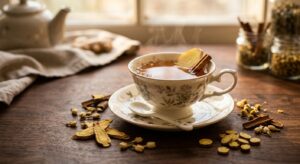
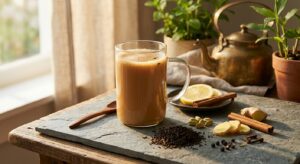
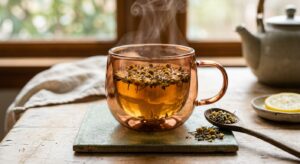
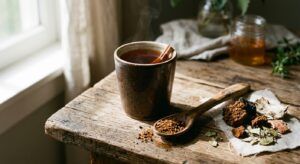
As a tea, licorice root offers a deeply comforting experience. The brew is naturally sweet, warming, and slightly anise-like without the sharpness of star anise or fennel. It is best suited to slow, intentional sipping, the kind of tea you make when the day has been too long and the mind needs permission to soften. Whether you are drawn to its remarkable history, its stress-modulating properties, or simply its extraordinary flavor, licorice root tea is one of herbal medicine’s most rewarding traditions to bring into your daily life.
2
cups
Ingredients
- 2 tspdried licorice root pieces or slices
- 480 mlwater (95°C / 203°F)
- —fresh ginger slices (optional, for warming depth)
- —dried chamomile flowers (optional, for extra calm)
How to Brew
Click on an item below to shop for the recommended items for this recipe on Amazon.
As an Amazon Associate, we earn from qualifying purchases.
- Measure 1 teaspoon of dried licorice root pieces per 240 ml of water. If the pieces are large, break or lightly crush them with the back of a spoon to expose more surface area and release the sweet glycyrrhizin compounds.
- Bring filtered water to a near-boil, around 95 to 100°C (203 to 212°F). Pour it directly over the licorice root placed in your infuser or directly into a small teapot.
- Cover the mug or teapot with a lid or small plate to trap volatile aromatic compounds and prevent heat loss during steeping. Steep for 7 to 10 minutes depending on how intense you prefer the sweetness.
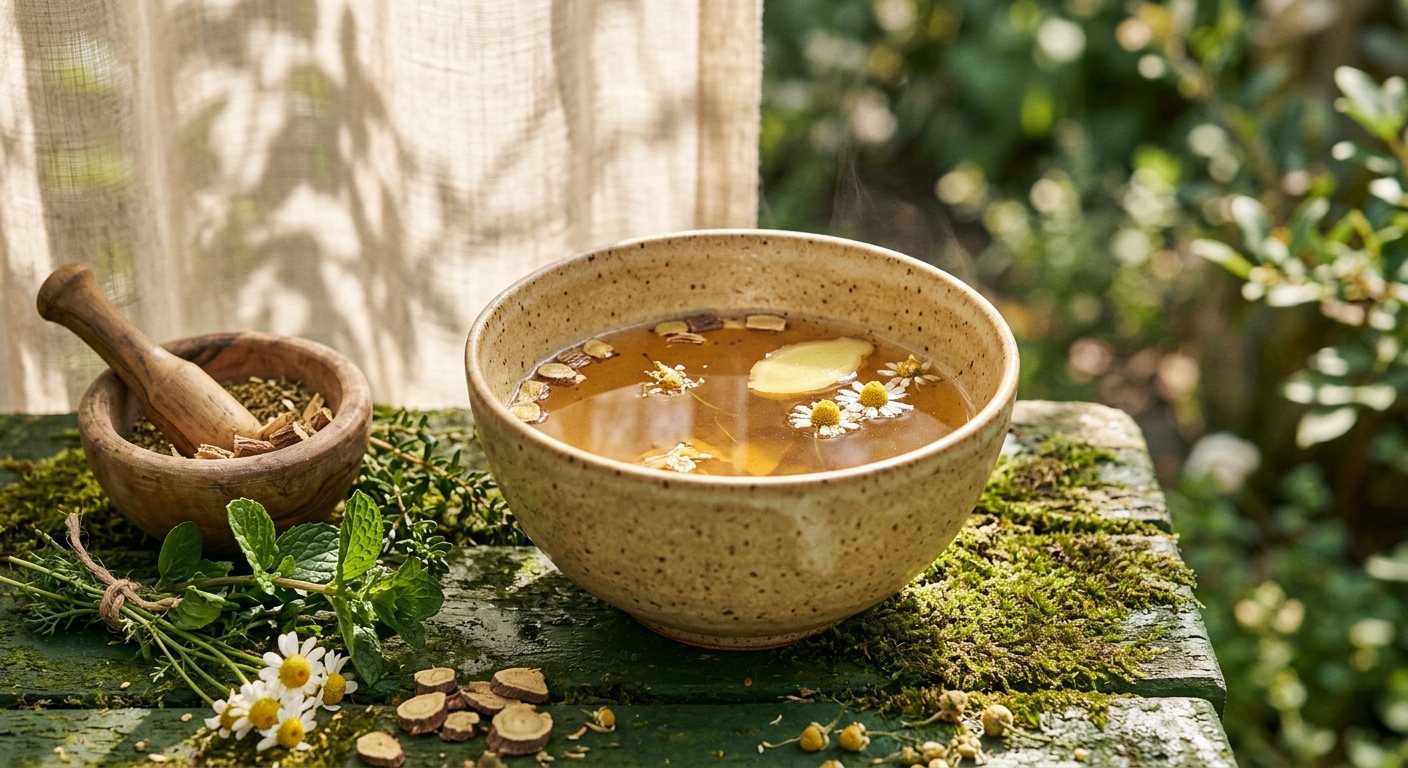
- Remove the infuser or strain the root pieces out. Taste before adding anything, as the brew is naturally very sweet. If desired, add a slice of fresh ginger or a few chamomile flowers to the last 2 minutes of steeping for a complementary layer of flavor.
- Sip slowly while warm. This tea is best enjoyed in the early evening as part of a wind-down ritual, when its adaptogenic and calming properties are most welcome.
- Measure 1.5 teaspoons of dried licorice root pieces per 240 ml of cold, filtered water. Cold brew requires a slightly higher ratio because cold water extracts compounds more slowly and less completely than hot water.
- Add the licorice root pieces directly to a glass jar with a fitted lid. Pour room-temperature filtered water over the root pieces and stir briefly to ensure all the root is submerged.
- Leave the jar at room temperature for 1 hour to begin the extraction process, then move it to the refrigerator. Steep for a total of 12 to 16 hours, ideally overnight.
- The next morning, strain the root pieces through a fine mesh strainer or cheesecloth into a clean jar or pitcher. The resulting liquid will be a pale golden color, lighter than the hot brew, with a delicate, smooth sweetness.
- Serve over ice in a tall glass. For a refreshing twist, add a few mint leaves or a thin slice of cucumber before serving. The cold brew concentrate will keep refrigerated for up to 3 days.
- Measure 2 teaspoons of dried licorice root per 480 ml of cold, filtered water and combine them in a small saucepan. Starting in cold water allows the compounds to extract gradually as the temperature rises, producing a fuller and more balanced brew.
- Place the saucepan over medium heat and bring to a gentle simmer, not a rolling boil. Adjust the heat to maintain a soft simmer, with small bubbles rising steadily from the bottom of the pan.
- Simmer uncovered for 20 to 25 minutes. You will notice the water deepening in color, shifting from pale gold to a rich amber, and the kitchen filling with a sweet, earthy fragrance. Stir occasionally.
- Remove from heat and allow the decoction to rest for 5 minutes off the heat, which allows the liquid to settle and any remaining compounds to diffuse from the root into the water.
- Strain through a fine mesh strainer into two mugs. The decoction will be noticeably sweeter and more full-bodied than the hot steep method. For a traditional Ayurvedic preparation, stir in a small pinch of ground cinnamon or cardamom before serving.
- Because this method produces a more concentrated brew, limit intake to one cup per day and do not use this method daily for extended periods without consulting a healthcare provider.
Health Benefits
Glycyrrhizin inhibits the enzyme that breaks down cortisol, effectively extending the hormone’s availability during periods of stress. This adaptogenic action helps the body maintain energy and equilibrium without the sharp peaks and crashes associated with chronic stress, making licorice root a traditional choice for adrenal fatigue support.
Glabridin and liquiritigenin have demonstrated anxiolytic activity in preclinical models, with mechanisms including modulation of serotonin and dopamine signaling and interaction with estrogen receptor beta pathways in the brain. Traditional Ayurvedic use of licorice for calming the nervous system aligns closely with these emerging mechanistic findings.
Licorice root has a long history of use for gastrointestinal complaints, and modern research supports this application. Glycyrrhizin and related compounds help protect the stomach lining by stimulating mucus secretion, making it particularly useful for stress-related digestive upset, which often accompanies anxiety.
Multiple flavonoids in licorice root, including isoliquiritigenin and glabridin, inhibit pro-inflammatory cytokines and enzymes such as COX-2. Chronic low-grade inflammation is a recognized driver of mood disorders, and licorice root’s anti-inflammatory profile may help address the physical substrate of stress and anxiety over time.
Licorice root has been used for millennia as an expectorant and throat soother. Its saponin compounds help thin and mobilize mucus in the respiratory tract, while its anti-inflammatory action reduces irritation. Stress commonly manifests in respiratory tension, making this a doubly useful herb during anxious periods.
🧪 Key Bioactive Compounds
The Science Behind Licorice Root
The scientific story of licorice root begins with glycyrrhizin, the triterpenoid saponin responsible for its extraordinary sweetness and much of its therapeutic activity. Glycyrrhizin is metabolized in the gut into glycyrrhizinic acid and then into 18-beta-glycyrrhetinic acid, the compound that directly inhibits 11-beta-hydroxysteroid dehydrogenase type 2 (11-HSD2), the enzyme responsible for inactivating cortisol in peripheral tissues. By slowing this enzyme, licorice root compounds effectively extend cortisol’s active presence in tissues, which under normal conditions supports energy regulation, immune balance, and stress adaptation. This is the primary mechanistic basis for licorice root’s long-standing reputation as an adaptogen, and it explains why traditional systems used it specifically for exhaustion and stress recovery.
Beyond adrenal modulation, licorice root’s flavonoid fraction has attracted growing interest for its neurological effects. Glabridin, an isoflavonoid unique to licorice root, has been shown in animal studies to increase brain levels of serotonin and dopamine, the neurotransmitters most closely associated with mood stability and feelings of reward and calm. Glabridin’s ability to cross the blood-brain barrier is notable, as many herbal compounds cannot do so efficiently. Liquiritigenin has demonstrated selective binding to estrogen receptor beta in the brain, a receptor subtype associated with anxiolytic effects and neuroprotection, suggesting that licorice root’s calming effects may operate through estrogenic pathways in addition to adrenal ones. These findings help explain the traditional use of licorice across cultures for what ancient physicians described as melancholy, nervous exhaustion, and emotional imbalance.
The anti-inflammatory dimension of licorice root science adds another layer of therapeutic relevance. Chronic stress elevates inflammatory cytokines throughout the body, including in the brain, where neuroinflammation is increasingly recognized as a driver of anxiety and depression. Isoliquiritigenin and other licorice polyphenols have demonstrated the ability to inhibit NF-kB signaling, one of the primary molecular switches for inflammatory gene expression, and to reduce COX-2 activity, the enzyme responsible for producing pro-inflammatory prostaglandins. This positions licorice root not just as a symptom soother, but as an herb that may address some of the underlying biological conditions that make chronic stress so damaging over time. As with all botanical medicine, the whole-root tea preparation preserves the synergy between these compounds in a way that no single extract can replicate.
Brewing Tips
- Always start with small amounts of licorice root, around half a teaspoon per cup, if you are sensitive to sweet flavors or trying it for the first time. The glycyrrhizin can be surprisingly intense, and a lighter brew is often more pleasant and easier to assess for tolerance.
- Store dried licorice root pieces in an airtight glass jar away from direct sunlight and heat. Properly stored, dried licorice root retains its potency and flavor for up to two years, far longer than most dried leaf herbs.
- If you find the sweetness of licorice root overwhelming on its own, balance it by blending it with naturally bitter or tart herbs such as dandelion root, hibiscus, or rose hips. These contrasting flavors create a more complex and enjoyable cup while also expanding the herbal benefit profile.