The human gut microbiome, home to trillions of bacteria, fungi, and archaea, is increasingly recognized as a cornerstone of whole-body health, influencing everything from immunity and mood to metabolic function and skin clarity. For centuries, healers across cultures reached for specific roots, barks, and seeds to calm digestive unrest, support regular bowel movements, and strengthen the gut lining. What modern science has begun to confirm is that many of these traditional remedies were working, in part, by feeding and protecting the microbial communities living within us.
This Microbiome Support Tea brings together three powerful digestive allies: chicory root, a bitter Mediterranean plant prized by ancient Egyptians and Roman physicians for liver and digestive complaints; slippery elm bark, a staple of Native American healing traditions used to coat and calm irritated mucous membranes; and fresh ginger root, a warming rhizome used across Ayurvedic, Traditional Chinese, and Caribbean medicine to stimulate digestion, reduce bloating, and modulate gut motility. Together, they create a tea that works on multiple layers of gut health simultaneously.
The taste is earthy, slightly bitter, and gently warming, with a creamy, almost velvety body from the slippery elm. It is not a delicate floral cup but a functional, grounding brew that signals to your body it is time to rest, digest, and restore. Drunk consistently before meals or in the evening, this blend has become a beloved ritual for those navigating leaky gut, dysbiosis, IBS, or simply the everyday consequences of a processed-food diet and chronic stress.
2
cups
Ingredients
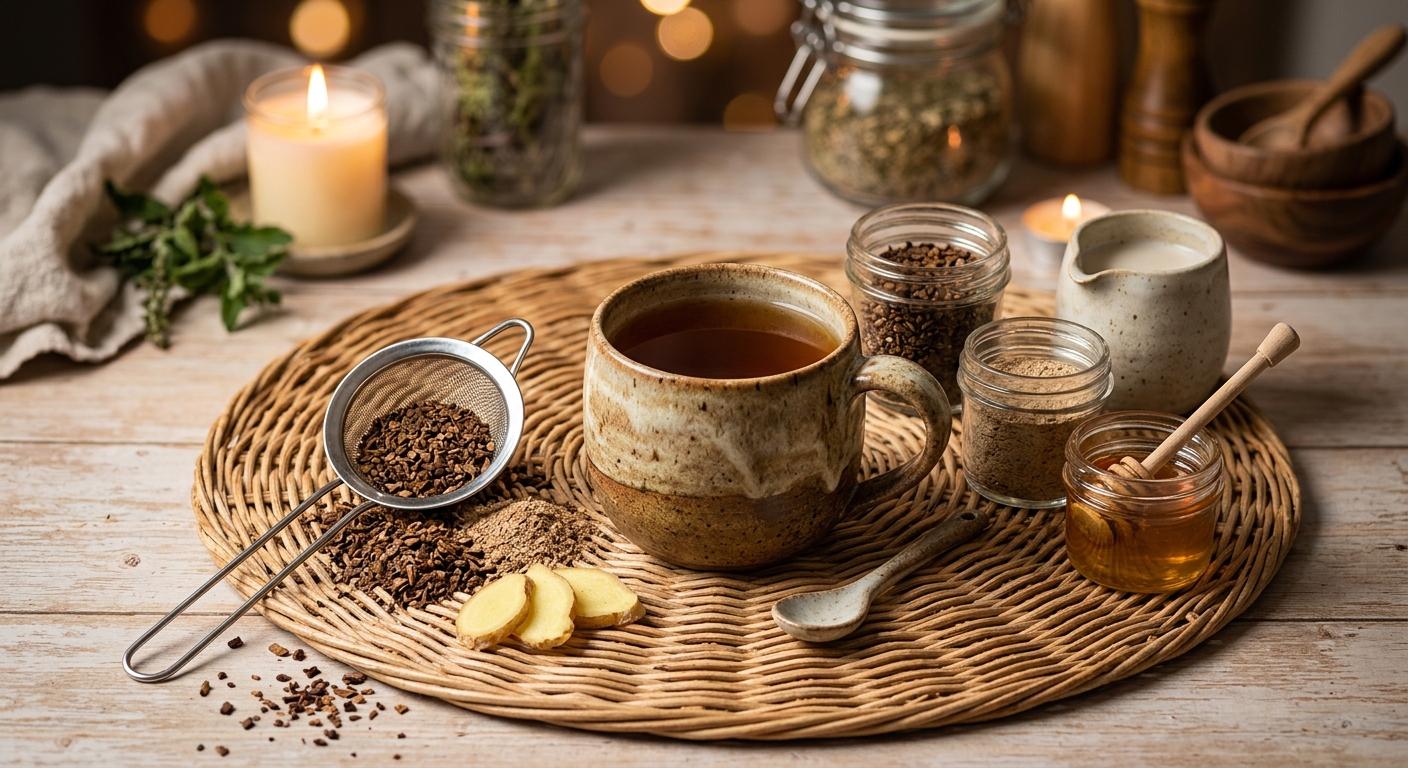
- 2 tspdried roasted chicory root (chopped or granulated)
- 1 tspslippery elm bark powder or inner bark shreds
- 1 tspfresh ginger root, thinly sliced (or 0.5 tsp dried)
- 500 mlfiltered water
- —raw honey or maple syrup to taste (optional)
- —a splash of oat milk for creaminess (optional)
How to Brew
Click on an item below to shop for the recommended items for this recipe on Amazon.
As an Amazon Associate, we earn from qualifying purchases.
- Combine the chopped chicory root, slippery elm bark, and sliced fresh ginger in a small saucepan. Add 500 ml of filtered cold water.
- Bring the water to a full boil over medium heat, then immediately reduce to the lowest simmer. Cover the saucepan partially with a lid to retain volatile aromatic compounds from the ginger.
- Simmer gently for 10 to 15 minutes. The liquid will deepen to a rich amber-brown and take on a slightly viscous quality from the slippery elm mucilage.
- Remove from heat and allow to rest, covered, for 2 minutes. This brief resting period allows the temperature to drop just enough to preserve any remaining volatile compounds before straining.
- Pour through a fine mesh strainer or cheesecloth into your mugs, pressing the plant material gently to extract the last of the mucilaginous liquid. Sweeten with honey if desired and serve immediately.
- Combine the chicory root, slippery elm bark shreds (not powder, which clouds excessively in cold water), and dried ginger slices in a glass jar. Using dried ginger here rather than fresh helps manage clarity and prevents premature fermentation.
- Pour 600 ml of cold filtered water over the herbs. The increased water volume compensates for the less aggressive extraction that occurs at low temperatures.
- Stir gently to ensure all the plant material is fully submerged. Cover the jar with a lid or a clean cloth secured with a rubber band, and allow it to sit at room temperature for the first hour.
- Transfer the jar to the refrigerator and cold brew for 12 to 16 hours. Overnight is ideal. The slow, cool extraction pulls inulin and mucilaginous compounds without drawing out as many bitter tannins.
- In the morning, strain through a fine mesh strainer lined with cheesecloth into a clean glass or pitcher. Serve over ice with a squeeze of lemon and honey, or drink straight as a cool, refreshing gut tonic.
- Double the herb quantities: use 4 tsp chicory root, 2 tsp slippery elm bark, and 2 tsp dried ginger. Combine in a medium saucepan with 750 ml of filtered water.
- Bring to a boil, then reduce to a steady medium-low simmer. Simmer uncovered for 25 to 30 minutes, allowing the liquid to reduce by roughly half to approximately 350 to 400 ml of concentrated tea.
- Watch the simmer carefully and stir occasionally. The concentrate should thicken slightly from the slippery elm and take on a deep, molasses-brown color with a noticeably more intense bitter-roasted aroma.
- Remove from heat and cool for 10 minutes before straining through a fine mesh strainer lined with cheesecloth into a sterilized glass jar. Press plant material firmly to extract all remaining mucilaginous liquid.
- Allow the concentrate to cool completely to room temperature before sealing the jar. Label with the date and refrigerate. To serve, mix 60 to 80 ml of concentrate with 180 ml of hot water, oat milk, or chilled sparkling water. Add honey to taste.
Health Benefits
Chicory root is one of the richest dietary sources of inulin-type fructans, a class of prebiotic fiber that resists digestion in the small intestine and arrives intact in the colon where it selectively stimulates the growth of beneficial Bifidobacterium and Lactobacillus species. Clinical trials have consistently shown that 5 to 10 grams of chicory inulin daily increases microbial diversity and short-chain fatty acid output, both markers of a healthy microbiome.
Slippery elm bark contains a high concentration of mucilaginous polysaccharides that, when mixed with water, form a viscous gel that coats the esophagus, stomach, and intestinal walls. This mechanical protection reduces irritation from stomach acid and inflammatory compounds, and preliminary evidence suggests it may help restore mucosal integrity in people with intestinal hyperpermeability, commonly known as leaky gut.
Ginger’s primary active compounds, including 6-gingerol and shogaol, have been shown in multiple randomized controlled trials to accelerate gastric emptying, the rate at which food moves from the stomach into the small intestine. Faster gastric emptying reduces the window for bacterial fermentation of undigested food in the stomach, directly addressing one of the most common causes of bloating and post-meal discomfort.
The bitter compounds in chicory root, particularly intybin (lactucopicrin), activate bitter taste receptors in the gut and liver, triggering a reflex increase in bile production and secretion. Adequate bile flow is essential for the digestion and absorption of dietary fats and fat-soluble vitamins, and bile itself plays a role in regulating the composition of the gut microbiome by acting as a natural antimicrobial agent against certain pathogens.
All three herbs in this blend contribute anti-inflammatory activity relevant to the digestive tract. Ginger’s shogaols inhibit NF-kB signaling pathways in gut epithelial cells, chicoric acid from chicory reduces oxidative stress in the intestinal mucosa, and slippery elm’s mucilage physically buffers inflammatory stimuli. This multi-pathway approach makes the blend particularly useful for those with chronic low-grade gut inflammation.
🧪 Key Bioactive Compounds
The Science Behind Chicory Root
The gut microbiome is shaped profoundly by what we eat, and among the most powerful dietary modulators are prebiotics, non-digestible fibers and compounds that selectively feed beneficial microbial populations. Chicory root stands out as one of the most studied prebiotic sources in the plant kingdom. Its inulin content, which can comprise up to 48 percent of the dried root by weight, consists of long chains of fructose molecules that human digestive enzymes cannot break down. When these chains reach the colon intact, species like Bifidobacterium longum and Lactobacillus acidophilus ferment them into short-chain fatty acids (SCFAs), primarily butyrate, propionate, and acetate. Butyrate, in particular, is the preferred fuel source for colonocytes, the cells lining the colon wall, and low butyrate production is consistently associated with intestinal permeability, colorectal cancer risk, and systemic inflammation.
Slippery elm bark operates through an entirely different but complementary mechanism. Its mucilaginous polysaccharides, which include arabinoxylans and polyuronides derived from galacturonic acid, absorb water and swell into a thick, slippery gel when they contact moisture. This gel adheres loosely to the mucosal surfaces of the digestive tract, forming a physical barrier that protects damaged or hyperpermeable tissue from further insult. Research published in the Journal of Alternative and Complementary Medicine found that a formulation containing slippery elm significantly improved bowel habit consistency and reduced symptoms of IBS-C in a clinical cohort, suggesting its mucilage not only soothes but also normalizes transit time.
Ginger’s contribution to this blend lies primarily in its influence over gut motility and inflammation. The compound 6-gingerol and its heat-converted form shogaol both interact with transient receptor potential (TRP) channels in the gut, particularly TRPV1 and TRPA1, producing a warming, pro-motility effect that speeds gastric emptying. A 2015 meta-analysis in the European Journal of Gastroenterology and Hepatology confirmed that ginger accelerates gastric emptying in healthy volunteers and in patients with functional dyspepsia. Beyond motility, shogaols have been shown to suppress the production of pro-inflammatory cytokines including TNF-alpha and IL-6 in gut epithelial cells, providing meaningful anti-inflammatory activity at doses achievable through regular tea consumption.
Brewing Tips
- Use roasted chicory root rather than raw for a smoother, less aggressively bitter flavor. Roasting also partially breaks down the inulin chains, making them slightly more accessible and reducing the risk of initial gas and bloating in those new to prebiotic fibers.
- If you are new to this blend, start with half the recommended chicory root quantity for the first week and build up gradually. Inulin is a potent prebiotic and introducing too much too fast commonly causes temporary bloating as your microbiome adjusts.
- For slippery elm bark, use inner bark shreds for cold brew and concentrate methods, but powdered bark works beautifully in the hot brew where the heat helps fully dissolve it and integrate the mucilage into the tea without leaving a gritty texture.