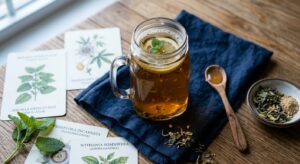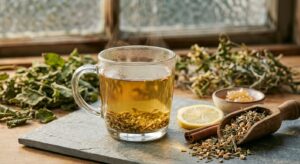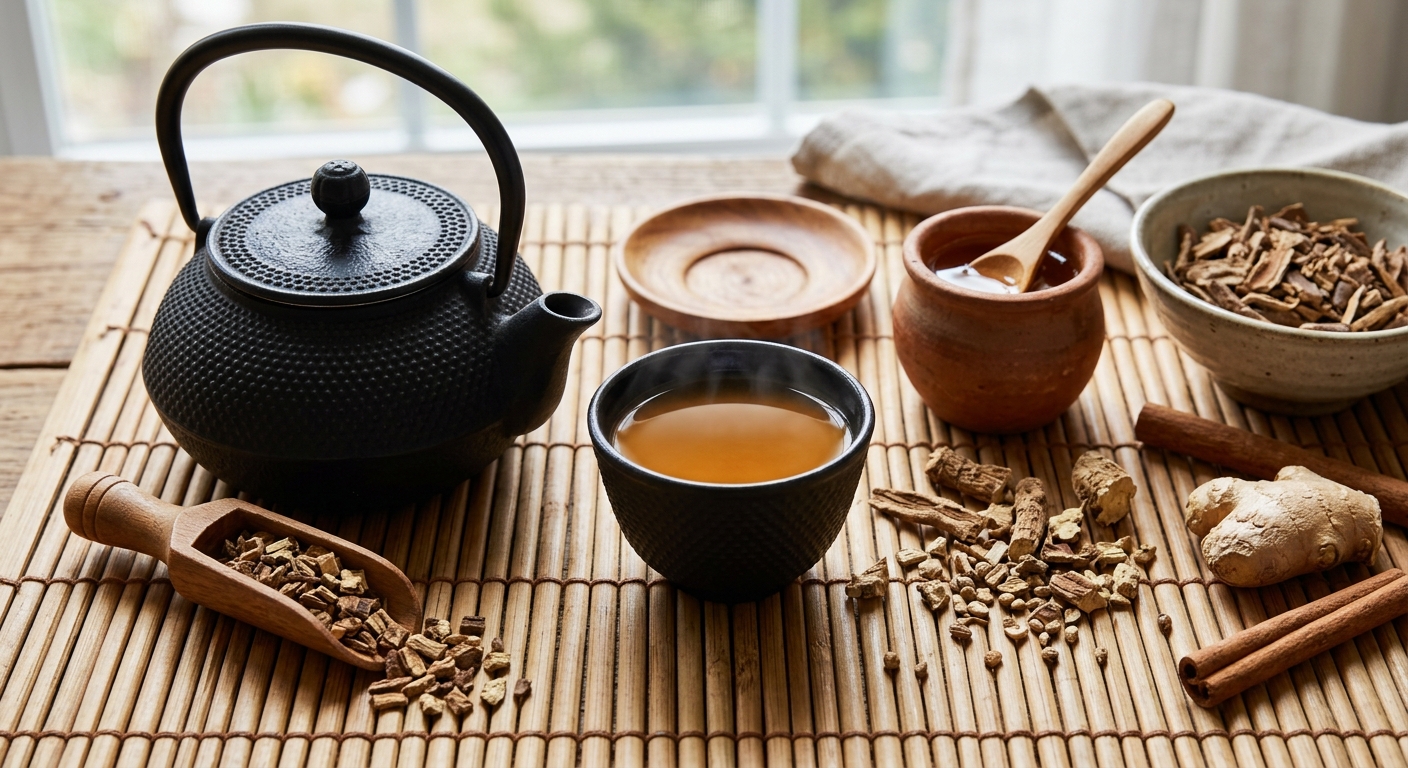
Eleuthero (Eleutherococcus senticosus) has been a cornerstone of traditional medicine in Siberia, China, Korea, and Japan for over two thousand years. Known in Chinese herbalism as ci wu jia, it appears in classical texts as a tonic for longevity, vitality, and the fortification of qi, or life force energy. In the twentieth century, Soviet scientists, led by pharmacologist Nikolai Lazarev and later Israel Brekhman, conducted hundreds of studies on eleuthero as part of a state-sponsored program to enhance the performance of soldiers, athletes, and cosmonauts. It was through this research that the term ‘adaptogen’ was coined, and eleuthero became its defining example.
Unlike Panax ginseng, with which it is sometimes confused under the outdated common name ‘Siberian ginseng,’ eleuthero belongs to a different genus entirely and has a distinct compound profile. Its earthy, slightly bitter, and mildly woodsy flavor reflects its dense root structure and the complex mix of bioactive eleutherosides it contains. The tea brewed from its dried root or bark carries a grounding, warming quality that feels fitting for an herb long associated with surviving the harsh winters of the Russian Far East.
Today eleuthero is among the most well-researched adaptogenic herbs in the world, with clinical interest spanning fatigue reduction, immune modulation, cognitive support under stress, and athletic endurance. Drinking it as a tea or decoction remains one of the most traditional and direct ways to access its benefits, making it a meaningful addition to any daily wellness routine centered on resilience and calm focus.
2
cups
Ingredients
- 2 tbspdried eleuthero root or bark, roughly chopped
- 500 mlwater
- —raw honey or maple syrup to taste (optional)
- —a cinnamon stick or slice of fresh ginger (optional, for flavor)
How to Brew
Click on an item below to shop for the recommended items for this recipe on Amazon.
As an Amazon Associate, we earn from qualifying purchases.
- Measure 1 tablespoon of finely cut or powdered dried eleuthero root per 250 ml of water. For two servings, use 2 tablespoons in 500 ml.
- Heat filtered water to 90 to 95°C (194 to 203°F). Avoid a full rolling boil, which can degrade some of the more delicate eleutherosides.
- Place the eleuthero in a tea infuser, muslin bag, or teapot strainer. Pour the hot water directly over the herb.
- Cover the vessel with a lid or small plate to retain aromatic compounds and trap heat. Steep for 15 to 20 minutes, tasting at 15 minutes for intensity.
- Strain thoroughly into your mug. The brew should appear a rich amber to reddish-brown. Add honey, a slice of ginger, or a splash of lemon if desired, and drink while warm.
- Measure 2.5 tablespoons of finely cut dried eleuthero root for every 500 ml of cold, filtered water. The slightly higher ratio compensates for the lower extraction rate of cold water.
- Combine the root and water in a clean glass jar. Stir briefly to ensure the herb is fully submerged. You may add a cinnamon stick or two slices of fresh ginger at this stage for added warmth and complexity.
- Leave the jar at room temperature for 1 to 2 hours to allow initial extraction to begin, then seal the jar and transfer it to the refrigerator.
- Let it steep for a total of 12 to 16 hours, or overnight. The longer the steep, the more robust the flavor, though 12 hours yields a pleasantly mild, smooth result.
- Strain the liquid through a fine mesh strainer or cheesecloth into a pitcher or glass. Serve over ice and sweeten lightly with honey or agave syrup if desired. The cold brew keeps refrigerated for up to 48 hours.
- Measure 2 heaped tablespoons of whole or roughly chopped dried eleuthero root and place it directly into a small stainless steel or ceramic saucepan. Avoid aluminum cookware, which may react with plant tannins.
- Add 600 ml of cold, filtered water to the pan. Starting with cold water and gradually bringing it to temperature improves extraction compared to adding root to already-boiling water.
- Bring the water to a gentle simmer over medium heat, around 90°C (194°F). Once simmering, reduce the heat to low. You want a steady, gentle bubble, not a hard boil. Cover the pan partially with a lid.
- Simmer for 25 to 35 minutes. The liquid will reduce and deepen in color, turning a rich, warm mahogany. Check periodically and add a small splash of water if the level drops too low.
- Remove from heat and allow the decoction to rest, covered, for 5 minutes. This resting period allows any remaining compounds to settle into the liquid.
- Strain into two mugs using a fine mesh strainer or cheesecloth. You should yield approximately 400 ml of finished decoction. Sweeten with honey or a cinnamon stick steeped in the hot liquid. Drink one cup immediately and store the second, covered, in the refrigerator for up to 24 hours.
Health Benefits
Eleuthero’s eleutherosides, particularly B and E, help normalize the hypothalamic-pituitary-adrenal (HPA) axis response to stress, reducing the magnitude and duration of elevated cortisol. Multiple clinical trials and a substantial body of Soviet-era research support its role in improving subjective stress tolerance and reducing burnout symptoms in healthy adults.
Several randomized controlled trials, including a notable 2004 study in the journal Current Therapeutic Research, found that eleuthero supplementation significantly reduced fatigue severity in patients with moderate fatigue. Its adaptogenic action supports mitochondrial energy production and delays the onset of fatigue under sustained mental or physical demands.
Eleuthero polysaccharides and eleutherosides have been shown to stimulate natural killer cell activity, increase T-lymphocyte proliferation, and support interferon production. A German clinical trial found that eleuthero extract reduced the frequency and duration of respiratory infections when taken over a winter period.
Preclinical and observational data suggest that eleuthero may improve working memory, attention, and mental clarity under conditions of stress or sleep deprivation. Isofraxidin and eleutherosides may protect neuronal function by reducing oxidative stress and supporting neurotransmitter balance, including dopamine signaling.
Eleuthero was famously studied in Soviet Olympic athletes and has since been explored in modern sports science. Evidence suggests it may improve VO2 max, extend time to exhaustion during aerobic exercise, and shorten recovery time, likely through enhanced oxygen utilization and reduced oxidative muscle damage.
🧪 Key Bioactive Compounds
The Science Behind Eleuthero
The adaptogenic activity of eleuthero is primarily attributed to a group of compounds collectively called eleutherosides, of which eleutherosides B (syringin) and E (syringaresinol diglucoside) are the most studied and are used as quality markers in standardized extracts. These compounds appear to modulate the hypothalamic-pituitary-adrenal (HPA) axis, the body’s central stress regulation system. Under chronic stress, the HPA axis can become dysregulated, producing either excessive cortisol output or, over time, blunted cortisol responses associated with burnout and adrenal fatigue. Eleutherosides help normalize this signaling pathway, supporting a balanced and proportionate stress response rather than simply suppressing or amplifying it. This bidirectional, normalizing quality is the hallmark of a true adaptogen as originally defined by Lazarev and Brekhman.
Eleuthero also exerts meaningful effects on immune function through its polysaccharide content. These large carbohydrate molecules, extracted most effectively through prolonged simmering (decoction), stimulate macrophage activity and enhance natural killer cell cytotoxicity. The eleutherosides contribute further by increasing T-lymphocyte counts and enhancing interferon gamma production, the signaling protein central to antiviral immunity. A 2009 study published in Phytotherapy Research found that eleuthero extract significantly increased immune cell activation markers in healthy volunteers, supporting its long traditional use as a winter immunity tonic in Russian folk medicine.
On the neuroprotective front, isofraxidin, a coumarin compound found in eleuthero root, has demonstrated the ability to inhibit neuroinflammation by suppressing microglial activation and reducing pro-inflammatory cytokine expression in animal models. Chlorogenic acid adds antioxidant support by neutralizing reactive oxygen species that accumulate in neurons during periods of high cognitive demand or poor sleep. Together, these compounds help explain why eleuthero is particularly valued for cognitive resilience, the ability to think clearly and maintain focus not under ideal laboratory conditions, but under the real-world pressures of sustained stress, illness, or fatigue.
Brewing Tips
- Buy eleuthero root from a reputable supplier that provides a standardized extract or third-party tested product, as the market contains adulterated products mislabeled as Siberian ginseng. Look for products specifying Eleutherococcus senticosus and an eleutheroside B and E content of at least 0.8 percent.
- For the most potent cup, always use the decoction method with whole or roughly chopped root rather than a simple hot infusion. The dense, woody cell walls of the root require sustained heat and time to fully release the polysaccharides and lignan glycosides responsible for its adaptogenic and immune-modulating effects.
- Drink eleuthero tea in the morning or early afternoon to take advantage of its gentle energy-supporting and focus-enhancing properties without risking sleep disruption. Some practitioners recommend drinking it consistently for six to eight weeks before taking a short break to maintain sensitivity to its adaptogenic effects.