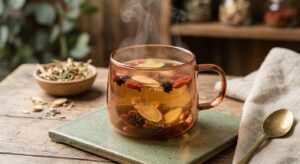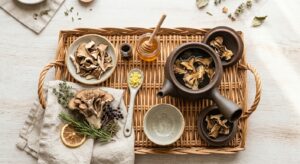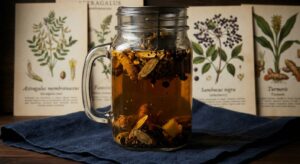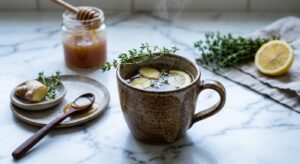
Few plants carry as much medicinal weight as the elder tree. Known botanically as Sambucus nigra, elder has been cultivated and revered across Europe, North America, and the Middle East for thousands of years. Hippocrates called it his ‘medicine chest,’ and traditional herbalists from the British Isles to the Balkans relied on elder berries and blossoms to treat fevers, coughs, and the kind of bone-deep fatigue that comes with a winter illness. The plant’s antiviral reputation was not merely folklore; it reflected centuries of careful observation about what actually worked when illness swept through a community.
What makes this tea particularly compelling is the combination of two parts of the same plant used together. The deep purple berries, harvested in late summer and dried or cooked to neutralize their mildly toxic raw compounds, deliver potent anthocyanins and flavonoids that interfere directly with viral replication. The delicate cream-white flowers, gathered in early summer and dried gently, contribute their own antiviral and anti-inflammatory compounds alongside a floral, honey-like sweetness that softens the berry’s tartness. Together, they create a tea that works on multiple fronts while tasting genuinely beautiful.
Modern research has begun to catch up with what traditional healers always knew. Several randomized controlled trials have demonstrated that elderberry extract can significantly reduce the duration and severity of influenza infections, with one landmark 2016 study showing a reduction in cold duration of over four days in air travelers. While tea is a gentler preparation than a concentrated extract, the bioactive compounds remain present and meaningful, especially when consumed regularly at the first sign of illness. This is a tea worth knowing before you need it.
2
cups
Ingredients
- 2 tbspdried elderberries
- 1 tbspdried elderflowers
- 500 mlwater (for decoction)
- 1 tspfresh grated ginger (optional, for warming and extra antiviral action)
- 1 stickcinnamon (optional)
- —raw honey to taste (added after cooling slightly)
- —fresh lemon juice to taste (optional)
How to Brew
Click on an item below to shop for the recommended items for this recipe on Amazon.
As an Amazon Associate, we earn from qualifying purchases.
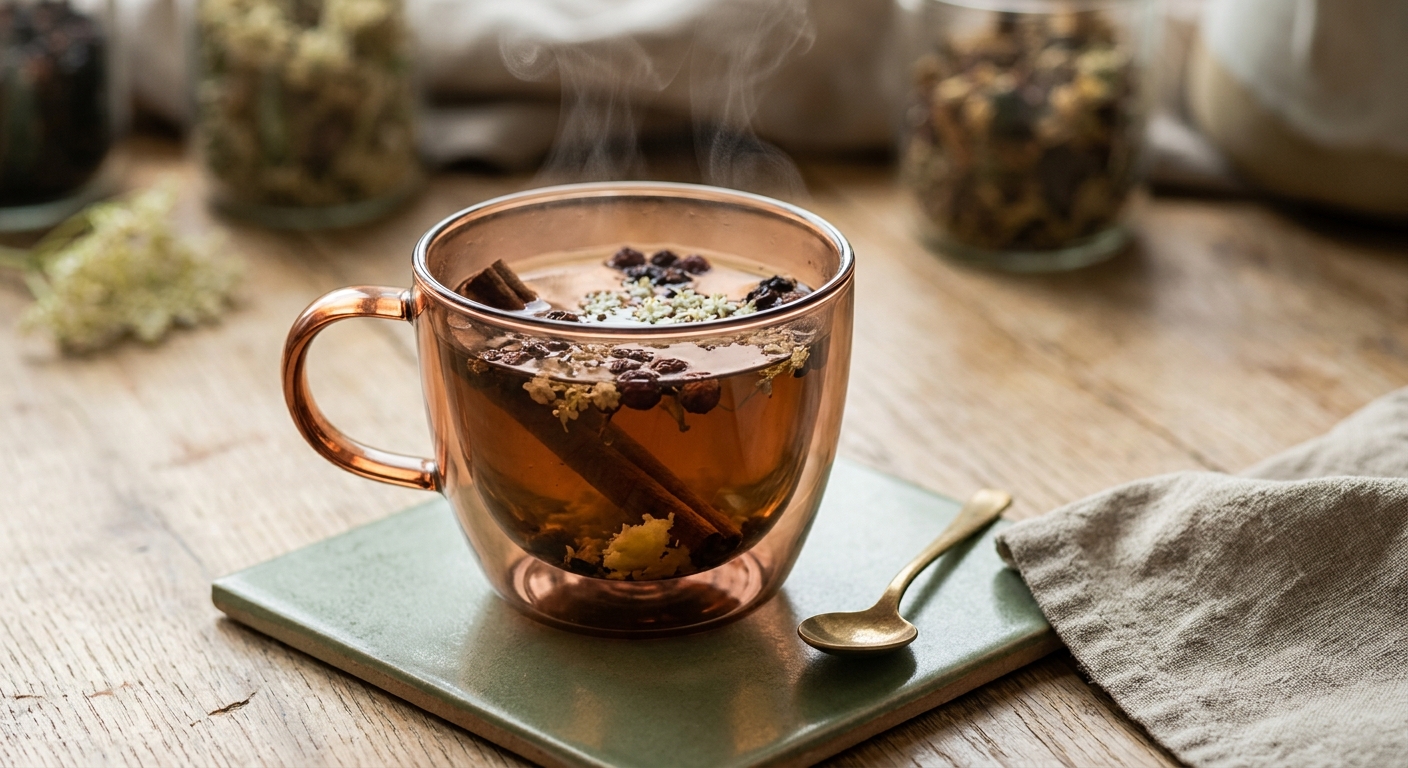
- Add the dried elderberries, cinnamon stick (if using), and grated ginger (if using) to a small saucepan with 500ml of cold filtered water.
- Bring to a full rolling boil over medium-high heat, then reduce heat to a gentle simmer. Cover the pot and simmer for 15 minutes, pressing the berries occasionally against the sides of the pan with a spoon to release their juice. The water should deepen to a dark violet-purple.
- Remove the pan from heat and allow the liquid to cool for 2 to 3 minutes until it drops below 90°C (194°F). Add the dried elderflowers directly to the hot liquid and cover the pan immediately to trap the aromatic volatile oils.
- Steep the elderflowers in the hot berry liquid for 5 minutes, no longer, as over-steeping can introduce bitterness.
- Strain the liquid through a fine mesh strainer or cheesecloth into your mugs, pressing firmly on the solids to extract maximum goodness. Discard the spent berries and flowers.
- Allow to cool slightly, then stir in raw honey to taste. Add a squeeze of fresh lemon juice if desired. Serve immediately while hot.
- Prepare a concentrated elderberry base first: combine 2 tablespoons of dried elderberries with 300ml of water in a small saucepan, bring to a boil, and simmer for 15 minutes. Strain and allow to cool completely to room temperature. This step is essential for food safety.
- Pour the cooled elderberry liquid into a glass jar or pitcher and top up with an additional 200ml of cold filtered water to reach 500ml total volume.
- Add 2 tablespoons of dried elderflowers to the cooled elderberry liquid in the jar. Stir gently to submerge the flowers, then cover the jar tightly with a lid or plastic wrap.
- Leave the jar at room temperature for 1 hour to begin the infusion, then transfer to the refrigerator and allow to steep for a further 10 to 12 hours, or overnight.
- Strain through a fine mesh strainer, pressing gently on the flowers. Discard the spent flowers.
- Serve over ice in tall glasses. Sweeten with elderflower cordial, honey syrup, or a splash of fruit juice to taste. Garnish with a few fresh or dried elderflowers if available.
- Combine 4 tablespoons of dried elderberries, 1 cinnamon stick, 4 whole cloves, 1 tablespoon of fresh grated ginger, and 750ml of cold filtered water in a medium saucepan.
- Bring to a full boil over medium-high heat, then reduce to a steady low simmer. Leave the lid slightly ajar to allow steam to escape, and cook for 30 to 45 minutes until the liquid has reduced by approximately half, leaving around 350 to 400ml of deep, concentrated liquid.
- Remove from heat and allow to cool for 5 minutes. Add 2 tablespoons of dried elderflowers to the hot concentrate, cover, and steep for 5 minutes.
- Strain the concentrate through a fine mesh strainer lined with cheesecloth, pressing firmly on the solids. Discard the spent plant material.
- Once the concentrate has cooled to below 40°C (104°F), stir in 3 to 4 tablespoons of raw honey to help preserve the liquid and add soothing sweetness. Add the juice of half a lemon.
- Pour the finished concentrate into a sterilized glass jar or bottle and store in the refrigerator for up to 2 weeks. To serve, dilute 2 to 3 tablespoons of concentrate with 200ml of hot water, adjusting strength to taste.
Health Benefits
Multiple randomized controlled trials, including a widely cited 2016 study published in Nutrients, found that elderberry supplementation reduced cold duration by an average of two days and flu duration by up to four days compared to placebo. The antiviral anthocyanins appear to interfere with viral replication at an early stage of infection.
Laboratory studies have shown that elderberry flavonoids, particularly the anthocyanins cyanidin-3-glucoside and cyanidin-3-sambubioside, bind directly to influenza virus surface proteins, physically blocking the virus from attaching to and entering healthy respiratory cells.
Elderberry compounds stimulate cytokine production (including interleukins and tumor necrosis factor alpha) to activate immune defenses, while quercetin simultaneously helps prevent cytokine overproduction, offering a balanced rather than purely stimulating immune effect.
Elderflowers in particular have a long traditional use as a diaphoretic herb, meaning they promote sweating, which supports the body’s natural fever-breaking process. This is a primary reason traditional herbalists combined the flowers and berries when treating acute febrile illnesses.
Elderberries are among the highest antioxidant fruits measured by ORAC score, with chlorogenic acid and rutin helping to neutralize the elevated free radical activity that accompanies systemic infection, supporting faster tissue recovery.
🧪 Key Bioactive Compounds
The Science Behind Elderberry (Sambucus Nigra)
The antiviral activity of elderberry is one of the better-studied areas in botanical medicine, with a clear mechanistic story emerging from the research. The primary drivers are the anthocyanin pigments that give elderberries their deep purple-black color: cyanidin-3-glucoside and cyanidin-3-sambubioside. A landmark study by Roschek et al. (2009), published in Phytochemistry, demonstrated that these compounds bind directly to the hemagglutinin and neuraminidase proteins on the surface of influenza virions. By occupying these binding sites, they prevent the virus from docking onto host cell receptors, effectively stopping infection before it can take hold. This mechanism is notably similar to that of the antiviral drug oseltamivir (Tamiflu), which also targets neuraminidase.
Beyond direct antiviral activity, elderberry compounds also modulate the immune system in a clinically meaningful way. In vitro studies have shown that elderberry extracts stimulate the production of pro-inflammatory cytokines including interleukin-1 beta, interleukin-6, interleukin-8, and tumor necrosis factor alpha, helping to rally immune defenses quickly. At the same time, the flavonol quercetin present in both berries and flowers acts as a cytokine modulator, helping to prevent the kind of excessive inflammatory response (cytokine storm) that can cause serious tissue damage during severe viral infections. This dual action, stimulating when needed and moderating excess, makes elderberry a genuinely sophisticated immunological tool rather than a simple stimulant.
The elderflowers contribute a distinct biochemical profile of their own. Rich in flavonoids including rutin and kaempferol, as well as volatile compounds like hotrienol and linalool, the flowers contribute both antiviral and diaphoretic activity. Rutin has demonstrated antiviral properties against RNA viruses in multiple cell culture studies, and it also strengthens vascular integrity, which helps reduce the edema (swelling) in mucous membranes that makes respiratory infections so uncomfortable. The combination of berry and flower in a single tea therefore addresses infection at multiple biological levels simultaneously, which is precisely why traditional herbalists used both parts of the plant together long before the underlying chemistry was understood.
Brewing Tips
- Buy your dried elderberries from a reputable herbalist or supplier who stocks Sambucus nigra specifically. Other elderberry species (such as Sambucus ebulus, the dwarf elder) have a different and potentially more problematic toxin profile, so species identification matters.
- Store your dried elderberries and elderflowers separately in airtight glass jars away from light and heat. Elderberries hold their potency for up to 18 months when stored correctly; elderflowers are more delicate and are best used within 12 months of harvest.
- For maximum antiviral effect, begin drinking this tea at the very first sign of illness rather than waiting until symptoms are fully developed. The research suggests early intervention is when elderberry compounds are most effective at interrupting viral replication cycles.
- If you have access to fresh elderflowers in early summer, you can freeze them on a flat tray and store in sealed bags for year-round use in this tea. Their volatile aromatic compounds are better preserved by freezing than by commercial drying.
- Do not sweeten this tea with honey while the liquid is still above 40°C (104°F). High temperatures destroy the beneficial enzymes and antimicrobial compounds in raw honey. Let the tea cool slightly before stirring in your honey for the best therapeutic and flavor result.