Walk into almost any Indian restaurant at the end of a meal and you will be handed a small dish of roasted fennel seeds, often candy-coated, to chew on the way out. This habit, known as mukhwas, is only one thread in a very long tradition. The ancient Romans considered fennel a plant of vitality and strength, Pliny the Elder recommended it for dozens of ailments, and medieval European monks grew it in monastery gardens as a digestive aid. In Italy, a glass of finocchietto after dinner is still a common way to settle the stomach.
Fennel (Foeniculum vulgare) belongs to the carrot family, alongside anise, dill, and caraway. Its seeds, which are technically tiny dried fruits, hold a concentration of aromatic volatile oils that give the tea its unmistakable sweet, licorice-like character. For centuries, mothers and grandmothers have steeped these seeds to calm infant colic, ease cramping, and soothe the discomfort that follows a rich or rushed meal.
What makes fennel seed tea especially appealing is how approachable it is. There is no bitterness to mask and no need for sweetener, because the seeds carry their own natural sweetness. It is caffeine-free, so it suits the evening hour perfectly, and it brews well hot, cold, or as a concentrated decoction. Whether you are winding down after supper or simply want a calming ritual, a cup of fennel tea is one of the most time-tested ways to close a meal.
2
cups
Ingredients
- 2 tspwhole dried fennel seeds
- 480 mlwater (95°C / 203°F for hot brew)
- —a thin slice of fresh ginger (optional)
- —a few mint leaves or a squeeze of lemon (optional)
- —raw honey to taste (optional, rarely needed)
How to Brew
Click on an item below to shop for the recommended items for this recipe on Amazon.
As an Amazon Associate, we earn from qualifying purchases.
- Measure 1 teaspoon of whole fennel seeds per cup of water and place them in a mortar, or on a cutting board.
- Gently crush the seeds with a pestle or the flat side of a knife, just until they crack open and release their fragrance. Do not grind them into powder, or the tea will turn cloudy and gritty.
- Bring fresh water to a boil, then let it rest for 30 seconds so it sits near 95°C (203°F).
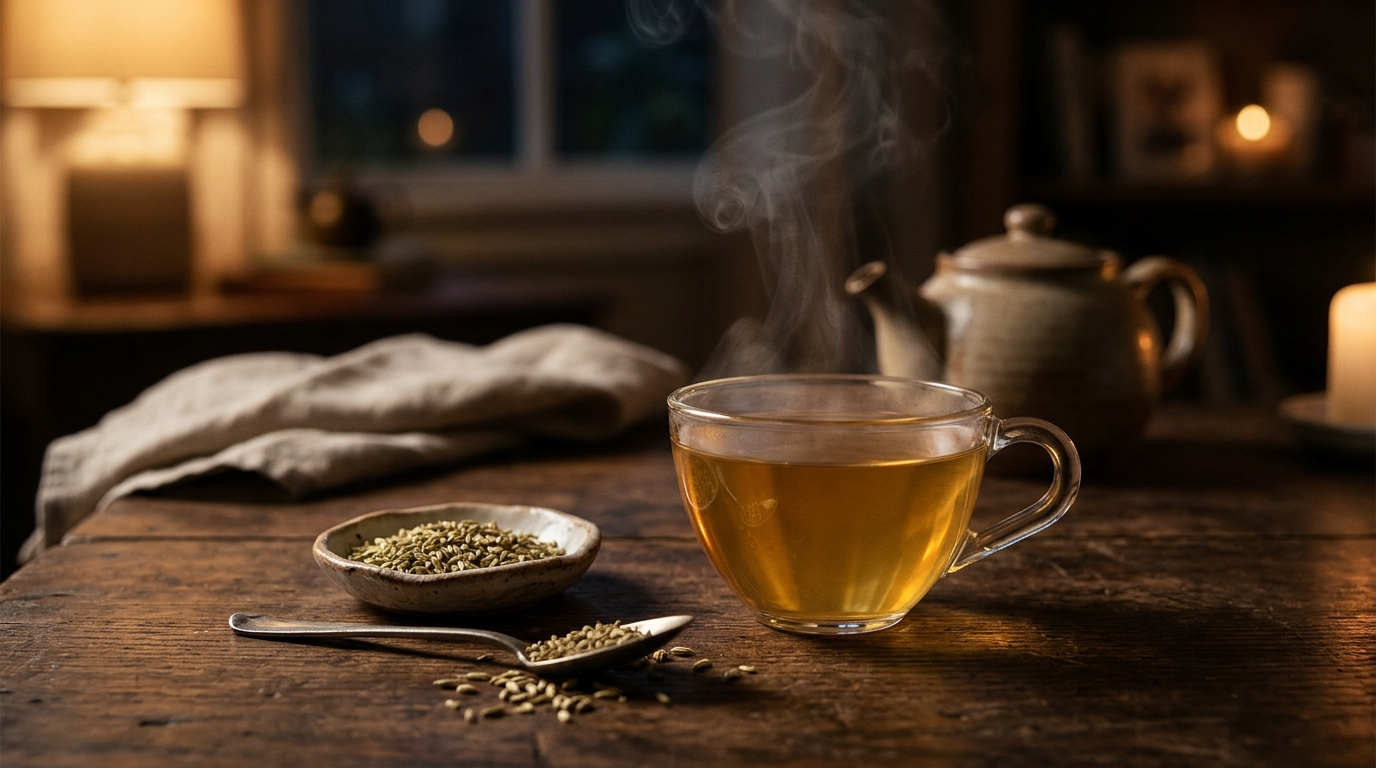
- Place the crushed seeds in a mug or teapot and pour the hot water over them. Cover immediately with a saucer or lid to trap the volatile oils, which escape quickly as steam.
- Steep for 8 to 10 minutes. Because the seeds are dense and hard, a shorter steep gives a faint, thin cup.
- Strain through a fine mesh strainer into a clean cup, and sip slowly while warm, ideally 15 to 30 minutes after eating.
- Lightly crush 2 teaspoons of fennel seeds and add them to a clean glass jar.
- Pour 500 ml of cool, filtered water over the seeds and stir once to make sure all of them are submerged.
- Seal the jar and refrigerate for 10 to 12 hours, or overnight. Shake the jar gently once or twice if you pass by it.
- Strain through a fine mesh strainer or a piece of muslin to catch the small seed fragments.
- Serve over ice, or pour into a glass and drink it as is. It will keep in the refrigerator for up to 2 days.
- Add 2 teaspoons of lightly crushed fennel seeds to a small saucepan with 300 ml of cold water.
- Bring the water slowly to a gentle simmer over medium-low heat. Avoid a hard rolling boil, which drives off the delicate oils.
- Cover the pan with a lid and simmer for 10 minutes. If you like, add a thin slice of fresh ginger for extra digestive warmth.
- Remove from the heat and leave the pan covered for 5 more minutes so the infusion can deepen.
- Strain into a cup, pressing the seeds lightly with the back of a spoon to release the last of the liquid, and drink warm.
Health Benefits
Fennel’s carminative volatile oils, chiefly anethole, relax intestinal smooth muscle and help trapped gas move through the digestive tract. Small clinical studies and long traditional use support its role in relieving bloating and flatulence.
The antispasmodic action of anethole and fenchone can calm the muscle contractions behind post-meal cramps and stomach discomfort. This is the core reason fennel has been served as an after-dinner digestif for centuries.
Fennel has been studied for infant colic and for menstrual cramps, with several small trials suggesting a benefit, likely through its muscle-relaxing effects. The evidence is encouraging but limited in size, so it is best viewed as a gentle supportive remedy.
Flavonoids such as quercetin and phenolic acids like rosmarinic acid give fennel seed measurable antioxidant activity in laboratory studies. This may contribute to its general anti-inflammatory reputation, though human evidence from tea specifically is still developing.
The traditional practice of chewing or steeping fennel after meals is thought to stimulate saliva and digestive secretions while its aromatic oils freshen the breath.
🧪 Key Bioactive Compounds
The Science Behind Fennel Seed
Fennel’s reputation as a digestive herb rests largely on its volatile oil, which makes up roughly 1 to 5 percent of the seed by weight. The dominant component, trans-anethole, can account for more than half of that oil. Laboratory and animal studies suggest that anethole acts as a smooth muscle relaxant, reducing spasm in the intestinal wall and helping to release trapped gas. This is the pharmacological backbone of fennel’s classification as a carminative, a term herbalists use for plants that ease gas and cramping.
Beyond anethole, fenchone and other terpenes contribute to fennel’s aroma and may influence gut motility. Studies in animals have observed that fennel extracts can increase gastrointestinal movement at certain doses while also calming excessive contractions, which may explain why it seems to help both sluggish and crampy digestion. Fennel’s phenolic compounds, including quercetin and rosmarinic acid, add antioxidant and anti-inflammatory activity, though most of this evidence comes from extracts rather than brewed tea.
It is worth being honest about the state of the research. Several small human trials, particularly on infant colic and menstrual pain, have shown promising results, but many are limited by size or design. Fennel tea is best understood as a gentle, well-tolerated traditional remedy backed by plausible mechanisms and encouraging early evidence, rather than a proven treatment for any digestive disease. Its long history of safe use in food and tea, paired with its pleasant flavor, makes it an easy habit to try.
Brewing Tips
- Crush the seeds right before brewing, since the aromatic oils fade quickly once the seed is broken or ground in advance.
- Always cover your cup or teapot while steeping to trap the volatile oils that give fennel its digestive power.
- Buy whole seeds rather than pre-ground fennel, and store them in an airtight jar away from light for the freshest flavor, usually good for about a year.
- Sip the tea slowly 15 to 30 minutes after a meal rather than during it, so it supports digestion without diluting your stomach’s own secretions.
- Lightly toast the seeds in a dry pan for 30 to 60 seconds before brewing for a deeper, nuttier, more fragrant cup.