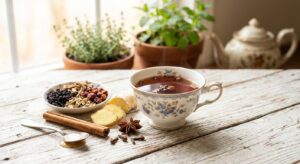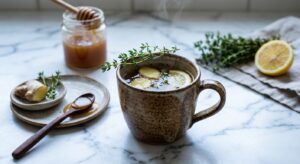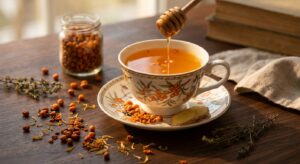
Thyme has been a staple of the medicine cabinet for thousands of years. Ancient Egyptians used it in embalming, Greek physicians prescribed it for respiratory complaints, and medieval European herbalists tucked sprigs under pillows to ward off illness and bad dreams. Long before pharmacies stocked cough syrups, thyme infusions were the household answer to a tickly throat and a chest full of phlegm. Modern herbal practice still reaches for it, and German health authorities have approved thyme preparations for bronchitis and cough.
Elderberry has an equally storied past. Hippocrates reportedly called the elder tree his medicine chest, and folk traditions across Europe, from Scandinavia to the Balkans, relied on dark elderberry preparations to see families through the cold and flu season. The berries stain everything they touch a rich violet, a visible sign of the anthocyanins that give them their reputation as an immune-supportive food.
Together, the two herbs make a remarkably complementary evening tea. Thyme brings the volatile oils that calm coughs and ease congestion, while elderberry brings a tart, fruity depth and a wealth of polyphenols. The result is a cup that tastes like a woodland dusk, savory and berry-bright at once, and works as both a comfort and a remedy when you feel a cold coming on.
2
cups
Ingredients
- 2 tspdried thyme leaves
- 2 tbspdried elderberries
- 500 mlwater (95°C / 203°F for hot brew)
- 1 slicefresh ginger (optional)
- —raw honey to taste (optional, not for infants under 1 year)
- —lemon wedge to finish (optional)
How to Brew
Click on an item below to shop for the recommended items for this recipe on Amazon.
As an Amazon Associate, we earn from qualifying purchases.
- Add the dried elderberries and 500 ml of water to a small saucepan. Bring to a boil, then reduce the heat and simmer gently, partially covered, for 10 minutes to extract the pigments and neutralize compounds that can upset the stomach.
- While the berries simmer, place the dried thyme and the optional ginger slice in a teapot or heatproof pitcher. Crushing the thyme gently between your fingers first helps release its aromatic oils.
- Remove the saucepan from the heat. Pour the hot elderberry liquid, berries included, over the thyme in the teapot.
- Cover the pot with a lid or saucer to trap the volatile thyme oils, and steep for 5 minutes. Covering matters here, because the steam carries the same compounds that ease congestion.
- Strain into two mugs, pressing lightly on the berries with a spoon to extract the last of the juice.
- Stir in a little raw honey and a squeeze of lemon if you like, and sip slowly while the steam rises toward your face.
- Simmer the dried elderberries in 250 ml of water for 10 minutes, then let the liquid cool completely. This one short heated step ensures the berries are safe, and the rest of the process stays cold.
- Place the dried thyme in a large glass jar. Pour in the cooled elderberry liquid with the berries, then add 250 ml of cold filtered water.
- Seal the jar and give it a gentle shake to combine. Slice the optional ginger and add it now if using.
- Refrigerate for 8 to 12 hours, or overnight. The long, cool steep yields a smoother, softly sweet cup with less of thyme’s sharp bite.
- Strain through a fine mesh sieve into a clean glass, pressing the berries lightly.
- Serve over ice or chilled, with a drizzle of honey and a lemon wedge. Keep any extra covered in the fridge and drink within 48 hours.
- Combine 1/4 cup dried elderberries, 2 tablespoons dried thyme, and 500 ml of water in a saucepan. Bring to a boil, then lower to a low simmer.
- Simmer uncovered for 30 to 40 minutes, stirring now and then, until the liquid has reduced by about half and turned a thick, inky purple.
- Remove from the heat and let it cool for 10 minutes, then strain through a fine sieve or cheesecloth, pressing firmly on the solids to extract every drop.
- Let the liquid cool until just warm, then stir in about 1/3 cup of raw honey until fully dissolved.
- Pour into a clean glass jar or bottle and refrigerate. It keeps for up to two weeks.
- To serve, stir 2 to 3 tablespoons of concentrate into a mug of hot water, adjusting the strength to taste.
Health Benefits
Thyme’s thymol and flavonoids relax airway smooth muscle and have a mild expectorant effect, and clinical studies on thyme preparations show reduced cough frequency and duration.
Elderberry’s anthocyanins and polyphenols have been studied for their ability to shorten the duration and ease the symptoms of colds and influenza, though larger trials are still needed.
Inhaling the warm steam of thyme tea while drinking it delivers volatile oils that help thin mucus and make coughs more productive.
Both herbs are rich in polyphenols that neutralize free radicals, which helps limit oxidative stress during illness.
Easing a cough and a scratchy throat before bed makes it easier to fall and stay asleep, and the warm ritual itself is naturally calming.
🧪 Key Bioactive Compounds
The Science Behind Thyme
The cough-calming reputation of thyme rests largely on two phenolic compounds, thymol and carvacrol. In laboratory studies these molecules disrupt the cell membranes of a range of bacteria and fungi, which explains thyme’s long use as a natural antiseptic. Thyme also contains flavonoids such as luteolin and apigenin, which appear to relax the smooth muscle of the airways. In clinical research, thyme extracts, often combined with ivy or primrose, have reduced the severity and duration of acute bronchitis and cough, which is why the herb holds approved status in several European monographs.
Elderberry’s strengths lie in its anthocyanins, especially cyanidin-3-glucoside and cyanidin-3-sambubioside, along with flavonols like quercetin and rutin. Laboratory work suggests these compounds may interfere with the ability of certain viruses, including influenza, to attach to and enter cells. Small clinical trials have found that standardized elderberry preparations can shorten the length of cold and flu symptoms by a couple of days. The evidence is encouraging but not conclusive, and most studies used concentrated extracts rather than a simple tea.
The pairing is more than a matter of taste. Thyme works mainly on the respiratory tract, easing cough and congestion, while elderberry offers broader antioxidant and immune-supportive polyphenols. Taken warm in the evening, the tea also provides hydration, steam inhalation, and a calming ritual, all of which are simple but genuinely useful when you are fighting a cold.
Brewing Tips
- Always cook elderberries before drinking, even in the cold brew method, to break down the compounds that can cause stomach upset.
- Cover your mug or teapot while the thyme steeps to trap the volatile oils, then lean over the cup and inhale the steam before sipping.
- Buy whole dried elderberries from a reputable herb supplier rather than relying on a pre-made blend, so you control the quality and quantity.
- Make a batch of the concentrate at the first sign of a scratchy throat so you can brew a quick warm cup whenever you need one.