Few plants carry as much spiritual and medicinal weight as holy basil. Known as tulsi in India, Ocimum tenuiflorum has been grown in courtyards and temple gardens for thousands of years, where it is revered as a living goddess and tended daily. In Ayurveda it is called the “Queen of Herbs” and the “Incomparable One,” prized as a rasayana, a tonic believed to promote longevity, resilience, and a steady mind. Modern herbalists classify it as an adaptogen, a plant that helps the body respond to stress without overstimulating or sedating it.
Lavender (Lavandula angustifolia) has a gentler but equally storied past. Romans scented their baths with it, which is where the name likely comes from, the Latin lavare meaning “to wash.” Medieval households strewed it on floors and tucked sachets under pillows to encourage sleep and keep troubles at bay. Across Europe it became the herb of calm, used for headaches, nervous tension, and restless nights long before aromatherapy gave it a modern spotlight.
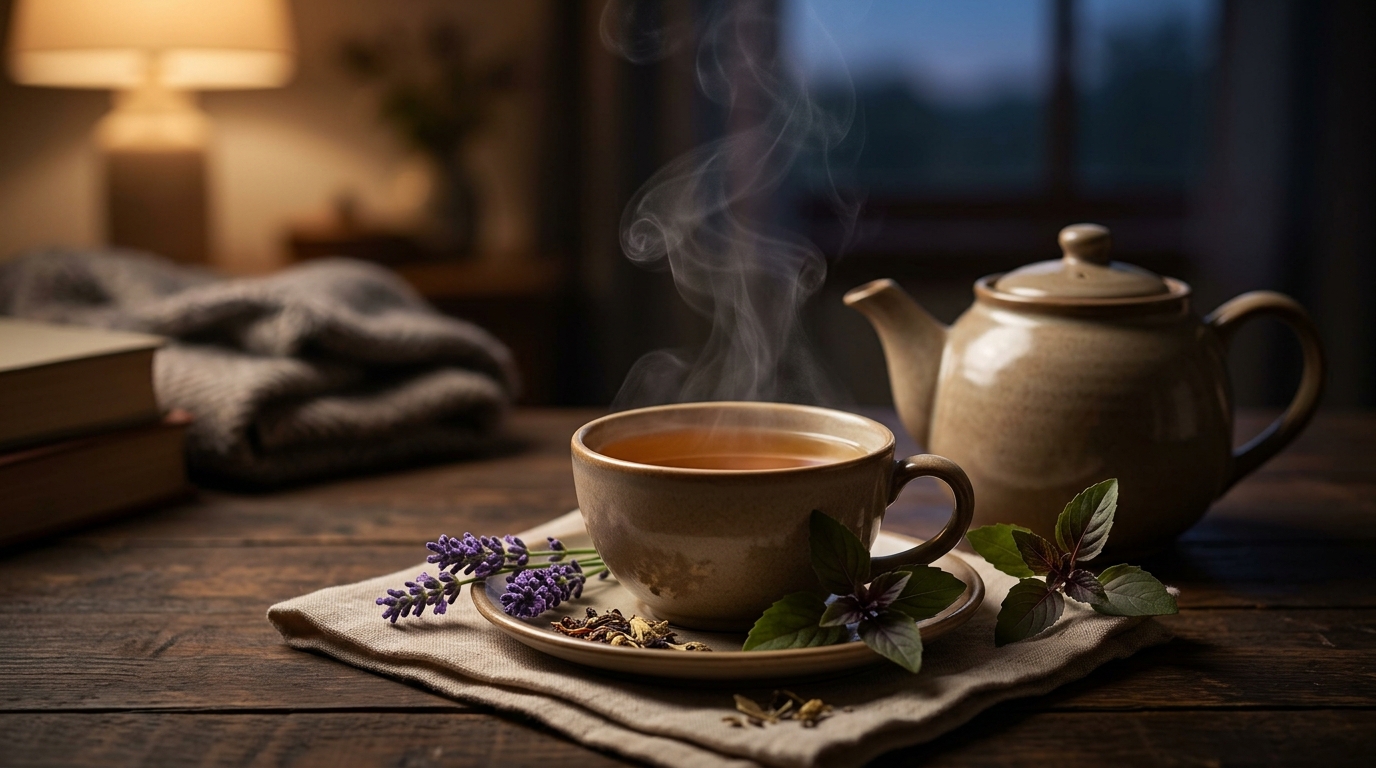
Brewed together, the two herbs complement each other beautifully. Tulsi brings a warm, clove-like spiciness and a grounding, uplifting quality, while lavender adds a floral, softly sweet top note and a deeply relaxing character. The result is a cup that feels both comforting and clarifying, ideal for the quiet hour after dinner when you want to let the day’s tension drain away without reaching for something heavy.
2
cups
Ingredients
- 2 tspdried holy basil (tulsi) leaves
- 1 tspdried culinary lavender buds
- 480 mlwater (90°C / 194°F)
- —raw honey to taste (optional)
- —thin strip of lemon peel (optional)
How to Brew
Click on an item below to shop for the recommended items for this recipe on Amazon.
As an Amazon Associate, we earn from qualifying purchases.
- Bring fresh, filtered water to a boil, then let it rest for about 1 minute so it settles near 90 to 95°C. Water that is too hot will extract bitter tannins from the tulsi and a harsh, soapy edge from the lavender.
- Measure the dried tulsi leaves and lavender buds into a teapot or a large infuser. Gently crush the tulsi leaves between your fingers as you add them to release their aromatic oils.
- Pour the hot water over the herbs, cover the pot or mug with a small plate or lid to trap the volatile aromatic compounds, and steep for 6 to 8 minutes.
- Strain thoroughly so no lavender buds remain in the cup, since they continue to extract and can turn the tea perfumey.
- Stir in a little raw honey if you like, and add a strip of lemon peel to brighten the finish. Sip slowly in a quiet spot, ideally 30 to 60 minutes before bed.
- Combine 2 tablespoons dried tulsi leaves and 1 tablespoon dried lavender buds in a clean glass jar. Lightly crush the tulsi first to help release its flavor into cool water.
- Pour 1 liter of cold, filtered water over the herbs, stir once, and seal the jar with a lid.
- Refrigerate for 8 to 12 hours, or overnight. Because cold water extracts more slowly, you can use a slightly higher herb ratio than a hot brew without bitterness.
- Strain through a fine mesh sieve or a coffee filter into a clean pitcher, pressing gently on the herbs to recover the last of the liquid.
- Serve over ice with a lemon slice or a few fresh basil leaves. The cold brew keeps well for up to 48 hours in the refrigerator.
- Heat 240 ml of water to 90°C (194°F). Add 3 teaspoons dried tulsi and 1.5 teaspoons dried lavender to a heatproof jug to make a double-strength concentrate.
- Steep for 5 minutes only. The shorter time keeps the lavender from turning bitter even though the herb ratio is higher.
- Strain the concentrate into a second jug and stir in 1 to 2 teaspoons of honey or maple syrup while it is still warm, so it dissolves fully.
- Fill two tall glasses with ice and pour the concentrate over, filling each about halfway.
- Top with chilled sparkling water or soda, stir gently, and garnish with a lemon wheel and a sprig of fresh basil or a few lavender buds.
Health Benefits
Holy basil is classified as an adaptogen, and small clinical trials suggest it may reduce self-reported stress and support healthy cortisol balance, though larger studies are still needed.
Lavender’s linalool has been shown in research, particularly with oral lavender oil preparations and aromatherapy, to reduce anxiety. Tea delivers a milder dose but offers a soothing ritual that compounds the effect.
Lavender has modest evidence for improving sleep quality, and the calming, caffeine-free nature of this blend makes it a natural fit for a bedtime routine.
Rosmarinic acid, ursolic acid, and eugenol from tulsi act as antioxidants in laboratory studies, helping protect cells against oxidative stress.
Both herbs have traditional use as carminatives, easing bloating and nervous stomach, and lavender’s relaxing effect may help when tension shows up in the gut.
🧪 Key Bioactive Compounds
The Science Behind Holy Basil
The calming reputation of this blend rests on two very different mechanisms. Lavender’s effects are driven largely by its volatile compounds, especially linalool and linalyl acetate. Research on lavender oil, mostly in aromatherapy and standardized oral preparations, indicates that linalool can modulate neurotransmitter systems, including GABA and glutamate signaling, which helps explain its anxiolytic and mild sedative qualities. Tea delivers a much lower dose than concentrated oils, but a warm, fragrant cup still offers aromatic exposure and the relaxation that comes from the ritual itself.
Holy basil works more as a modulator of the body’s stress response. As an adaptogen, it is thought to help regulate the hypothalamic-pituitary-adrenal axis, the system that governs cortisol release. A handful of small human trials have found that tulsi extract reduced perceived stress, forgetfulness, and exhaustion compared with placebo, and animal studies point to antioxidant and anti-inflammatory activity from compounds like rosmarinic acid, ursolic acid, and eugenol. The evidence is encouraging but still preliminary, and most studies used concentrated extracts rather than tea.
It is worth being honest about that gap. A cup of herbal tea is a gentle, low-dose preparation, so the benefits are best viewed as supportive rather than medicinal. Where this blend shines is in combining mild, plausible pharmacology with a consistent, caffeine-free evening ritual, and regular rituals of rest are themselves one of the most reliable tools for lowering stress.
Brewing Tips
- Use culinary-grade lavender buds and start with a small amount, since too much quickly turns the tea soapy and perfumey.
- Crush the dried tulsi leaves lightly before steeping to release more of their aromatic oils and warming spice.
- Cover your cup while steeping to trap the volatile aromatics that give this blend its calming scent.
- For a milder, sweeter cup, try cold brewing overnight and serve over ice the next day.
- Store both herbs in airtight containers away from light and heat, and use within 6 to 12 months for best flavor.